
Reviewed · WALKING TOURS
3 Hour Guided Private Walking Tour: The Best of London
Big sights, short stops, zero stress. This private walking tour strings together London’s most famous landmarks with a guide who keeps things moving on foot, including frequent photo breaks. You can also tailor the route to your interests and pace, which matters a lot in a city where crowds can turn a plan into a shuffle.
I especially like the private format, meaning it is just you (and your group) with the guide, not a line of strangers. I also love that it can flex, with an extended upgrade that reaches St Paul’s, the Thames, and all the way to Tower of London and Tower Bridge. The one drawback to plan for is the walking, because it is a moderate route where comfortable shoes are not optional.
In This Review
- Key highlights worth knowing
- A private Westminster-and-West End loop that keeps your bearings straight
- Meeting at Westminster, and why starting a bit later helps
- Big Ben to the Thames: Westminster’s greatest hits in quick bites
- Parliament to Whitehall: statues, power, and the stuff history textbooks skip
- The Downing Street and Horse Guards moment (and why it is worth a look)
- Westminster Abbey, Admiralty Arch, and the short stops that make the route click
- Trafalgar Square and Nelson’s Column: the center that pulls you toward the rest of London
- Cecil Court, Covent Garden, Leicester Square, and Piccadilly: old streets meet big-city energy
- Royal parks and Buckingham area: Green Park, The Mall, and St James’s Park views
- Chinatown stop and the value of a short cultural contrast
- If you choose the extended route: St Paul’s to Tower Bridge, plus the Thames storyline
- Tickets and admissions: what you may not need to plan for
- Guides, pacing, and why private beats big-group walking
- Price and value: when $241.69 per person makes sense
- Who should book this, and who should pick something else
- Should you book this private guided walking tour?
- FAQ
- How long is the tour?
- Is this a private tour?
- Where does the tour start and end?
- Is hotel pickup included?
- Are any admission tickets included?
- Can I cancel for a full refund?
Key highlights worth knowing
- Private guide, custom pace: You steer the energy, not the other way around.
- Westminster in hours: Big Ben, Parliament, Whitehall, and key memorials without parking headaches.
- Frequent photo stops on foot: You get time to look up and shoot without ferrying between stops by taxi.
- Included entry surprises: Tickets are included for the Cenotaph and Nelson’s Column.
- Optional extended route: St Paul’s to Tower of London and Tower Bridge if your day can handle more miles.
A private Westminster-and-West End loop that keeps your bearings straight
This is the kind of London tour that works even if it is your first day. You start in the Westminster area, then sweep through the political core, the grand squares, and central London, with a route designed for seeing the big visual hits without feeling like you are sprinting from stop to stop.
Because it is private, your guide can slow down when you want to linger at a view, or speed up when you are more interested in story than in scenery. That also helps if your group has mixed interests, like one person who wants architecture and another who wants royal history and photo angles.
More Walking Tours in London
- Tour for Muggles The Ultimate Harry Potter Walking Tour in London
★ 5.0 · 4,684 reviews - Changing of the Guard Guided Walking Tour in London
★ 5.0 · 1,793 reviews - The Great British Rock and Roll Walking Tour
★ 5.0 · 1,371 reviews
Meeting at Westminster, and why starting a bit later helps
You start at Underground Ltd, Westminster Station (Bridge St, SW1A 2JR), and the tour ends back at the meeting point. A big convenience here is hotel pickup in central London, so you are not forced to wrestle with trains and buses before your sightseeing day even begins.
The standard start time is 9:30 am, but the provider suggests starting around 10:30 to 11 am to reduce rush-hour friction and crowd density at some sites. If you hate feeling rushed, that later start is a smart move, even if it means shifting your morning plans.
What you should bring is simple: a water bottle, and shoes that can handle pavement. The tour is moderate walking, and you will feel it if you try to do this in fashion boots.
Big Ben to the Thames: Westminster’s greatest hits in quick bites
You kick off at Big Ben, the famous clock tower tied to Westminster Palace. Expect a short, focused look that gets you oriented fast. This is one of those landmarks where seeing it from ground level matters, because you start to understand how the whole Westminster layout fits together.
Next comes the River Thames, right behind Parliament. This pause is about more than a scenic break. Your guide connects the river to everyday life across centuries, and you will get a clearer mental picture of why London grew where it did. There is also a stop where you see a highlight from the river without going inside, which is perfect if you want the view but not the hassle.
From there, you transition into the government-and-history zone where the stories keep stacking.
Parliament to Whitehall: statues, power, and the stuff history textbooks skip
At the Houses of Parliament, you get that classic exterior moment, plus the context that makes it meaningful. You will hear how it moved from a royal palace setting into an engine of democratic governance, with influence reaching well beyond Britain.
Then you hit Parliament Square, a compact place that feels loaded with meaning. The statues are the point here, because they connect political ideas to real people, from Winston Churchill to Abraham Lincoln, and even Nelson Mandela. It is also where you understand why Westminster is both symbolic and practical.
After that, the tour stretches out along Whitehall, the broad avenue lined with government buildings. This is a great stop for architecture and scale, and it also functions as a natural way to reset after the more intense Parliament moments.
A short walk later, you reach The Cenotaph, the national memorial to those who died in major wars. Tickets are listed as included here, so you will not have to figure out admissions on your own if you want to go beyond just a curbside look. Even if you prefer photos, this memorial stop tends to land emotionally, because it is solemn and central.
Same part of England, a different sort of day out:
- Stonehenge, Windsor Castle, and Bath from London
★ 4.5 · 18,662 reviews - London Big Bus Hop-On Hop-Off Tour with Optional River Cruise
★ 3.5 · 10,803 reviews - London Small Group Tour of Historical Pubs
★ 5.0 · 10,422 reviews - Stonehenge, Windsor Castle and Bath with Pub Lunch in Lacock
★ 4.5 · 7,402 reviews
The Downing Street and Horse Guards moment (and why it is worth a look)
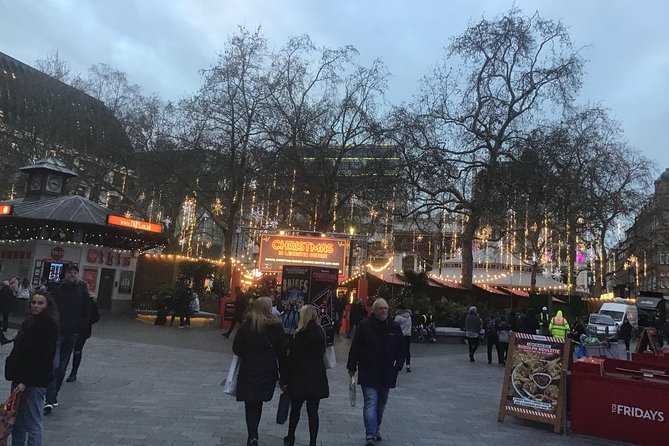
You do a quick pass by 10 Downing Street, the home of the Prime Minister. It is not an inside visit, but it is one of those London icons where the exterior does most of the work. Pair that with the surrounding political architecture, and the area starts to feel less like a postcard and more like a living command center.
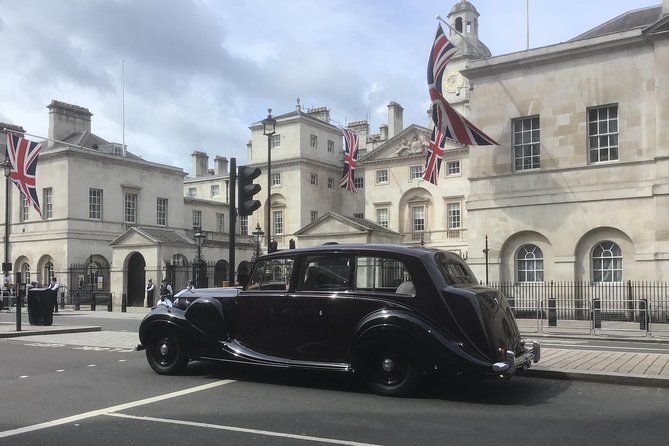
Then you go to Horse Guards Parade at Whitehall, a ceremonial ground surrounded by historic buildings and nearby green space. It is the kind of spot where you can see how London mixes pageantry with real daily movement. If you like British royal traditions and how they show up in public spaces, this is a memorable interlude.
Westminster Abbey, Admiralty Arch, and the short stops that make the route click
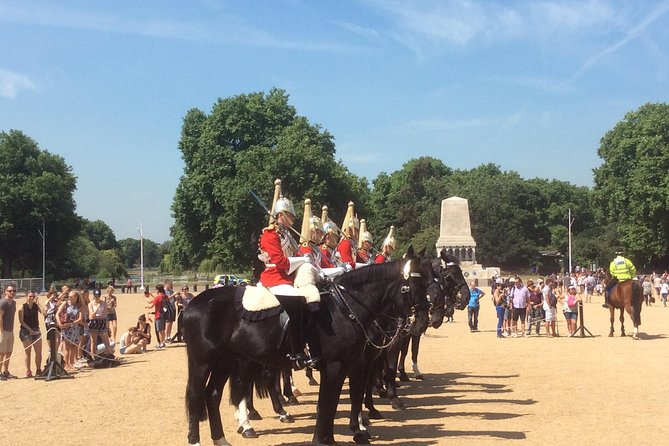
Two more quick hits keep building the Westminster story. Westminster Abbey is where you get the long view of British monarchy, with a tradition of coronations reaching back close to a thousand years. You see it from the outside during a short stop, but your guide’s framing makes it easier to place in time.
Then you check out Admiralty Arch, tied to the Royal Navy. Even from a short viewpoint, it gives you that grand London-government feel, like you have stepped into a capital that runs on ceremony and institutions.
These short stops might seem brief on paper, but they are the connective tissue. They keep the walking loop from feeling like disconnected photos.
Trafalgar Square and Nelson’s Column: the center that pulls you toward the rest of London
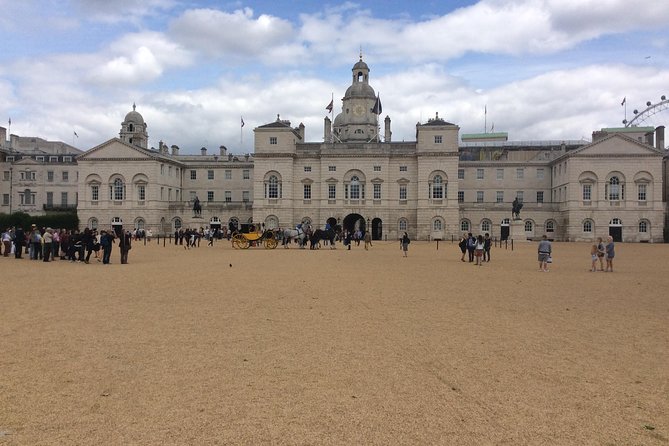
When you reach Trafalgar Square, you get one of London’s best-known plazas, with fountains, statues, galleries, and the everyday theatre of people moving through central London. The square is also a nice navigational anchor, which helps if you are planning your own sightseeing after the tour.
Next is Nelson’s Column. Tickets are listed as included, so it is another stop where you might go beyond the outside view. Your guide connects Admiral Nelson’s story and even the famous lions at the base, which are easy to miss when you are just snapping pictures.
Nearby, you get a look at The National Gallery from the plaza side. Your stop here is brief, but it sets up options, since the art is there if you want to add more time later on your own.
Cecil Court, Covent Garden, Leicester Square, and Piccadilly: old streets meet big-city energy
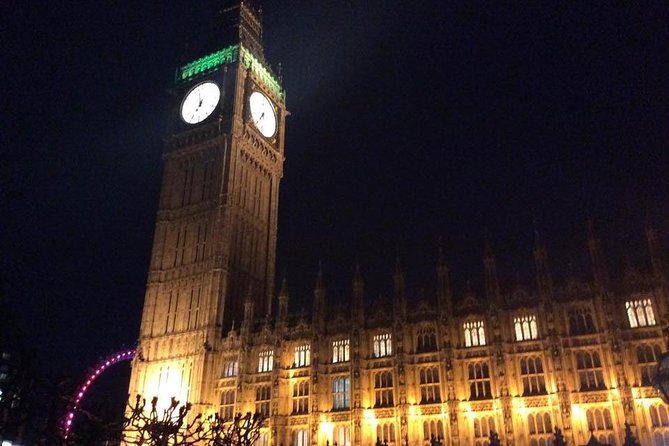
As you move toward central London, the pace changes in a good way. These stops are about texture. Cecil Court is a narrow, older street with niche shops, and it is often linked to the inspiration behind Diagon Alley. Even if you are not chasing that fandom angle, it is a fun change from the monumental buildings.
Then you step into Covent Garden, which feels like London’s entertainment heart. You might see opera connections and street performers, and your guide can point out what to watch for while still keeping the group on schedule.
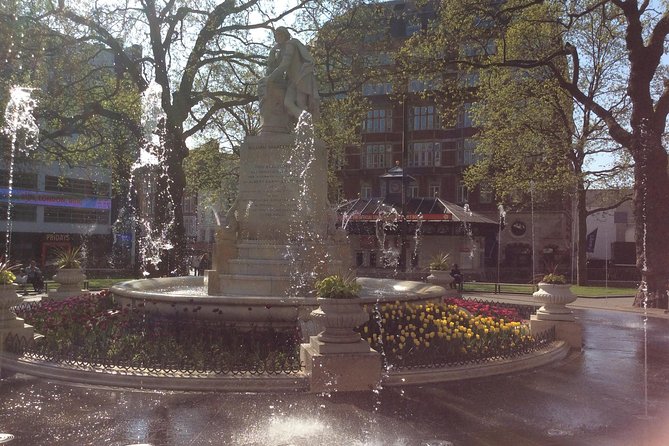
Leicester Square adds a different kind of buzz, with cafes and movie theatres around you. It is very tourist-facing, but it is also a cultural crossroads that makes sense right after Covent Garden.
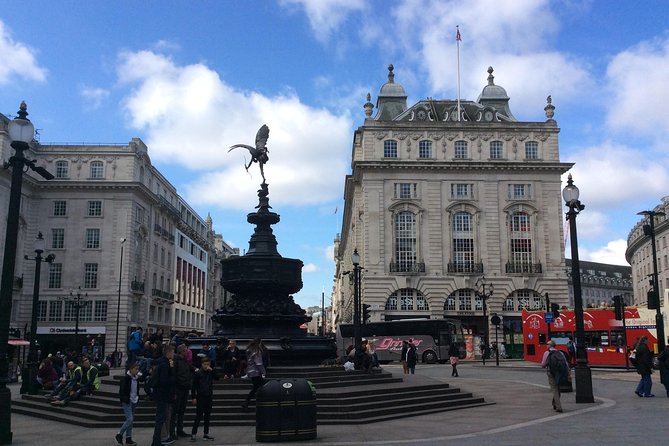
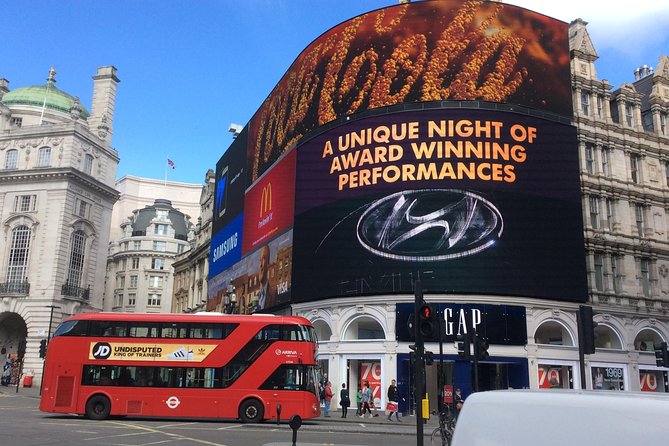
Finally, you reach Piccadilly Circus, which is London’s time-square cousin, just older and with its own style. It is a short stop, but it is a visual reset, because the surrounding neon and signage make the city feel instantly current.
You also pause briefly for shopping street energy in Piccadilly, where the big-name retailers live. If you are the kind of person who wants to know where locals shop versus where the crowds go, this is a quick way to get your bearings.
Royal parks and Buckingham area: Green Park, The Mall, and St James’s Park views
Next comes the green and grand section. Green Park is described as a Royal Park where the name connects to what you see on site. This stop is a breather, and it also sets you up for the ceremonial road that comes next.
You then get Spencer House in the view picture, the London family home of the Spencer family. It is a quick look, but it reinforces that the royal world is not only palaces and guards, it is also private power and historic residences.
The Mall follows, the ceremonial road used for royal weddings and national celebrations. It is the kind of street where, even without a specific event happening, you can imagine the crowds and pageantry.
At Buckingham Palace, you get the classic exterior view. The tour frames the palace as the home of the king, and you get a sense of why this area becomes a magnet during major public moments.
Then you finish this royal-side stretch with St James’s Park, where you get ornately beautiful park views, with Westminster and the palace area in your sightline. You are also told that it shows up in TV, including Downton Abbey, which gives you a helpful mental map if you have watched the series.
Chinatown stop and the value of a short cultural contrast
A short stop at Chinatown rounds out the city-center mix. This is less about monuments and more about the layered feel of London: old streets, Chinese heritage, and contemporary culture all living in the same frame.
Even though it is brief, it is a smart move because it prevents your day from becoming one long string of royal, political, and museum-adjacent sights. It is an easy, low-effort way to taste another side of the city.
If you choose the extended route: St Paul’s to Tower Bridge, plus the Thames storyline
Here is where the tour can turn into a bigger day. The extended option adds St Paul’s Cathedral, plus the Thames crossings and the East-side icons.
You start the extended portion with St Paul’s Cathedral, with the guide sharing the cathedral’s history as you see it from the route. This is one of those skyline landmarks that changes your sense of distance in London. After Westminster, St Paul’s acts like a visual reset.
Next comes Millennium Bridge, described as one of the newest iconic bridges. Then there is also a look at a large modern art gallery outside, presented as a major modern art space. Even if you do not go in, it helps you understand how London balances centuries of stone with postmodern architecture.
You then reach Borough Market, London’s famous food market with roots reaching back to Roman times. This is a practical break point, because market time turns a sightseeing day into something you can actually eat and enjoy. The guide also points you toward snack choices, including ideas like dairy-free goat ice cream or Ethiopian curry, depending on what sounds good to your group.
After the market, you see Southwark Anglican Cathedral, presented as smaller and less famous, but still beautiful. That kind of stop is valuable because it gives you a calmer, less obvious London moment without adding museum-ticket stress.
Then you cross into the river-and-history theater around London Bridge. You will hear a story that connects the Romans, Vikings, and later rebuilds, plus the note about a tall spike and a darker tale. Even though it is just a viewpoint stop, the guide’s framing makes it feel like you are reading the city like a timeline.
You also get Shakespeare’s Globe, with the story behind the famous theatre and why it matters in London’s literary identity.
One more outside viewpoint is included from the London Bridge area, a view of an old Royal Navy cruiser, plus the Monument to the Great Fire of London, which is described as appearing out of nowhere. That phrasing is spot-on for how these landmarks feel when you finally see them.
Finally, the extended portion ends with the heavy hitters: Tower of London and Tower Bridge. You hear how the Tower dates back to William the Conqueror, plus its role tied to the Crown Jewels and military history extending into the 20th century. You also get a stop at Traitors Gate. The day finishes with a look at Tower Bridge, presented as the ending symbol of London, with the guide sharing the history as you walk toward the finish.
In short: if your feet can handle it, the extended route turns a Westminster orientation walk into a full Thames-and-monuments arc.
Tickets and admissions: what you may not need to plan for
A few stops list admission as included or not included. Here is the practical takeaway.
- The Cenotaph includes an admission ticket in the tour format.
- Nelson’s Column also includes an admission ticket.
- Stops like Big Ben, Parliament, Westminster Abbey, National Gallery, and others are listed as not including admission tickets, so you should expect mostly exterior views or optional self-planning if you want interior access.
This matters because it affects how you plan your own time after the tour. If you want to go inside, you might still need to handle those separately unless the tour explicitly includes tickets for that specific stop.
Guides, pacing, and why private beats big-group walking
This tour’s reputation is tied heavily to the guide experience. I like that the guides described across the booking feedback are not just reading facts. They are adjusting as you go.
You will see patterns in what gets praised: guides like Kevin Pearman and Stephen are described as friendly and very story-driven, with a talent for connecting details to the places you are standing in. One reviewer noted their guide asked if they needed stops during the walk and then kept the day moving at a pace that still felt leisurely.
Another practical perk: your guide can help with photos, including suggestions for picture moments so you are not stuck doing awkward selfie angles while trying to keep up.
And if you get a guide who texts to confirm a few days ahead, it can reduce that annoying I hope this is real anxiety right before your big sightseeing day.
Price and value: when $241.69 per person makes sense
The price is $241.69 per person, and it is not trying to be a budget group deal. The value is in three things you cannot easily replace on your own.
First, you pay for a guide who can compress a ton of background into short stops, so you are not staring at stone and guessing what matters. Second, you pay for the private pacing, so the tour does not lock you into someone else’s preferences. Third, the pickup and drop-off component for central hotels saves time that you would otherwise spend figuring out transport.
If you are traveling solo, it might feel pricey, but it can still be worth it if you want maximum orientation in limited time. If you are traveling as a couple or small family group, the private format often becomes easier to justify, because you are effectively paying for one guide to serve your exact day.
Who should book this, and who should pick something else
This tour is ideal for:
- First-timers who want to see the key landmarks fast and understand how they connect.
- People who like history told through streets and buildings, not only through museum walls.
- Groups with different interests who want one flexible plan that can slow down.
Consider another option if:
- You want a lot of long indoor visits. This is a walking loop with mostly short stops.
- You do not want a moderate walking day, especially if you add the extended route.
Should you book this private guided walking tour?
I think you should book it if your goal is to get oriented quickly and learn the stories behind the places you recognize from photos. The private setup, the frequent photo-friendly pacing, and the option to extend to St Paul’s and the Tower area make it a smart “build your London map” day.
If you do book, pick the shoe-and-stamina plan that matches your schedule. A later start can help with crowds. And if you are deciding between the base and the extended route, trust your feet. One booking experience described walking about 11 miles when doing the extra portion, and that kind of day rewards you with the full Thames-to-Tower arc.
FAQ
How long is the tour?
The tour runs about 3 to 4 hours.
Is this a private tour?
Yes. It is private, so only your group participates.
Where does the tour start and end?
It starts at Underground Ltd, Westminster Station (Bridge St, London SW1A 2JR) and ends back at the same meeting point.
Is hotel pickup included?
Yes, hotel pickup and drop-off are offered to selected central London hotels.
Are any admission tickets included?
Admission tickets are included for the Cenotaph and Nelson’s Column. Other stops list admission tickets as not included.
Can I cancel for a full refund?
Yes. You can cancel up to 24 hours in advance for a full refund.
Recently added around London
- Shared Service from Stansted airport to Central London★ 3.5 · 3 reviews
- VIP Private Transfers Stansted Airport to/from Any London Hotel★ 5.0 · 6 reviews
- Transfer from London Stansted Airport to Central London★ 5.0 · 6 reviews
- eSIM for UK (34 EU countries) | 3 to 30 days. Up to 40GB of data★ 4.0 · 18 reviews
- Layover Tour of London from LHR Executive Luxurious Vehicle Private Tour 6 hour★ 4.5 · 9 reviews
- York Day Rail Tour from London Including Hop-on Hop-off Tour★ 3.0 · 3 reviews
- Working Women of the East End Walking Tour★ 5.0 · 85 reviews
- London with a Local (Historical)★ 5.0 · 3 reviews
Walking Tours, compared.
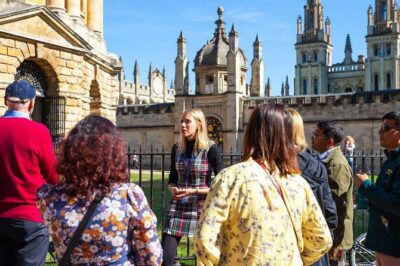
Oxford University Walking Tour With University Alumni Guide
Read our review →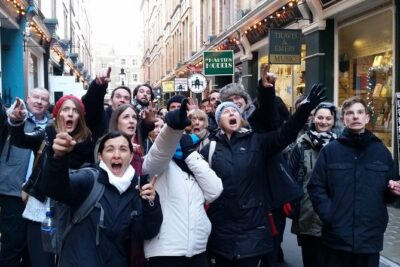
Tour for Muggles The Ultimate Harry Potter Walking Tour in London
Read our review →
Cambridge University Walking Tour by Alumni™ Kings College Option
Read our review →
Blackbeard to Banksy – The Ultimate Walking Tour of Bristol
Read our review →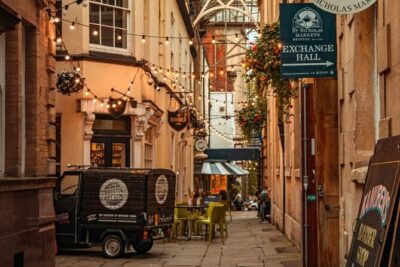
Air Raid Shelter + St. Nicholas Market Walking Tour
Read our review →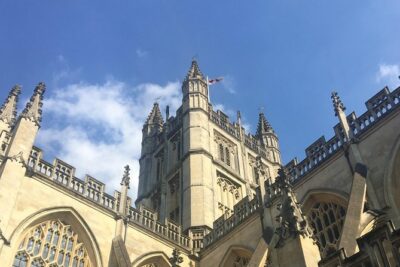
Walking Tour of Bath with Blue Badge Tourist Guide
Read our review →
Changing of the Guard Guided Walking Tour in London
Read our review →
Shadows of York: Ghost Walk and Horrible History.
Read our review →Browse the lists this tour appears in