
Reviewed · WALKING TOURS
Best of Bath Walking Tours – Georgian Tour
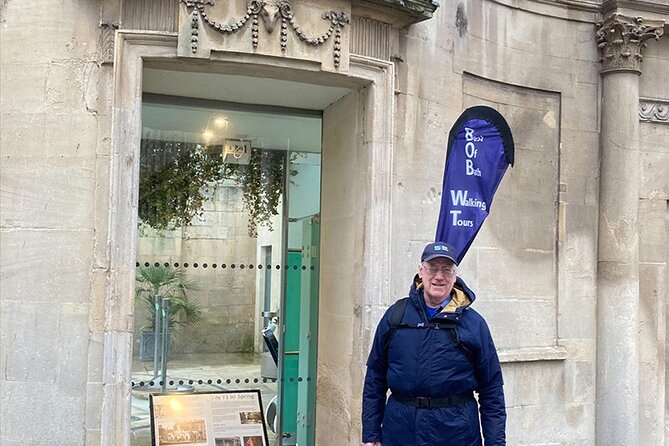
Georgian Bath clicks into place fast. This 2 to 3 hour walk is led by Bob, who guides you through Bath’s Georgian architectural highlights and explains how they connect to earlier Roman and medieval layers. I especially like the way Bob makes the streets feel easy to navigate, and I also appreciate the small group size that keeps questions in the spotlight. One thing to plan for, Roman Baths and the Royal Mineral Water Hospital are included as stops, but tickets are not included.
If you want a Bath day that feels purposeful, this tour is a strong match. You meet at Bath Abbey Churchyard, and the pacing is made for a real walk through central Bath, not a lecture from behind a mic. You’ll also get a mobile ticket and clear guidance, which helps a lot when Bath gets crowded.
In This Review
- Key things I noticed are worth your time
- Why this Georgian Bath walk works better than going it alone
- Starting at Bath Abbey Churchyard, where the story begins
- Abbey Churchyard to the city’s spring-driven Bath identity
- Roman Baths at street level, thermae, ruins, and redevelopments
- The Royal Mineral Water Hospital, healing beliefs made into architecture
- Queen Square and the formal Georgian plan: the first domino
- John Wood’s Circus and the Royal Crescent, from ring-shaped drama to a sweep of terraces
- Assembly Rooms: fashionable society, balls, concerts, and big names
- Pulteney Bridge: Palladian style and shops built into the view
- Gravel Walk, old city lines, and the bridge between eras
- Guildhall Market to the finish at Abbey Churchyard
- Price and value: why $27.73 feels fair for what you get
- Who should book this Georgian Bath walking tour
- FAQ
- What is the duration of the Best of Bath Walking Tours Georgian Tour?
- How much does the tour cost?
- Where does the tour start?
- When does the tour run?
- Is the tour in English?
- How big is the group?
- Do I need to bring cash for admissions?
- Is the tour suitable for people who want a moderate walking pace?
- Are service animals allowed?
- What happens if the weather is bad?
- Should you book this Georgian Bath tour?
Key things I noticed are worth your time
- Bob’s on-the-ground storytelling, including why specific buildings look the way they do
- A small group, max 15 people, which keeps the walk feeling personal
- Clear Georgian sequence stops like Queen Square to the Circus and on to the Royal Crescent
- Signature Bath sights in one loop, including Pulteney Bridge and Guildhall Market
- Free viewing at most stops, with only a couple of major paid sites along the way
Why this Georgian Bath walk works better than going it alone
Bath is one of those places where you can absolutely walk around and still miss what matters. The stones look beautiful, sure, but Georgian Bath has a logic to it. This tour turns that logic into something you can actually remember, because Bob ties buildings to planning ideas, street layouts, and famous characters who shaped the city’s social life.
The biggest value is guidance. Bob helps you keep your bearings while you move from one showpiece to the next. A second win is context. You do not just see a façade, you learn what was built first, what came later, and why Bath became so fashionable in the Georgian era.
One practical note: a walk through this part of Bath involves steady walking on city streets. The tour calls for moderate physical fitness, so if you need frequent breaks or long periods to sit, you may want to choose a gentler option.
More Walking Tours in Bath
- Walking Tour of Bath with Blue Badge Tourist Guide
★ 5.0 · 1,877 reviews - Roman Baths and Bath City Walking Tour
★ 4.5 · 762 reviews - Bad of Bath fun Walking Tour of Bath
★ 5.0 · 402 reviews
Starting at Bath Abbey Churchyard, where the story begins
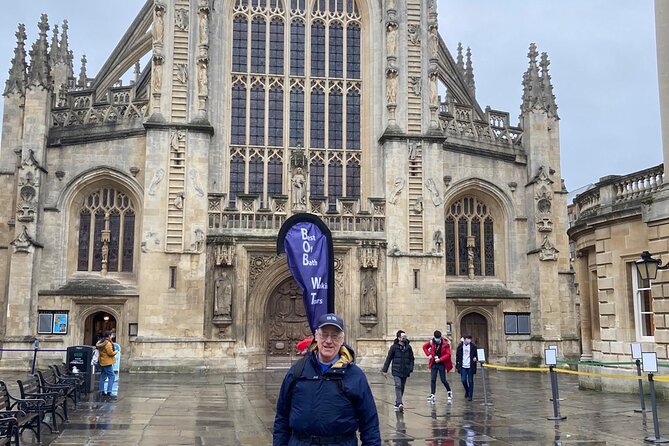
You start in Abbey Churchyard in front of Bath Abbey, one of the city’s most recognizable landmarks. Bath Abbey is an Anglican parish church and a former Benedictine monastery, and it has a long timeline. It was founded in the 7th century, reorganised in the 10th, rebuilt in the 12th, and again in the 16th.
What I like about beginning here is that you get a foundation before you jump into the Georgian highlights. Bath’s most famous architecture is Georgian, but the city’s identity keeps stretching backward. Bob uses this first stop to set the tone, then you move on.
Expect a short, efficient introduction before you get out into the streets. This is ideal if you have a limited amount of time in Bath and want to start strong.
Abbey Churchyard to the city’s spring-driven Bath identity
Once you’re oriented, the walk builds toward Bath’s famous mineral water culture. On the way you’ll get a sense of how the city developed around the springs and the different eras that left their mark.
There are a few themes Bob keeps returning to:
- how Bath’s natural springs shaped public life
- how major buildings were designed for visitors as well as residents
- how the city’s layout makes it easier to connect the Georgian dots once you know what to look for
The stop flow is timed so you’re not stuck lingering. You get enough time to look closely, take photos, and ask questions without turning the walk into a half-day slog. It also helps that the group is capped at 15 travelers, so the experience stays manageable.
Roman Baths at street level, thermae, ruins, and redevelopments
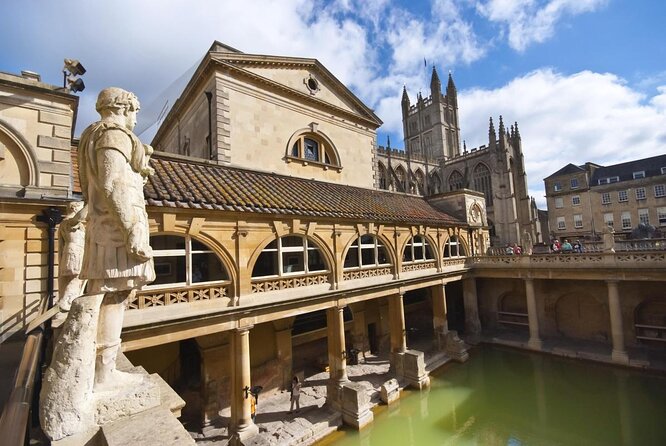
The Roman Baths are the moment where Bath’s story stretches back to the earliest big chapter. The site preserves thermae, with a temple built between 60 and 70 AD during the early decades of Roman Britain. By about a century later, the original Roman baths were in ruins, and later periods redeveloped the area around the natural springs.
This stop matters even if you are not a Roman history person. Here’s why: you start to see Bath as something that kept getting rebuilt and reimagined. Georgian Bath did not appear from nowhere. It landed in a city that already had a reputation for healing water and a central gathering space.
Admission for the Roman Baths is not included, and the stop is short. That’s normal for a walking tour. If you want to go inside, plan on paying separately and add a little extra time.
Same part of England, a different sort of day out:
- Stonehenge, Avebury & the Cotswolds from Bath (Small group)
★ 5.0 · 798 reviews - Fully Guided Bath Ghost Tours
★ 5.0 · 539 reviews - City Sightseeing Bath Hop-On Hop-Off Bus Tour
★ 4.0 · 431 reviews - Half-Day Small-Group Tour to Stonehenge from Bath, inc Entry
★ 5.0 · 424 reviews
The Royal Mineral Water Hospital, healing beliefs made into architecture
Next up is the Royal Mineral Water Hospital. Construction began in 1737, marking a shift into a new period of faith and scientific belief in Bath’s mineral waters.
This is one of those stops where a small amount of time can still pay off because Bob connects the building style and location to the purpose. Bath’s mineral water was not just a quirky tradition. In the 18th century, it became tied to health, status, and how people traveled for recovery.
Admission is not included at this stop, and you might mainly view it rather than enter. Either way, it helps round out the Georgian picture so the city feels less like a set of pretty backdrops and more like a functioning social machine.
Queen Square and the formal Georgian plan: the first domino
Now you hit the core Georgian set pieces, and Queen Square is the starting point of a key architectural sequence. Queen Square is made up of Georgian houses and is the first element in the city’s architectural run that includes the Circus and the Royal Crescent. All buildings here are Grade I listed.
If you like architecture that makes sense at street level, this stop is for you. Once you understand where Queen Square sits in the sequence, the next buildings stop feeling random. They feel planned.
Bob’s approach helps here. He points out what you might otherwise gloss over, like how the facades relate to the street, and why the square plays a role in framing the rest of the walk.
John Wood’s Circus and the Royal Crescent, from ring-shaped drama to a sweep of terraces
The Circus is a historic ring of large townhouses designed by John Wood the Elder. It was built between 1754 and 1768. The design is famous for how it works from multiple angles, with three entrances and three matching viewpoints. Each segment faces one entrance, so the classical look stays in view.
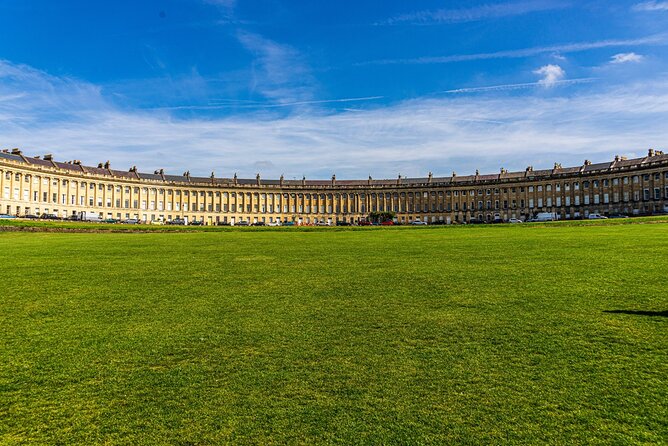
Then you move on to the Royal Crescent, the great sweeping row of 30 terraced houses. It was designed by John Wood the Younger and built between 1767 and 1774. It is another Grade I listed structure and one of the most iconic Georgian sights in the UK.
What makes these stops especially worthwhile on a walking tour is pacing. You get to compare the geometry. A ring works differently than a straight terrace. Together, Queen Square, the Circus, and the Royal Crescent show you how Georgian Bath used town planning as theater.
No. 1 Royal Crescent is part of the sights here, and admission is not included. In practical terms, you’ll likely view it and learn about it from outside, with the option to pay separately if you want to step in.
Assembly Rooms: fashionable society, balls, concerts, and big names
Bath’s Georgian story is not only about buildings. It’s also about people who visited, lived, and held events. That’s where the Assembly Rooms come in.
In the Georgian era, Bath became fashionable, and the architect John Wood the Elder and his son laid out housing for residents and visitors. The Assembly Rooms were built early in the 18th century, and a new venue for balls, concerts, and even gambling was planned in the area between Queen Square, the Circus, and the Royal Crescent. The new or upper assembly rooms opened with a grand ball in 1771.
Bob also ties this stop to famous names. The rooms became a hub of fashionable society, frequented by Jane Austen and Charles Dickens, along with members of the nobility.
Admission is not included, and the stop itself is short. But the payoff is in understanding what these rooms represented. They were the social engine behind Bath’s Georgian glow.
Pulteney Bridge: Palladian style and shops built into the view
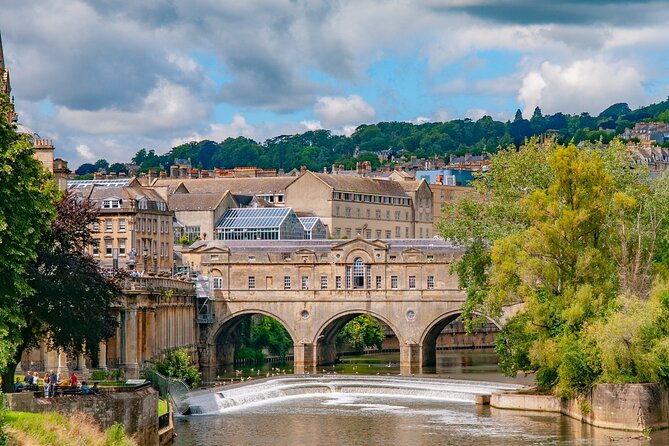
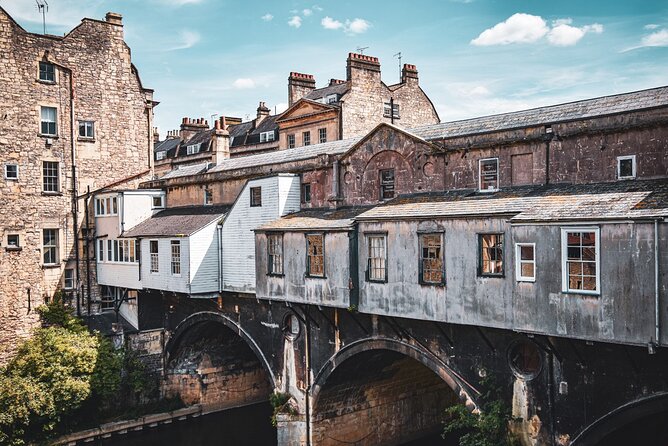
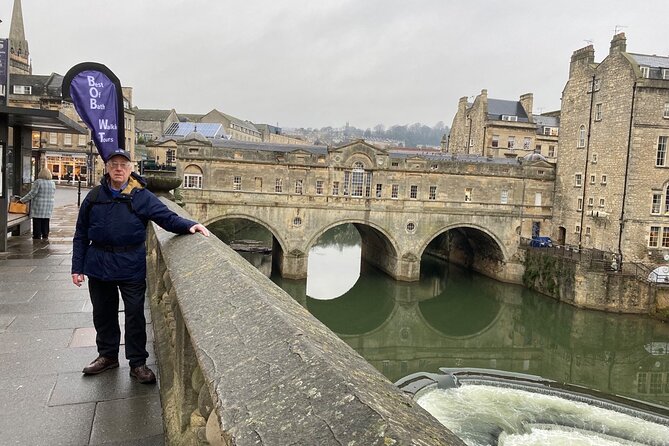
Pulteney Bridge is one of Bath’s most unusual structures. It is a bridge over the River Avon completed by 1774 and linked the city with the land of the Pulteney family. It was designed by Robert Adam in a Palladian style.
The standout detail is that it has shops built across its full span on both sides. That means you get a bridge view that acts like a street, not just a crossing.
Bob’s commentary helps you notice the design choices. Instead of treating the bridge as a postcard, you start to see it as smart development, with commerce stitched into architecture. It’s the kind of detail that makes Bath feel lived-in, even when you are standing among tourists.
Admission is listed as free for this stop, which likely means you are viewing from the outside as part of the walk.
Gravel Walk, old city lines, and the bridge between eras
Between the big Georgian monuments, Bob also threads in smaller routes and in-between views that connect the whole story. The walk includes sights like the Hot Springs, the Old City Wall, and Gravel Walk.
These parts can be easy to miss if you are wandering on your own. On foot with a guide, they become the links between eras. You start to see how people moved through the city, where they gathered, and how older structures framed the later Georgian rebuilding.
It also helps that Bob keeps the tour lively. Multiple comments highlight his humor and the way he answers questions without making you feel rushed.
Guildhall Market to the finish at Abbey Churchyard
To end, you return to Abbey Churchyard. Before that, you pause at Bath Guildhall Market, an indoor market housed in a beautiful building. The market has been established since 1284.
This is a nice way to close the tour because it breaks the architecture-only rhythm. You get a more everyday Bath moment, with stalls that help you think about what the city looks like on normal days.
Then you finish back at Abbey Churchyard, with time to keep asking questions and discussing what you saw. That last bit is more useful than it sounds. If Georgian Bath is the main focus, you may leave with a lot of names, styles, and dates. A guided wrap-up makes it all click into one mental map.
Price and value: why $27.73 feels fair for what you get
At about $27.73 per person, this is priced like a true half-day sightseeing activity, not a premium private tour. The value comes from three places.
First, you get a guided route through central Bath. The guide helps you avoid the common solo mistake of walking past the connections. Second, you see a cluster of major Georgian icons, including Queen Square, the Circus, and the Royal Crescent, plus Roman Baths and more. Third, the group is capped at 15, which keeps it interactive. Many people highlight Bob’s habit of taking questions and providing answers.
The trade-off is that a couple of key sites have admission not included. If you want to go inside places like the Roman Baths or the Royal Mineral Water Hospital, budget extra. Still, even without entry, the walking component is doing heavy lifting.
If you’re visiting Bath for a short time, this price lands in the sweet spot because it compresses a lot of the most important architecture into a single coherent walk.
Who should book this Georgian Bath walking tour
Book it if:
- you want to see the major Georgian landmarks in a structured route
- you like learning the why behind what you see, not just the what
- you appreciate a guide who can handle questions with good humor
Consider skipping or swapping for a different format if:
- you dislike walking city streets and prefer a slower, more sit-down plan
- you know you only want interior visits. Since admission is not included for some stops, a self-guided day might fit better
This tour is also a great fit for people who want to get their bearings fast. You leave with a sense of how the Georgian architecture sequence works and how Bath’s mineral-water identity links to earlier periods.
FAQ
What is the duration of the Best of Bath Walking Tours Georgian Tour?
The tour runs about 2 to 3 hours.
How much does the tour cost?
The price listed is $27.73 per person.
Where does the tour start?
The meeting point is Abbey Churchyard, Bath BA1, UK, in front of Bath Abbey.
When does the tour run?
The start time shown is 1:00 pm.
Is the tour in English?
Yes, it is offered in English.
How big is the group?
The tour has a maximum of 15 travelers.
Do I need to bring cash for admissions?
Some stops list free admission, while the Roman Baths and the Royal Mineral Water Hospital list admission as not included, so you may need to pay separately if you plan to enter.
Is the tour suitable for people who want a moderate walking pace?
The tour notes a moderate physical fitness level.
Are service animals allowed?
Yes, service animals are allowed.
What happens if the weather is bad?
The tour requires good weather. If it is canceled due to poor weather, you are offered a different date or a full refund.
Should you book this Georgian Bath tour?
If you want Bath to feel clear and connected, I think it is an easy yes. The walk focuses on the Georgian set pieces people come for, and the guide is a big part of the value, with strong communication and lots of Q and A time. Just be ready for a real walking experience, and if Roman Baths or the Royal Mineral Water Hospital are must-dos for you, plan extra for admission since those are not included.
Recently added around Bath
- e-Scavenger hunt Bath: Explore the city at your own pace★ 4.5 · 3 reviews
- Wells, Cheddar Cheese and Cheddar Gorge – Private Day Trip from Bath★ 5.0 · 10 reviews
- The Splendour of Georgian and Victorian Era Bath: A Self-Guided Audio Tour★ 4.0 · 3 reviews
- ‘Stonehenge & Secret England’ from Bath for 2-8 curious adventurers★ 5.0 · 54 reviews
- Stonehenge & the Cotswolds Including Admission from Bath★ 5.0 · 145 reviews
- Stonehenge Private Tour – Half-Day Tour from Bath★ 5.0 · 145 reviews
- Stonehenge, Salisbury Cathedral & Old Sarum Day trip from Bath★ 5.0 · 4 reviews
- BATH: 2-Hour Bath Walking Tour of Bridgerton Filming Locations★ 5.0 · 99 reviews
Walking Tours, compared.
Oxford University Walking Tour With University Alumni Guide
Read our review →
Tour for Muggles The Ultimate Harry Potter Walking Tour in London
Read our review →
Cambridge University Walking Tour by Alumni™ Kings College Option
Read our review →
Blackbeard to Banksy – The Ultimate Walking Tour of Bristol
Read our review →
Air Raid Shelter + St. Nicholas Market Walking Tour
Read our review →
Walking Tour of Bath with Blue Badge Tourist Guide
Read our review →
Changing of the Guard Guided Walking Tour in London
Read our review →
Shadows of York: Ghost Walk and Horrible History.
Read our review →Browse the lists this tour appears in