
Reviewed · WALKING TOURS
Burnings, Butchery & Black Death: A Walking Tour of London’s Bloody Past
London turns grim when you walk it. This two-hour tour packs more than a thousand years into one tight loop, using real sites tied to the plague, markets, and public fear. I love Charterhouse for its plague-pit story, and I love Smithfield Market because it shows how everyday life in London could feel dark fast.
The main catch is the theme. You will be walking for about two hours, and the subject matter is heavy, so pack sensible shoes and expect the mood to go serious. Also, it needs good weather, since this is an outdoor walking experience.
The guide role is a big part of why this tour works, and the name that comes up again and again is Tom. With a small group of up to 15 people, it stays personal, and you can actually hear the details as you move street to street.
In This Review
- Key things I’d bet on before you book
- Entering London’s bloody past in a small, focused group
- Price and value for a 2-hour, admission-light tour
- Meeting at Aldersgate and finishing near Farringdon
- Charterhouse: a 14th-century monastery and a plague pit
- Smithfield Market: the meat market that echoes for 1,000 years
- St John’s Gate: the Hospitallers and a story behind the name
- Cloth Fair: a quiet alley with a noisy past
- William Wallace Memorial: a Braveheart link, and a reminder of how memory travels
- St Bartholomew the Great: London’s oldest surviving parish church
- Golden Boy of Pye Corner and the ghost stories after the Great Fire
- Holborn Viaduct: the River Fleet and Victorian London’s open-air sewer
- Ye Olde Mitre: a real pub pause down an alley
- St Bartholomew’s Hospital Museum: why ending at a hospital matters
- Who this walk is best for
- Should you book this Bloody Past walking tour?
- FAQ
- How long is the tour?
- How much does it cost per person?
- Is the tour offered in English?
- How big are the groups?
- Do I need admission tickets for the stops?
- Is the tour dependent on weather?
Key things I’d bet on before you book
- A tight, two-hour route that covers Middle Ages to Victorian London without feeling rushed
- Charterhouse and the plague pit, a standout stop that sets the tone early
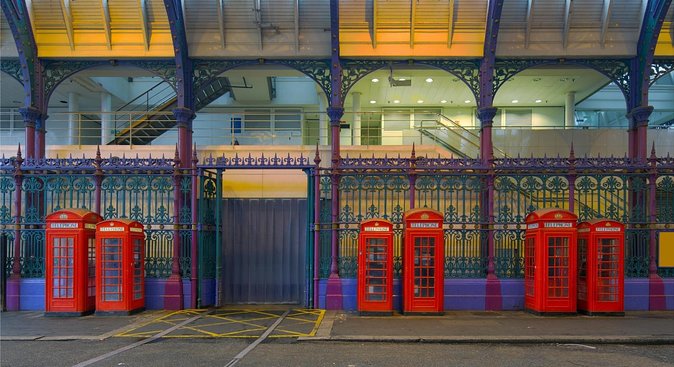
- Smithfield Market as the anchor point for how food, power, and public life mixed together
- St Bartholomew the Great and the included admission ticket, so you get one true indoor moment
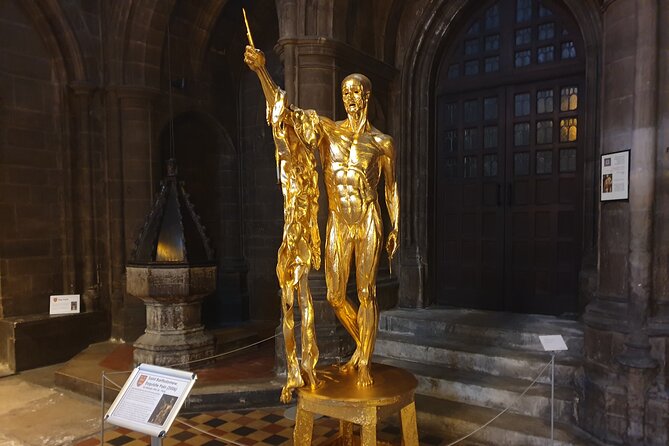
- Golden Boy of Pye Corner and the Great Fire aftermath, where London fear becomes folklore
- An ending that fits real life, with Ye Olde Mitre and the St Bartholomew’s Hospital Museum nearby
Entering London’s bloody past in a small, focused group
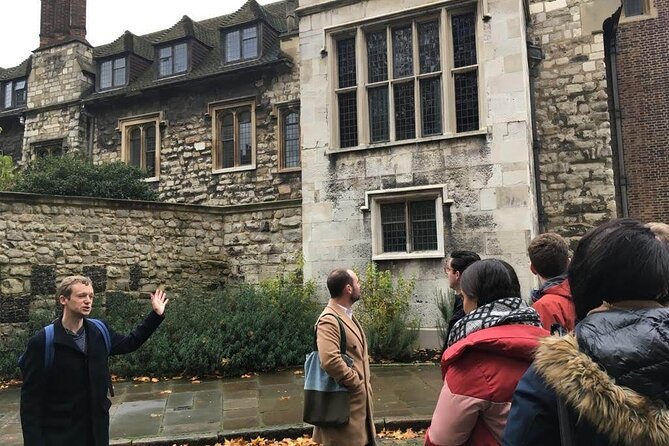
This tour is built around one simple idea: London’s darkest episodes did not happen in some faraway world. They happened in the same neighborhoods you can visit today, often just steps from offices, pubs, and transit stops.
What I like for you is the pacing. Two hours is long enough to feel like a real walk, but short enough that you are not stuck for half a day in the dark theme. The small group size also matters more than you might think. When you can hear the guide clearly, the stories land better, and you spend less time scanning heads and street corners.
The other quiet win is variety. You get monasteries and plague associations, medieval market life, hospital origins, and Victorian plumbing horror, all in one line. It is not only doom for doom’s sake. It is the cause and effect, how people lived, how cities reacted, and how fear turned into landmarks.
More Walking Tours in London
- Tour for Muggles The Ultimate Harry Potter Walking Tour in London
★ 5.0 · 4,684 reviews - Changing of the Guard Guided Walking Tour in London
★ 5.0 · 1,793 reviews - The Great British Rock and Roll Walking Tour
★ 5.0 · 1,371 reviews
Price and value for a 2-hour, admission-light tour
At about $27.73 per person for a 2-hour walk, you are mainly paying for a guide who can connect distant time periods to specific places you can stand on. That is a different value than paying for a big museum ticket where you mostly explore alone.
One reason the math feels fair here is that most stops are free. The Church of St. Bartholomew the Great is the one place where admission is included, so you are not paying extra to access that key site. For the rest of the route, you are getting what you came for, context and interpretation, tied to spots you would likely pass without understanding what they represent.
If you are the type who likes history but hates slow tours, this format may suit you. You will be moving, and the route is compact. If you want a slow, sit-down lecture style, this is probably not your best match.
Meeting at Aldersgate and finishing near Farringdon
The tour starts at Underground Ltd, Aldersgate St, Barbican, London EC1A 4JA. Getting there is pretty straightforward because it sits near public transport, and Barbican is a familiar hub if you are already using the Tube.
It ends on Ely Place, around the corner from Farringdon Station. That is helpful because you can end your walk and stay mobile for the rest of your day. You are also finishing in an area that keeps your options open, whether you want to eat, pop into another stop, or head back out of the City.
One practical tip: since the route ends near Farringdon, I like to plan my next move around that. It reduces stress, especially when you are trying to fit this into a busy London itinerary.
Charterhouse: a 14th-century monastery and a plague pit
You start at Charterhouse, and the reason it works is because it sets the theme immediately. This is a fourteenth-century monastery association tied to a plague pit, which helps explain why disease shaped London space and memory.
Even if you know the basics about outbreaks, what you may not know is how physical places carried those stories. The tour uses this stop to connect the fear of the medieval world to the built environment you can still recognize today. It is one thing to read about plague, and another to stand near a site that implies how people coped and buried the problem in the same urban fabric.
The “watch your step” part here is mostly mental. The topic is grim, but the tour approach keeps it focused on the meaning, not shock value.
Same part of England, a different sort of day out:
- Stonehenge, Windsor Castle, and Bath from London
★ 4.5 · 18,662 reviews - London Big Bus Hop-On Hop-Off Tour with Optional River Cruise
★ 3.5 · 10,803 reviews - London Small Group Tour of Historical Pubs
★ 5.0 · 10,422 reviews - Stonehenge, Windsor Castle and Bath with Pub Lunch in Lacock
★ 4.5 · 7,402 reviews
Smithfield Market: the meat market that echoes for 1,000 years
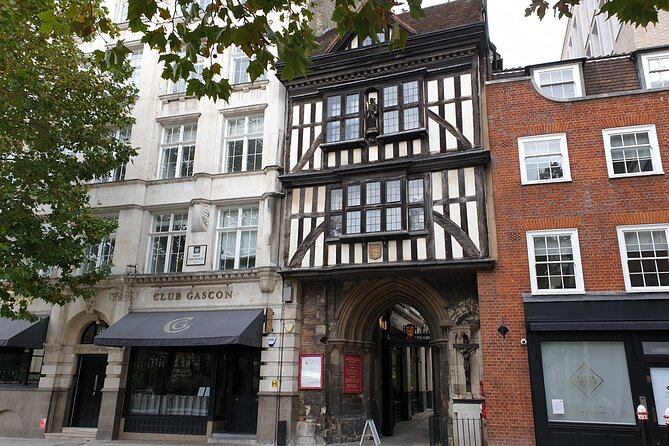
Smithfield Market is next, and it is a strong second anchor. You are looking at a meat market with roots described as about a thousand years old, and that matters because it shows how daily needs can be tied to tragedy.
I like that the tour uses Smithfield to explain the link between public markets and public risk. Food supply was essential, and markets were where people gathered, traded, and lived side by side. In eras of plague, those same crowds could become part of the story people feared most.
This stop is also a good one for photos and atmosphere. You get a sense of why the neighborhood felt like the center of gravity for so long. It is not just history on paper, it is visible in the street scale and location.
St John’s Gate: the Hospitallers and a story behind the name
At St John’s Gate, you step into the medieval world of the Knights Hospitallers. The site is described as home to those medieval knights, which gives the tour a real institutional backbone.
What you likely appreciate here is the way the guide turns a name into a network of people and responsibilities. The Hospitallers were not only fighters. They were also tied to care and organization, and the tour also links this broader St John thread to later public service themes, including the beginnings of St John Ambulance.
This stop can feel less dramatic than plague talk, but it adds context. It reminds you that even in “bloody” London, there were systems built for support and order, not only suffering.
Cloth Fair: a quiet alley with a noisy past
Cloth Fair sounds gentle at first. Then the story kicks in, because it is described as a quiet alley with a noisy history. That contrast is exactly what I like about this tour. London’s loud chapters often hide inside calm-looking streets.
The fair connection points to trade and commerce, and that matters because markets, fairs, and guild life shaped where crowds formed. Those crowds could be good for business, and dangerous when outbreaks hit. This is where the tour helps you connect dots without turning it into a textbook.
If you prefer history that feels like walking through clues, Cloth Fair is the kind of stop that rewards you.
William Wallace Memorial: a Braveheart link, and a reminder of how memory travels
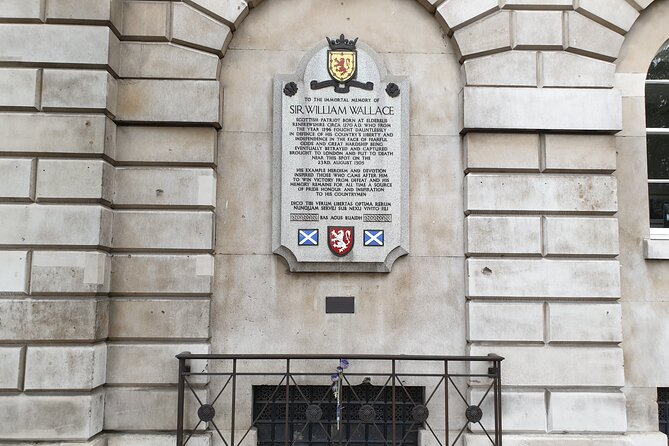
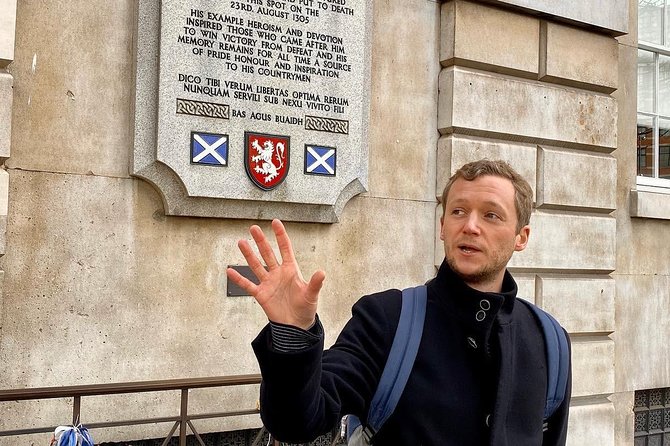
Then you reach the William Wallace Memorial, known through the wider cultural association with Braveheart. The important takeaway is not only the figure, but how public memory gets translated into London’s streets.
This stop is brief, but it helps break the density. After plague, markets, and fear, the tour gives you a moment to step back and think about how stories get kept alive. It also sets up a larger point for me: London is a magnet for national myth, not only local events.
St Bartholomew the Great: London’s oldest surviving parish church
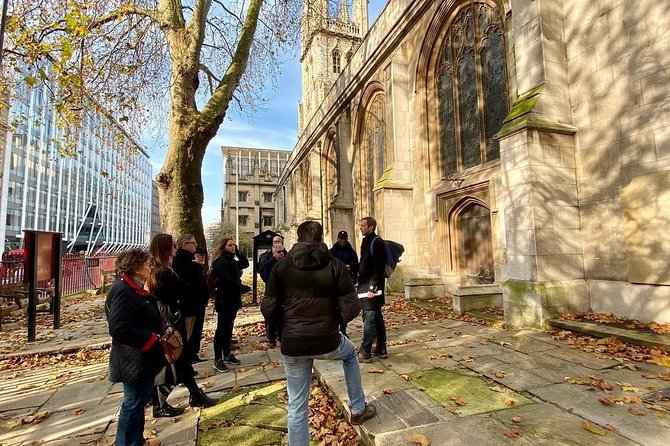
Now you get the included admission ticket at Church of St. Bartholomew the Great. The tour describes it as London’s oldest surviving parish church, and that label matters because it signals continuity. You are not just looking at an artifact, you are looking at a long-standing place of community worship.
This stop is valuable because it anchors the story in something stable. In a route full of fear and disruption, an institution that survives across centuries helps you understand how London kept moving even as it changed.
What you should expect is a sense of age you can feel in the space. For me, this is one of the moments where you pause mentally, not only physically, because the church gives the tour a different tone.
Golden Boy of Pye Corner and the ghost stories after the Great Fire
The Golden Boy of Pye Corner is one of the most fun and unsettling stops. It is tied to the spot where the Great Fire of 1666 died out, and the tour also points to eighteenth-century ghost hysteria around that location.
This is where the “bloody past” idea expands from disease and violence into public panic. Fires were existential, and the aftermath could turn into legends, scares, and stories people repeated because they needed an explanation.
If you like history that explains why folklore grows, you will enjoy this stop. It also helps you see how major disasters can reshape belief for generations.
Holborn Viaduct: the River Fleet and Victorian London’s open-air sewer
At Holborn Viaduct, the tour shifts gears hard, to Victorian infrastructure. The route describes the site of the River Fleet as Victorian London’s largest open-air sewer.
This is a smart inclusion because it tells you something many visitors miss. London’s darker chapters are not only medieval. They include the 19th century, when cities were sprawling and sanitation lagged behind population growth.
You will likely walk away with a clearer mental map of how health fears connect to engineering. The point is not to make you gag at the idea of sewage. It is to show how modern London began solving problems that were once lived with daily.
Ye Olde Mitre: a real pub pause down an alley
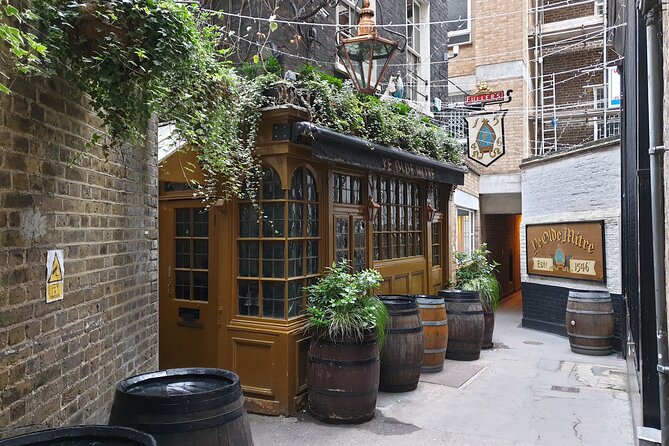
You finish with time around Ye Olde Mitre, a pub hidden down an alleyway. This is one of those “right place, right mood” stops. After dark stories, a pub break is not a distraction, it is how people actually recover from a long walk in London.
This is also where the experience can become practical for you. You can decide whether to grab a snack or settle in for a meal. The route is often paired with good comfort-food options like cheese toasties and pork pies, so it is a solid choice if you are hungry right after the tour.
Even if you skip ordering, this stop gives you a final layer of authenticity. It feels like you are ending in the working City, not a themed set.
St Bartholomew’s Hospital Museum: why ending at a hospital matters
The last stop is Saint Bartholomew’s Hospital Museum, described as the oldest surviving hospital in the country. That makes the ending powerful, because it brings the tour back to care and institutional survival.
After plague, sewer, and public panic, ending at a hospital museum changes the emotional arc. It answers an important question quietly: if London suffered, how did people build systems to treat and reduce harm?
I also like that it is museum time without turning the whole day into museum time. The tour keeps it short, but it gives you a meaningful reason to care about health history beyond grim curiosity.
Who this walk is best for
This tour fits you if you like London history, but also like your history grounded in places you can stand in. You do not need to be a hardcore plague scholar. You just need to enjoy seeing how neighborhoods carry stories.
It also fits well if you want something different from the usual big-ticket sights. You are not chasing royal palaces. You are chasing the real texture of the City, the stuff that makes London feel layered.
A possible mismatch: if you dislike disease topics or get uncomfortable with grim themes, you might find the subject matter harder than you expect. The pacing is manageable, but the topic stays serious.
Should you book this Bloody Past walking tour?
Yes, if you want a compact, high-impact way to understand London’s darker chapters without feeling lost. The value is strong because you get a guided narrative, small-group listening, and at least one included admission ticket, while most other stops are free to access. You also get a route that ends in a walkable, transport-friendly area near Farringdon.
I would not book it if you want an easy, light stroll or if you know you struggle with death and plague themes. And since it requires good weather, check the forecast and plan to dress for walking.
If you do book it, I’d bring one mindset: treat it like a guided walk through London’s causes and consequences. Then you will get the most out of every stop, from Charterhouse to the hospital museum, and you will leave with a City map that now includes the darker truths that built it.
FAQ
How long is the tour?
The walking tour lasts about 2 hours.
How much does it cost per person?
The price is $27.73 per person.
Is the tour offered in English?
Yes, the tour is offered in English.
How big are the groups?
The tour has a maximum of 15 travelers.
Do I need admission tickets for the stops?
Most stops have admission ticket free, and the Church of St. Bartholomew The Great includes an admission ticket.
Is the tour dependent on weather?
Yes, this experience requires good weather. If it is canceled due to poor weather, you will be offered a different date or a full refund.
Recently added around London
- Stonehenge Private Tour★ 5.0 · 4 reviews
- Private Transfers From Heathrow Airport to Central London★ 5.0 · 8 reviews
- Professional Private Couple Photoshoot★ 5.0 · 35 reviews
- Private transfer to Southampton with a stop at Stonehenge★ 4.5 · 33 reviews
- Private transfer from London Heathrow Airport to Southampton★ 5.0 · 3 reviews
- Private London Panoramic Tour by Car with Pick Up From Your Hotel★ 5.0 · 13 reviews
- Private driver tours to Leeds Castle, Canterbury, White Cliffs★ 4.5 · 30 reviews
- Private Transfer Any London Hotel to Southampton Cruise Port★ 5.0 · 7 reviews
Walking Tours, compared.
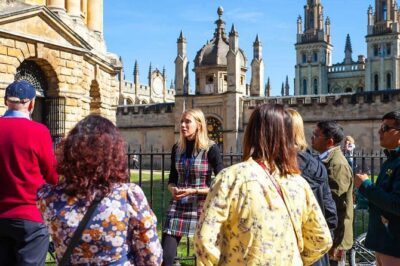
Oxford University Walking Tour With University Alumni Guide
Read our review →
Tour for Muggles The Ultimate Harry Potter Walking Tour in London
Read our review →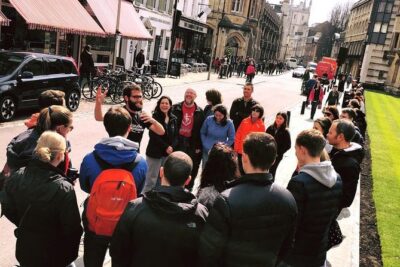
Cambridge University Walking Tour by Alumni™ Kings College Option
Read our review →
Blackbeard to Banksy – The Ultimate Walking Tour of Bristol
Read our review →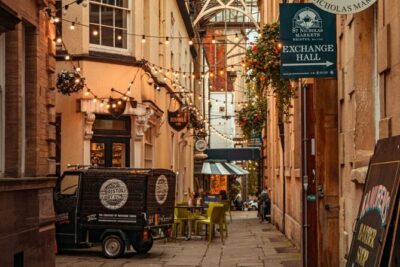
Air Raid Shelter + St. Nicholas Market Walking Tour
Read our review →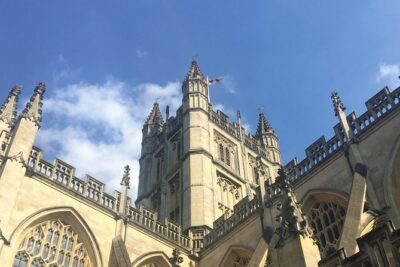
Walking Tour of Bath with Blue Badge Tourist Guide
Read our review →
Changing of the Guard Guided Walking Tour in London
Read our review →
Shadows of York: Ghost Walk and Horrible History.
Read our review →Browse the lists this tour appears in