
Reviewed · BRITISH MUSEUM TOURS
Crash course in archaeology at the British Museum
Time travel, minus the jet lag. This 5.5-hour crash course turns the British Museum into a guided walk through how archaeology changed what we know, from deciphering scripts to telling the stories behind famous finds. It is built around one tight theme, archaeology, and it connects artifacts from Egypt, Assyria, Greece, and Rome to Vikings and Aztecs, all in a morning pace.
I really like two things here. First, the guided storytelling makes objects easier to see and remember, including big-decipherment moments like the Rosetta Stone and the work that unlocked hieroglyphs and cuneiform. Second, the small-group format (up to 25 people) plus a morning start means you get a structured experience and still have the afternoon for your own London plans. One thing to consider: this is not designed to cover every possible highlight of the museum. You are there for focused learning through selected stops, not a see-everything checklist.
In This Review
- Key things to know
- Crash Course Archaeology at the British Museum, what you actually get
- Meeting point at Russell Square and how the day flows
- The guided timeline, from early humans to later Britain
- Egypt focus, Rosetta Stone momentum and hieroglyphs that make sense
- Mesopotamia and Assyria, where cuneiform becomes more than a shape
- Greece and Rome, plus the surprises people usually miss
- Vikings and Aztecs, the big-picture value of one museum view
- What you will not get: not a see-everything museum marathon
- Standing, chairs, and pacing tips that actually help
- Price and value: is $83.34 worth it
- Language, tickets, and practical logistics for your London day
- Should you book this British Museum archaeology crash course?
- FAQ
- How long is the Crash Course in Archaeology at the British Museum?
- What is included in the tour price?
- Is lunch included?
- Where do I meet, and what time does it start?
- Is this tour suitable for most people?
- What group size should I expect?
- Can I cancel and get a full refund?
Key things to know
- A timeline walk across many civilizations, with a story thread that keeps the museum from feeling random
- Decipherment made practical, including Egyptian hieroglyphs and cuneiform, explained through the collection
- The human drama behind discoveries, with archaeology, relic-hunting, and exploration in the mix
- Highlights from Egypt, Assyria, Greece, Rome, Vikings, and Aztecs, tied together instead of shown in isolation
- Morning schedule for a free afternoon, so you can keep your day flexible
- Small group size, with a maximum of 25 and English-only guiding
Crash Course Archaeology at the British Museum, what you actually get
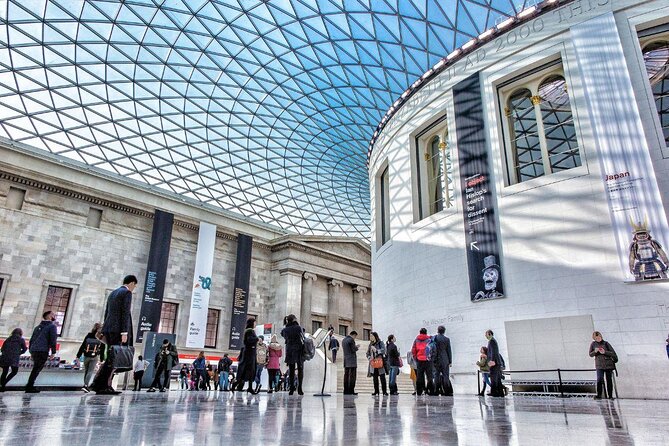
The British Museum can feel like a challenge. Big galleries. Lots of cases. Confusing signage. This tour solves the main problem by giving you a clear route and a narrative, not just a list of famous things to spot.
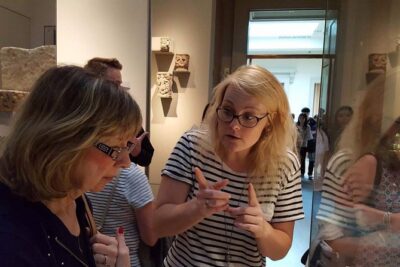
Instead of walking past artifacts with no context, the guide frames what you are seeing in human terms: who made it, who moved it, who found it, and how later scholars figured out what it said or meant. That shift is huge. Even if you already know the Rosetta Stone and the broad outlines of ancient history, you still learn how archaeology turns clues into stories.
This tour also has a very practical rhythm. It is long enough to be satisfying (about 5 hours), but short enough that you are not trapped in museum mode all day. Morning departure also helps. After you finish, you can head out for lunch plans, a riverside walk, or another London neighborhood without feeling like you wasted your whole daylight.
More British Museum tours:
- British Museum London Guided Tour Semi-Private 8ppl Max
★ 5.0 · 984 reviews - The British Museum London – Exclusive Guided Museum Tour
★ 5.0 · 555 reviews - British Museum Guided Tour
★ 4.0 · 470 reviews
Meeting point at Russell Square and how the day flows
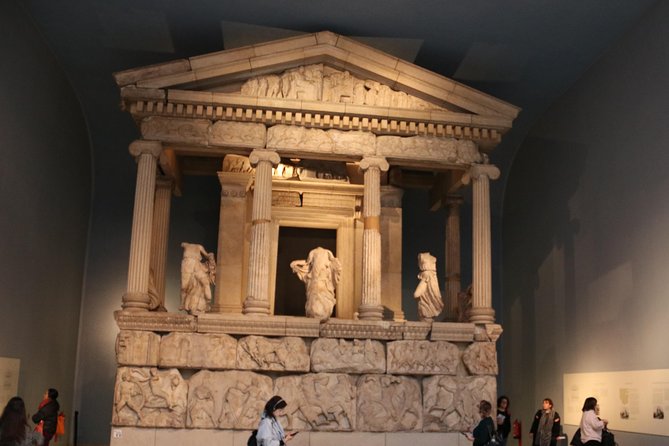
You start at Russell Square, Bernard St, London WC1N 1LJ, with the tour beginning at 9:45am. The tour ends at the British Museum on Great Russell St, London WC1B 3DG.
The ending matters more than you might expect. You are not shuffled off to a meeting point far away. You finish inside the museum area, so if you decide you want to return to a gallery later, you are already in the right zone.
The day runs with breaks built in. People report that it includes time for lunch, plus shorter pauses as you move. One of the most useful things to know is that standing for most of a multi-hour museum walk can be tough. The tour is designed to keep moving, but the museum itself is designed for standing and looking. If your feet complain easily, plan to sit when you can.
The guided timeline, from early humans to later Britain
One reason this “crash course” works is the pacing. You are not stuck in one room listening to a lecture. You hop between galleries across different cultures and eras, while the guide keeps your brain oriented with a chronological story.
From the early stages of human life and tools, the narrative builds toward cities and civilizations, and then continues through major world powers represented in the museum. The effect is like getting a map of time. Once you have that map, you start seeing patterns in how people developed farming, government, religion, war, trade, and writing.
This also explains why the tour mixes regions that are sometimes treated separately. Egyptology gets its moment. Assyria and Mesopotamia get their moment. Classical Greece and Rome get their moment. And then you get the wider frame, including Vikings and Aztecs. The big win is not that you visit more countries. It is that you understand why artifacts in one museum can still tell connected stories about how societies changed.
Egypt focus, Rosetta Stone momentum and hieroglyphs that make sense
If you care about Egyptian history, this tour has the kind of stops that make your eyes widen when the guide points out what is really happening.
Rosetta Stone level decipherment is part of the tour theme. You will see highlights tied to Egyptian pharaohs and the breakthroughs that helped people read hieroglyphs again, not as decoration but as actual writing.
What I like about the approach is that you do not just get a trivia-style explanation. You get the reason behind the knowledge. How do we go from carved symbols in stone to sentences you can read? What kind of detective work lets scholars match scripts to languages and meanings? That is the archaeology story under the museum story.
Even if you already have seen the Rosetta Stone in passing, a guided timeline changes the experience. You start noticing how the museum collection itself is a record of discovery, not only an archive of ancient life.
More museum visits in London:
- Tower of London and Crown Jewels Exhibition Ticket
★ 4.5 · 6,677 reviews - Chelsea FC Stadium Tours and Museum
★ 5.0 · 1,908 reviews - Official tickets: Moco Modern & Contemporary Art Museum
★ 4.5 · 1,157 reviews - The Postal Museum Admission Ticket
★ 4.5 · 347 reviews
Mesopotamia and Assyria, where cuneiform becomes more than a shape
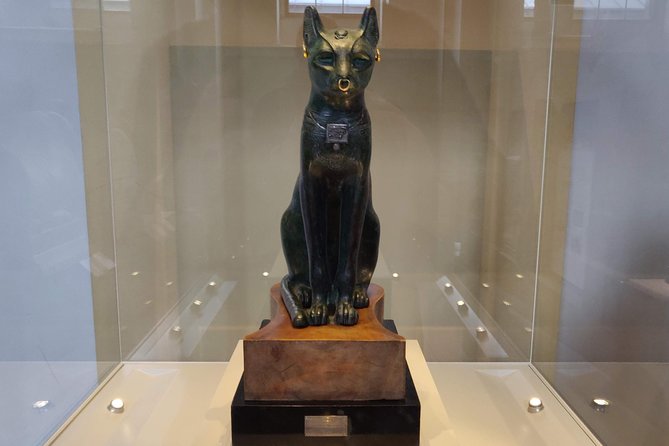
Mesopotamia can feel abstract when you only see tablets under glass. This tour helps with that by connecting the writing system to the people and processes behind it.
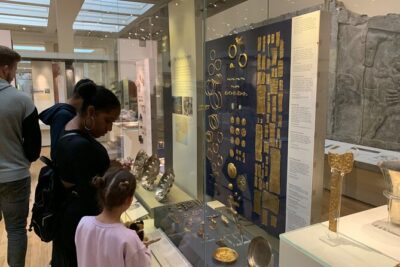
Cuneiform is a central thread. The guide explains how scholars decoded it, and you see how that decoding turned scattered inscriptions into readable evidence. It is one of those topics that sounds technical until it is explained through actual artifacts and clear goals.
Assyria also gets highlighted, and you get that “history of impact” feeling. These were empires that documented themselves loudly. When you stand close enough to see the carving patterns and the scale of the objects, the story becomes more than a textbook chapter.
The tour also touches archaeological work and digs. One standout example in what people mention is Jericho digs and analysis, which helps anchor the idea that archaeology is not only about collecting artifacts. It is also about interpreting layers of human life and figuring out what happened when.
Greece and Rome, plus the surprises people usually miss
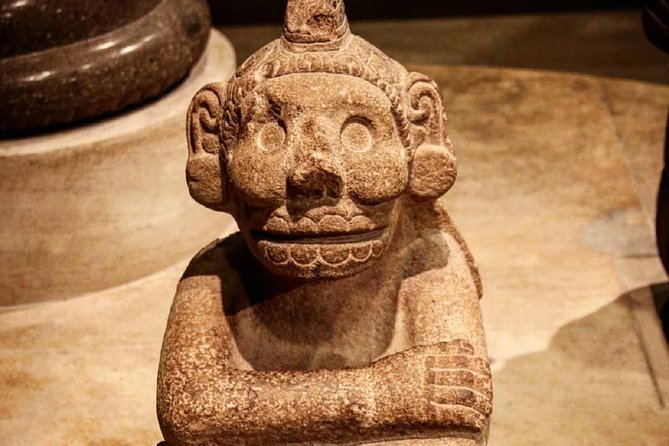
Greece and Rome in the British Museum can be overwhelming because there are so many recognizable names and so many beautiful objects. This tour does something smarter than trying to show everything.
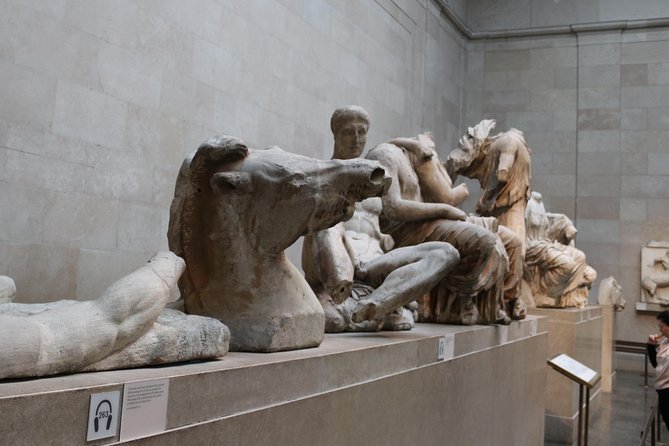
It chooses a few key objects and uses them as anchors for larger themes. The Elgin Marbles show up in the discussion, and so do other classical highlights people specifically mention, like the Lewis chessmen. Those objects tend to become more interesting once you hear the backstory of where they came from and why they matter for understanding daily life, belief, or power.
If you have ever walked past a famous item and felt like you were barely seeing it, this tour is a fix. The guide points out things that you might otherwise miss, like how one detail changes your understanding of a whole artifact.
And the best part is that it stays connected to archaeology itself. You are not only looking at ancient artwork. You are learning how the modern world built the collection and how scholars interpret what they find.
Vikings and Aztecs, the big-picture value of one museum view
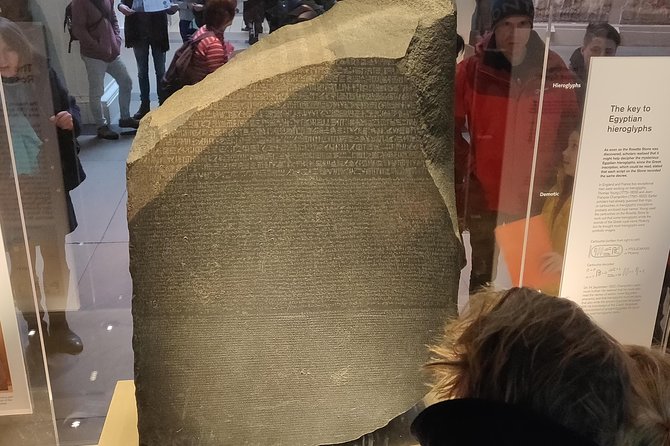
One of the most pleasant surprises is how the tour uses the museum as a bridge across time and place. Vikings and Aztecs are part of the highlights, and those sections help you understand that the museum is not just a Europe-only temple.
The guide ties those artifacts into the same core ideas: how societies record identity, how objects travel, and how later researchers reconstruct meaning from fragments. This prevents the classic problem where you learn separate civilizations as isolated units.
You end up with a broader sense of why archaeology matters. It is not only about the distant past. It is also about how we build knowledge, and how that knowledge can change.
What you will not get: not a see-everything museum marathon
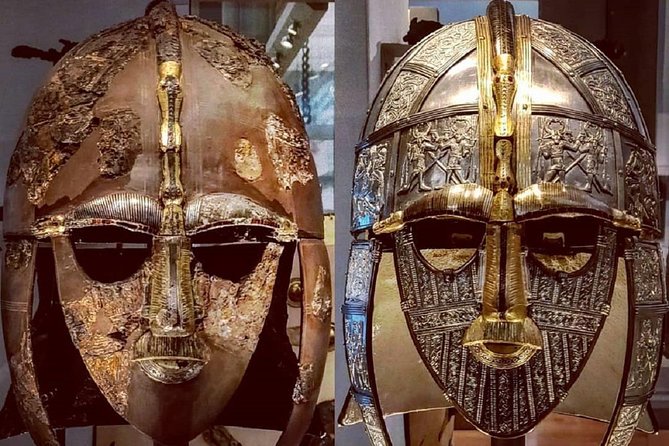
Let me be straight with you. This tour is not for you if your mission is to cover all highlights of the British Museum. Even with a 5.5-hour plan, the museum is massive, and there are endless corners you could spend days exploring.
This is a focused learning experience. You will spend meaningful time at selected stops, and you will get context at those stops. The tradeoff is that you do not walk out having seen everything.
I think that is the right trade for most people. Otherwise you end up racing and absorbing almost nothing. But if you are the type who wants a checklist of every must-see object, plan to visit the museum again on your own later.
Standing, chairs, and pacing tips that actually help
This tour includes breaks, and people describe it as not feeling like a pure slog. Still, you are in a museum environment, and you will likely spend long stretches on your feet while the guide explains objects nearby.
Here are the practical tips that matter:
- Look for the museum’s small folding stools early. People report they helped a lot, especially later in the tour when feet start to feel it.
- If you are sensitive to standing, grab a seat whenever you spot an available stool, even if the explanation feels like it might move on fast.
- Pack simple stamina help. A snack, water, and comfortable shoes go a long way in a 5.5-hour museum schedule.
Lunch is not included, so you need a plan. Bring your own food if you can. One practical tip from experience reports is that the museum’s food options can be limited and pricey, so having your own backup prevents the day from turning into a budget surprise.
Price and value: is $83.34 worth it
At $83.34 per person for about 5.5 hours, you are not paying for a museum ticket. Admission is listed as free, so the real value is the guide.
You are getting a qualified archaeologist guide, and that changes how the collection lands in your brain. When a tour focuses on interpretation, not speed, it is often worth paying more than a basic entry guided walk.
It also helps that the group max is 25. Smaller groups tend to keep the guide attentive and the pace more human, which is key in a place like the British Museum where you can otherwise get lost fast.
If your goal is learning archaeology through real objects, you will likely feel this is good value. If your goal is simply to tick off famous items with minimal explanation, you may decide it is too much structure.
Language, tickets, and practical logistics for your London day
This tour runs in English and uses a mobile ticket. It is also near public transportation, which helps in a city where you can easily waste time walking.
Service animals are allowed, and most people can participate. In other words, this is not an extreme physical activity, but it is still a long indoor walking and standing day.
Booking is recommended about a month in advance on average, so if you have fixed plans for London, secure your slot early. This is especially smart if you want the morning timing, since the afternoon stays open for whatever you feel like doing next.
Should you book this British Museum archaeology crash course?
Book it if you want a guided timeline that makes archaeology understandable through famous objects and the stories behind them. The mix of Egypt, Assyria, Greece, Rome, plus Vikings and Aztecs, is a strong “one museum, many worlds” approach. The Rosetta Stone and script decipherment angle is also a good fit if you like how scholarship works, not just what happened.
Skip it if you mainly want to see every big-ticket highlight without committing to a longer, guided lecture-walk style. This tour is about learning through selected stops, so you will miss out on a lot if your only goal is coverage.
If you are the kind of person who likes to connect dots, this is a great way to start your British Museum visit in the morning and then keep the rest of your day free.
FAQ
How long is the Crash Course in Archaeology at the British Museum?
It runs about 5 hours 30 minutes (approx.), with a 5-hour museum segment noted on the tour summary.
What is included in the tour price?
The tour includes a qualified archaeologist guide. Museum admission is listed as free.
Is lunch included?
No. Lunch is not included.
Where do I meet, and what time does it start?
You meet at Russell Square, Bernard St, London WC1N 1LJ, and the tour starts at 9:45am. It ends at the British Museum on Great Russell St, London WC1B 3DG.
Is this tour suitable for most people?
Most travelers can participate. The tour runs with a walking and standing format, so comfortable shoes help.
What group size should I expect?
The tour has a maximum of 25 travelers.
Can I cancel and get a full refund?
Yes, you can cancel for a full refund if you cancel at least 24 hours before the experience’s start time. Free cancellation is available.
Recently added around London
- eSIM for UK (34 EU countries) | 3 to 30 days. Up to 40GB of data★ 4.0 · 18 reviews
- Layover Tour of London from LHR Executive Luxurious Vehicle Private Tour 6 hour★ 4.5 · 9 reviews
- York Day Rail Tour from London Including Hop-on Hop-off Tour★ 3.0 · 3 reviews
- Working Women of the East End Walking Tour★ 5.0 · 85 reviews
- London with a Local (Historical)★ 5.0 · 3 reviews
- Pub & History Tour London (History & Beers)★ 5.0 · 3 reviews
- Wonderful Windsor Black Taxi Tour London★ 5.0 · 12 reviews
- Women of Whitechapel 2 hour Walking Tour★ 5.0 · 15 reviews
British Museum Tours, compared.
British Museum London Guided Tour Semi-Private 8ppl Max
Read our review →
The British Museum London – Exclusive Guided Museum Tour
Read our review →
Private Guided Tour of the British Museum – Tickets Included
Read our review →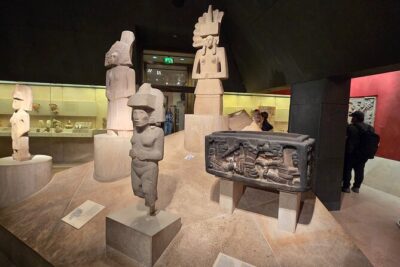
British Museum Guided Tour with Priority Timeslots(Small Group)
Read our review →
British Museum & National Gallery of London Semi-Private 8ppl Max
Read our review →
Explore Biblical Artifacts at the British Museum
Read our review →
British Museum Highlights Private Tour in London including the Rosetta Stone
Read our review →Browse the lists this tour appears in