
Reviewed · WALKING TOURS
Crime and Policing London Walking Tour
London policing history gets personal fast. This walking tour connects famous landmarks to the way law enforcement grew in the city, with stories from a former police officer and a route that stays close to the big-name sights. You’ll cover Bow Street, Scotland Yard, and the surrounding areas that shaped how London handled crime.
I love the mix of real locations and practical police background. You’ll also get the chance to examine historic police regalia, which turns the stories from spooky to tangible.
One drawback to consider: this tour leans into murder, mayhem, and unsolved cases. If you want a light, funny sightseeing stroll only, you may feel the tone gets heavy at times.
In This Review
- Key highlights at a glance
- How crime and policing tells London’s real story
- Price and what you get for $48.61
- Meeting at Covent Garden and finishing near Westminster
- Bow Street: the policing engine that started it all
- Aldwych: the unsolved murder thread and the espionage angle
- Charing Cross and the Blue Lamp: busiest station energy
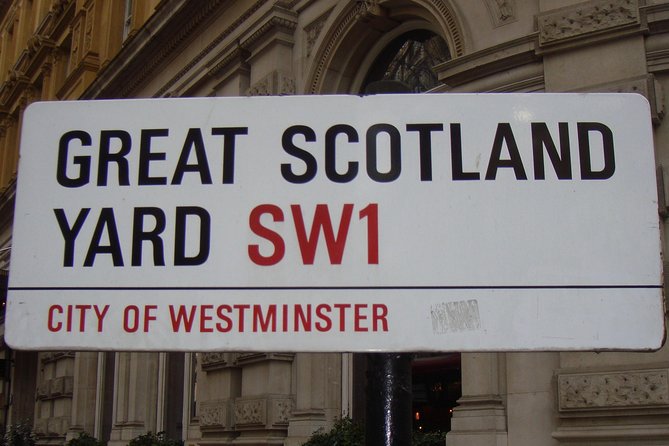
- Northumberland Avenue to Great Scotland Yard: Sherlock, then the origin HQ
- Trafalgar Square: protests, celebrations, and a tiny watch
- Whitehall: women in policing and wartime enforcement
- Great Scotland Yard and the Metropolitan Police revolving sign
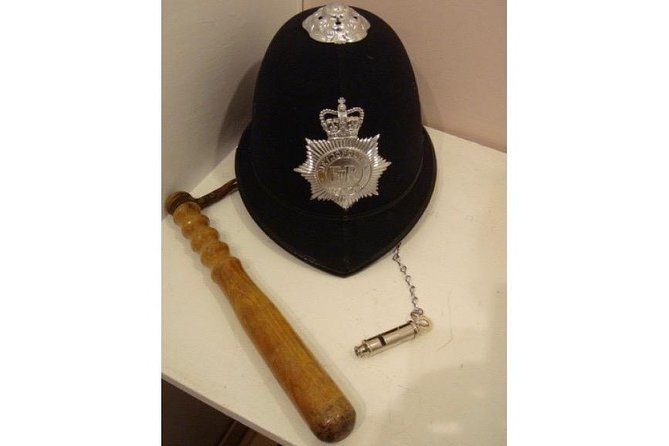
- What the hands-on police regalia adds
- Stories you’ll actually be able to use later
- Who should book this tour, and who might not love it
- Should you book Crime and Policing London Walking Tour
- FAQ
- How long is the London Crime and Policing Walking Tour?
- How much does the tour cost?
- Where does the tour start and where does it end?
- Is there a mobile ticket?
- Are the stops free to enter?
- What kind of walking pace should I expect?
- Do I need to tip the guide?
Key highlights at a glance
- Small group, gentle pace: up to 20 people, designed for an easy walk with breaks as needed
- Former police officer storytelling: insider perspective on how policing worked in London
- Free to enter the stops: each listed stop is marked as free admission
- Scotland Yard focus: you’ll see key policing landmarks across central London
- Arthur Conan Doyle and Sherlock Holmes Pub: a fun literary stop inside the crime theme
- Historic police regalia: kit and equipment includes hands-on items to look at during the tour
How crime and policing tells London’s real story
London crime stories are easy to turn into theatre. This tour aims for something closer to how the system actually operated. You’re not just looking at plaques. You’re walking the corridors where magistrates, police work, and public order intersected.
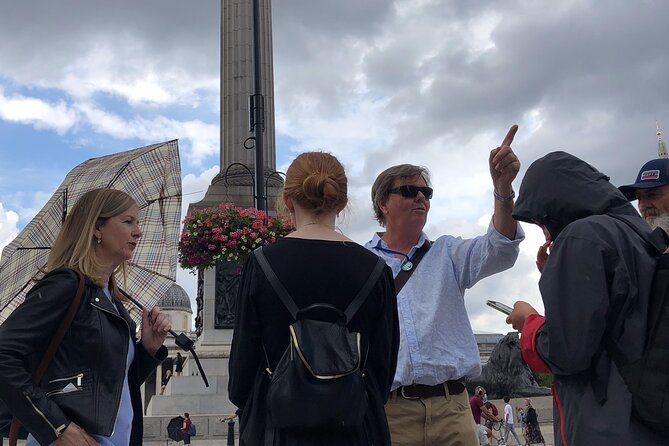
What makes the experience feel different is the guide background. The tour is led by Francis Mullan, and the overall concept is built around insider stories about police work and history in London. That practical angle helps you make sense of why specific places mattered, not just when famous cases hit the headlines.
And yes, the theme is crime. But it’s also about institutions and everyday enforcement, from early policing to later structures near Great Scotland Yard and the Metropolitan Police.
More Walking Tours in London
- Tour for Muggles The Ultimate Harry Potter Walking Tour in London
★ 5.0 · 4,684 reviews - Changing of the Guard Guided Walking Tour in London
★ 5.0 · 1,793 reviews - The Great British Rock and Roll Walking Tour
★ 5.0 · 1,371 reviews
Price and what you get for $48.61
At $48.61 per person for about 2 hours and 15 minutes, you’re paying for more than a route map. You’re paying for a real guided thread from place to place, plus the guide’s first-hand framing of how policing evolved.
The value gets stronger because the stops are listed as free to enter. You’re not stacking extra admission costs on top of the ticket. You also get kit and equipment time, with the chance to examine real historic items of police regalia, which most standard walking tours do not include.
Finally, you’re in a group capped at 20 people. A smaller group usually means you can ask questions and actually get answers that fit the way you’re thinking about the city.
Meeting at Covent Garden and finishing near Westminster
The tour starts in Covent Garden at Long Acre, near Underground. That location matters because it makes the beginning easy to reach, and you can arrive by Tube without stress.
The tour ends at 35 Victoria Embankment at New Scotland Yard, a short walk from Westminster Underground. This is a smart finish if you plan to keep sightseeing after the walk, since you land near many places people already want to see.
The pace is a gentle walking pace, and comfortable footwear is recommended. Refreshment and toilet stops are available if required, which helps a lot for a 2 plus hour route. It’s also offered in English, and the tour uses a mobile ticket.
Bow Street: the policing engine that started it all
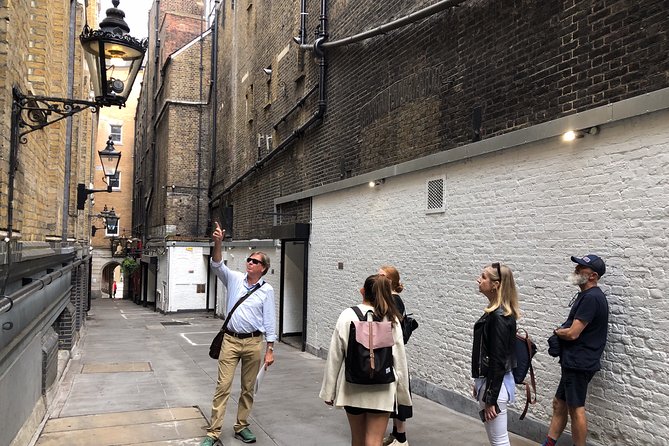
Stop 1 is Bow Street, where you’ll see the police station and Magistrates Court. This is presented as the heart of where policing was introduced, and it’s tied to the famous Bow Street Runners.
Why this stop is worth your attention: it anchors the story in early enforcement. Modern London feels like it grew in layers, and Bow Street is where you can point to the early “how it began” moment. The Magistrates Court angle also adds context, because policing is not only street patrol. It’s also paperwork, authority, and the chain that turns reports into decisions.
This stop is short, about 10 minutes, with free admission. That means you’ll want to listen closely and then use nearby sidewalks to absorb what the guide is connecting.
Same part of England, a different sort of day out:
- Stonehenge, Windsor Castle, and Bath from London
★ 4.5 · 18,662 reviews - London Big Bus Hop-On Hop-Off Tour with Optional River Cruise
★ 3.5 · 10,803 reviews - London Small Group Tour of Historical Pubs
★ 5.0 · 10,422 reviews - Stonehenge, Windsor Castle and Bath with Pub Lunch in Lacock
★ 4.5 · 7,402 reviews
Aldwych: the unsolved murder thread and the espionage angle
Stop 2 takes you to the Aldwych area. Here, the focus is on one of the saddest unsolved murders in London, paired with talk about international espionage and murder.
This is the moment where the tour’s tone can shift. Rather than just showing you a famous viewpoint, the guide is steering you toward a case that still carries weight. For me, that’s where a crime tour feels more grown-up than a simple “spooky facts” walk. It’s about how cities deal with the unanswered.
It’s also a useful contrast to Bow Street. You go from the beginnings of policing to the messy reality of investigations that do not end neatly. Even if you know the overall genre of London crime stories, the Aldwych framing helps you see how political pressures and international connections could mingle with local violence.
Plan for about 10 minutes here, again with free admission.
Charing Cross and the Blue Lamp: busiest station energy
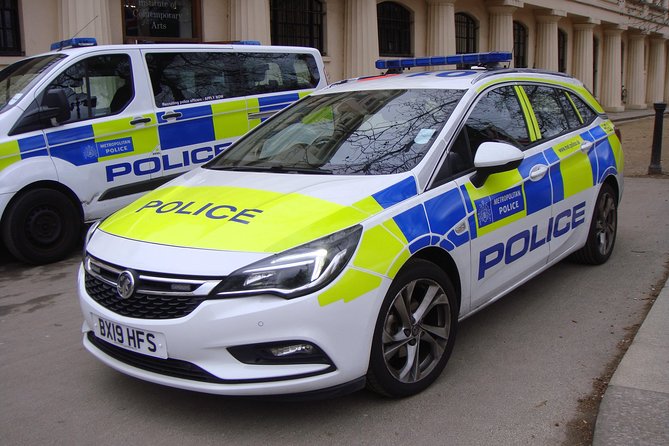
Stop 3 is at Charing Cross, and it’s built around tales of grisly murder and mayhem. You’ll also see one of the busiest police stations in Europe and learn about the famous Blue Lamp of London.
This stop works because it connects two things: the myth and the machine. The Blue Lamp is the cultural symbol people associate with policing. The busy station is the reality of policing at scale.
Charing Cross is also a good “navigation checkpoint” in the route. By this point, you’ve heard enough background to understand why the guide keeps steering you toward police spaces, not just monuments. The 10 minute length means you’ll get the key points quickly and then move on while the story is still fresh.
Northumberland Avenue to Great Scotland Yard: Sherlock, then the origin HQ
Stop 4 gives you a breather. You’ll stop for a drink at the famous Sherlock Holmes Pub, linked to Arthur Conan Doyle.
This isn’t just a themed pit stop. It helps you reset your brain so you can handle the next stretch with better attention. Literary crime matters in London because it shaped what people expect policing to look and feel like. The guide then pivots from that cultural layer into the real policing layer by crossing toward Great Scotland Yard.
Great Scotland Yard is described as where policing was invented. That’s a big claim in spirit, and it’s exactly why the guide brings you there right after the Holmes stop. You get the story of how policing became a system, then you get a reminder of how fiction turned that system into recognizable imagery.
Stop 4 is about 20 minutes, with free admission at the listed stops.
Trafalgar Square: protests, celebrations, and a tiny watch
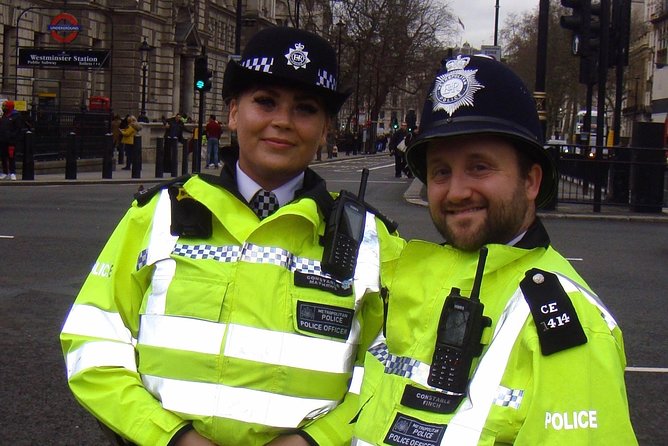
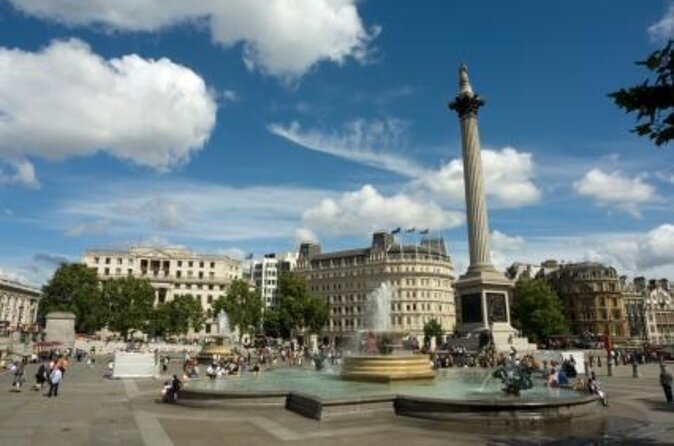
Stop 5 is Trafalgar Square, where national celebrations, demonstrations, and riots have happened under the watchful eye of the world’s smallest police station.
This is a smart inclusion because it shows policing in a public square, not just in offices. Trafalgar Square is a place people feel they can control through crowds. The tour reframes that by focusing on how order gets managed when the city turns into a stage.
The world’s smallest police station detail is the kind of nugget that makes you look around differently after the guide points it out. Even if you’ve visited Trafalgar Square before, this stops you from treating it like a backdrop.
Expect about 10 minutes, free admission.
Whitehall: women in policing and wartime enforcement
Stop 6 is in Whitehall, at the heart of government near Downing Street. The tour here highlights the role of women in policing and the police in wartime London.
This stop adds a deeper social angle to the theme. Crime history often gets framed as men, uniforms, and classic casework. The women in policing thread broadens the story and puts real human roles on the timeline.
The wartime mention also changes how you think about policing during stress. In wartime, safety, intelligence, and enforcement shift quickly. Even if your main interest is crime stories, this portion helps you understand why policing was not one fixed thing in London.
Again, it’s short, about 10 minutes, with free admission.
Great Scotland Yard and the Metropolitan Police revolving sign
Stop 7 returns you to the broader Great Scotland Yard area, described as seeing where London Police was created and the first police HQ. It’s another 10 minute stop with free admission, so you’re not meant to memorize everything. You’re meant to connect the dots.
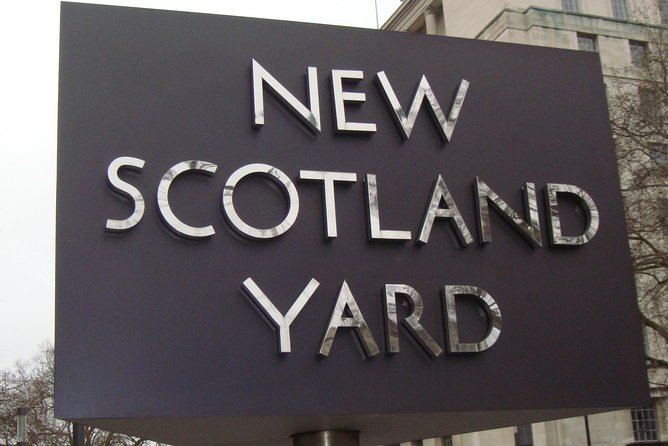
Stop 8 is Metropolitan Police, where you’ll see the iconic revolving sign. This is the part of the tour where the city’s branding meets its enforcement story.
The revolving sign is memorable because it’s visible. You don’t need special access to know what it is. But the guide’s job is to help you connect that object to the history you’ve been building for the last stretch.
If you’re the type who loves “show me why this matters,” this ending does that well. By the time you reach the final stop, you’ve been walking through the geography of authority, so the revolving sign doesn’t feel like a prop. It feels like a landmark with a job.
What the hands-on police regalia adds
One of the more practical elements is included in the tour: kit and equipment, with the opportunity to examine real historic police regalia.
You don’t get that on most walking tours. And even when it’s only a brief window, it changes how you remember the guide’s stories. Words about rank, uniforms, and policing practices become more concrete when you can look at the items themselves.
If you’re a museum type, this is the closest thing in a walking format to that same “seeing it in front of you” moment. If you’re more of a casual sightseer, you’ll still get something useful because it helps you picture the people behind the history.
Stories you’ll actually be able to use later
A crime and policing tour can go one of two ways: facts piled on facts, or an experience that helps you read the city. This one aims for the second.
The guide offers insider stories about police work and London’s policing history. The tour also brings in both historical cases and cold-case style angles, so you’re not only hearing about what made the newspapers long ago.
I like that the guide runs at a pace that gives you time to absorb without feeling rushed. The route is designed as a gentle walk, which matters when you’re trying to keep track of names, institutions, and how one site relates to another.
It also ends near major sightseeing, so you can keep the story going in your own time.
Who should book this tour, and who might not love it
This is a great fit if you:
- enjoy London history that goes beyond the usual postcard stops
- like crime stories grounded in real institutions
- want a small group walk with a guide who can answer questions
- are curious about how policing in London evolved over time
It may be less ideal if you:
- want only cheerful sightseeing and quick photos
- get uncomfortable with murder and unsolved case themes
- prefer a purely architectural tour with less story-driven content
Should you book Crime and Policing London Walking Tour
Book it if you want a walking tour that feels like street-level history, not just a set of photo stops. The $48.61 price feels fair for the mix of central locations, free admission at the stops, the chance to examine real police regalia, and a guide who brings firsthand police context.
I’d especially recommend it for first-timers who feel overwhelmed by London’s size. This route is tight, the sights are iconic, and the stories give you a mental map that stays with you after the walk.
If the crime theme sounds intense, you can still do the tour with a smart expectation. It’s not a gore-fest. It’s a look at policing, institutions, and the cases that shaped how London handled public safety.
FAQ
How long is the London Crime and Policing Walking Tour?
The tour runs for about 2 hours and 15 minutes.
How much does the tour cost?
The price is $48.61 per person.
Where does the tour start and where does it end?
It starts at Covent Garden Underground Ltd, Long Acre, London WC2E 9JT. It ends at 35 Victoria Embankment, London SW1A 2JH, near Westminster Underground Station.
Is there a mobile ticket?
Yes, the tour provides a mobile ticket.
Are the stops free to enter?
The listed stops are marked as free admission.
What kind of walking pace should I expect?
It is a walking tour at a gentle pace. Comfortable footwear is recommended, and refreshment and toilet stops will be available if required.
Do I need to tip the guide?
Gratuities are not included. You are welcome to tip the guide.
Recently added around London
- Stonehenge Private Tour★ 5.0 · 4 reviews
- Private Transfers From Heathrow Airport to Central London★ 5.0 · 8 reviews
- Professional Private Couple Photoshoot★ 5.0 · 35 reviews
- Private transfer to Southampton with a stop at Stonehenge★ 4.5 · 33 reviews
- Private transfer from London Heathrow Airport to Southampton★ 5.0 · 3 reviews
- Private London Panoramic Tour by Car with Pick Up From Your Hotel★ 5.0 · 13 reviews
- Private Transfer Any London Hotel to Southampton Cruise Port★ 5.0 · 7 reviews
- Private driver tours to Leeds Castle, Canterbury, White Cliffs★ 4.5 · 30 reviews
Walking Tours, compared.

Oxford University Walking Tour With University Alumni Guide
Read our review →
Tour for Muggles The Ultimate Harry Potter Walking Tour in London
Read our review →
Cambridge University Walking Tour by Alumni™ Kings College Option
Read our review →
Blackbeard to Banksy – The Ultimate Walking Tour of Bristol
Read our review →
Air Raid Shelter + St. Nicholas Market Walking Tour
Read our review →
Walking Tour of Bath with Blue Badge Tourist Guide
Read our review →
Changing of the Guard Guided Walking Tour in London
Read our review →
Shadows of York: Ghost Walk and Horrible History.
Read our review →Browse the lists this tour appears in