
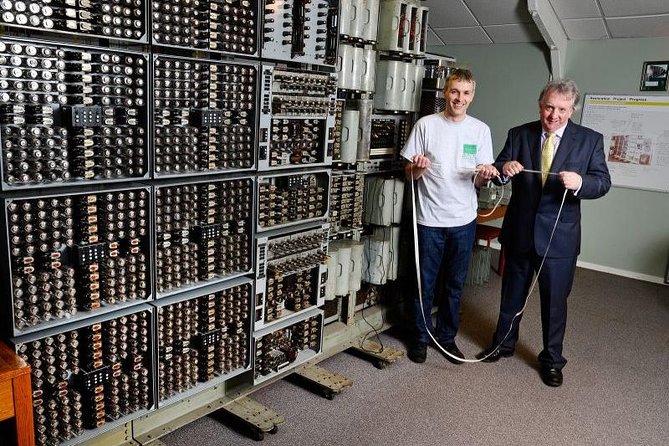
Reviewed · ENGLAND
Day Entry Ticket
This is a compact day out with big-brain payoff: step into the National Museum of Computing and trace how computers evolved from WWII breakthroughs to today’s digital life. The museum is known for its working historic computers, plus the practical perk of pre-booked skip-the-line entry.
I love the way this museum connects names you might know, like Enigma and Colossus, to machines you can actually see operating. I also like that you can tailor your pace, from a focused 2-hour visit to a longer session of demos, exhibits, and old-school computer play.
One thing to watch: this ticket is for the National Museum of Computing, a separate museum site from Bletchley Park even though both sit in the same broader area. If you were hoping for Bletchley Park itself, read carefully before you book.
In This Review
- Key points before you go
- Why this museum deserves your time in Milton Keynes
- Skip-the-line entry, mobile ticket, and getting there without stress
- Your 2 to 6 hour route through the computer timeline
- Stop 1: The National Museum of Computing
- The WWII machines section, Bombe and Colossus in motion
- From mainframes to retro games, and why the ending feels personal
- Staff support and talks that make the machines easier to grasp
- Don’t mix it up with Bletchley Park, the ticket is for TNMOC
- Price and value for a $20.83 ticket
- Practical planning tips that make the visit smoother
- Who should book this entry ticket
- Should you book this tour?
- FAQ
- How long does the National Museum of Computing visit last?
- Is the ticket a mobile ticket, or will I need to print anything?
- What language is the experience offered in?
- What is the main highlight of the National Museum of Computing?
- When is the museum open?
- Is there a cafe or places to sit?
- Are sensory maps available?
- Are service animals allowed?
- What is the cancellation policy?
- Is this ticket for Bletchley Park itself?
Key points before you go
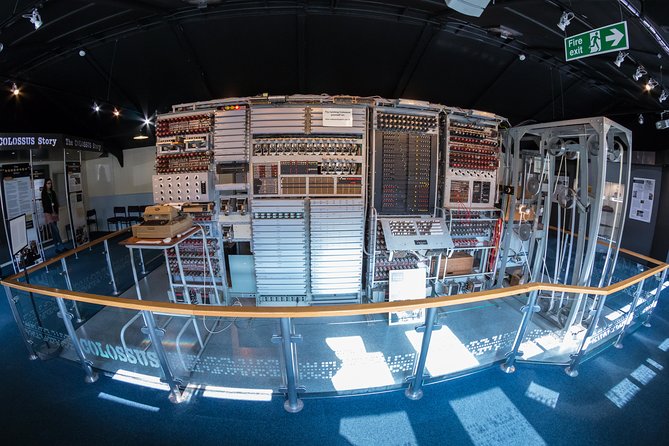
- Working machines in motion: see major historic computer systems demonstrated
- WWII to internet timeline: wartime codebreaking tech to personal computing and mobile life
- Easy logistics for arrival: mobile ticket and skip-the-line entry
- Good for tech fans and history fans: WWII story meets engineering detail
- Practical on-site breaks: cafe for light refreshments plus outside seating
- Help for different needs: sensory maps available and service animals allowed
Why this museum deserves your time in Milton Keynes
If you like history, this museum explains why the 1940s mattered. If you like technology, it shows how ideas turn into working systems. Either way, you get more than static displays. A big reason people plan time here is the museum’s world-class claim to fame: it hosts the world’s largest collection of working historic computers.
What I find especially useful is that the museum is laid out like a timeline you can follow. You start with the WWII-era machines and codebreaking systems, then move forward through large systems and mainframes, and finally land in personal computing, retro games, and modern mobile and internet concepts.
This is also the kind of place that works for groups and schools, not just solo visitors. So the experience is built to be understood, not just looked at.
A few more England days worth comparing
- Tower of London and Crown Jewels Exhibition Ticket
★ 4.5 · 6,677 reviews - Thorpe Park Admission Ticket
★ 4.0 · 5,915 reviews - Alton Towers Resort 1 Day Admission Ticket
★ 3.5 · 5,501 reviews
Skip-the-line entry, mobile ticket, and getting there without stress
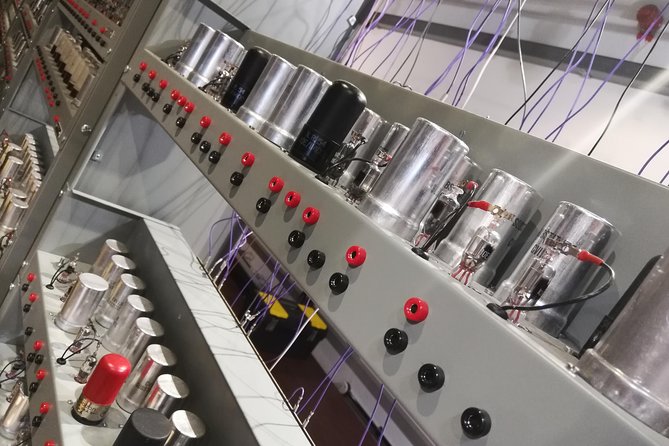
You’re paying for something simple that saves time: a pre-booked ticket that supports a skip-the-line arrival. The payoff is mostly mental. You spend less effort figuring out where to queue and more time walking into the exhibits at your own pace.
The ticket is a mobile ticket, and the museum is near public transportation. That matters if you are pairing this stop with other plans around the Bletchley Park area. When schedules are tight, being able to show your ticket quickly at the entrance helps.
Plan for a visit window that matches the opening hours. The museum lists hours for Tuesdays as 10:30 AM to 5:00 PM. If your itinerary is built around a different day of the week, double-check the exact hours for that specific date.
Your 2 to 6 hour route through the computer timeline
This entry experience runs about 2 to 6 hours depending on how deep you go. If you want a lighter visit, focus on the wartime machines and then skim the later computing sections. If you’re a serious history-and-tech fan, you’ll likely want more time for demos and the game area.
Because the museum centers on working systems and displays, the rhythm of your visit is less about reading every label and more about watching, asking questions, and moving between exhibit rooms. Expect a clear “then and now” flow, from WWII machines to later mainframes, and on to retro computing.
Stop 1: The National Museum of Computing
The museum’s main storyline is computing development, presented as an exhibit walk-through with recognizable milestones.
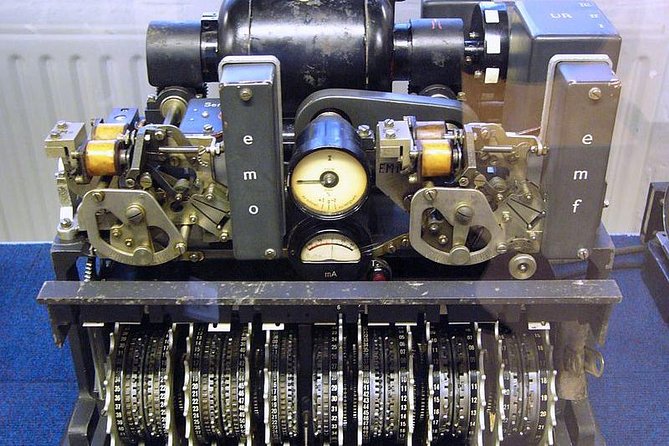
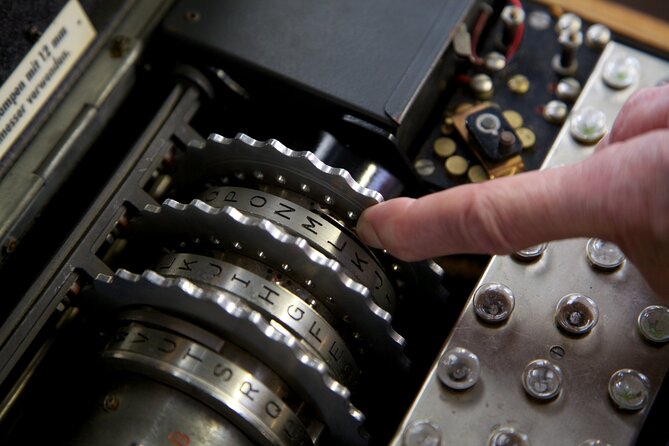
It starts with WWII and codebreaking systems. You’ll encounter machines and projects connected to:
- the Turing-Welchman Bombe
- Enigma
- Lorenz
- Colossus
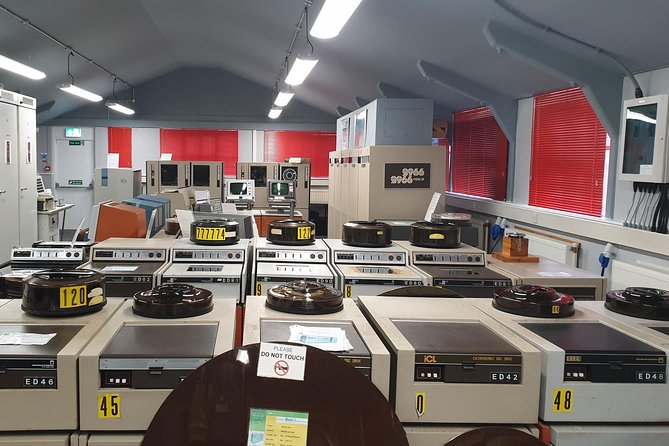
Then the museum continues forward into the era of big machines: large systems and mainframes spanning the 1950s, 60s, and 70s. After that, it moves into the rise of personal computing, retro games, and finally the internet and mobile computing.
What makes this route feel satisfying is that it doesn’t treat computers as magic boxes. It shows gradual improvements, shifting use cases, and how the technology kept finding new roles.
A practical tip: give yourself a buffer. The museum can be more absorbing than you expect, especially if you stop to watch demonstrations more than once.
Same part of England, a different sort of day out:
- Stonehenge, Windsor Castle, and Bath from London
★ 4.5 · 18,662 reviews - London Big Bus Hop-On Hop-Off Tour with Optional River Cruise
★ 3.5 · 10,803 reviews - London Small Group Tour of Historical Pubs
★ 5.0 · 10,422 reviews - Beatles Magical Mystery Tour
★ 5.0 · 9,266 reviews
The WWII machines section, Bombe and Colossus in motion
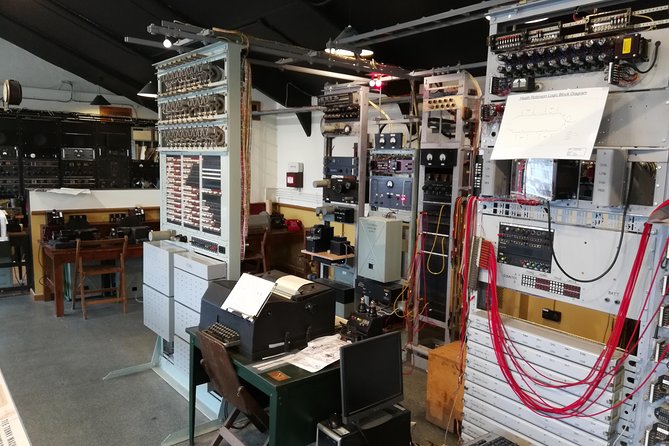
This is the part that tends to stick with people, and it’s easy to see why. The museum highlights WWII-era breakthroughs and gives visitors the chance to see rebuilt systems running.
If you’re into the story of codebreaking, you’ll likely spend extra time here. The rebuilt Bombe and Colossus machines are the kind of exhibits you can’t fully appreciate from photos. Seeing how they operate, at their real scale and with real mechanisms, helps you understand why this was such a monumental engineering task.
Even if WWII history is not your main interest, this section works because it links people, ideas, and engineering constraints. You’re not just learning trivia. You’re seeing the evolution of a machine made to solve a hard problem.
One more thing I like: this era sets the tone for the rest of the museum. After you’ve seen wartime problem-solving at work, the later computing rooms feel like a natural continuation rather than a separate topic.
From mainframes to retro games, and why the ending feels personal
After the WWII segment, the museum shifts gears. You move from special-purpose historic systems into the broader story of computing systems, including large-scale mainframes from the mid-century decades.
Then it gets more approachable in a fun way. The museum includes sections tied to personal computing and retro games, and it also connects those themes to later developments like mobile computing and the internet.
What this means for you as a visitor is choice. If you prefer engineering, lean into the technical evolution and larger systems. If you want a lighter end to the visit, spend time in the game area and treat the exhibits as a bridge between earlier machines and what you use today.
A simple strategy that works: watch the demonstrations in the earlier rooms, then use the retro and games area as your decompression zone. You’ll leave feeling like you understood the whole journey, not just one chapter.
Staff support and talks that make the machines easier to grasp
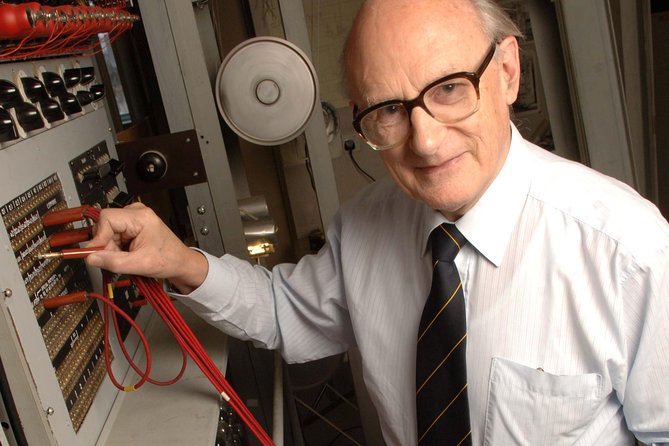
One of the most consistently praised parts of the experience is how the staff explains things. People come away saying the team is friendly and patient, and that they take time to help you understand what you’re seeing.
That matters because this is a museum where the labels can only do so much. Historic computers can look intimidating if you are not sure what to focus on. When staff talks are clear, you can turn confusion into curiosity fast.
You should also expect demonstrations to be part of the rhythm. The museum’s identity is tied to working machines. So if you catch a talk when you’re in the right room, it’s usually worth staying for it, even if you think you already know the basics.
Don’t mix it up with Bletchley Park, the ticket is for TNMOC
Here’s the one travel snag that can really hurt your day: this museum ticket is for the National Museum of Computing. It’s on the Bletchley Park site area, but it is separate from Bletchley Park itself.
If you booked expecting Bletchley Park exhibits, you might end up paying again at the door for the other site. The lesson is simple. Before you go, verify you are buying the correct museum entry for the experience you want, and read the confirmation so you know which site your ticket covers.
If you are doing both in one day, the good news is that they pair well. Many visitors like the contrast: Bletchley Park focuses on the wartime site story, while the National Museum of Computing turns the spotlight on the machines and the broader history of computing development.
Price and value for a $20.83 ticket
At $20.83 per person, the cost is reasonable for what you’re getting. You’re not paying just for a room of static exhibits. You’re paying for access to a working collection and for the chance to see historic machines in operation.
The value equation improves if you go in with realistic expectations:
- You’re investing time, not just money.
- You’ll get more out of it if you like questions and explanations.
- You’ll likely appreciate the wartime and mainframe story even if you only understand parts of it at first.
It also helps that the visit can fit different schedules. A 2-hour plan can work if you focus tightly. A 4 to 6 hour plan works if you want more demos and time with the later computing sections.
Practical planning tips that make the visit smoother
A few details from the museum setup make a difference when you plan your day.
- Bring comfort time: there’s a cafe for light refreshments and outside seating if the weather cooperates.
- Use sensory tools: sensory maps are available, which can help you plan a route that feels manageable.
- Plan for language: the experience is offered in English, so plan accordingly if that’s not your comfort zone.
- Service animals are allowed: if you rely on one, you can go without worry.
- Most travelers can participate: the museum is designed for a broad range of visitors.
If you are combining this with other stops nearby, give yourself a little slack. The museum’s working exhibits tend to pull you in.
Who should book this entry ticket
This museum entry is a strong fit if you:
- love WWII history and want the engineering side of the story
- enjoy technology and want to see historic computing systems in motion
- want a family-friendly but still serious tech/history outing
- like a structured timeline that takes you from the 1940s to modern computing
It may feel like too much if you want a purely casual stroll with very light reading. But if you can enjoy watching machines and following a clear story arc, you’ll probably have a good time.
Should you book this tour?
Yes, if you want a high-value, hands-on museum experience focused on working computers and the evolution of computing. The skip-the-line approach is a plus, especially if you’re doing multiple stops in the same day.
Maybe double-check your expectations if you were specifically planning to visit Bletchley Park itself. This entry is for the National Museum of Computing, a separate museum experience. If you want both, plan them as two separate pieces of your itinerary so you do not get surprised by ticket coverage.
FAQ
How long does the National Museum of Computing visit last?
The experience duration is listed as about 2 to 6 hours.
Is the ticket a mobile ticket, or will I need to print anything?
The ticket is provided as a mobile ticket.
What language is the experience offered in?
The experience is offered in English.
What is the main highlight of the National Museum of Computing?
It is home to the world’s largest collection of working historic computers, covering developments from WWII-era systems through later computing eras.
When is the museum open?
The listed opening hours show Tuesday hours from 10:30 AM to 5:00 PM.
Is there a cafe or places to sit?
Yes. There is a cafe for light refreshments, and the site has outside seating.
Are sensory maps available?
Yes, sensory maps are available.
Are service animals allowed?
Yes, service animals are allowed.
What is the cancellation policy?
You can cancel for free up to 24 hours in advance for a full refund.
Is this ticket for Bletchley Park itself?
This entry is for the National Museum of Computing, which is separate from Bletchley Park even though both are in the wider Bletchley Park area.
Recently added around England
- Horse drawn carriage ride york★ 5.0 · 75 reviews
- Yorkshire Dales Tour App, Hidden Gems Game and Big Britain Quiz (7 Day Pass) UK★ 3.5 · 3 reviews
- Private Tour – Yorkshire Dales Day Trip from York★ 5.0 · 13 reviews
- Luxury Private Yorkshire Dales National Park Tour★ 5.0 · 12 reviews
- The Treasures of Bloodaxe – A Fun Viking Treasure Hunt in York★ 4.5 · 21 reviews
- The Yorkshire Dales of All Creatures Great & Small★ 5.0 · 109 reviews
- York 3-Hour Photography Walking Tour★ 5.0 · 9 reviews
- Welcome to York – The Royal Route★ 5.0 · 6 reviews