
Reviewed · OXFORD TOURS
Follow the Money Tour – by Uncomfortable Oxford™
Oxford has a money trail, if you look. This 1.5 hour walking tour turns familiar college names into a living question about who paid and what that means. You’ll pause at six spots across central Oxford and talk through the controversies tied to major donations.
I especially like the way the tour mixes big institutions with everyday places, like Middle Fisher Row Gardens and a former workhouse site at Wellington Square. I also like the discussion format, where the guide shares researched details and then asks you to react as a group, not just listen.
One possible drawback: the tour leans into controversial funding and asks moral questions. If you want a light highlights walk with zero debate, this may feel heavy.
In This Review
- Key tour points at a glance
- Following the money in Oxford, where the questions walk with you
- Price and value: is $89.12 a good deal for 90 minutes?
- Getting set up: where you start and where the route ends
- The full itinerary, stop by stop, and what each one is really for
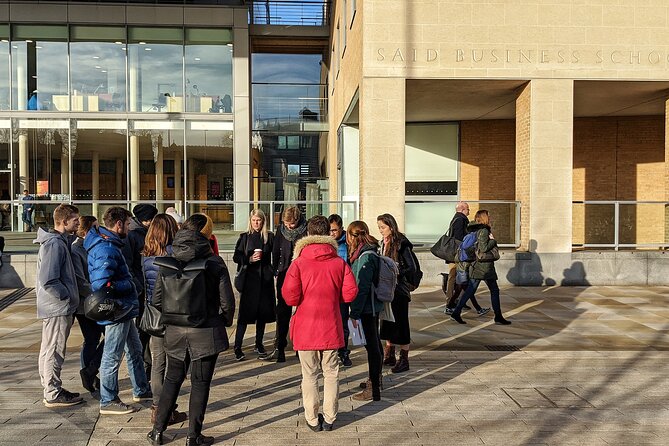
- Stop 1: Saïd Business School, and the controversy behind Wafiq Said
- Stop 2: Middle Fisher Row Gardens, where the Oxford housing crisis enters the conversation
- Stop 3: Nuffield College, Lord Nuffield and the question of memory
- Stop 4: Bodleian Art, Archaeology and Ancient World Library, and the Sackler name
- Stop 5: Wellington Square, the peaceful garden that used to be an Oxford Workhouse
- Stop 6: Blavatnik School of Government, and the newer promise of Schwarzman
- What makes the tour stand out: discussion, not lecturing
- Who this tour is best for (and who should skip it)
- The practical plan: timing, pace, and how to get the most out of it
- Should you book Follow the Money Tour?
- FAQ
- What is the duration of the Follow the Money Tour?
- Where does the tour start and end?
- How much does it cost?
- Is the tour offered in English?
- Is there a group size limit?
- Do I need an admission ticket for the stops?
- How do I get the ticket?
- Can I cancel for a full refund?
- Is the tour accessible for everyone?
Key tour points at a glance
- Small group size (max 15): You get enough time to ask questions and react during the stops.
- Six stops in about 90 minutes: It’s fast enough to fit your day, but still structured for real discussion.
- Named-building controversies: The route spotlights Saïd, Sackler, Nuffield, Blavatnik, and Stephen A. Schwarzman.
- Green space and civic context: You’re not only looking at colleges, you also talk about housing and the workhouse legacy.
- Free admission tickets at each stop: The tour includes tickets where applicable, so you spend less mental energy on entry rules.
Following the money in Oxford, where the questions walk with you
Oxford is famous for tradition. This tour uses that fame as the starting point, then nudges you toward the less comfortable parts: how institutions get funded, how names get attached to buildings, and how the city handles that history once it’s in public space.
The best part is the tone. The guide does not try to steamroll your opinion. You get a clear account of the controversies around major donors, and then you’re invited to weigh the information yourself. One review noted the guide did not try to push an agenda, instead asking the group for thoughts, which is exactly the right approach for this subject.
Another thing I like is the way the tour uses the physical setting. You look at a library facade, step into a quiet garden space, and then connect those places to the money behind them. That makes it harder to shrug the topic off as abstract.
If you’re the kind of traveler who likes asking, How far would I go for funding? you’ll probably find yourself doing just that by the end.
A few more Oxford days worth comparing
- Oxford University Walking Tour With University Alumni Guide
★ 5.0 · 6,905 reviews - Oxford Castle and Prison Guided Tour
★ 5.0 · 1,402 reviews - 1.5-hour Oxford City and University Walking Tour
★ 4.5 · 1,383 reviews
Price and value: is $89.12 a good deal for 90 minutes?
The price is $89.12 per person for about 1 hour 30 minutes, offered in English. That might sound steep until you translate it into what you’re paying for: a curated route across six meaningful stops plus a guide who’s steering a structured discussion.
You also get practical perks that help the value feel real. There’s a mobile ticket, and the tour includes admission ticket access for each stop, listed as free admission tickets in the itinerary. Since several stops are part of Oxford university-related sites, this is one less headache you have to manage on your own.
Then there’s the format. Maximum group size is 15 travelers, which usually means less waiting, more time at each location, and more opportunity for your questions to land. Reviews also praised the guide’s facilitation and storytelling, and that kind of hosting matters when you’re talking about ethics and money.
One final value point: the route is designed to make you see Oxford differently, not just better. Even if you already know the standard Oxford storyline, the tour reframes how you interpret named buildings and donated memorials.
Getting set up: where you start and where the route ends
You start outside Saïd Business School, Park End Street, Oxford OX1 1HP. You’ll finish beside the Blavatnik School of Government, 120 Walton St, Oxford OX2 6GG.
This matters because the walk is not a loop that drops you back at the start. It’s a straight-line day plan from one institution zone to another. If you’re pairing this with other sights, think about where you want your later dinner and how you’ll get home from the Walton Street area.
The tour is near public transportation, which is handy in Oxford where walking distances can add up faster than you expect. And it’s designed so most people can participate. Service animals are allowed as well.
I’d wear comfortable shoes. The tour is short, but it’s still a city walk with stops clustered in different spots, including gardens and square areas.
The full itinerary, stop by stop, and what each one is really for
This tour is tight: each stop is about 15 minutes. That means you get enough time to look, learn, and react, but you’re not stuck for long at any single location.
What makes the itinerary work is that each stop answers a different piece of the same question. Who funded what? Why does the name remain in public view? What do you think should happen next?
Same part of England, a different sort of day out:
- Oxford Official University & City Tour
★ 5.0 · 1,134 reviews - City Sightseeing Oxford Hop-On Hop-Off Bus Tour
★ 4.5 · 1,042 reviews - Harry Potter Walking Tour of Oxford Including New College
★ 4.5 · 930 reviews - Oxford Sightseeing River Cruise Along The University Regatta Course
★ 4.5 · 652 reviews
Stop 1: Saïd Business School, and the controversy behind Wafiq Said
You begin outside Saïd Business School on Park End Street. The tour uses this first stop to set the theme: you’ll learn about Wafiq Said and the controversies surrounding his large donations to the University.
Why start here? Because it anchors everything that follows. Once you connect a donor’s name to a specific building, it becomes easier to spot the same pattern elsewhere on the route.
The practical downside is that if you’re sensitive to political or reputational debate, starting with controversy can feel like a strong first note. On the flip side, it prepares you for the rest of the walk, so you’re not blindsided later.
Stop 2: Middle Fisher Row Gardens, where the Oxford housing crisis enters the conversation
Next you head to Middle Fisher Row Gardens. You’ll enjoy a green pause while discussing the ongoing Oxford housing crisis.
This is a smart pivot. The tour does not keep everything inside the “rich donor, university building” bubble. It adds the city’s pressure points, reminding you that money and power show up in housing, access, and everyday life.
If you’re hoping for a purely academic ethics lesson, this stop gives it a street-level edge. It also offers a moment of calm, so the debate does not stay tense the whole way.
Stop 3: Nuffield College, Lord Nuffield and the question of memory
At Nuffield College, the tour focuses on Lord Nuffield and tensions over his memory in the city.
This is one of those Oxford topics that can feel abstract until you connect it to a name and a place you can see. The point is not only to know what happened. It’s to grapple with what happens when a university honors a donor that some people view as ethically complicated.
A consideration here: if you expect a clean timeline, this stop may feel more like moral discussion than factual lecture. That said, that is also what makes it memorable.
Stop 4: Bodleian Art, Archaeology and Ancient World Library, and the Sackler name
Then you pause at the Bodleian Art, Archaeology and Ancient World Library. The itinerary calls out the beautiful Romanesque library named after the Sackler family, a name tied to controversy.
This stop balances aesthetics and discomfort. You admire architecture, then confront why that architecture bears a particular name.
It’s also a useful reminder that branding and memorials are not neutral. The tour nudges you to think about how institutions normalize controversial names once they become part of everyday sightseeing.
Stop 5: Wellington Square, the peaceful garden that used to be an Oxford Workhouse
At Wellington Square, you enter a peaceful garden that was the former site of the Oxford Workhouse.
This stop expands the scope beyond modern billionaire donations. It connects the university and city to older social systems, where “care” and “control” could be two sides of the same policy coin.
You also get a strong contrast. A calm garden can hide hard history. The tour uses that contrast to keep the discussion grounded in real human lives, not just donor branding.
Stop 6: Blavatnik School of Government, and the newer promise of Schwarzman
You finish at Blavatnik School of Government, beside two sites connected to controversial billionaires: the Blavatnik School of Government itself, and the soon-to-be Stephen A. Schwarzman Centre for the Humanities.
This ending is deliberate. The tour has walked you from donor names to social impacts, then returns to the future, with what’s coming next. It leaves you with a forward-looking question: will the city keep repeating the same ethical tradeoffs as new centers rise?
It’s a strong way to end because it turns your reaction from “what happened before” into “what will we accept going forward?”
What makes the tour stand out: discussion, not lecturing
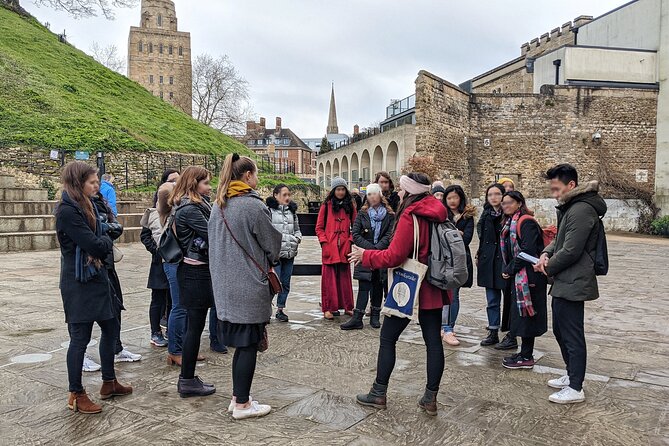
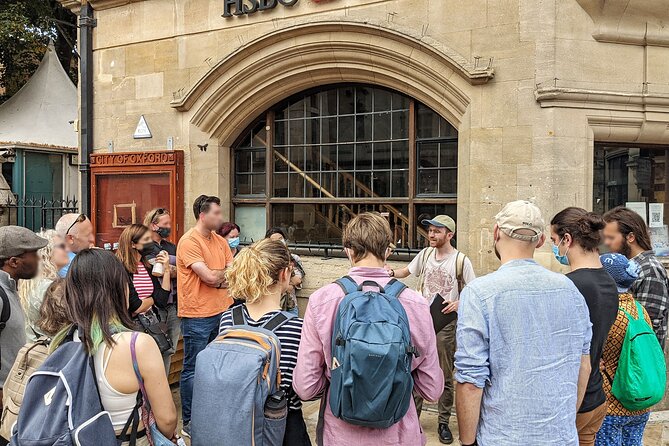
Several reviews highlight that the guide facilitated debate in a way that felt welcoming. One named guide was Hera Jay, and the feedback praised both the storytelling and the space for discussion.
That matters because a tour about money and ethics has a risk. It can turn into a shouting match, or a one-way sermon. This experience seems to avoid that by using researched points and then asking you to weigh the tradeoff yourself.
In other words, you’re not only learning. You’re practicing ethical thinking in a real place, with real buildings and public memorials around you.
A final detail that seems to help: the group format invites multiple viewpoints. That gives the tour a kind of texture you don’t get from a solo audio guide.
Who this tour is best for (and who should skip it)
You’ll likely enjoy this if you:
- like Oxford but want to see it with sharper questions
- care about ethics around philanthropy, naming rights, and public memory
- enjoy guided discussion more than passive sightseeing
- want a short, structured walk you can fit into a busy day
You might want to skip it if you’re traveling with someone who wants only light facts and no controversy. Also, if your ideal Oxford day is all about medieval streets and quiet photo stops, this route will feel more like a debate walk than a postcard walk.
The practical plan: timing, pace, and how to get the most out of it
The duration is about 1 hour 30 minutes, with stops at 15-minute intervals. That pacing is good for travelers who get bored on long walks, but it also means you should show up ready to talk.
Here’s how to get more value from the experience:
- Bring a few questions you genuinely want answered, not questions designed to win
- Stay curious when the guide asks for your take, even if you’re unsure at first
- Watch how the names repeat across different sites, then ask yourself what stays the same and what changes
Also, book with some lead time. On average, it’s booked about 11 days in advance, so you’ll have better pick of dates if you plan ahead.
Should you book Follow the Money Tour?
I think you should book it if you want Oxford to feel less like a museum and more like a living debate. The route connects named buildings to donor controversies, then broadens out into housing and older social history. It’s not just information, it’s a guided way to see the city through a moral lens.
If you prefer a traditional narrative that keeps controversies in the background, you may find the discussion too intense for your taste. But if you’re up for thoughtful questions, this is one of the best ways to spend 90 minutes in Oxford with your eyes open.
FAQ
What is the duration of the Follow the Money Tour?
The tour lasts about 1 hour 30 minutes.
Where does the tour start and end?
It starts outside Saïd Business School, Park End Street, Oxford OX1 1HP, UK. It ends beside Blavatnik School of Government, 120 Walton St, Oxford OX2 6GG, UK.
How much does it cost?
The price is $89.12 per person.
Is the tour offered in English?
Yes, the tour is offered in English.
Is there a group size limit?
Yes, the tour has a maximum of 15 travelers.
Do I need an admission ticket for the stops?
The itinerary lists admission ticket free access at each stop, and the tour includes an admission ticket component as part of the experience.
How do I get the ticket?
You’ll have a mobile ticket.
Can I cancel for a full refund?
Yes. Free cancellation is available if you cancel up to 24 hours in advance for a full refund.
Is the tour accessible for everyone?
Service animals are allowed, it is near public transportation, and most travelers can participate.
Recently added around Oxford
- Undiscovered Cotswolds Private Tour★ 5.0 · 87 reviews
- Full Day Private History Tour of the Cotswolds in a Rolls Royce★ 5.0 · 3 reviews
- The wonders of Christ Church Oxford: Private Tour★ 5.0 · 6 reviews
- Ashmolean Museum Tour – by Uncomfortable Oxford™★ 5.0 · 9 reviews
- Top 10 Oxford Highlights with Divinity School and New College★ 5.0 · 3 reviews
- Tours of Oxford private walking tours for the Discerning Traveler★ 5.0 · 70 reviews
- Private Half-Day Guided Tour in Oxford★ 5.0 · 12 reviews
- Airport Coach Service from Oxford to Gatwick★ 3.5 · 27 reviews
Oxford Tours, compared.
Oxford University Walking Tour With University Alumni Guide
Read our review →
1.5-hour Oxford City and University Walking Tour
Read our review →

City Sightseeing Oxford Hop-On Hop-Off Bus Tour
Read our review →
Harry Potter Walking Tour of Oxford Including New College
Read our review →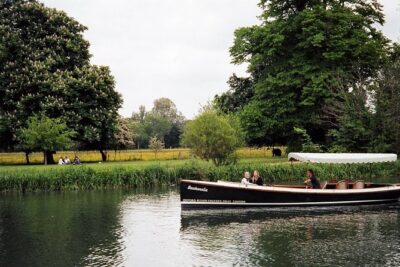
Oxford Sightseeing River Cruise Along The University Regatta Course
Read our review →
Afternoon Tea Sightseeing River Cruise in Oxford
Read our review →Browse the lists this tour appears in