
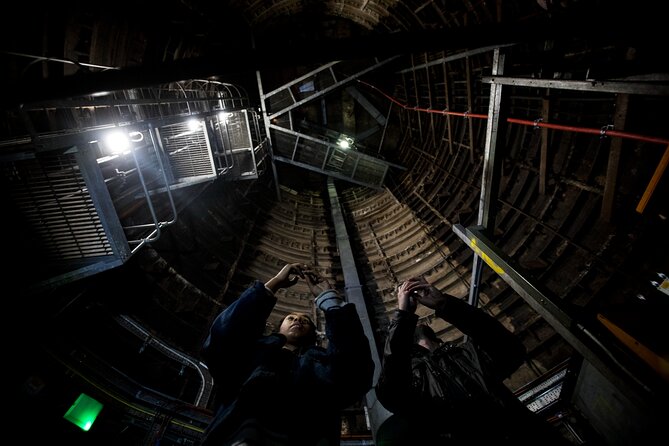
Reviewed · WALKING TOURS
Hidden Tube Walking Tour of Moorgate Station
Moorgate Station hides a whole underground walk. This Hidden Tube style tour takes you off the normal platforms and into disused, older spaces inside one of London’s oldest stations. I especially liked the easy meeting point inside a working public transport station and the fact the whole experience is short enough for a busy day.
The main thing to consider is practical, not historical. This isn’t step-free, and you’ll do a lot of walking on uneven ground with stairs and low lighting, plus no elevator.
The tour is led by a team that includes guides such as Emma and Roberto, and it’s built around a timeline you can see with your own eyes. You move through traces of the system from the early network era into later decades, including World War years and references to more recent lines like the Elizabeth line.
In This Review
- Key things I’d plan for before you go
- Why this Moorgate tour feels different from a typical Underground stop
- Getting your bearings at Moorgate, then stepping into forgotten spaces
- What you’ll see: unused tunnels, forgotten tracks, and vintage corridor details
- The guide team and the timeline: seeing Moorgate from the 1860s onward
- Price value: what $61.73 buys you, and when it might feel unfair
- Walking route reality check: stairs, low light, and shoes that make sense
- Group size and hearing the guide: how not to get stuck at the back
- Who this Moorgate Hidden Tube tour is for
- Should you book the Hidden Tube Walking Tour of Moorgate Station?
- FAQ
- How long is the Hidden Tube Walking Tour of Moorgate Station?
- Where does the tour start and end?
- Is the tour step-free or accessible for wheelchairs?
- What should I bring for the tour?
- Are food and drinks allowed during the tour?
- Can I bring luggage or large bags?
- What are the age rules for kids?
- Can I cancel for a refund?
Key things I’d plan for before you go
- Moorgate is your address, and the start is a functioning Underground station, not some hard-to-find back alley.
- It’s about 80 minutes of guided walking, which is great when you want a “secret London” moment without sacrificing the whole day.
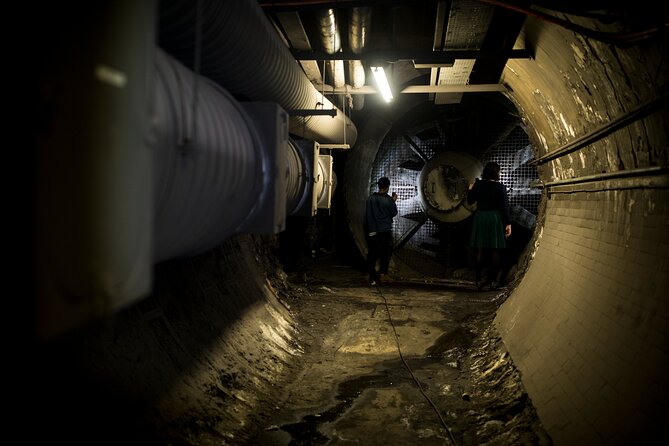
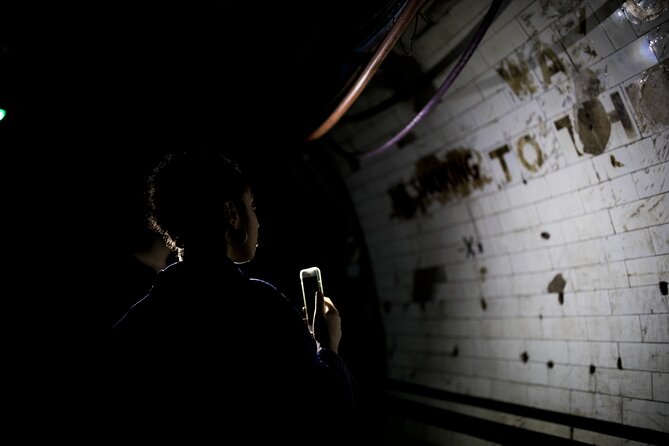
- Disused tunnels and tracks are part of what you’ll experience, plus older passenger-corridor details like vintage glass tiles and posters.
- Expect stairs and uneven, low-lit sections, not a smooth museum-style route.
- Small-group size caps at 18 people, but you still may find it crowded at tight viewing spots.
- Bring photo ID, and skip open-toed shoes, food, and large bags.
Why this Moorgate tour feels different from a typical Underground stop
London’s Tube is everywhere, but you usually only see the present version. This tour gives you permission to look at the layers underneath, including parts of Moorgate that stopped being used the way they once were.
Moorgate matters because it dates back to the earliest expansion phase. The station opened in 1865 as Moorgate Street and was part of the first push that helped shape the Metropolitan line’s early identity. That early “Deep Tube” story is the backdrop for what you’ll actually walk through.
If you like practical travel sightseeing, this also plays to your schedule. You get a guided experience that’s long enough to feel substantial, but short enough that it won’t hijack your day.
More Walking Tours in London
- Tour for Muggles The Ultimate Harry Potter Walking Tour in London
★ 5.0 · 4,684 reviews - Changing of the Guard Guided Walking Tour in London
★ 5.0 · 1,793 reviews - The Great British Rock and Roll Walking Tour
★ 5.0 · 1,371 reviews
Getting your bearings at Moorgate, then stepping into forgotten spaces
You meet at Moorgate Station, Moorgate, London EC2M 6TX, inside a place you can orient yourself in quickly. That matters more than people think. When you’re on a first London trip, finding the start location without stress sets the tone for everything that follows.
From there, the experience shifts into “out of service” territory. You explore areas linked to older tunnel work and adaptations made as London grew. The focus isn’t on big flashy installations. It’s on seeing how the system was physically shaped, and how parts of it became redundant over time.
One of the most satisfying parts is that you’re walking where the station’s wiring and corridors once supported different needs. Instead of only reading about expansion and renovation, you’re moving through the spatial evidence.
What you’ll see: unused tunnels, forgotten tracks, and vintage corridor details
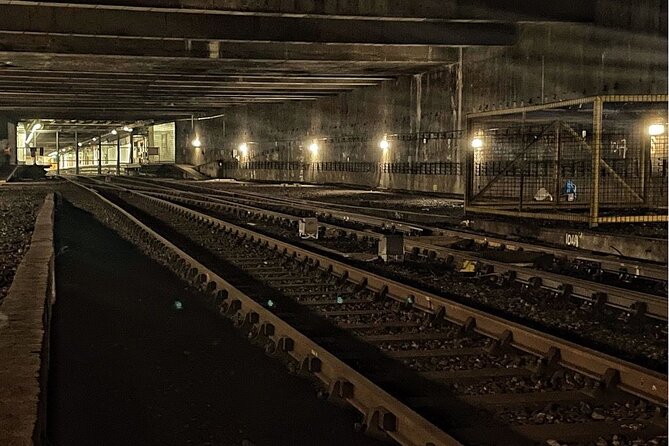
This is the core of why Hidden Tube fans book this. You’re guided through disused tunnels and unused tracks that emerged through nearly 160 years of renovations and upgrades. That phrase is important, because it explains what “Hidden” means here. It’s not a gimmick. It’s literally older infrastructure.
Here are the kinds of details you can expect to look for during the walk:
- Abandoned track sections, where you’re close enough to understand the physical scale.
- Original passenger corridor features, including vintage glass tile details and old posters.
- Clever adaptations that were made as the city’s demands changed.
- Large structural elements, including lift shafts and concrete spans that help you picture how the space was engineered.
A big advantage of this format is scale. In a normal Tube carriage, everything feels compressed by motion and crowds. Underground, standing still, you can actually take in the size of roof spans and the vertical space of lift shafts.
It also helps that the route is guided like a story. The history doesn’t feel like a lecture. It’s connected to what you’re standing next to.
The guide team and the timeline: seeing Moorgate from the 1860s onward
The best guided tours do one thing well: they make the place feel lived-in. This one aims for exactly that, and the names you may hear include Emma and Roberto.
The pacing tends to follow the Underground’s evolving decades. You’re not just told that Moorgate changed. You’re guided through how those changes show up in the physical spaces you’re moving through. That includes references to the 1860s build phase, then the 1920s and 1930s, and later periods such as the war years and post-war adjustments.
One of the reasons I think this tour earns its reputation is that it bridges eras. It moves you from the early development phase into later infrastructure thinking, and it even gestures toward more modern context like the Elizabeth line.
If you’re a transport enthusiast, there’s an added layer of satisfaction. In at least one conversation I’d expect the guides to reference how Moorgate ties into other historical threads, like the Northern City line connection. One specific topic mentioned in past tour experiences is the old Great Headshield tunnelling machine, with the added caveat that some sites are not accessible from this walk.
Same part of England, a different sort of day out:
- Stonehenge, Windsor Castle, and Bath from London
★ 4.5 · 18,662 reviews - London Big Bus Hop-On Hop-Off Tour with Optional River Cruise
★ 3.5 · 10,803 reviews - London Small Group Tour of Historical Pubs
★ 5.0 · 10,422 reviews - Stonehenge, Windsor Castle and Bath with Pub Lunch in Lacock
★ 4.5 · 7,402 reviews
Price value: what $61.73 buys you, and when it might feel unfair
At $61.73 per person, this is not a budget stroll. So you should ask a straight question: are you paying for access, or for interpretation?
You are paying for both. The price covers an 80-minute guided experience in controlled, off-standard parts of a working station. You’re also paying for the work involved in turning archival material into something you can understand on foot. The “Hidden” access itself is the expensive part, since it’s not something you can DIY without the safety and permissions that come with an organized tour.
That said, not every traveler is going to love the value if they want an extravagant show. If you expect highly interactive exhibits at every corner, this can feel more restrained than a museum. A complaint you may run into is that some behind-the-scenes areas can feel modest, and that the on-the-spot history could sound similar to what you can find online.
My practical take: this tour is value-for-money if you’re the type who enjoys engineering details, architectural traces, and the quiet thrill of seeing disused spaces. If you just want a quick “Tube facts” moment, you might feel price anxiety.
Walking route reality check: stairs, low light, and shoes that make sense
The tour involves a lot of walking, including uneven ground and sections with low lighting. There are stairs, and it is not step free. There is no elevator.
So before you book, match the experience to your body. You’re told the tour suits guests with moderate physical fitness, and it’s not designed for people who need barrier-free access.
Here’s what to prep so you don’t waste energy during the tour:
- Wear shoes that meet the rule of no open-toed footwear.
- Expect stair climbing as part of the walk.
- Skip the idea of bringing a large bag, since there’s no cloakroom and you’re asked not to bring luggage or large bags.
Also, note that you’ll be in low-lit, closed-in spaces. That usually means you’ll walk slower than you planned, because you’re paying attention and negotiating steps.
And one more detail that’s easy to overlook: bring photo ID. Everyone must bring it, and confirmation is received at booking.
Group size and hearing the guide: how not to get stuck at the back

The tour caps at 18 travelers. That’s fairly small for London, but it doesn’t automatically solve tight-space problems. If you’re toward the back, you might have trouble seeing posters, maps, or small features your guide is pointing out.
This is why positioning matters. When you stop in a corridor or near a display, try to drift toward the front edge of the group. You’ll get more out of the small details, and you’ll hear instructions better when the route narrows.
If you hate crowds in confined areas, consider booking at a time you expect fewer people in the wider station. The tour group itself is capped, but the station around you can still feel busy.
Who this Moorgate Hidden Tube tour is for
This tour is best for people who enjoy:
- Underground infrastructure and how systems change over time.
- Architectural cues like corridors, tiling, posters, and structural shapes.
- Guided history you can verify by looking right at it.
It also fits travelers who want a “hidden London” experience without a full-day commitment. At roughly 1 hour 20 minutes, you can still do other sightseeing the same day.
It is not a good fit if you need step-free access, or if you dislike walking on uneven ground in low light. It’s also not suitable for children under 10, with a specific adult-to-child limit for ages 10 to 15.
Should you book the Hidden Tube Walking Tour of Moorgate Station?
Book it if you want a rare, in-person look at how London’s Tube grew, changed, and left physical evidence behind. The best part is standing in the older corridors and seeing disused tracks and tunnels with your own eyes, led by guides like Emma and Roberto who tie each stop into the station’s timeline from the 1860s onward.
Skip it or rethink your expectations if you want a laid-back, fully accessible stroll, or if you’re mainly chasing dramatic “wow” factor at every turn. The route is active, stair-heavy, and low-lit, and some people have felt the value depends a lot on how much they care about engineering details.
My final suggestion: if Moorgate and London transport history make you curious, this is the kind of tour that earns its place on your list. Just come prepared to walk, look closely, and enjoy the quiet thrill of being in the layers beneath the everyday Tube route.
FAQ
How long is the Hidden Tube Walking Tour of Moorgate Station?
It runs for about 1 hour 20 minutes, with an 80-minute guided tour included.
Where does the tour start and end?
The meeting point is Moorgate Station, Moorgate, London EC2M 6TX, UK. The tour ends back at the meeting point.
Is the tour step-free or accessible for wheelchairs?
No. The tour is not step free. It includes walking on uneven ground, low lighting, and stairs, and there is no elevator.
What should I bring for the tour?
You must bring photo ID. You should also wear appropriate footwear, since open-toed shoes are not allowed.
Are food and drinks allowed during the tour?
No. There is no food or drinks allowed on the tour.
Can I bring luggage or large bags?
No. You should not bring luggage or large bags, and there is no cloakroom.
What are the age rules for kids?
It’s not suitable for children under 10 years old. For ages 10 to 15, there is a maximum of four children allowed per adult.
Can I cancel for a refund?
Yes. You can cancel for free up to 24 hours in advance of the experience start time for a full refund. If you cancel less than 24 hours before, the amount paid is not refunded.
Recently added around London
- Highlights of London Private Guided Taxi Tour★ 5.0 · 11 reviews
- Highlights & Secrets of London Private Tour – Camden Town, Downtown & Markets★ 5.0 · 16 reviews
- Hidden Gems Tour of the City of London★ 5.0 · 9 reviews
- Hidden Tube Walking Tour of Green Park Station★ 4.5 · 25 reviews
- Exciting Full Day Walking Tour – See All London Sites★ 4.5 · 23 reviews
- Hever Castle – England’s Hidden Gem★ 5.0 · 6 reviews
- Heathrow to Southampton via Attraction of your choice (Stonehenge, Windsor etc)★ 5.0 · 5 reviews
- Heathrow Airport to Southampton Private Transfer★ 5.0 · 9 reviews
Walking Tours, compared.

Oxford University Walking Tour With University Alumni Guide
Read our review →
Tour for Muggles The Ultimate Harry Potter Walking Tour in London
Read our review →
Cambridge University Walking Tour by Alumni™ Kings College Option
Read our review →
Blackbeard to Banksy – The Ultimate Walking Tour of Bristol
Read our review →
Air Raid Shelter + St. Nicholas Market Walking Tour
Read our review →
Walking Tour of Bath with Blue Badge Tourist Guide
Read our review →
Changing of the Guard Guided Walking Tour in London
Read our review →
Shadows of York: Ghost Walk and Horrible History.
Read our review →Browse the lists this tour appears in