
Reviewed · JACK THE RIPPER TOURS
Jack the Ripper Private Immersive Tour
Whitechapel turns creepy when you follow the evidence. This private walk is a question-friendly way to hear the murders explained street by street, and the hi-tech headphones help you stay locked into the story even when you are walking at night. One thing to weigh first: it is about 2.5 hours with no real break, so you need comfort with steady standing and walking.
I like that the tour does more than recite names. You get context about what life looked like in 1888, including homelessness, common lodging houses, workhouses, and the lack of employment that shaped so many daily choices. You also use a 14-inch tablet at several stops for photos, which matters because it can be dark and the details matter.
Finally, the experience is built for your group only, with a set meeting point near Aldgate and an ending near Bell Lane. It runs Monday through Thursday from 3:00 PM to 9:00 PM, and it depends on good weather, so pick a night when you expect clear conditions.
In This Review
- Key highlights and what they mean for you
- Start at Aldgate Station, then follow the case like a map
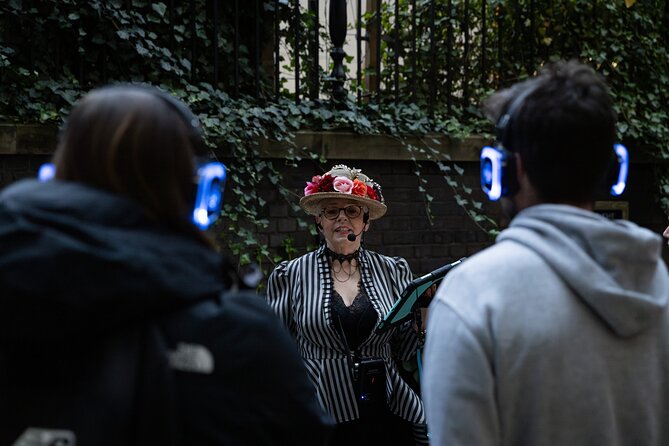
- Headphones, a 14-inch tablet, and a guide who keeps pace
- Dorsett City Hotel and St Botolph’s Aldgate: the world before the murders
- Mitre Street and Mitre Square: Elizabeth Stride and Catherine Eddowes in their exact moments
- Goulston Street: the only clue and the police split you should understand
- Wentworth Street back to the start: a likely extra victim
- Osborn Street music and Brick Lane pressure points: Polly Nichols and the neighborhood noise
- Hanbury Street to Wilkes Street: Annie Chapman, newspapers, and houses from the 1700s
- Letters, the Ten Bells, and the Lusk letter trail
- London Fruit and Wool Exchange courtyard: Mary Kelly indoors, and the whodunnit theory
- Price, timing, and real-world value of a private Ripper tour
- Should you book this Jack the Ripper private walk?
- FAQ
- How long is the Jack the Ripper private immersive tour?
- Where does the tour start and where does it end?
- Is this tour private?
- What is included in the price?
- Is bottled water included?
- What are the tour hours?
- Is the tour okay for people with mobility issues?
- What is the cancellation policy?
Key highlights and what they mean for you
- Private, question-friendly guiding so you can ask follow-ups as you go, not just at the end.
- Hi-tech headphones that make the narrative feel more personal while you walk.
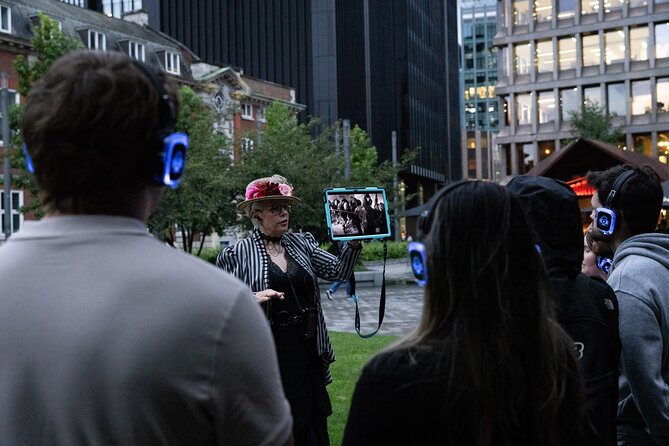
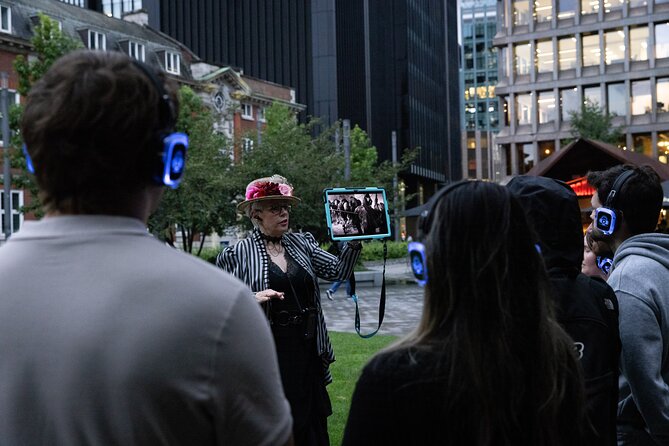
- 14-inch tablet photo stops so you can actually see street views and details in low light.
- A focused Whitechapel route that connects each killing with nearby streets and clues.
- Police and rumor context that explains why the case spread fast and stayed controversial.
Start at Aldgate Station, then follow the case like a map
The tour begins at Aldgate Station (Aldgate, London EC3A), then moves through East London streets tied to the Whitechapel murders. You are not just walking from photo to photo. The pacing is set up so each new stop picks up the story where the previous one left off, which makes the whole case easier to hold in your head.
You end near Bell Lane (Bell Ln, London E1), and your guide also directs you toward the quickest route to Liverpool Street Station. That end plan is helpful because it means you are not stranded with a confusing last leg, especially on a night when you want to get home quickly.
Timing also matters here. The tour runs about 2 hours 30 minutes, and it is scheduled Monday through Thursday, 3:00 PM to 9:00 PM. Since it is designed around walking time, I would treat that window as part of the experience, not something you can rush. If you are sensitive to standing around outdoors in cool or damp weather, dress for it.
And one more practical note: it is not recommended if you have walking or standing difficulties. The route includes multiple stops, but you should expect long stretches where you are on your feet, plus time listening.
More Jack the Ripper walks:
- London Jack the Ripper Guided Tour with Ripper-Vision
★ 4.5 · 4,840 reviews - Ultimate Jack the Ripper : Guided Tour of London
★ 5.0 · 1,495 reviews - The Original Jack the Ripper : Guided Tour
★ 5.0 · 1,264 reviews
Headphones, a 14-inch tablet, and a guide who keeps pace
This is where the tour earns its name. You get hi-tech headphones included, and the story is delivered as you move. That has two real benefits for you.
First, it reduces the usual London problem where street noise eats your audio. Second, it lets you hear the details without stopping constantly. If you love true crime, the small specifics are often the fun part, like names, street locations, and what investigators reportedly did next.
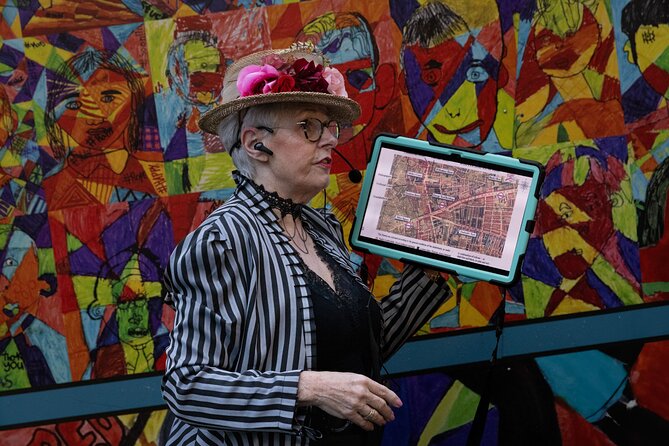
A key detail you should know: the tour uses photos on a 14-inch tablet at several stops so you can see what the guide is pointing at. That is especially useful in darker areas where it is hard to judge distances or recognize anything that looks like the 1888 street scene.
One important consideration from experience feedback: on busy nights, the guide may use a mic rather than pushing the audio entirely through headphones. If you are hard of hearing, plan to tell the guide right away and stand toward the front when you can. That advice came up specifically, because being too far back can make some audio harder to catch.
Also, you should be prepared for a guided experience that is lively rather than quiet. Guides like Jenny are described as energetic and very knowledgeable, with a style that keeps people engaged while still using the photo-and-street format.
Dorsett City Hotel and St Botolph’s Aldgate: the world before the murders
The first stop sets the tone at Dorsett City Hotel. You hear an introduction to the Jack the Ripper murders along with what the area looked like in 1888. This is a good early anchor because it gives you baseline context before you start moving to specific streets and victims.
Then you head to St Botolph’s Aldgate by the green. Here, the focus shifts from the crime scenes to the people around them. You get a detailed look at what life could mean in 1888, including:
- homelessness and how people lived without stable housing
- common lodging houses
- workhouses and the limited options for paid employment
This is not just background padding. For me, this part is essential to understanding why the case felt so disruptive in real time. When you grasp how precarious life was, you also see why rumors spread quickly and why police and newspapers could hit nerves fast.
You also get photo support on the 14-inch tablet at this stage. That matters because even a basic street-level photo can help you mentally reconstruct what you are looking at, especially if the modern buildings make the past harder to see.
Mitre Street and Mitre Square: Elizabeth Stride and Catherine Eddowes in their exact moments
Next comes Mitre Street, focused on the murder of Elizabeth Stride. You hear about the evening leading up to the murder in the early hours of the morning, and the guide connects it to the reported discovery by Louis Diemschultz when he arrived at the gateway of Dutfield’s Yard.
What I like here is that the story is tied to action, not just a grim fact list. The tour gives you the sequence, so you can follow how people moved through the area and how discovery happened on the ground.
Then you move to Mitre Square, where the focus becomes Catherine Eddowes. You hear that her body was discovered and mutilated on 30 August 1888, and you also learn that discovery happened while PC Edmund Watkins was on his beat. That detail helps you understand the police workflow in a practical way, because it frames the discovery as something that could happen during normal duty.
The guide also explains how City of London Police excitement played into the hunt for Jack at the time. That is a big theme of this case: the investigation was not just detectives in isolation. It was police forces trying to respond to fear, urgency, and the pressure of a public frenzy.
You also follow a route tied to searching after Eddowes, leading to a place where a key clue was found. Expect photos to support the street view and victim details on the tablet, which makes this stop easier to track than if you were only listening without visuals.
A few more London days worth comparing
- Stonehenge, Windsor Castle, and Bath from London
★ 4.5 · 18,662 reviews - London Big Bus Hop-On Hop-Off Tour with Optional River Cruise
★ 3.5 · 10,803 reviews - London Small Group Tour of Historical Pubs
★ 5.0 · 10,422 reviews - Stonehenge, Windsor Castle and Bath with Pub Lunch in Lacock
★ 4.5 · 7,402 reviews
Goulston Street: the only clue and the police split you should understand
At Goulston Street, you stop opposite 108 to 119 Goulston Street to view the doorway connected with the case’s only clue. The guide explains what happened after the clue was discovered, and it also highlights a structural detail that keeps showing up in the Ripper story: the Metropolitan Police and the City of London Police were separate then, and they still are separate in some ways today.
That police split can be confusing if you only focus on victims and suspects. I like that this tour forces you to think about investigation as a system. Different jurisdictions, different responsibilities, and different coordination issues can change how a case unfolds, even when everyone is trying to solve the same mystery.
Because you are dealing with a doorway and a specific location, this is one of those stops where paying attention matters. If you are chatting or half distracted, you can miss the practical “why this spot matters” explanation.
Wentworth Street back to the start: a likely extra victim
At Wentworth Street, the tour returns to the beginning of the murders and addresses a person not included in the canonical five, but credited as a likely victim by Professor David Wilson, described as a highly accredited criminologist.
I appreciate that this is handled as a theory-based addition rather than a guaranteed certainty, because it reflects how serious cases can keep evolving. The point is not just “more gore.” It is how new research can change old conclusions.
You also see photos on the tablet related to the murder site and victim. The stop is brief, but it gives you a big takeaway: even in one of the most famous cases in crime history, some details remain disputed, and that uncertainty is part of what keeps the story alive.
Osborn Street music and Brick Lane pressure points: Polly Nichols and the neighborhood noise
When you turn into Brick Lane via Osborn Street, the guide adds an audio layer: you hear music as it would have come from pubs and music halls in 1888. This works because it changes the walk from “listening to facts” into “feeling like you are there.” It also signals that the tour will not treat Whitechapel as a blank stage. It treats it as a living neighborhood.
Then you arrive at Brick Lane opposite the Frying Pan pub. This stop covers Polly Nichols, including the tragic angle that her desperation for lodging money may have pushed her into a path she otherwise would not have taken. You hear how two men discovered her body in Berner’s St Whitechapel, and that police were sent, but Polly was already dead.
A small but important detail: the tour connects this to “the last place she had a drink,” which helps you see why a pub name sticks in the story. Those are not just trivia. They show how everyday choices and the local geography intersected with the case.
After that, you stay in Brick Lane for another short stop that follows the immediate aftermath. You hear about street vendors selling wares and the police questioning members of the community about suspicious men. I like this because it reminds you the case was also a social event. Fear turns neighbors into witnesses, and witnesses into rumor carriers.
Hanbury Street to Wilkes Street: Annie Chapman, newspapers, and houses from the 1700s
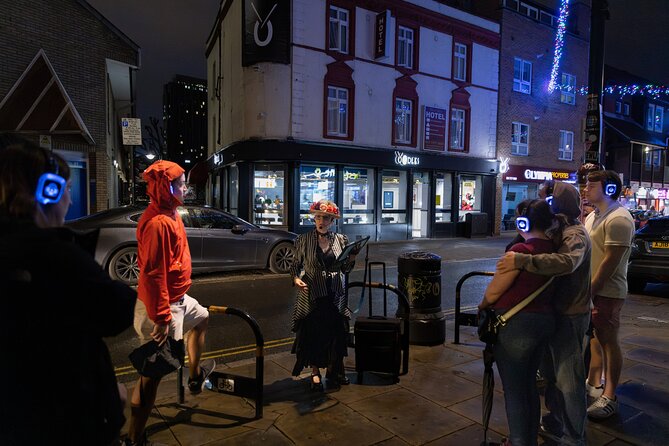
At Hanbury Street, the story moves to Annie Chapman. You hear about her life and the sequence of events leading up to her death on 8 September 1888. The guide describes how she was seen less than an hour before the murder by Mrs Long, with a man present outside number 27. You also hear how she was enticed into the backyard of 29 with promises of money and then brutally murdered.
The tour includes mention of a prominent suspect who was later discounted, plus photos of the victim and murder site on the tablet. That mix of human detail and investigation detail is what makes this stop work. It does not just say who might have done it. It shows the uncertainty and how the story changed as people talked, investigated, and corrected.
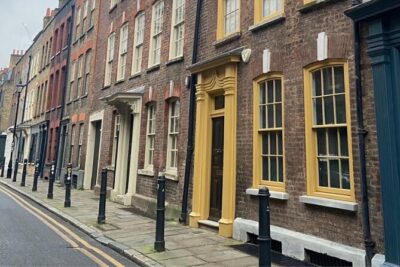
Then you move to Wilkes Street. Here, the tour shifts from one killing to how the whole area responded. You hear about outrage among local community members and how newspapers stoked terror. You also learn that some houses there date back to the 1700s, which gives you a physical time anchor. It helps you picture how long these streets and structures have held people and secrets.
Letters, the Ten Bells, and the Lusk letter trail
From the murder sites, the tour starts chasing the case as it spread through headlines and written evidence.
At Puma Court, you stop to look at a press letter. The guide explains that while 1092 letters were sent to police and the press, this letter and one other were notable. As you leave, you hear how newspaper boys or men shouted lurid headlines to stoke fear.
This is a powerful point to remember when you hear big claims about the Ripper case. Not all “evidence” is equal. Some letters were part of panic. Some might have been connected. The tour helps you separate noise from potentially meaningful material.
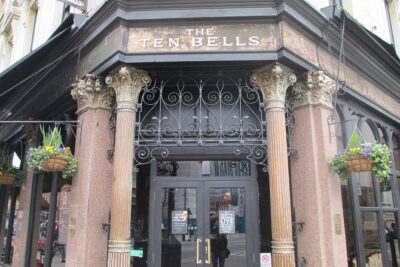
Then you stop at Commercial Street opposite the Ten Bells, described as Mary Kelly’s favorite pub. You hear about the area at the time, including Spitalfields Market, and how Jack the Ripper has caused controversy over the years. You also hear why Christchurch Graveyard mattered to homeless people then, and how the basic things many people take for granted became daily flashpoints, sometimes leading to fights.
This stop matters because it broadens the lens. If you only focus on victims and suspects, the case feels like a closed story. Here, it feels like a crisis that played out in public life.
Next is Brushfield Street, in the entranceway of the London Fruit and Wool Exchange building. You hear about the other letter of importance, the Lusk letter, including how it arrived in a box with an article that could have come from one of the victims. You see photos of the letter and the recipient.
That “could have” language is important. It keeps the story tied to what evidence actually can and cannot prove.
London Fruit and Wool Exchange courtyard: Mary Kelly indoors, and the whodunnit theory
The final and longest stop is the London Fruit and Wool Exchange courtyard. You pause at the closest point to where Mary Kelly, the last victim, was killed in her own room. You hear that she was the youngest victim and that she was the only one killed indoors.
This is also where the tour goes into the events leading up to her death and the murder itself in gruesome detail, so treat this as a moment for the serious side of true crime. If you prefer lighter stories, this ending is not for you.
After that, your guide talks through suspects then and now and shares their theory on whodunnit. The goal is not to “win” the case. The goal is to help you see how reasoning works when the evidence is old, incomplete, and disputed.
Finally, the guide gives you the shortest route to Liverpool Street Station, so you can exit cleanly after a heavy, long walk.
Price, timing, and real-world value of a private Ripper tour
At $47.52 per person for roughly 2 hours 30 minutes, this sits in the middle of what you might expect for a private, guide-led London experience. What makes it feel like decent value is the combination of:
- private guiding for your group only
- hi-tech headphones
- multiple photo-supported stops on a tablet
- a route that links each story point to a real street location
Also, the mobile ticket format helps. You are not scrambling for paper or QR codes at the last second.
Two practical cautions, based on the tour’s format and feedback you might run into:
- No bottled water included. If you are doing the full walk, bring a bottle if you need one, especially in warmer months.
- Hear it early. If you know your hearing is an issue, tell the guide right away and position yourself where you can hear best.
If you are a true crime fan who likes street-level context, this is a strong match. You are getting the “why this mattered” version of the Ripper story, not just the spooky names.
It also suits people who enjoy questions. The tour is designed so you can ask as you go, and that changes the whole feeling of the experience.
Should you book this Jack the Ripper private walk?
I would book this if you want a structured, street-by-street Ripper route with headphones, photo tablet support, and a guide who stays energetic and answers questions. I would especially consider it if you like understanding how the area worked in 1888, not just the murders themselves.
I would think twice if you:
- need frequent breaks or have trouble with standing and walking for 2.5 hours
- have significant hearing issues and do not feel comfortable communicating that early in the tour
- dislike graphic crime details, since the Mary Kelly ending includes gruesome description
If your goal is a guided, question-friendly, photo-supported case walkthrough, this tour offers a lot of value for the money and a very clear route through Whitechapel.
FAQ
How long is the Jack the Ripper private immersive tour?
It is approximately 2 hours 30 minutes.
Where does the tour start and where does it end?
The meeting point is Aldgate Station (Aldgate, London EC3A). The tour ends at Bell Lane (Bell Ln, London E1).
Is this tour private?
Yes. It is described as a private tour/activity, with only your group participating.
What is included in the price?
Hi-tech headphones are included.
Is bottled water included?
No, bottled water is not included.
What are the tour hours?
It runs Monday through Thursday from 3:00 PM to 9:00 PM.
Is the tour okay for people with mobility issues?
It is not recommended for people with walking or standing difficulties. A moderate physical fitness level is recommended.
What is the cancellation policy?
Free cancellation is available up to 24 hours in advance for a full refund. If you cancel less than 24 hours before, the amount paid will not be refunded. The tour may also be canceled due to poor weather, with an option for a different date or a full refund.
Recently added around London
- Stonehenge Private Tour★ 5.0 · 4 reviews
- Private Transfers From Heathrow Airport to Central London★ 5.0 · 8 reviews
- Professional Private Couple Photoshoot★ 5.0 · 35 reviews
- Private transfer to Southampton with a stop at Stonehenge★ 4.5 · 33 reviews
- Private transfer from London Heathrow Airport to Southampton★ 5.0 · 3 reviews
- Private London Panoramic Tour by Car with Pick Up From Your Hotel★ 5.0 · 13 reviews
- Private driver tours to Leeds Castle, Canterbury, White Cliffs★ 4.5 · 30 reviews
- Private Transfer Any London Hotel to Southampton Cruise Port★ 5.0 · 7 reviews
Jack the Ripper Tours, compared.
London Jack the Ripper Guided Tour with Ripper-Vision
Read our review →
Ultimate Jack the Ripper : Guided Tour of London
Read our review →
Jack the Ripper Tour with ‘Ripper-Vision’ in London- Afternoon
Read our review →
Browse the lists this tour appears in