
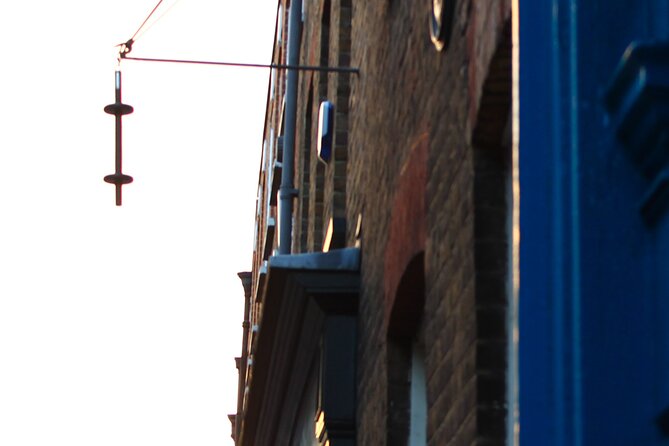
Reviewed · JACK THE RIPPER TOURS
Jack the Ripper – What About the Women?
Women take center stage in Whitechapel. This 2-hour evening walk in East London centers on the women harmed by Jack the Ripper, with street-level history that explains the Victorian world around them. Aldgate, Brick Lane, and Spitalfields form your backbone, and the stories keep the focus where it belongs.
I love how this tour stays factual and respectful, with no graphic imagery and a serious tone about real lives. I also love the practical neighborhood lens, from dosshouses and workhouses to immigration and the textile trade, so the murders make more sense in their grim social setting. You’re not just learning names, you’re understanding the city that shaped them.
One possible drawback: it is an active night walk and it relies on good weather. If you prefer a slow pace or mostly indoor stops, plan carefully and wear comfortable shoes for uneven London sidewalks.
In This Review
- Key things you will notice on this tour
- Why this Jack the Ripper tour focuses on the women, not the killer myth
- From Aldgate High Street to Whitechapel Road: Martha Tabram and Polly Nichols’ world
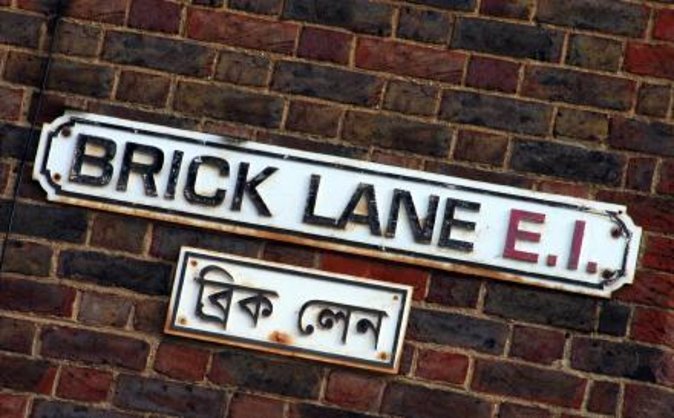
- Brick Lane links to Polly Nichols, plus immigration at the Brick Lane Mosque
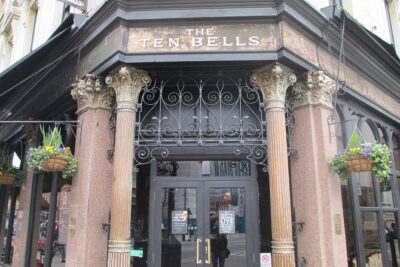
- Spitalfields Market, Truman Brewery, and Annie Chapman at Ten Bells
- Old Spitalfields Market to Crispin Street, and Mary Jane Kelly’s last night
- Petticoat Lane and St Botolph’s to Mitre Square: Elizabeth Stride and Catherine Eddowes
- Price, pacing, and who should book this East London night walk
- Should you book this women-focused tour?
- FAQ
- How long is the tour?
- What time does the tour start?
- Where does the tour meet and where does it end?
- How big is the group?
- Is the tour appropriate for kids, or is it graphic?
- What language is the tour offered in?
- Do I receive a mobile ticket and confirmation?
- What if weather is poor or I need to cancel?
Key things you will notice on this tour
- Women-led storytelling instead of the usual killer-myth spotlight
- Small group size with time for questions (maximum 20)
- Big-name East London stops like Brick Lane, Ten Bells, and St Botolph’s
- No graphic detail and a tone that works for mature kids and adults
- City history explained in plain language, including working-class housing
- Guide clarity praised by visitors, plus local tips in conversation
Why this Jack the Ripper tour focuses on the women, not the killer myth
If your idea of a Jack the Ripper tour is gore, sensational clues, and nonstop obsession with the killer, this is a smart change of pace. The whole structure of the experience is built around the women, including what life was like before anyone ever wrote their name into a notorious case.
What makes it work is the emphasis on context. You get the social pressures of Victorian East London, the housing types poor residents lived with, and the cultural mix of the area as it evolved. That means the stories feel grounded, not like spooky theater.
The tone also matters. People consistently praise the guides for keeping the focus respectful and for explaining how misconceptions spread about the victims. You leave feeling like you learned something real about society, not just the latest version of a dark legend.
More Jack the Ripper walks:
- London Jack the Ripper Guided Tour with Ripper-Vision
★ 4.5 · 4,840 reviews - Ultimate Jack the Ripper : Guided Tour of London
★ 5.0 · 1,495 reviews - The Original Jack the Ripper : Guided Tour
★ 5.0 · 1,264 reviews
From Aldgate High Street to Whitechapel Road: Martha Tabram and Polly Nichols’ world
Your tour starts near Aldgate High Street, outside the Aldgate station area, with a scheduled evening start at 6:30 pm. It’s a convenient time if you want to sightsee in the afternoon and still get a night view of the East End. The meeting point is designed to be easy to find, and the route is set up for a smooth walking flow.
The first stop along Whitechapel Road sets the tone fast. You hear the stories of Martha Tabram and Polly Nichols, with a clear focus on working-class life in the Victorian East End. You’re not only learning about the women, you’re learning about what the poor actually dealt with day to day.
Expect the guide to talk about harsh living conditions, including types of accommodation like dosshouses and workhouses, plus other terms tied to cramped survival. This is where the case turns from a set of names into a social portrait. If you’ve ever wondered how so many people could be ignored, this part gives you the uncomfortable answer.
You’ll also see how some charities carry on work in the area today. That modern link helps the past feel connected, rather than sealed off behind a museum glass case.
Brick Lane links to Polly Nichols, plus immigration at the Brick Lane Mosque
Next you move to Brick Lane, a street that has always drawn crowds and cultures. One stop focuses on the site of the pub where Polly Nichols was on her final night, and the story shifts toward alcoholism and addiction in the Victorian era. The goal is not lurid detail. It’s about understanding how vulnerability can be created by social and economic pressure.
Then you make a quick stop near the Brick Lane Mosque. This is one of the tour’s best reminders that East London is not a theme park. The guide connects the area’s story to immigration and cultural diversity, so you walk through the neighborhood as it is now, not just as it was in the 1800s.
Timing here is tight but manageable. The stop is short, so you’ll want to listen for the key names and take a moment to look around after the explanation. Brick Lane is active even in the evening, so it helps to have a guide pointing out what’s relevant beyond the storefronts and street art.
Spitalfields Market, Truman Brewery, and Annie Chapman at Ten Bells
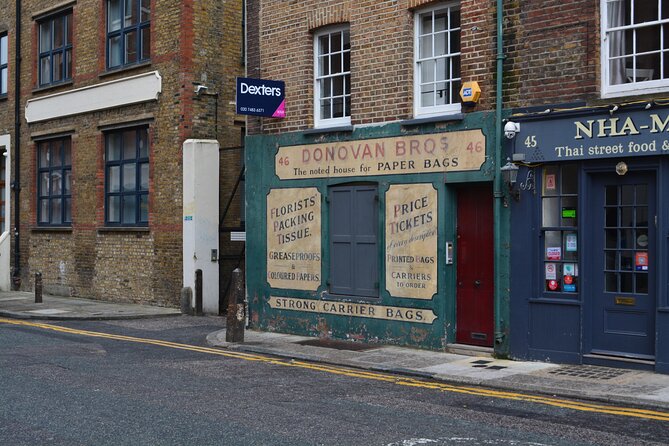
Spitalfields Market is where the tour starts stacking landmark after landmark. You’ll visit the old Truman Brewery site, once described as the largest brewery in the world. That matters because it tells you this was not only a poor district, it was also an industrial engine that shaped who lived and worked nearby.
From there, the story sharpens on Annie Chapman. You’re directed to the area of 29 Hanbury Street, where Annie Chapman was found on the morning of September 8. It’s a short walk between points, but the narration makes the geography feel deliberate.
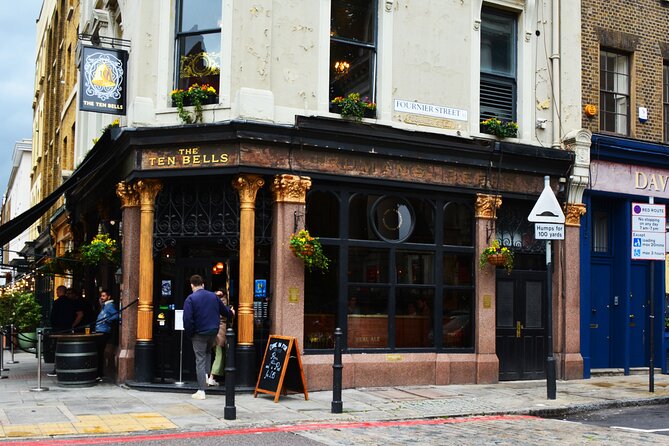
Around the corner sits Ten Bells Pub, and the tour uses it to tell Annie Chapman’s story in a human way, including the heartbreak tied to her life. One of the more interesting modern angles here is the movement Reclaim the Night, which helped push the pub to change its name back to Ten Bells from a Jack the Ripper-associated name. It’s a reminder that communities actively shape how history is remembered.
This is also one of the tour’s most emotionally effective moments, because the guide keeps returning to the woman as a person, not a headline. If you want a tour that resists turning victims into props, this segment delivers.
A few more London days worth comparing
- Stonehenge, Windsor Castle, and Bath from London
★ 4.5 · 18,662 reviews - London Big Bus Hop-On Hop-Off Tour with Optional River Cruise
★ 3.5 · 10,803 reviews - London Small Group Tour of Historical Pubs
★ 5.0 · 10,422 reviews - Stonehenge, Windsor Castle and Bath with Pub Lunch in Lacock
★ 4.5 · 7,402 reviews
Old Spitalfields Market to Crispin Street, and Mary Jane Kelly’s last night
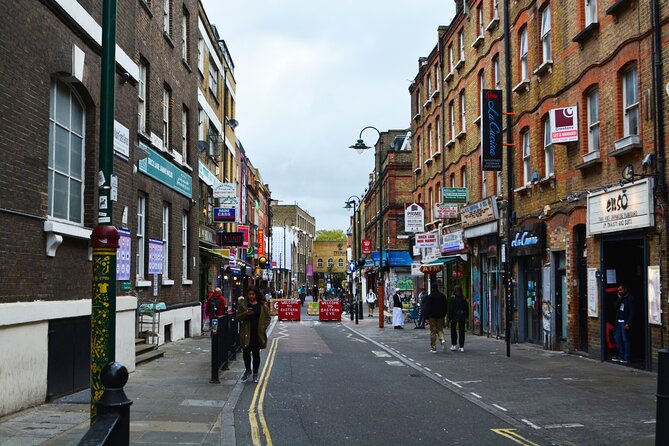
The next stretch takes you through Old Spitalfields Market, a market opened in 1887. That timing is not random. The guide uses it to frame the era’s big contrasts, and to connect the start of the market world to the year that sits right before the Whitechapel murders began.
You’ll pause briefly, then the route heads toward Crispin Street. This is where the tour adds a practical, almost surprising detail: you see the site of a refuge for working-class people that actually worked. In other words, it was built around helping people survive with some kind of workable structure, not just offering charity as a buzzword.
Across the street, the tour points out the former site of Mary Jane Kelly’s residence. The guide treats her as the last victim and highlights why the case is often described as the most mysterious. The narration here still stays respectful, so you get the gravity without the shock-photo approach.
This stop is also a strong lesson in how cities remember. Even when the buildings change, the street grid can preserve the outline of a story.
Petticoat Lane and St Botolph’s to Mitre Square: Elizabeth Stride and Catherine Eddowes
After Spitalfields, the tour heads to Petticoat Lane Market, once the heart of the textile industry in the East End. Even if you’ve walked through markets before, this one lands differently because it’s tied to labor and the kinds of economies that shaped working-class life. You get that sense of daily survival that makes the earlier housing talk click.
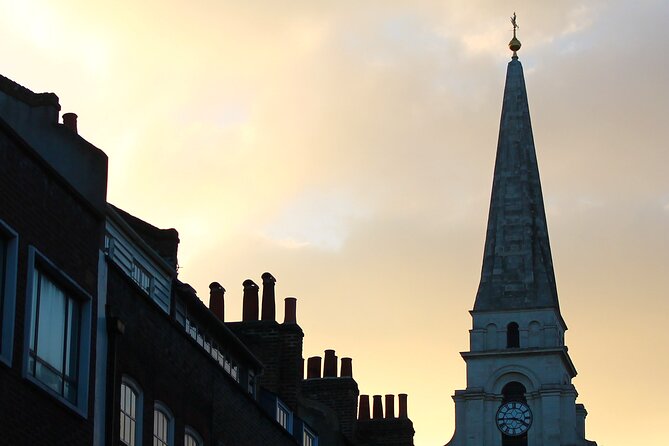
Then the route moves to St Botolph’s without Aldgate, where you learn about Elizabeth Stride. The guide brings in her origins, including that she was from Sweden, and ties her story to traumatic beginnings in Gothenburg and her later adventures in London. It’s a good reminder that the East End pulled in people from far beyond England’s borders.
The tour finishes close by in Mitre Square, where Catherine Eddowes’ body was discovered. The narration gives you a portrait of her, including that she was a feisty woman from Wolverhampton. After the final story, you end near Spitalfields Market at 65 Brushfield St.
If you want to understand East London as a real lived-in place, not just a list of crime scenes, this final sequence brings it together. You get labor, migration, and the stubborn complexity of a neighborhood.
Price, pacing, and who should book this East London night walk
At $34.28 per person for about 2 hours, the value is in the guide and the structure. You’re not just visiting a few plaques. You’re walking a compact route through several major areas, and getting explanations that connect Victorian housing, addiction, immigration, and industrial work to the case.
The group size helps. With a maximum of 20 people, the pace feels easier to manage, and questions are more realistic. Many visitors also mention that the guides speak clearly and answer questions with enthusiasm, including extra context beyond the core stories.
Pacing-wise, you’ll have frequent stops. There’s also mention of places to sit if needed, which is important on a night walk that can run through uneven terrain and crowds. Because this tour depends on good weather, you should bring a light layer if rain or wind is possible.
This is also a good pick for people who do not want a gore-heavy experience. The tone is described as more history and sociological context than true crime, with no grisly pictures and no step-by-step depiction of how people were murdered. That makes it a strong choice for mature families and teens who can handle difficult topics without being shielded.
Finally, if you’re coming from central London, start by planning to spend some extra time around your end point. Ending near Spitalfields Market is convenient for continuing the evening with food and drinks.
Should you book this women-focused tour?
Yes, if you want a Jack the Ripper experience that centers victims as people and explains the social machinery around them. The route hits key East London landmarks, the storytelling is respectful and fact-based, and the focus on the women is the whole point.
Skip it only if you are specifically looking for graphic crime details or a purely killer-centered mystery tour. This is built for understanding, not shock.
FAQ
How long is the tour?
The tour is about 2 hours.
What time does the tour start?
It starts at 6:30 pm.
Where does the tour meet and where does it end?
You meet outside Aldgate High St, London EC3N 1AH. The tour ends near Spitalfields Market at 65 Brushfield St, London E1 6AA.
How big is the group?
The tour has a maximum of 20 travelers.
Is the tour appropriate for kids, or is it graphic?
The experience is described as not using grisly pictures and not explaining gruesome details of how people were murdered, which makes it safer for children who can handle darker history in a non-graphic way.
What language is the tour offered in?
The tour is offered in English.
Do I receive a mobile ticket and confirmation?
Yes, you get a mobile ticket. Confirmation is received at the time of booking.
What if weather is poor or I need to cancel?
The tour requires good weather. If it is canceled due to poor weather, you will be offered a different date or a full refund. You can cancel up to 24 hours in advance for a full refund. If you cancel less than 24 hours before the start time, the amount paid is not refunded.
Recently added around London
- London Theatre: SIX The Musical★ 4.5 · 15 reviews
- Hard Rock Cafe Piccadilly Circus with Set Menu for Lunch or Dinner★ 4.5 · 120 reviews
- Day Trip to Paris with Eiffel Tower, Notre Dame and Louvre Museum★ 3.5 · 170 reviews
- Sir Winston Churchill Private Walking Tour & War Rooms★ 5.0 · 130 reviews
- Inside Buckingham Palace State Rooms & Royal London Walking Tour★ 4.5 · 57 reviews
- Silent Disco London Thames Boat Party★ 5.0 · 133 reviews
- London Sights and Sounds on Christmas Day Afternoon Guided Tour★ 4.5 · 4 reviews
- The Sweet Spots of Covent Garden★ 5.0 · 5 reviews
Jack the Ripper Tours, compared.
London Jack the Ripper Guided Tour with Ripper-Vision
Read our review →
Ultimate Jack the Ripper : Guided Tour of London
Read our review →
Jack the Ripper Tour with ‘Ripper-Vision’ in London- Afternoon
Read our review →
Browse the lists this tour appears in