
Reviewed · ENGLAND
Map Reading and Navigation Course in Peak District
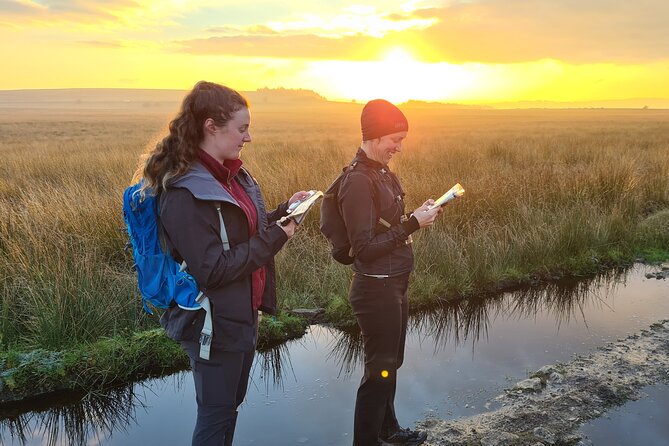
Navigation practice in the Peak District feels real. This one-day course in Bamford puts you into the Peak District training hub and then out onto the tracks with practical map skills and compass direction checks.
I like how the guide walks you through different compasses and how to actually use them, not just name-drop parts. I also love the small group size (up to 8) and the included coffee and tea to keep you steady through the morning to afternoon.
One possible catch: lunch isn’t included, so plan ahead if you need a proper sit-down meal during the day.
In This Review
- Key takeaways before you go
- One-day Peak District map reading course: what you’re really buying
- Starting in Bamford at 9:30, then working from The Adventure Hub
- Maps, grid references, and scales: the stuff that makes directions click
- Compasses: from types to setting the map and checking direction
- Learning on real Peak District tracks and moorland, not just in a room
- Weather readiness, what to pack, and food reality
- Small group learning and real guide attention
- Value versus buying apps or watching videos
- Who should book this course, and who might want a different option
- Should you book this Peak District navigation day from Bamford?
- FAQ
- Where does the course start?
- What time does the course begin?
- How long is the course?
- Is lunch included?
- Is coffee or tea provided?
- Does it run in bad weather?
- What is the maximum group size?
- Is the course offered in English?
- Is free cancellation available?
Key takeaways before you go
- Beginner-friendly pace: build confidence from basics like maps, grid references, and scale.
- Compass skills with real checking: set your map and then confirm direction on foot.
- Rights of way basics: learn how waymarked areas and routes should guide your decisions.
- Small group learning: a maximum of 8 people means you get more time with the instructor.
- Comfort reset breaks: coffee and/or tea included back at The Adventure Hub.
One-day Peak District map reading course: what you’re really buying
This is a straightforward, practical day aimed at getting you walking with confidence. If your goal is to move beyond guessing on hikes, you’ll get the core skills that help you interpret a map and choose a direction when the terrain gets messy.
The course is built around the basics, but it does not feel like watered-down theory. You cover the tools people use in the real UK outdoor world, then you practice applying them. The emphasis is on learning how to read what’s in front of you, match it to the map, and then navigate with a compass when visibility, paths, or time pressure make you doubt yourself.
Price is $136.73 per person for a full day with a professional guide and coffee or tea. That can feel steep until you compare it to the cost of wasting a day on unclear skills. For beginners, one coached day can be the difference between learning fast and spending months self-teaching with frustration.
Guiding matters here. In the feedback I’ve seen, instructors are praised for clarity and for creating a calm atmosphere even when people start nervous. Names that come up include Gavin, Rick, Paul, Guy, and Richard, and the common thread is teaching that keeps beginners from feeling behind.
More of England worth an open tab:
- Stonehenge, Windsor Castle, and Bath from London
★ 4.5 · 18,662 reviews - London Big Bus Hop-On Hop-Off Tour with Optional River Cruise
★ 3.5 · 10,803 reviews - London Small Group Tour of Historical Pubs
★ 5.0 · 10,422 reviews
Starting in Bamford at 9:30, then working from The Adventure Hub
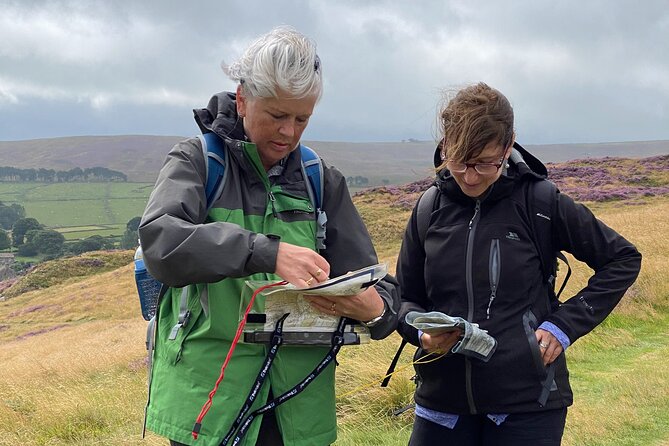
The course starts in Bamford, in the Hope Valley area (S33, UK), with a 9:30 am start time. It ends back at the same meeting point, so you’re not left worrying about transport at the end of the day.
A big part of why this works is the base location. You spend the day at the training facility, The Adventure Hub, in the heart of the Peak District. That matters because you can learn the theory in a comfortable place, then step out into the hills and moorland for the hands-on practice without long transfers.
The group is kept small, up to 8 travelers, which changes the feel of the day. In a small group, you tend to ask more questions because you are not shouting across a crowd. It also helps the guide adjust the instruction to your level, especially if you have never used a compass before.
It runs in all weather conditions, so you should treat this as a true “go outside and learn” day. You will likely get wet, get muddy, or both. Dress appropriately and assume the day will follow the forecast in spirit, even if the forecast changes.
Maps, grid references, and scales: the stuff that makes directions click
You start with the map foundation: how to read what the map is actually telling you. That includes practical map reading basics such as grid references, scale, and how to interpret the map features you’ll see while walking.
This section is valuable because most beginner navigation mistakes come from one of two issues: using the wrong part of the map (zooming with your eyes but not with your brain) or translating the map to the terrain too slowly. When you can confidently locate yourself using grid references, your whole hike changes. You stop panicking and start steering.
You’ll also learn about rights of way. That sounds formal, but on foot it’s practical. When you understand what routes are meant to be followed and how rights of way connect, you navigate with fewer dead ends and fewer “did we just step off the route?” moments.
There’s also a mindset shift in this kind of course. Instead of treating navigation as something you do only when you are lost, you learn to check your bearing and your position routinely. That turns navigation from a crisis skill into a normal walking habit.
Compasses: from types to setting the map and checking direction
A compass section is the headline for a reason. Many beginners buy one, play with it at home, and then freeze the moment they stand on uneven ground.
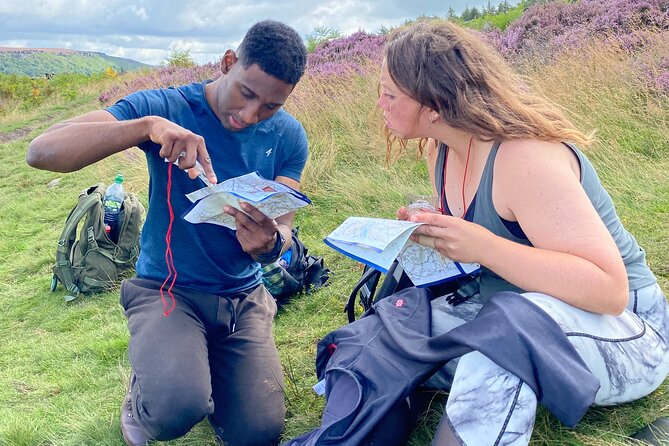
Here, you learn the theory and use of compasses in a hands-on way. That includes understanding the different types of compasses and how they work, so you are not stuck with a tool you do not fully trust. Then the key skill comes: using the compass to set the map and check direction.
The “set the map” part is where things click for a lot of people. You align the map to the ground, so features on the map make sense relative to where you are. After that, you can check your direction against what you see and what you expect to see next.
The “check direction” part is what builds confidence. Even with a good plan, outdoor conditions change. Paths can fork. Weather can steal visibility. The guide’s job is to help you keep making good calls rather than just following what feels right.
It also helps that you’ll be practicing, not just listening. In feedback, people consistently mention exercises and the way instruction is easy to understand. That kind of pacing is crucial when you are learning a mix of reading, measuring, and mental mapping all in one day.
Same part of England, a different sort of day out:
- Beatles Magical Mystery Tour
★ 5.0 · 9,266 reviews - Liverpool: “Blue Route” – City & Beatles Tour
★ 5.0 · 8,562 reviews - Stonehenge, Windsor Castle and Bath with Pub Lunch in Lacock
★ 4.5 · 7,402 reviews - Oxford University Walking Tour With University Alumni Guide
★ 5.0 · 6,905 reviews
Learning on real Peak District tracks and moorland, not just in a room
You’re based at The Adventure Hub, but most of your day is spent out in the hills and moorland. That’s where navigation skills stop being abstract.
Practicing in the Peak District environment matters because it teaches you how to navigate when the terrain is not tidy. You get a taste of what it feels like to walk with the plan you made from the map, then adjust when the trail or the ground reality differs from what you expected.
This is especially important if you’re planning future self-guided walks. A day like this builds a working routine:
- find your rough location on the map
- choose a direction and route intention
- use the compass to support your navigation decisions
- check again as you move
That routine is what keeps you calm. Instead of thinking about getting lost, you focus on small, repeatable steps. When you can do that, you can handle confusion without letting it turn into panic.
One more practical point: coffee and tea are included. It sounds minor, but it’s the kind of detail that helps you keep your energy up during breaks. When you’re learning a technical skill outdoors, brain fatigue is real.
Weather readiness, what to pack, and food reality
The day operates in all weather conditions, so you should dress for wet and changing conditions. Even when the group is small and the guide is calm, the environment decides how comfortable you feel.
Because lunch isn’t included, you should plan your own meal. You might bring something simple that won’t be annoying to eat while you are learning and moving. If you skip lunch and you get cold or damp, you can lose focus, and navigation tasks feel harder when you’re running on low energy.
Other practical items to consider are the kind of basics you’d normally bring for a UK day hike: layers, waterproof outerwear, and footwear that works on uneven ground. The course is designed for beginners, but it is still an outdoor day, not a sit-down class.
If you are traveling with a service animal, service animals are allowed. It’s good to know ahead of time so you can choose your gear and pacing around your needs.
Small group learning and real guide attention
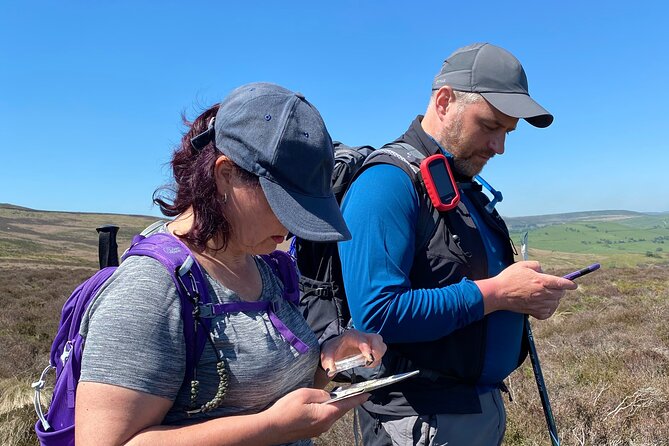
With a maximum of 8 travelers, this course is built for hands-on coaching. In a larger class, you can lose time waiting for your turn, and navigation practice needs repetition to sink in.
The guide’s commentary is part of the value. In the highlights, you hear insightful commentary while you learn, which makes the skills feel connected to what you are actually seeing. That’s the difference between memorizing facts and understanding why a decision makes sense on the ground.
Guides named in feedback include Gavin, Rick, Paul, Guy, and Richard. The best takeaway from those notes is not the names themselves, it’s the teaching style: supportive, clear, and tailored to mixed experience levels. People also mention that instructors make the course enjoyable, not stiff.
There’s also a practical reassurance here: the course is aimed at beginners and described as a good introduction to navigation fundamentals. If you have never used a compass, or it has been years since you touched one, this is exactly the kind of structured first step that helps.
Value versus buying apps or watching videos
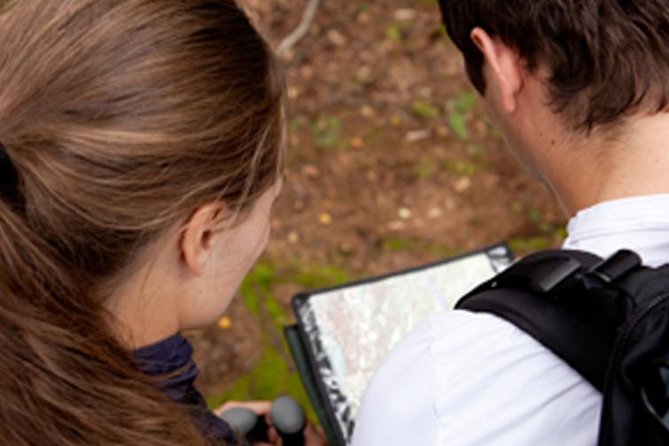
It’s tempting to rely on an offline map app or YouTube, especially if you already have a phone. But a one-day in-person skills course is different because it trains you to make decisions without staring at a screen.
Apps can help you get from A to B. Navigation skills help you understand why you are moving and what your options are when signals, battery, or terrain complicate things. Even if you plan to use an app later, map reading and compass technique make you less dependent and more flexible.
The real value here is confidence. The most praised outcomes are people leaving the day feeling capable of using the skills later. That’s what you want from a course like this: usable basics you can repeat on your next walk.
And since you’re learning with a professional guide, you can correct mistakes quickly. That matters with compasses, grid references, and direction checking. One small error early on can snowball into a wrong turn later, especially if you are not yet comfortable translating map to ground.
Who should book this course, and who might want a different option
Book it if you want to start self-guided walking and you feel uncertain about maps and direction. It’s ideal for true beginners who want a structured introduction to core tools like grid references, scale, rights of way, and compass use.
It also suits people who want a refresh. The skill set is practical and foundational, so if you last used a compass decades ago, you can rebuild the fundamentals without feeling like you’re catching up on advanced material first.
You might think twice if you already navigate confidently and you’re looking for a deeper technical challenge. This is designed as a beginner-friendly taste of skills for getting out on tracks and trails. If you’re aiming for advanced route planning, complex navigation scenarios, or long multi-day expeditions, you may want a higher level course instead.
Should you book this Peak District navigation day from Bamford?
If your goal is confidence, this is the kind of day you should strongly consider. The combination of hands-on compass work, map reading basics, and learning rights of way adds up to real, repeatable ability. The small group size also means you’re more likely to get your questions answered while you’re still learning.
I’d especially recommend it if you’re heading into the Peak District soon and you want to stop relying on luck. You’ll leave with a routine for checking direction and position that makes future walks feel more like guided competence and less like a gamble.
Just don’t ignore the food reality. Since lunch isn’t included, bring your own plan so you can stay focused when the day gets long and damp.
FAQ
Where does the course start?
It starts in Bamford, Hope Valley (S33, UK).
What time does the course begin?
The start time is 9:30 am.
How long is the course?
It runs for about 1 day.
Is lunch included?
No. Lunch is not included.
Is coffee or tea provided?
Yes. Coffee and/or tea is included.
Does it run in bad weather?
Yes. It operates in all weather conditions, so dress appropriately.
What is the maximum group size?
The group has a maximum of 8 travelers.
Is the course offered in English?
Yes. The course is offered in English.
Is free cancellation available?
Yes. You can cancel for a full refund up to 24 hours before the experience’s start time.
Recently added around England
- Horse drawn carriage ride york★ 5.0 · 75 reviews
- Private Tour – Yorkshire Dales Day Trip from York★ 5.0 · 13 reviews
- Luxury Private Yorkshire Dales National Park Tour★ 5.0 · 12 reviews
- Yorkshire Dales Tour App, Hidden Gems Game and Big Britain Quiz (7 Day Pass) UK★ 3.5 · 3 reviews
- The Treasures of Bloodaxe – A Fun Viking Treasure Hunt in York★ 4.5 · 21 reviews
- The Yorkshire Dales of All Creatures Great & Small★ 5.0 · 109 reviews
- York 3-Hour Photography Walking Tour★ 5.0 · 9 reviews
- Welcome to York – The Royal Route★ 5.0 · 6 reviews