
Reviewed · WALKING TOURS
Medieval London Walking Tour Oxford PhD Historian Guide
Medieval London comes into focus fast here. This private walk, led by Dr Geoff (an Oxford PhD historian), strings together the stories behind London’s medieval survivors and the events that erased so much else. I love how the route connects big turning points, like the Great Fire, to what you can still see on the street. I also like the mix of stops, from St Bartholomew the Great to Temple Church, where you get both architecture and backstory in one smooth loop. A fair heads-up: the tour needs good weather, and it is a full 2 hours 30 minutes of walking from start to finish.
You’ll start near St Paul’s Cathedral, with its grand stairs as your landmark, and you’ll finish at Temple Church’s garden. If you’re not up for steady pace pavement time, you may want to bring comfy shoes and plan to rest after.
In This Review
- Key things to know before you go
- Entering London’s medieval layer from St Paul’s Cathedral
- The Great Fire lesson that makes every later stop click
- William Wallace memorial, a quick stop with a big identity story
- St Bartholomew the Great, a 12th-century survivor through centuries
- Newgate Street and London’s old entry points that became courts
- Temple Church and the Knights Templar, plus wartime vault survival
- Price and time, does $122.18 feel fair?
- Who this private medieval London walk suits best
- Ready for your walking shoes, and a smooth start
- Should you book this tour?
- FAQ
- How long is the medieval London walking tour, and where does it end?
- Where do I meet the guide at the start?
- Is pickup available?
- Is this a private tour?
- Are admissions included for the stops?
- What language is the tour offered in?
- Are mobile tickets used?
- What is the cancellation and weather policy?
- Is a service animal allowed?
Key things to know before you go
- Oxford PhD guide, Dr Geoff, who explains medieval churches and British history in plain, direct ways
- St Bartholomew the Great (12th century) is one of the stops where multiple later disasters did not fully erase it
- Temple Church ties the Knights Templar, vaulting, war damage, and even a US Founding Fathers connection into one visit
- Newgate Street and the Newgate prison-era area, where medieval entry points connect to later London courts
- Pickup and mobile ticket options, plus a clear meeting marker with a blue lanyard
Entering London’s medieval layer from St Paul’s Cathedral
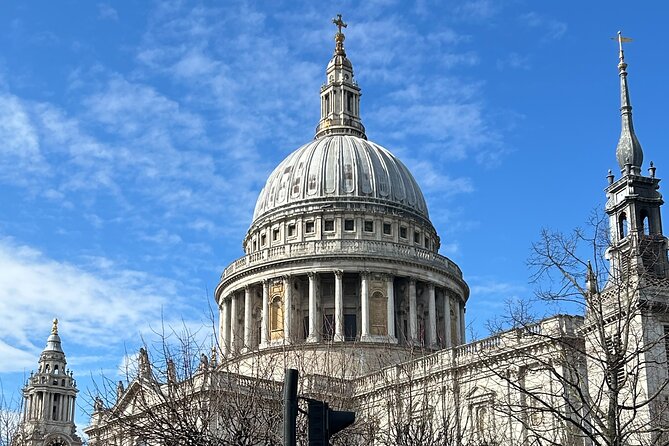
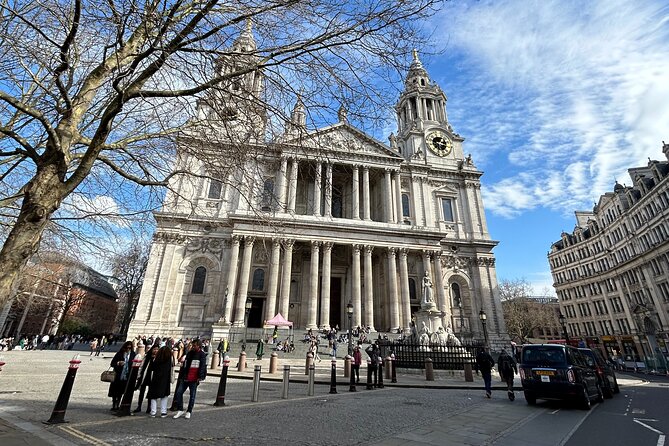
This tour starts where most visitors first notice London’s “newer” skyline, St Paul’s Cathedral. But the smart move is what happens before you even head down the first street: you get context for what came before. The Great Fire of 1666 destroyed most of medieval London, so your guide frames the route around what survived nearby and why that matters.
St Paul’s itself is part of the story. It was built by Sir Christopher Wren after the fire, and your guide connects Wren to the buildings you will see next. That link is useful because it keeps medieval London from feeling like a separate, dusty topic. You start with the turning point, then work backward and sideways toward the older fabric that is still here.
Practical tip: meet at St Paul’s Churchyard near the grand stairs. If you like being calm, arrive a few minutes early so you can spot the meeting spot quickly.
More Walking Tours in London
- Tour for Muggles The Ultimate Harry Potter Walking Tour in London
★ 5.0 · 4,684 reviews - Changing of the Guard Guided Walking Tour in London
★ 5.0 · 1,793 reviews - The Great British Rock and Roll Walking Tour
★ 5.0 · 1,371 reviews
The Great Fire lesson that makes every later stop click
Once you’re moving, you are not just sightseeing. You are learning a timeline you can walk through. Your guide’s approach is built around cause and effect: what vanished, what survived, and what later periods altered.
That matters because two of the biggest medieval-looking structures on your route did not stay untouched. St Bartholomew the Great survived multiple shocks across centuries, and Temple Church survived the Great Fire too, even though later restorations did significant damage. When you know that upfront, every architectural detail you see feels earned, not random.
Expect your guide to slow down at the right moments. The goal is not to cram dates into your head, but to give you mental hooks: why London’s medieval spaces survived in fragments, and why those fragments ended up where they did.
William Wallace memorial, a quick stop with a big identity story
After meeting at St Paul’s, you walk about 18 minutes toward St Bartholomew’s area. On the way, you pause at the William Wallace Memorial. The time here is short, about 10 minutes, and the point is more than name recognition.
Wallace represents a Scottish independence hero, and that stop widens the story beyond one corner of medieval England. Even though this is a London route, you are still tracking how Britain’s medieval and post-medieval identities showed up in public monuments and memory.
If you like history that connects personalities to place, you’ll appreciate this kind of stop. It is brief enough not to drag, but it adds color and context to the morning.
St Bartholomew the Great, a 12th-century survivor through centuries
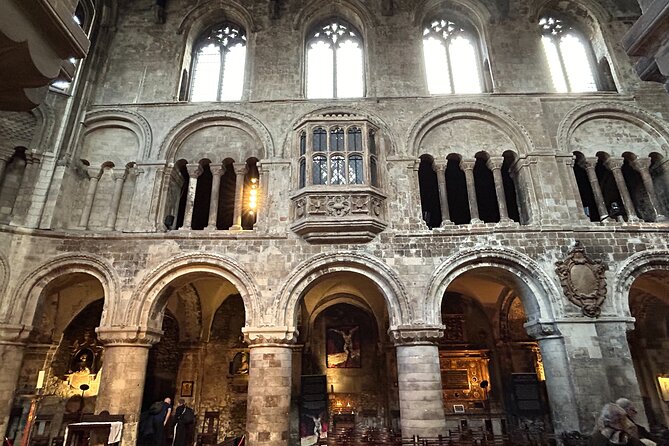
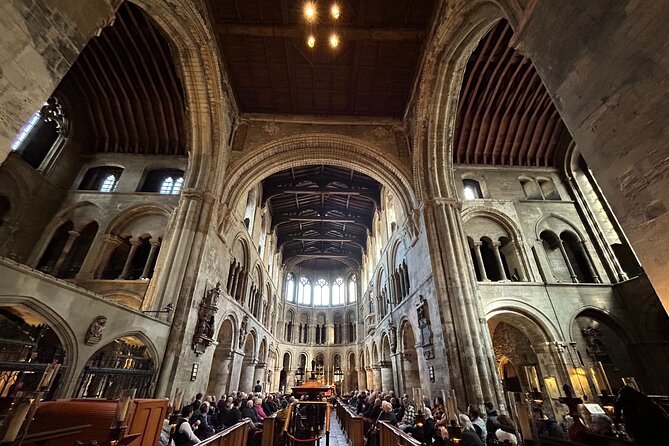
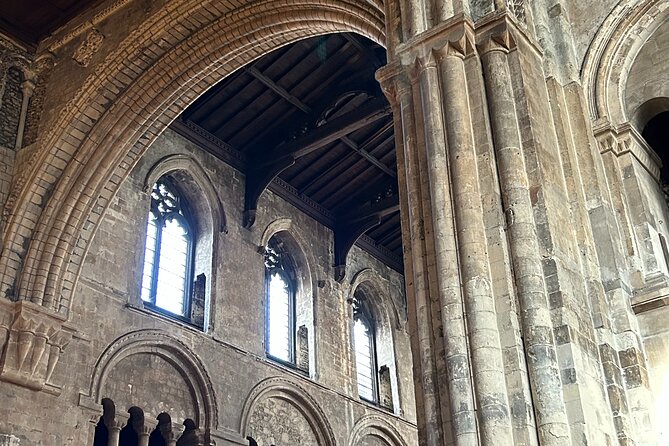
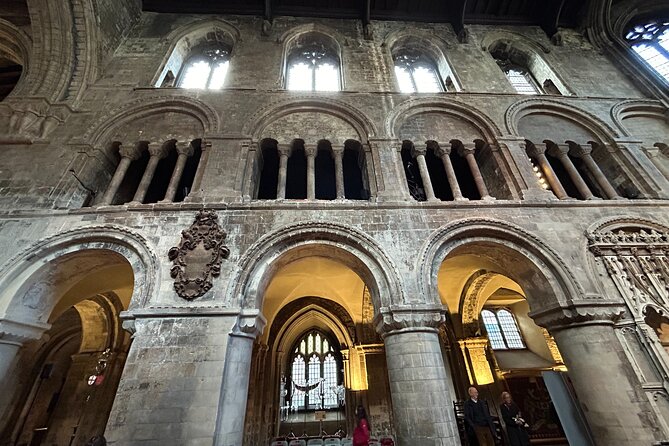
St Bartholomew the Great is the first big “stop and stay” moment on the walk, with about 45 minutes planned. This church is early Norman, dating back to the 12th century, and it is one of those places where the building feels older than the surrounding streets.
What makes it special is that it survived major disruptions that could have erased it. You are looking at a structure that endured the Great Fire of 1666, the Reformation, the Civil War, and even the Blitz of World War II. That list is not just trivia. It is a way to understand why you should pay attention to the parts you can see.
The eastern side retains stunning arches, columns, and tombs. Your guide helps you compare what you see here to later medieval churches you will visit. That comparison becomes one of the most useful parts of the tour because it teaches you how to “read” a church with your eyes.
One consideration: this stop includes admission, so it is worth arriving ready to look closely. If you rush, you will miss the architectural clues that your guide points out.
Same part of England, a different sort of day out:
- Stonehenge, Windsor Castle, and Bath from London
★ 4.5 · 18,662 reviews - London Big Bus Hop-On Hop-Off Tour with Optional River Cruise
★ 3.5 · 10,803 reviews - London Small Group Tour of Historical Pubs
★ 5.0 · 10,422 reviews - Stonehenge, Windsor Castle and Bath with Pub Lunch in Lacock
★ 4.5 · 7,402 reviews
Newgate Street and London’s old entry points that became courts
After St Bartholomew’s, the pace shifts again with a short stop at Newgate Street. This segment is about 10 minutes, but it’s packed with context.
You will discuss medieval London’s walls and how key entry points shaped the city. Newgate is one of the old gates and access areas, and later it became famous as a prison. From there, the story moves forward to the Old Bailey, London’s criminal court, which was built nearby and is still used.
This is a great moment if you like history that connects medieval geography to modern institutions. You get a sense of the city as a machine that kept reusing the same important routes and locations, even as the purposes changed.
If you are short on time in London, this stop is also a win. It takes very little time on foot, but it tells you what to notice if you walk around the area later on your own.
Temple Church and the Knights Templar, plus wartime vault survival
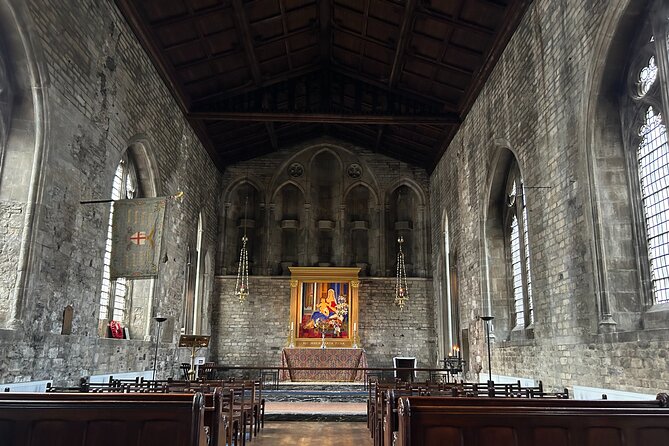
Temple Church is the grand finale, also about 45 minutes, and it is hard to beat as a closing act. If you have read The Da Vinci Code, you already know the Knights Templar name. In real life, these were medieval monk-knights, connected to the Crusades and backed by wealth. They built this church in the 12th century, and it kept standing through the Great Fire.
But here is where your guide’s historical framing really pays off. Temple Church survived the fire, yet Victorian restorations did significant damage. So when you look up, you are not just seeing medieval design. You are also seeing layers of later intervention, which makes the building a kind of time capsule you can interpret.
One of the most dramatic details is the stone vaulted ceiling. It survived the Blitz, when bombs fell all around during World War II. That contrast, medieval stone plus modern war impact, helps you understand how London’s past keeps getting tested and retouched.
Your guide also connects Temple Church to the Founding Fathers of the United States. That is a surprising thread, and even if you are not tracking it in your first pass, it gives the stop a wider horizon than you might expect from a medieval church in London.
The tour ends in the garden at Temple Church. It’s a good final reset point if your legs start negotiating with you.
Price and time, does $122.18 feel fair?
At $122.18 per person for roughly 2 hours 30 minutes, this is not a budget group walk. But it is also not priced like a full-day private charter. The value comes from the “expert guide” factor and the fact that the tour is private, meaning it is designed around your group rather than a big crowd flow.
You also get included admissions at two of the major stops: St Bartholomew the Great and Temple Church. Other stops like the William Wallace Memorial and Newgate area are free, which keeps the cost tied to the most meaningful interiors.
Timing helps the value math too. You do not spend hours getting between far-flung neighborhoods. The route is built for a walk between tightly connected historic areas, so you are always close to the next story beat.
If you’re traveling as a couple or small group and you care about history, the price starts to make sense quickly. If you mainly want quick views and photos, you might feel it is more guided than you need.
Who this private medieval London walk suits best
This works especially well if you like history you can see, not just read. The tour focuses on medieval survivors, key institutions, and architecture you can compare stop to stop. It is also ideal if you enjoy a guide who answers questions well, because the format encourages conversation.
Pick it if:
- you want a single focused route that covers multiple big themes without feeling rushed
- you enjoy churches and architectural details, not just famous street names
- you like guided explanations that connect centuries, like Wren’s post-fire rebuilding to what medieval London left behind
You might skip it if:
- you dislike walking for 2.5 hours total
- you only want broad sightseeing highlights and no deep explanation of what you’re looking at
Ready for your walking shoes, and a smooth start
The logistics are simple but worth planning for. The start is St Paul’s Cathedral at 10:00 am. You meet near St Paul’s Churchyard grand stairs, and Dr Geoff will be holding a blue lanyard showing Historic Tours of England. The tour ends at Temple Church, in the garden.
It is near public transportation, and service animals are allowed. You will receive confirmation at booking, and the tour uses a mobile ticket. Most people can participate, but it does require good weather, so check conditions and dress for walking.
Should you book this tour?
Yes, if you want medieval London with a guide who can tie buildings, wars, restorations, and institutions together without turning it into a lecture. The strongest reason to book is the combination of a professional historian and the specific selection of stops that still show medieval fragments beside later layers of London’s story.
Skip it only if you hate walking time or you want a casual stroll with minimal interpretation. For most history-minded visitors, this is a smart, efficient way to get beneath the surface and walk away with a clearer mental map of how London changed.
FAQ
How long is the medieval London walking tour, and where does it end?
The tour runs about 2 hours 30 minutes. It starts near St Paul’s Cathedral and ends in the garden at Temple Church.
Where do I meet the guide at the start?
You meet at St Paul’s Cathedral, in St Paul’s Churchyard, near the grand stairs. The start time is 10:00 am.
Is pickup available?
Pickup is offered. Dr Geoff will have a blue lanyard showing Historic Tours of England.
Is this a private tour?
Yes. It is a private tour/activity, and only your group will participate.
Are admissions included for the stops?
Admission is included for Church of St Bartholomew the Great and Temple Church. Admission tickets are free for William Wallace Memorial and Newgate Street.
What language is the tour offered in?
The tour is offered in English.
Are mobile tickets used?
Yes, the tour uses a mobile ticket.
What is the cancellation and weather policy?
You can cancel for free up to 24 hours in advance for a full refund. The tour requires good weather, and if it is canceled due to poor weather you will be offered a different date or a full refund.
Is a service animal allowed?
Yes, service animals are allowed.
Recently added around London
- Stonehenge Private Tour★ 5.0 · 4 reviews
- Private Transfers From Heathrow Airport to Central London★ 5.0 · 8 reviews
- Professional Private Couple Photoshoot★ 5.0 · 35 reviews
- Private transfer to Southampton with a stop at Stonehenge★ 4.5 · 33 reviews
- Private transfer from London Heathrow Airport to Southampton★ 5.0 · 3 reviews
- Private London Panoramic Tour by Car with Pick Up From Your Hotel★ 5.0 · 13 reviews
- Private Transfer Any London Hotel to Southampton Cruise Port★ 5.0 · 7 reviews
- Private driver tours to Leeds Castle, Canterbury, White Cliffs★ 4.5 · 30 reviews
Walking Tours, compared.
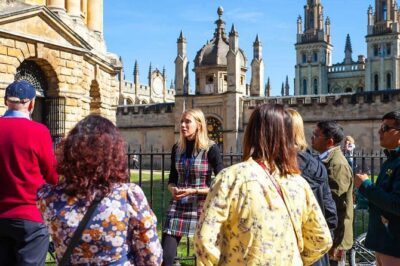
Oxford University Walking Tour With University Alumni Guide
Read our review →
Tour for Muggles The Ultimate Harry Potter Walking Tour in London
Read our review →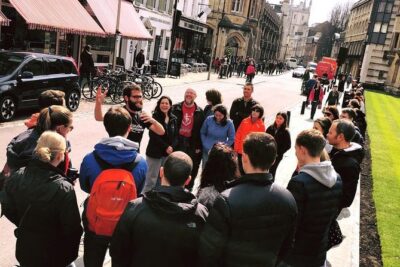
Cambridge University Walking Tour by Alumni™ Kings College Option
Read our review →
Blackbeard to Banksy – The Ultimate Walking Tour of Bristol
Read our review →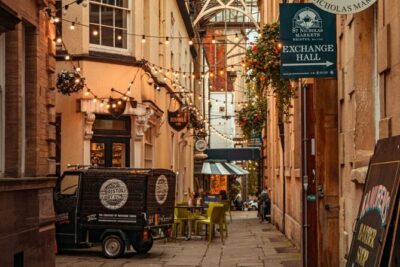
Air Raid Shelter + St. Nicholas Market Walking Tour
Read our review →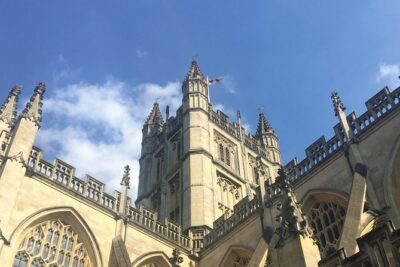
Walking Tour of Bath with Blue Badge Tourist Guide
Read our review →
Changing of the Guard Guided Walking Tour in London
Read our review →
Shadows of York: Ghost Walk and Horrible History.
Read our review →Browse the lists this tour appears in