
Reviewed · CITY TOURS
Money and Power in the City Sightseeing Tour
Money and power, in two hours. This City of London history tour follows the money trail from Roman and medieval beginnings to today’s financial skyline, mostly on foot. I especially like the small-group feel and the guide-led mix of stories, gossip, and scandal that makes big institutions feel human. One consideration: it runs outdoors and requires good weather, so plan for that.
You start at Emperor TrajanA100 near the City and finish near the London Stock Exchange, with a clear end point that feels like you are walking right into the modern action. Expect an English-speaking guide, a mobile ticket, and a maximum group size of 8, which keeps the pace comfortable and questions easy.
In This Review
- Key moments you will get from Money and Power in the City
- Walking the City of London like a money map
- Emperor Trajan to Paternoster Square, how the route sets the mood
- Roman and Medieval beginnings, where the Financial District story starts
- East India Company stop, why the City keeps repeating the same theme
- Royal Exchange, Bank of England, and Mansion House: power in neo-classical form
- Exchange Alley and Change Alley, the shortcut that explains how the City moves
- The coffee-shop location where the stock market began
- Guildhall and the medieval guild buildings, power that managed daily life
- St Paul’s over the trading world, seeing the skyline story
- What the guide style adds, Terry, Terry, and Mr. Silvers impact
- Price and value: why $41.14 can work for your schedule
- Who should book Money and Power in the City
- Should you book it
- FAQ
- How long is the Money and Power in the City sightseeing tour?
- Where does the tour start and end?
- What time does the tour run?
- What language is the tour offered in, and will I get a ticket on my phone?
- How big is the group?
- Is the tour suitable for most people, and are service animals allowed?
- What happens if the weather is bad, and can I cancel for a refund?
Key moments you will get from Money and Power in the City
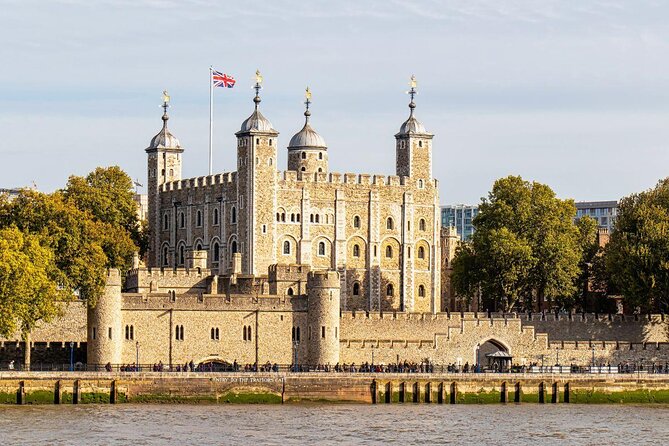
- Roman to Medieval origins explained nearby: you start with the Financial District’s early beginnings.
- East India Company connections in the City: you are shown an important historic East India Company location.
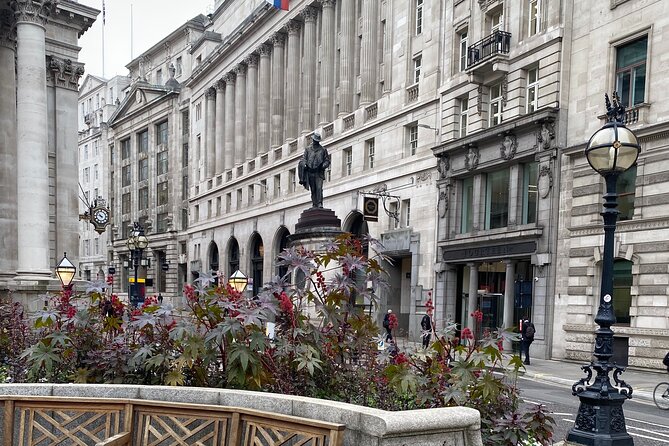
- Neo-classical power blocks: Royal Exchange, Bank of England, and Mansion House get put into context.
- Exchange Alley, the shortcut through history: a narrow alley that linked Cornhill to Lombard Street.
- The coffee-house start point of the stock market: you see where the market story began.
- St Paul’s as the skyline anchor: the cathedral towers over the trading world around it.
Walking the City of London like a money map
This is not the kind of tour where you stare at one building and move on. You walk a tight loop that ties streets and landmarks to the idea of money and power, from old trading habits to today’s financial center. The payoff is that you leave with a clearer mental map, not just a list of sights.
The small-group size matters here. With a maximum of 8 people, the guide can slow down when you have questions, and you are not stuck listening while everyone else rushes ahead. If you are new to London finance, that is a big help, and if you already know the basics, the stories still connect the dots.
I also like the tone. The guide style is built around storytelling, with humor and clarity that keeps the time moving. People in the group vary a lot in background, and the tour is set up so the explanations still land.
More City Tours in London
- City Sightseeing London Hop-On Hop-Off Bus Tour & Bookable Extras
★ 4.0 · 1,224 reviews - Private Windsor Castle, Stonehenge, The City of Bath Day Tour
★ 5.0 · 468 reviews - Heathrow London Airport Transfer to City center
★ 5.0 · 213 reviews
Emperor Trajan to Paternoster Square, how the route sets the mood
You begin at Emperor TrajanA100, London EC3N 4DR, with the meeting point at Emperor Trajan, then you finish at London Stock Exchange, 10 Paternoster Sq, London EC4M 7LS, by the main column in Paternoster Square. Starting at 2:00 pm is a nice middle-of-the-day window, because you are not rushing before lunch and you are still likely to catch good light for photos around St Paul’s.
The tour ends at the London Stock Exchange area, which is a satisfying bookend. You do not just learn about the institutions, you walk into the same neighborhood where modern trading is still happening. That is a practical way to feel the scale of the City.
Bring comfortable shoes. This is a foot-forward experience, and the stops are spread across streets that are part of the City’s everyday flow. The good news is that you are near public transportation, so it is easy to get there and get on with your day afterward.
Roman and Medieval beginnings, where the Financial District story starts
The tour kicks off with the Roman and Medieval beginnings of the Financial District. Even if you only catch the gist, it gives you a foundation for what comes next, because the City did not start as a slick modern business park. It grew through earlier patterns of settlement, trade, and civic organization that shaped how the area works.
What I like about this opening is that it stops you from treating the City like it appeared fully formed. When you understand that the Financial District has roots, the later landmarks feel less random. Instead, they read like upgrades built on top of earlier street logic.
You will also notice how the route is set up so you keep moving. That helps with attention, because every time you reach a new corner, the guide can connect it back to the bigger theme of money and power.
East India Company stop, why the City keeps repeating the same theme
Next, you see an important historic East India Company location. The way the tour frames it is simple but effective: you already learned about early beginnings, and now you are shown how major trading organizations connect to the City’s growth.
This is where the tour’s storytelling format really shows. Rather than dry recitation, you get the backstory that explains why that spot matters in a money-focused walk. If you like hearing how institutions build influence, this stop gives you that angle without needing a textbook.
One practical tip: use this moment to ask questions about what you are seeing right now. Since the guide is focused on making history feel relevant, you can usually get a clearer explanation by asking how the East India Company thread ties to the other sites you will see later.
A few more London days worth comparing
- Stonehenge, Windsor Castle, and Bath from London
★ 4.5 · 18,662 reviews - London Big Bus Hop-On Hop-Off Tour with Optional River Cruise
★ 3.5 · 10,803 reviews - London Small Group Tour of Historical Pubs
★ 5.0 · 10,422 reviews - Stonehenge, Windsor Castle and Bath with Pub Lunch in Lacock
★ 4.5 · 7,402 reviews
Royal Exchange, Bank of England, and Mansion House: power in neo-classical form
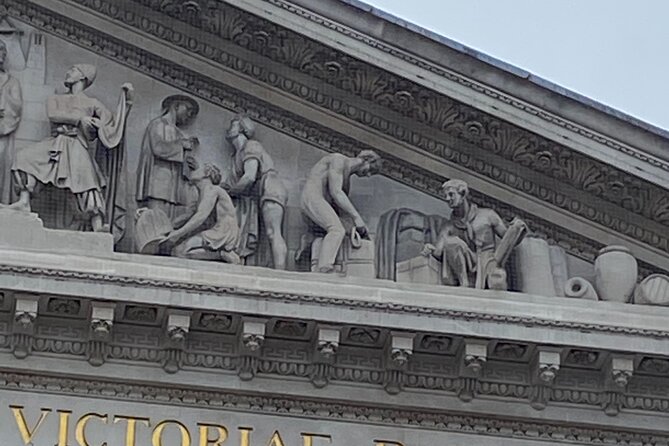
Then you hit the heavy hitters of the City, with the neo-classical splendour of the Royal Exchange, Bank of England, and Mansion House. The tour does a good job of treating architecture as more than decoration. You are not just looking at impressive facades, you are learning how these landmarks became symbols of authority and finance.
Here is what makes this stop valuable for you as a visitor: it trains your eye. Once you hear what to look for, you start noticing how design choices signal stability, control, and status. That is the kind of context you cannot get from a quick glance off a phone camera.
Also, these are the places where the tour’s walking approach pays off. You experience them as part of a connected street-world, not as separate photos you take and forget. The guide’s pacing helps too, so you are not overwhelmed by too many grand buildings in a row.
Exchange Alley and Change Alley, the shortcut that explains how the City moves
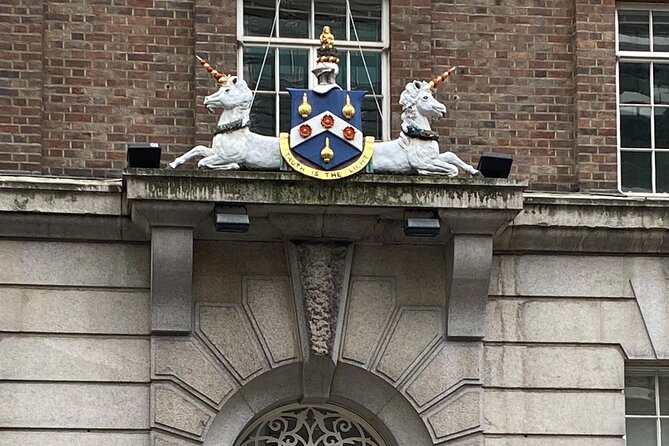
One of the best practical stops is Exchange Alley, also known as Change Alley. This is a narrow alleyway connecting shops and coffeehouses in the City, and it served as a convenient shortcut from the Royal Exchange on Cornhill to the Post Office on Lombard Street. You also learn why alleys like this mattered as a way to move faster between important business points.
I like this stop because it reframes the City from a collection of big-name landmarks into a working network of smaller spaces. When you walk an alley like this, you feel how business life depends on movement, shortcuts, and informal meeting spots.
The tour also points out that Exchange Alley remains one of several alleys linking the two streets. That means you can carry the concept forward as you explore on your own afterward, spotting other connecting lanes that keep the City flowing.
If you want a quick way to get more from this part of the walk, look down the alley and imagine the people moving between the Royal Exchange and the Post Office. It is a simple mental exercise, but it makes the setting click.
The coffee-shop location where the stock market began
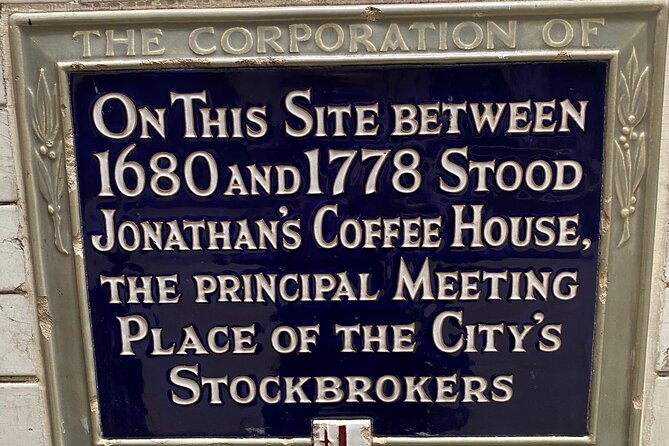
You also see the location of the coffee shop where the stock market was first based. This is one of those moments where the tour turns a modern idea into something more grounded and human.
It is also a reminder that big systems often start in ordinary places. Coffeehouses were social spaces, and a stock market beginning there fits the general theme of how commerce grows through conversation and proximity.
This stop works best if you lean into the idea of context. Instead of treating it as a marker on a map, treat it as a clue about how people once gathered, shared information, and made decisions. Even without extra background, the tour language helps you connect the dots.
Guildhall and the medieval guild buildings, power that managed daily life
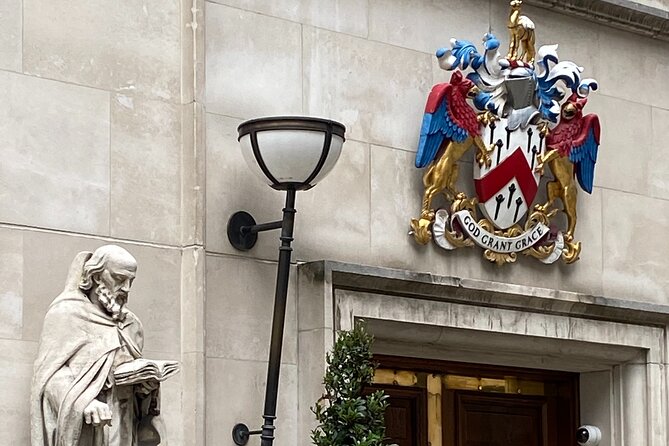
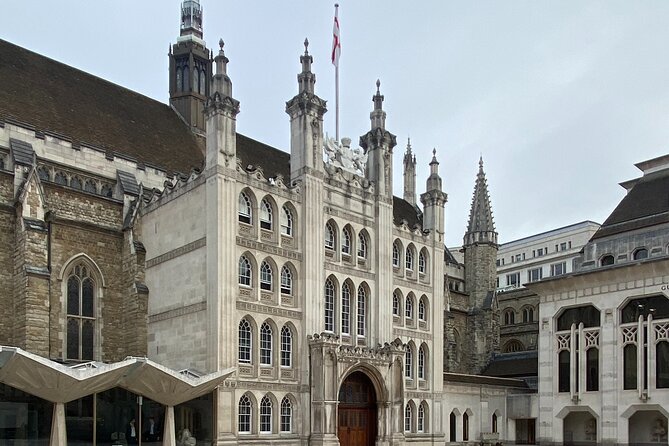
Next comes the medieval Guildhall and selected nearby Guild buildings. This part matters because it adds a civic layer to the money story. Medieval guild halls were used to store goods and host celebratory events, and when they were not needed for guild members, they often became places where townspeople could hold entertainments such as Passion plays.
That detail is more than trivia. It tells you the guild system was not only about economics, it also shaped community life. In a tour focused on money and power, this stop shows that power also ran through culture, gatherings, and shared public space.
The value for you is that the City stops feeling like a corporate museum. You get a sense of how institutions once handled storage, festivities, and public events in the same area. It makes the “power” theme broader, not just about banks and trading.
A practical note: this is the segment where you may want to slow down and look around the surrounding buildings. The tour helps you see patterns, and that works best when you give yourself a couple of extra minutes to notice what is near the Guildhall area.
St Paul’s over the trading world, seeing the skyline story
The final stretch ties the modern stock market area to St Paul’s Cathedral, with the cathedral effectively towering over the financial skyline. You also learn key facts about the cathedral: it is an Anglican cathedral in London, it is the seat of the Bishop of London, and it serves as the mother church of the Diocese of London. It sits on Ludgate Hill at the highest point of the City of London and is listed as Grade I.
This ending lands because it gives you perspective. The cathedral is a fixed reference point, and the stock market presence around it gives you contrast. You see how spiritual and civic authority coexisted with commercial power in the same city space.
If you want the best view, pay attention to how you are positioned as the group arrives near the final area. The tour’s finishing point near the London Stock Exchange area makes it easy to look between modern trading space and the cathedral’s bigger presence.
It is also a good chance to ask for a quick wrap-up question, such as what theme the guide wants you to remember most. The guides you hear about, including Terry and Mr. Silvers from the experience details, are praised for answering questions clearly and keeping the flow engaging.
What the guide style adds, Terry, Terry, and Mr. Silvers impact
The guide is a huge reason this tour scores so high. People highlight Terry as an amazing guide, praised for being very knowledgeable and for making the tour fun and informative. There is also mention of guides who answer questions well and meet the group where they are, so you do not feel lost if finance is not your thing.
Mr. Silvers also gets named as knowing the history and showing great, interesting places. That matters because a walking tour lives or dies on interpretation. You are looking at the same street anyone can see, but the difference is whether the guide gives you a reason to care.
The storytelling style is not just entertainment. It is a learning tool. When the guide uses gossip and scandal as entry points, it helps your brain hold onto details because you are picturing real people making real choices.
If you like tours where you can ask questions and get straight answers, this is built for you.
Price and value: why $41.14 can work for your schedule
At $41.14 per person for about 2 hours, this is priced in the practical zone for a focused walk. The value comes from three things you cannot ignore in London: time, group size, and context.
First, you get two hours of guided walking instead of spending that time piecing it together yourself. Second, you keep it small, with a maximum of 8 travelers, so your questions do not get swallowed by a large crowd. Third, you are not just visiting landmarks, you are hearing the stories behind the places, with insider angles like the gossip and scandal side of the City’s past.
Is it a bargain? It is in the right price range for a guide-led City experience, especially one that ends in the modern trading neighborhood rather than looping endlessly. If you are short on time, it is also a smart way to build a framework so your independent exploring afterward makes more sense.
This tour is also noted as being booked around 33 days in advance on average, which is a good hint that you should not wait until the last minute if your schedule is tight.
Who should book Money and Power in the City
This is a great choice if you like history that connects to the present. The City’s financial district can feel intimidating if you do not know the backstory, but this tour is designed to give you that context through a guided walk.
It is also ideal if you enjoy people-focused storytelling. The guide approach, including the talk of gossip, scandal, and insider stories, is what makes the City feel less like a theme park and more like a real place with real characters.
If you have limited time in London and want one compact, high-impact outing, this works well. You can build the rest of your day around the ending near Paternoster Square and the London Stock Exchange area.
Should you book it
I would book this if you want a high-context walk that turns major City landmarks into a coherent story about money and power. The combination of short duration, small-group limit, and a guide who can explain complex ideas in plain language is a strong match for most visitors.
Skip it if you dislike outdoor walking, or if you know you will not handle weather well. Since the experience requires good weather, you do not want to gamble on a day that is likely to be rough.
If you like learning by moving through a city, not just standing and reading plaques, this is the kind of tour that leaves you with a clearer mental picture fast.
FAQ
How long is the Money and Power in the City sightseeing tour?
It’s approximately 2 hours.
Where does the tour start and end?
It starts at Emperor TrajanA100, London EC3N 4DR, UK, and ends at London Stock Exchange, 10 Paternoster Sq., London EC4M 7LS, UK, near the main column at Paternoster Square.
What time does the tour run?
The start time listed is 2:00 pm.
What language is the tour offered in, and will I get a ticket on my phone?
The tour is offered in English, and you get a mobile ticket.
How big is the group?
The maximum group size is 8 travelers.
Is the tour suitable for most people, and are service animals allowed?
Most travelers can participate, and service animals are allowed.
What happens if the weather is bad, and can I cancel for a refund?
The experience requires good weather. If it’s canceled due to poor weather, you’ll be offered a different date or a full refund. Free cancellation is available, and you can cancel up to 24 hours in advance for a full refund.
Recently added around London
- London National Gallery Private Guided Tour★ 5.0 · 6 reviews
- Women in the British Museum★ 5.0 · 8 reviews
- London New Year’s Eve Dinner Cruise★ 4.5 · 8 reviews
- Hidden Tudors Tours: Mysterious Black Tudor London Walks★ 5.0 · 7 reviews
- Camden Market & Southbank Cycle Food Tour★ 5.0 · 3 reviews
- Music of London Rock And Pop Private 3-Hour Walking Tour★ 5.0 · 16 reviews
- Rock Music Walking Tour of London’s Soho★ 5.0 · 123 reviews
- London Murder Mystery Dinner Cruise★ 3.5 · 9 reviews
City Tours, compared.
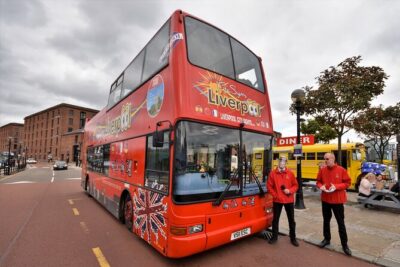
Liverpool City Sights Hop On Hop Off City Tour – 24hr Ticket
Read our review →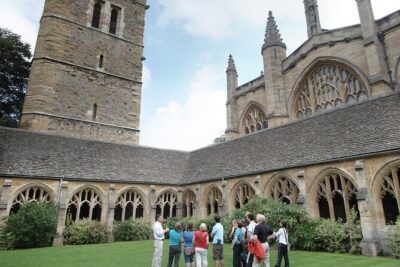
1.5-hour Oxford City and University Walking Tour
Read our review →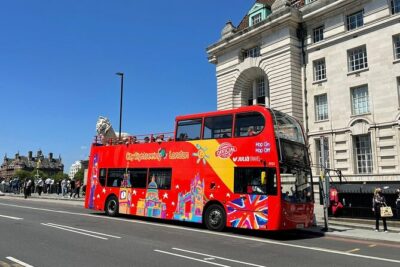
City Sightseeing London Hop-On Hop-Off Bus Tour & Bookable Extras
Read our review →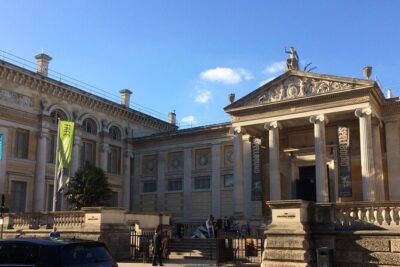
City Sightseeing Oxford Hop-On Hop-Off Bus Tour
Read our review →
Browse the lists this tour appears in