
Reviewed · GHOST TOURS
Private Ghosts and Gore Walking Tour of London
London at night has a darker bedtime story.
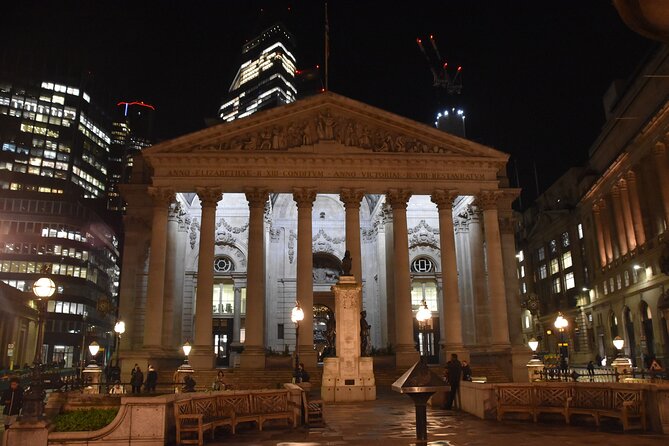
This private ghost and gore walk takes you through the City of London’s churchyards, alleyways, and famous haunted pubs with a guide who frames each haunting in plain, solid history. I especially love how the tour helps you get your bearings fast, because you move through landmarks that make the whole area easier to understand even if you only have a short time.
I also love the way the guide delivers it like a story, not a script. In my experience reading what Michael, one of the guides, brings to the route, it’s clear he is more of a historian than a performer, so you get context with every creep-inducing stop. The one thing to consider is that it is packed, with about five minutes per location, so you will want good shoes and you should be ready to walk steadily for the full stretch.
In This Review
- Key highlights you will feel fast
- Price and what “private” really buys you
- Where you start, how the route flows, and what the walk feels like
- St Magnus The Martyr to Cornhill: when the City’s churches point to the grave
- St Michael’s Cornhill and St Mary Woolnoth: storms, devils, and the Black or Bank Ghost
- St Michael Paternoster Royal and St James Garlickhythe: feline footsteps and Jimmy the Mummy
- Haunted pubs and a cursed Cockney church: Williamson’s Tavern and St Mary Le Bow
- Noble Street, plague pits, and Greyfriars: orbs and apparitions in the City
- Temple Bar, Amen Court, and the Old Bailey area: where punishment becomes architecture
- Holy Sepulchre, Cock Lane, and Pye Corner: bells, murder cases, and resurrection men
- West Smithfield, St Bartholomew the Great, and the Charterhouse finale: executions to plague pits
- Who this tour suits best, and who may want a different style of sightseeing
- Should you book Private Ghosts and Gore Walking Tour of London?
- FAQ
- How long is the Private Ghosts and Gore Walking Tour of London?
- Where does the tour start and end?
- What does the tour cost?
- Is it a private tour or do I join strangers?
- Is the tour offered in English?
- Do I need to buy tickets or pay for entry at the stops?
- Is the tour accessible for wheelchairs and strollers?
- What is the cancellation policy for a full refund?
Key highlights you will feel fast
- Private group pacing: only your group goes, so questions and detours fit the mood
- Guide-led history meets horror: the storytelling leans on real London details, not empty spooky noise
- Churchyard to pub to court: you cover the City’s most haunted-looking corners in about two hours
- Free entry at the listed stops: each stop is marked as admission ticket free in the tour notes
- Perfect for a night orientation: you learn the geography while you chase the chills
- Wheelchair and stroller accessible route: plus service animals are allowed
Price and what “private” really buys you
At $247.70 per group for up to 15 people, this tour can be a very solid value when you’re traveling with friends or family and can actually fill the group cap. If you’re a solo traveler, the price will feel steep compared to public walking tours, but the private format is the tradeoff you’re paying for: you get your guide’s full attention and a smoother pace.
The “private” part matters most on a ghost tour, because it is the difference between rushing past details and slowing down when something catches your interest. If you like history buffs’ stuff, like why the City of London keeps resurfacing in stories about death and punishment, this tour’s structure is built for you.
More Ghost Tours in London
- Ghost, Ghouls and Gallows Tour : Guided Tour with Boat Ride
★ 4.5 · 3,212 reviews - Ghost Bus Tour of London
★ 4.0 · 961 reviews - Ghastly Ghost Walking Tour in London
★ 5.0 · 878 reviews
Where you start, how the route flows, and what the walk feels like
You begin at Monument to the Great Fire of London, near Fish St Hill (EC3R 8AH). The ending point is Farringdon Station (Cowcross St, EC1M 6BY), finishing close to an Elizabeth Line entrance, which is handy if you want a clean exit without backtracking.
Plan on about 2 hours total, and a moderate fitness level is recommended. The route is wheelchair and stroller accessible, so you will likely see a lot of paved or manageable sidewalks, but five-minute stop times mean you should expect a steady walking rhythm, not a leisurely stroll.
Because every stop is marked admission ticket free, you are not budgeting extra money for entry fees during the route. That keeps your evening focused on the stories and the sights outside the churches and along the City streets.
St Magnus The Martyr to Cornhill: when the City’s churches point to the grave
The first stop sets the tone at St Magnus The Martyr. The guide frames a haunting around a specific shadowy figure that points to a particular grave inside the church, and you hear how a spiritual medium’s visit in 1951 shaped the tale. Even if you are skeptical, I find this kind of story works because it forces you to look at one spot, not just the building in general.
Then you move to 54-55 Cornhill, where the visuals are the hook. Instead of angels, the “heavens” idea is flipped to devils in the detail, and the guide connects it to how power and craftsmanship show up in City architecture. It’s short, but you leave with a sharper eye for decorative meaning in London.
At St Peter-upon-Cornhill, the tone shifts slightly toward literature. The guide brings in A Christmas Carol, with the idea of Ebenezer Scrooge horrified by his own grave. What I like here is the bridge between local hauntings and how London writers used real places and real fear to make fiction hit harder.
St Michael’s Cornhill and St Mary Woolnoth: storms, devils, and the Black or Bank Ghost
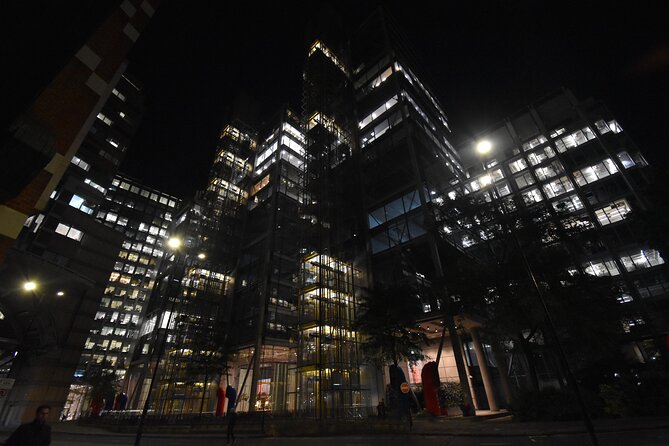
Next comes St Michael’s Cornhill, where you get a story about the day the devil visited London during a storm. This is the kind of stop that works best when you listen for the guide’s emphasis on weather, timing, and the way people in earlier centuries tried to explain chaos.
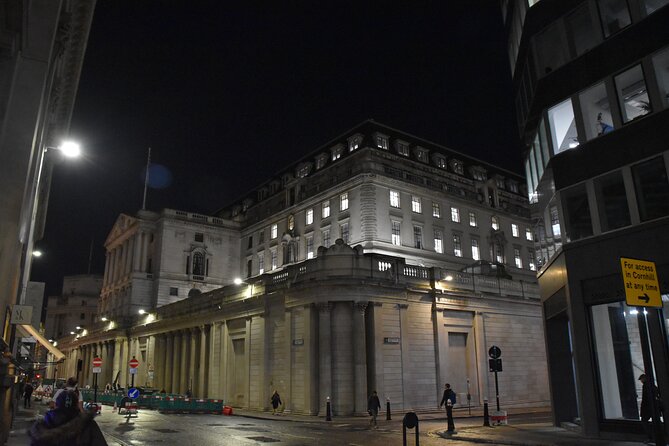
At St Mary Woolnoth, the tour reaches one of its best-known “haunts the area” stories, the Black or Bank Ghost. The haunting is tied not just to the church but to the wider surroundings, including Bank Station and the Bank of England. You also hear the setup about a woman in black asking about her brother, which makes the story feel like it has a social “you might hear this” quality, not just a spooky legend pinned to stone.
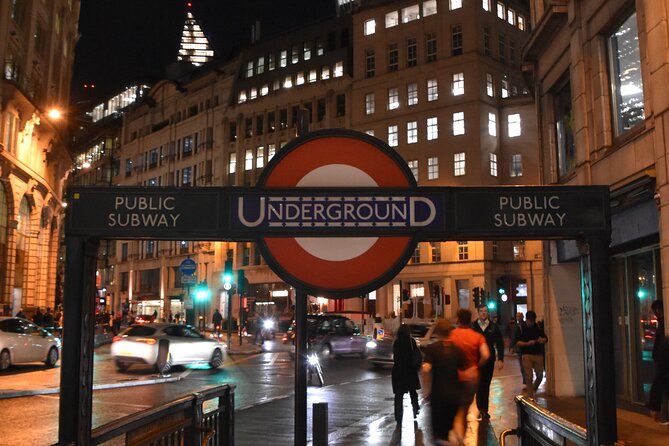
There is another thread here too, the secret of the Bank Station Booking Hall. The value of this stop is how it links modern London movement, like commuting spaces, with older layers of fear and rumor.
More Walking Tours in London
- Tour for Muggles The Ultimate Harry Potter Walking Tour in London
★ 5.0 · 4,684 reviews - Changing of the Guard Guided Walking Tour in London
★ 5.0 · 1,793 reviews - The Great British Rock and Roll Walking Tour
★ 5.0 · 1,371 reviews - Westminster Guided Walking Tour with Abbey Entry
★ 5.0 · 1,282 reviews
St Michael Paternoster Royal and St James Garlickhythe: feline footsteps and Jimmy the Mummy
At St Michael Paternoster Royal, the guide turns the focus to a Lord Mayor connection and a feline companion. You are told that a ratter is said to still roam between this location and the next. It’s playful, but it also gives you a reason to watch for the “in-between” spaces London keeps in its historical backstreets.
Then you hit St James Garlickhythe, where the story goes from spooky to uniquely specific. Workers discovered a mummified body in 1835, and it was displayed in a case for years, with local children reportedly playing with it under the nickname Jimmy the Mummy until about twenty years ago. The guide’s claim is that Jimmy still haunts the church and points to the buried spot.
This is one of those stops where the ghost story is almost secondary to the human detail. It makes you think about how communities treated the unusual back then, and how curiosity, fear, and respect got tangled.
Haunted pubs and a cursed Cockney church: Williamson’s Tavern and St Mary Le Bow
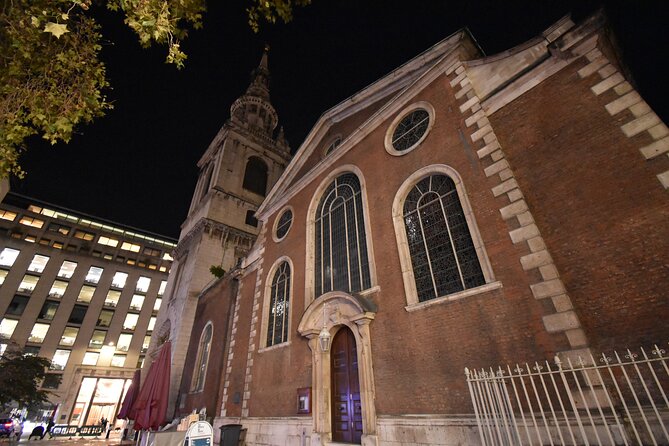
Williamson’s Tavern is next, and it leans hard into the classic London pub haunt vibe. You hear about poltergeists and phantoms and even a claim that the premises petrify police dogs that try to enter. The guide also sets up the sensory stuff, doors banging and steps heard, with a feeling that you have limited options once you’re inside.
Then you go to St Mary Le Bow Church. Here the story flips again: this church is described as the most cursed in London rather than haunted. There are threads about it burning, collapsing, and repeated accidents, plus mentions of murders and other deaths. The bells also matter in a very London way, because being born within hearing range of the bells is tied to being a Cockney.
If you want one stop that gives you a cultural London “accent in the air” feeling, this is it. If you dislike darker rumor-based storytelling, it can feel intense, but it is still tied to a real landmark people recognize.
Noble Street, plague pits, and Greyfriars: orbs and apparitions in the City
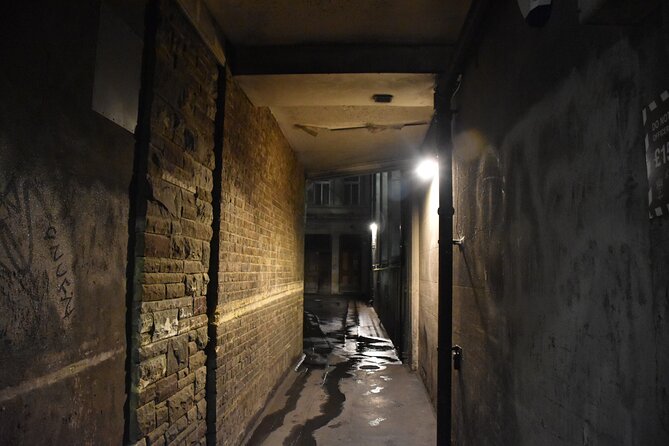
You then head to Noble Street, one of the oldest parts of the City where a Roman garrison once stood. The guide connects it to the founding of the City of London and to visible remnants like parts of the Roman wall and the medieval wall. Death-linked stories are part of the package here, including talk of orb photos and strange occurrences.
Right after that, you visit St Anne and St Agnes Garden, which sits over one of London’s plague pits. The guide ties the plague’s impact to how the area is remembered, and you hear why orbs are said to show up in photographs even today. If you like practical “try it and see” activities, bring your phone charger pack, because this is one of the stops where a quick photo attempt is part of the fun.
Then you reach Christchurch Greyfriars Church Garden, known for ruins and multiple ghosts. You hear names and character types, like Queen Isabella and her lover in rebellion, a married couple who are often seen arguing, a religious prophetess, a monk, and even a greyhound. Even with all the supernatural claims, I like how the guide treats the garden as a real place you can picture in different time periods.
Temple Bar, Amen Court, and the Old Bailey area: where punishment becomes architecture
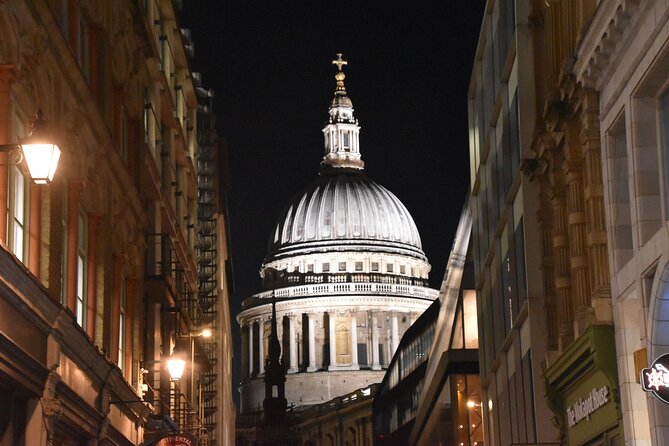
At Temple Bar, the story is about public display and power. You learn it was designed by Sir Christopher Wren and served as the main western entrance to the City of London. The ghost angle is tied to traitors and criminals whose severed heads were placed on public display, with the souls of the condemned said to remain part of the gateway’s mood.
Then you move to Amen Court, where you can see remaining walls of Newgate Prison. The guide points out that children play in the area above those foundations, and the questions the story raises are the heart of the stop: why children play here, and how people living nearby might not realize what sits beneath.
From there you hit The Viaduct Tavern, where the “most haunted pub” theme shows up with a mischievous ghost called Fred. You hear about harmless but confusing pranks, like flushing the ladies’ loos while it’s being used, and the guide also tells how a medium questioned Fred’s identity. For me, this stop is a nice tonal reset after the grimness around Newgate and the City courts.
Holy Sepulchre, Cock Lane, and Pye Corner: bells, murder cases, and resurrection men
Old Bailey comes next, and the guide links it back to the old Newgate site. You hear how people were hung in the street until 1868, and the haunting is tied to the Black Dog of Newgate, with a warning vibe if you spot a large black dog around the area.
At Holy Sepulchre Church, the focus becomes specific and physical: you learn about an execution bell that would toll before an execution nearby. The guide also explains the custom of ringing the bell, and you hear how one of the clerks who rang it became part of an infamous ghost story told in the next stop.
That story finishes at Cock Lane, where the Church Clerk of Holy Sepulchre narrative reaches its dramatic conclusion. You hear about a murder investigation and how a young girl is said to be channeling the spirit of a dead woman who insists she was murdered, while major minds in London work to save a man’s life.
Then you go to Golden Boy of Pye Corner, where the story connects London’s fire history to grave robbing. The guide explains that the statue marks the furthest point west of the Great Fire of London and recalls the practice of stolen bodies displayed for doctors at St Barts Hospital to dissect. It’s one of the stops where the tour’s “gore” promise is most directly about the system behind it, including resurrection men and why fresh corpses were in demand.
West Smithfield, St Bartholomew the Great, and the Charterhouse finale: executions to plague pits
At West Smithfield, the tour leans into England’s most brutal public punishments. You hear about rebel executions, including claims about William Wallace and Wat Tyler, along with stories of people burned at the stake and even boiled alive. The guide also brings in the butcher’s market smell as part of why the executions felt even worse in the moment. The link to ghosts continues too, with talk of St Barts Hospital being full of poltergeists, a haunted lift, and students reporting strange activity late at night.
Next is St Bartholomew the Great, described as the oldest surviving church, and haunted by its founder Rahere, who is said to appear hobbling around. The guide tells you why Rahere is limping after hundreds of years and who is blamed for it, giving you a story that is both creepy and oddly personal.
At Rising Sun, you get another resurrectionist-pub link, plus one of the most unsettling ghost concepts on the route, nicknamed a sex pest ghost. The guide also raises the practical human side of it, mentioning how difficult it is to find female staff willing to live on-site. I’ll be honest, this is the stop that might feel too uncomfortable for some people, so if you prefer lighter spook material, know it’s coming.
Finally, the Charterhouse ties the whole evening together. You hear about one of London’s largest plague pits, with an estimate of 50,000 buried beneath the buildings, plus ghost sightings tied to monks executed during the Reformation. The guide ends by explaining how modern medical science might interpret these strange experiences, and you hear that a prestigious school of psychiatry in the UK is based in the area of Charterhouse Square.
Who this tour suits best, and who may want a different style of sightseeing
This is best for you if you like history with teeth, or if you enjoy London landmarks but want a story thread that makes them feel alive. If you’re traveling with scare seekers, it’s also built for that, because you get multiple types of hauntings, from grave-linked apparitions to execution-bell legends and plague pit stories.
You may want a different type of tour if you dislike darker themes, especially the stops involving execution, dissection, and resurrection men. Also, because it is time-boxed at each stop, it is less ideal if you want long museum-style reading or deep interior access.
Should you book Private Ghosts and Gore Walking Tour of London?
Yes, if you want a short, high-impact night walk through the City of London that mixes clear historical context with ghost stories you can actually picture. I would book it if you care about the details that make London feel layered, and you like the idea of walking from one landmark to the next instead of bouncing around with guesswork.
Book it especially if you can fill the group, since the $247.70 per group up to 15 setup can bring the per-person cost down in a way that feels more fair for a private evening. And if you’re hoping for a smart, entertaining guide, the strongest signal here is the kind of delivery Michael is known for: historian energy with a creepy sense of timing. If you want proof, ask yourself one question before you go, do you want your London to have a pulse after dark? If yes, this tour is your kind of plan.
FAQ
How long is the Private Ghosts and Gore Walking Tour of London?
The tour lasts about 2 hours.
Where does the tour start and end?
It starts at the Monument to the Great Fire of London, Fish St Hill, London EC3R 8AH. It ends close to an Elizabeth Line entrance to Farringdon Station, Cowcross St, London EC1M 6BY.
What does the tour cost?
It costs $247.70 per group, up to 15 people.
Is it a private tour or do I join strangers?
It is a private tour, meaning only your group participates.
Is the tour offered in English?
Yes, it is offered in English.
Do I need to buy tickets or pay for entry at the stops?
All listed stops are marked as Admission Ticket Free.
Is the tour accessible for wheelchairs and strollers?
Yes, it is wheelchair and stroller accessible. Service animals are also allowed.
What is the cancellation policy for a full refund?
You can cancel for a full refund up to 24 hours in advance of the experience start time. Cancellation less than 24 hours before does not receive a refund.
More Ghost Walks in London
- Ghosts of Greenwich: London’s Haunted Walking Tour
★ 5.0 · 50 reviews - London Bridge Ghost Walking Tour
★ 4.0 · 38 reviews - Haunted London: Ghost Hunt Self-Guided Walking Adventure
★ 3.5 · 13 reviews - Classic Ghost Stories with An Actor
★ 5.0 · 11 reviews
Recently added around London
- Private Tour, The British Museum, popular with Families & Small Groups★ 5.0 · 5 reviews
- Private Gluten Free Borough Market Food Tour★ 5.0 · 4 reviews
- Private Full Day tour of Windsor castle and Hampton court palace from London★ 3.5 · 3 reviews
- British Museum Highlights Private Guided Tour★ 5.0 · 29 reviews
- Private Guided Full Day Downton Abbey Tour★ 5.0 · 15 reviews
- Private Guided Borough Food Tour★ 5.0 · 7 reviews
- Private Full Day Cotswolds Tour From London★ 5.0 · 8 reviews
- Private Full-Day London Tour by Foot & Public Transport★ 4.5 · 6 reviews
Ghost Tours, compared.
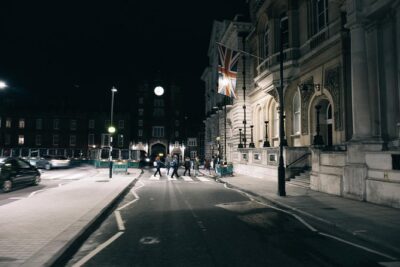
Ghost, Ghouls and Gallows Tour : Guided Tour with Boat Ride
Read our review →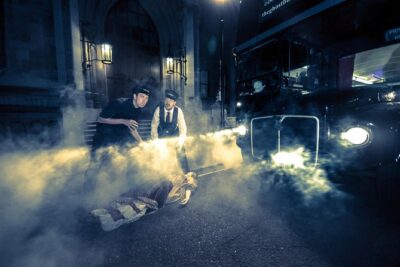
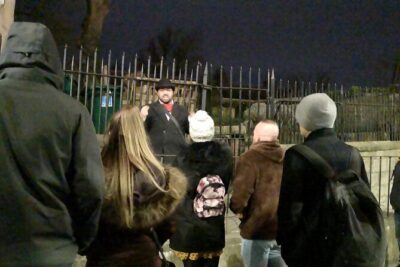
Shadows of York: Ghost Walk and Horrible History.
Read our review →


Creepy Cambridge – Cambridge’s Most Entertaining Ghost Walk
Read our review →Browse the lists this tour appears in