
Reviewed · WORKSHOPS
Private South Indian Home Cooking Class in London with a Local
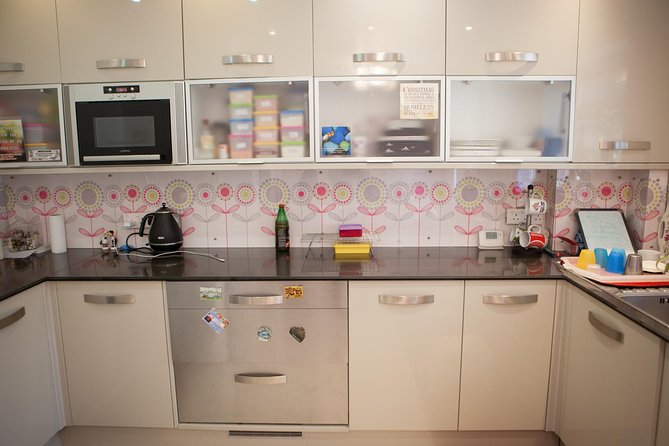
Cooking in a real London kitchen feels special. This private South Indian cooking class in Orpington lets you learn from Jemima and her family right at home, not in a studio. I especially liked the private feel, where you can ask questions as you cook, and the fact that it is set in calm Zone 6 London suburb life.
I love how hands-on the teaching is. You help make things like dosas (the fermented lentil-and-rice crepe), chutney, and a curry, then you sit down to eat what you made. I also really liked the way hosts keep the pace friendly and personal, with Jemima using her lifelong cooking knowledge and her family pitching in, including her husband Aaron.
One consideration: you are responsible for getting yourself to Orpington, and there is no hotel pickup. If you are short on time or dislike trains into the outer zones, this may feel like a bigger trip than a central London food tour.
In This Review
- Quick hits you will actually care about
- Why Orpington makes this South Indian cooking class feel different
- How the 2.5 hours in Orpington really works
- Jemima’s kitchen teaching style: questions welcome, pace stays friendly
- The likely menu: chaias to dosas, chutney, curry, and coconut rice
- Starter: a spiced South Indian drink
- Main 1: dosas with tomato chutney
- Main 2: a meat or vegetable curry dish
- Main 3: coconut rice
- Dessert: fresh fruit
- What makes dosas and chutney the best value lesson
- The curry part: spicy, but with structure
- Eating at their dining table, with the patio option in summer
- Drinks included: why that actually improves the class
- Price and value: what $105 buys you in London
- Who should book this South Indian home cooking class
- Practical tips before you go (so it feels smooth)
- Should you book Jemima’s South Indian home cooking class?
- FAQ
- How long is the South Indian home cooking class?
- What dishes are included in the class experience?
- Is this a private experience?
- Are drinks included?
- Where do we meet and how does it end?
- Is there a cancellation refund available?
Quick hits you will actually care about
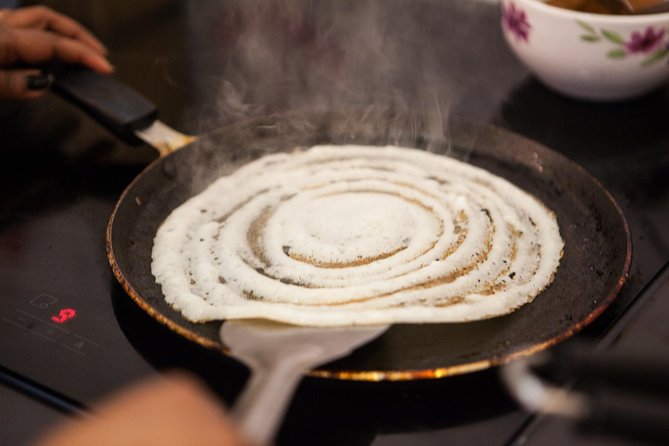
- Real home setting in Orpington, with Jemima cooking in her family space
- Private group experience, so you get more direct feedback than you would in a big class
- A practical cooking menu, built around dosas, chutney, curry, and coconut rice
- Welcome drink plus alcoholic and non-alcoholic beverages, so you can relax while you cook
- Meal setup is intentional, with the host serving so dosas come out piping hot
- Summer option for the patio meal, if the weather cooperates
Why Orpington makes this South Indian cooking class feel different
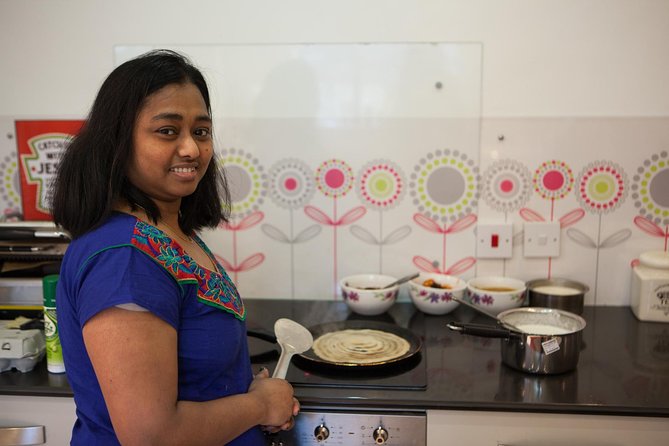
London has plenty of food tours, but this one is about food at home. You go to Orpington, in London Zone 6, a quieter pocket outside the busy core where working families live. The vibe is calmer than you might expect, and it matters, because cooking is easier when you are not rushing through a crowd.
The big win here is that it is private and family-run. Jemima cooks with you, and her husband Aaron and children are part of the background rhythm when they are home. That adds context you do not get in a typical classroom, like how ingredients get chosen, how chutneys get adjusted, and what people actually eat on a normal day.
The other detail I like: you are not just learning recipes. You are learning the logic behind them, like why dosas need the right batter texture and heat control, and how chutneys can be balanced to match the curry. Even if you only cook a dish or two afterward, the method sticks.
A few more London days worth comparing
- Pasta Making with Unlimited Prosecco in London’s West End
★ 5.0 · 264 reviews - Indian Cooking Masterclass in London
★ 5.0 · 50 reviews - 3 Hour Chinese Dumpling Cooking Class for 2-6 people in London
★ 5.0 · 44 reviews
How the 2.5 hours in Orpington really works
The experience runs about 2 hours 30 minutes, and the timing is built around two phases: cooking, then eating. Depending on your group size, the actual cooking portion lasts about 1 to 1.5 hours. That is long enough to feel hands-on, but short enough that the class never turns into a slow marathon.
You start at Station Approach, Orpington (BR6 0SX). You meet there and then head to the home. At the end, it returns you back to the meeting point, so you do not need to figure out a separate drop-off.
For me, the key practical advantage is that the hosts can control the flow. Jemima will answer your questions while you cook, and during the meal she will serve, but she will not sit down and eat with you. That sounds odd on paper, but it makes sense: she can keep an eye on timing so dosas stay piping hot when you get to them.
Because it is a private tour, you only share the space with your group. That often means quieter conversation and fewer interruptions, which matters when you want to ask about ingredients like lentils, rice batter, coconut, and spices.
Jemima’s kitchen teaching style: questions welcome, pace stays friendly
This is not a formal lecture. You learn in the middle of doing the work. Jemima has been cooking throughout her life, and her teaching method matches that, you pick up technique by seeing what she does and then doing it yourself.
A major theme is questions. You can ask as many as you like about South Indian cooking, from ingredient swaps to how to control spice levels. In the reviews, people highlight that the conversation was delightful and that they learned a lot about the ingredients they were using. That lines up with what you would want from a cooking class: not just a list of steps, but real guidance.
Also, the hosts prepare additional dishes for you to try. Your hands-on menu is focused, but you are not limited to only what you personally cook. That helps if you are curious about the broader South Indian spread, especially if you are new to dishes like dosas and idlis.
The likely menu: chaias to dosas, chutney, curry, and coconut rice
Your exact menu can vary, but here is the kind of spread you should expect based on the class design and sample dishes.
Same part of England, a different sort of day out:
- Stonehenge, Windsor Castle, and Bath from London
★ 4.5 · 18,662 reviews - London Big Bus Hop-On Hop-Off Tour with Optional River Cruise
★ 3.5 · 10,803 reviews - London Small Group Tour of Historical Pubs
★ 5.0 · 10,422 reviews - Stonehenge, Windsor Castle and Bath with Pub Lunch in Lacock
★ 4.5 · 7,402 reviews
Starter: a spiced South Indian drink
You get a welcome Indian drink, and one example is chaas, a spiced buttermilk yogurt drink. It is a smart start in a cooking class because it is refreshing and balances spice before the hot food hits. It is also a good clue to the menu logic, South Indian food often plays with cooling flavors and acidity, not just heat.
Main 1: dosas with tomato chutney
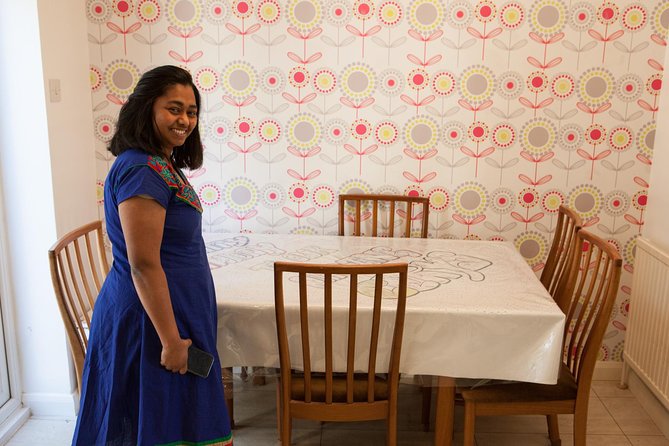
Dosas are the headline. They are made from fermented lentil and rice batter, then cooked into thin crepe-like rounds. In a home setting, you learn more than the recipe name. You learn how the pan and heat matter, and why chutney is not an afterthought.
The tomato chutney is part of that balance. In many South Indian meals, chutneys do the job of brightening the flavors so the curry is not overwhelming. If you are the type who likes to eat with sauces, you will love this portion.
Main 2: a meat or vegetable curry dish
You may make and eat a curry dish. The sample menu includes beef ularthiyathu, a dry roasted beef with onions and spices. That is a specific, flavorful choice, and it gives you something beyond the most common curry stereotype.
You might also see a vegetable curry as an option depending on what the hosts are planning for your group. Either way, expect a curry that is built around spices and aromatics, not just gravy heat.
Main 3: coconut rice
Coconut rice is included, and it is another balance move. Coconut rice tends to soften spice and add aroma. If you learn this pairing once, you will know how to build a South Indian-style plate at home, curry plus something fragrant plus a chutney component.
Dessert: fresh fruit
Dessert is kept simple, fresh fruit. That fits the meal rhythm and avoids a heavy ending after a filling class.
What makes dosas and chutney the best value lesson
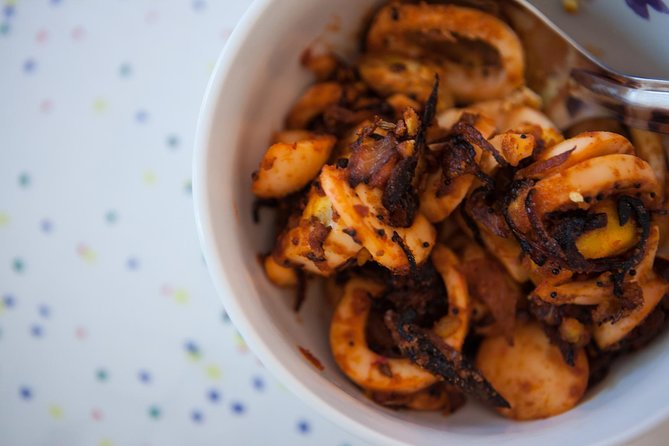
If I had to pick one part of the experience that justifies the price, it is the dosas and chutney pairing. It teaches you the two core skills of South Indian home cooking: batter-based comfort food and condiment flavor building.
Dosas can feel intimidating when you see them on a menu, but the class format makes them approachable. You get to work with the batter, practice the cooking steps, and understand what makes them right. And when you add tomato chutney, you learn how acidity and sweetness can sharpen the bite.
Chutney is also where you can ask the most useful questions for future cooking. You can talk about spice control, texture, and how to adjust it to match the curry. Even if you do not nail every step at first, you will walk away with a clear sense of how the flavors should work together.
The curry part: spicy, but with structure
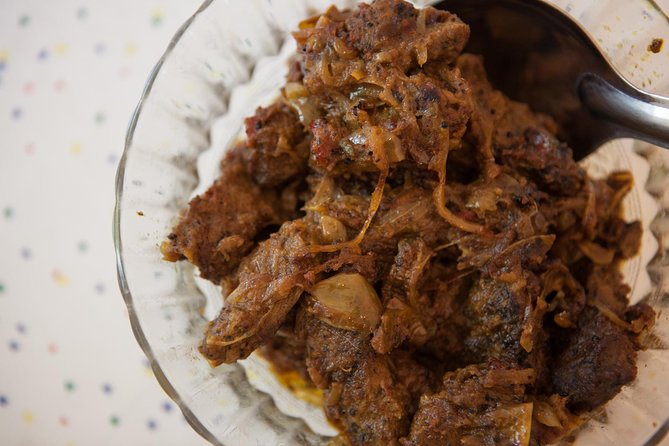
Curry in South Indian cooking often has a different feel than what some people expect. Instead of thinking only about thick sauce, focus on spices, onions, and how the dish gets cooked down. The sample beef dish, beef ularthiyathu, is described as dry roasted with onions and spices. That tells you it is more about concentrated flavor than watery curry.
That is valuable because it gives you options when you cook at home. If you are used to simmering and thickening, this approach broadens your technique. You learn that curries can be drier, more spice-forward, and built for spooning with rice or folding into a meal with chutney.
For anyone with dietary preferences: the sample menu includes beef. If you do not eat beef, plan ahead when you book and ask what can be adapted for your group. The hosts are also known for adapting to tastes, so do not be shy about discussing your needs.
Eating at their dining table, with the patio option in summer
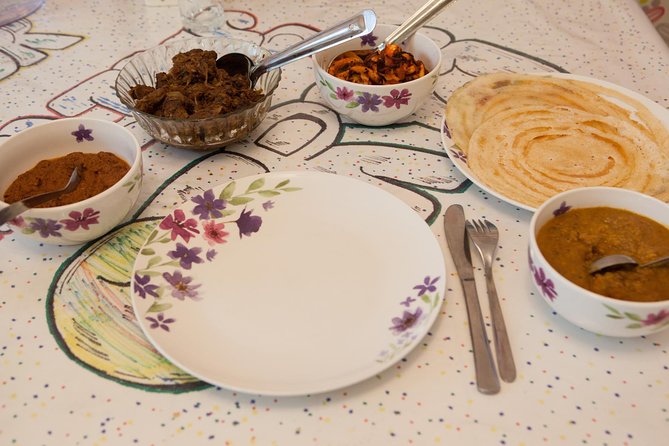
After the cooking, you eat the meal you helped prepare. The host serves you and chats as you eat, but she does not eat with you. Again, this is not a social oddity, it is a timing strategy. It keeps the dosas hot when they hit your plate.
If you are visiting in warm weather, you might eat on their back patio. That can turn the whole experience from meal plus lesson into something more memorable, especially if London skies cooperate.
One practical note: because this is a home setting, do not expect restaurant plating or a formal service routine. You are there for food, conversation, and learning. That is part of the charm, and it is why people leave talking about the dishes and the friendly host talk, including Aaron’s conversation in the feedback.
Drinks included: why that actually improves the class
Alcoholic and non-alcoholic beverages are included. That means you can settle in and keep the mood relaxed while you cook. Food education works better when you are not stressed and watching the clock, and drinks help with that.
The chaas starter is non-alcoholic (spiced buttermilk), and it sets you up for the rest of the meal. Then you can choose alcoholic or non-alcoholic options as the class continues.
If you prefer to keep it light, you still get a welcome drink and hydration. If you enjoy a casual glass with dinner, this class is set up for that without making it feel like an afterthought.
Price and value: what $105 buys you in London
At $105 per person for about 2 hours 30 minutes, this is not a budget option. But it is also not trying to be. The value is in three places.
First, you get a private cooking class format with personalized feedback. That is usually what drives the cost higher than group cooking demos.
Second, you get the full meal outcome. You do not just watch, you cook a portion of the food, then you eat a South Indian meal built around dosas, chutney, curry, coconut rice, and fruit. That means the class is not separate from dinner. It is dinner.
Third, drinks are included. Beverage inclusion can matter more than people expect, because it keeps the experience flowing and comfortable.
The biggest “cost” is not money, it is travel to Orpington. If you are already in outer London or you enjoy suburb exploring, it feels easy. If you are basing yourself far from Zone 6, factor in train time and plan your day so you do not arrive frazzled.
Who should book this South Indian home cooking class
This is a great match if you want more than a recipe souvenir.
Book it if:
- You love South Indian food or want to learn it from the source, in a home kitchen
- You like conversation and want to ask real questions about ingredients and technique
- You prefer smaller, personal experiences over big group activities
- You want a meal at the end that you helped create
It may be less ideal if:
- You strongly dislike traveling to outer zones and planning around transit
- You expect a hands-off cooking show with no participation
- You have strict dietary limits and need guaranteed menu changes, because the sample includes beef and the exact menu can vary
Practical tips before you go (so it feels smooth)
Plan your transport early. Orpington is not central London, so check your train route before booking day gets busy. Since there is no hotel pickup, arriving a bit early is smart.
Wear comfortable clothes. You will be standing and working as you cook, and this is a home environment, not a polished restaurant kitchen with staff-only floors.
Come with curiosity. The best part of the class is the questions you ask, so think about what you want to know, like how dosas are made, how chutney texture is controlled, or what spices are doing in the curry.
If you drink alcohol, enjoy it. The class is set up with beverages included, but keep in mind you are still cooking and eating a full meal.
Should you book Jemima’s South Indian home cooking class?
I think it is a strong yes for the right traveler. If you want a genuine local home meal, and you like cooking that is practical and teachable, this private class gives you that in a calm Orpington setting. The biggest draw is the combo of hands-on learning and a real dinner you helped make, plus the relaxed conversation with Jemima and Aaron.
If you are only looking for quick tastes or you want a central London schedule with minimal transit, you might feel the outer-zone location more than the average person. But if you are willing to go a little farther for a more personal meal experience, this is the kind of food day that sticks with you, even after you get back home.
FAQ
How long is the South Indian home cooking class?
It lasts about 2 hours 30 minutes. The cooking portion typically lasts 1 to 1.5 hours, depending on your group size.
What dishes are included in the class experience?
A sample menu includes a welcome Indian drink (like chaas), dosas with tomato chutney, a meat curry such as beef ularthiyathu or a vegetable curry, coconut rice, and fresh fruit for dessert.
Is this a private experience?
Yes. It is private, meaning only your group participates.
Are drinks included?
Yes. Alcoholic and non-alcoholic beverages are included, and a welcome Indian drink is part of the experience.
Where do we meet and how does it end?
You meet at Station Approach, Orpington BR6 0SX, UK. The experience ends back at the meeting point.
Is there a cancellation refund available?
Yes. You can cancel for a full refund if you cancel up to 24 hours in advance of the experience start time.
Recently added around London
- Private Chauffeured Minivan Tour of Stonehenge from London★ 4.0 · 5 reviews
- London sightseeing tour with a chauffeur driver★ 5.0 · 7 reviews
- Private Bike or eBike Gold Classic Tour London★ 5.0 · 124 reviews
- Private Chauffeur at your Disposal in London★ 4.0 · 4 reviews
- Private Driver at Your Disposal in London★ 4.0 · 4 reviews
- Private Chauffeured Tour to Hever Castle from London★ 5.0 · 6 reviews
- Private Chauffeured Tour to Windsor Castle from London★ 5.0 · 20 reviews
- Private Blenheim Palace, the birthplace of Winston Churchill, Tour from London.★ 3.5 · 3 reviews
Workshops, compared.



Chocolate Bar Making Workshop – York Cocoa Works
Read our review →

3 Hour Chinese Dumpling Cooking Class for 2-6 people in London
Read our review →
Browse the lists this tour appears in