
Reviewed · WALKING TOURS
Secrets of the London Underground Small Group Walking Tour
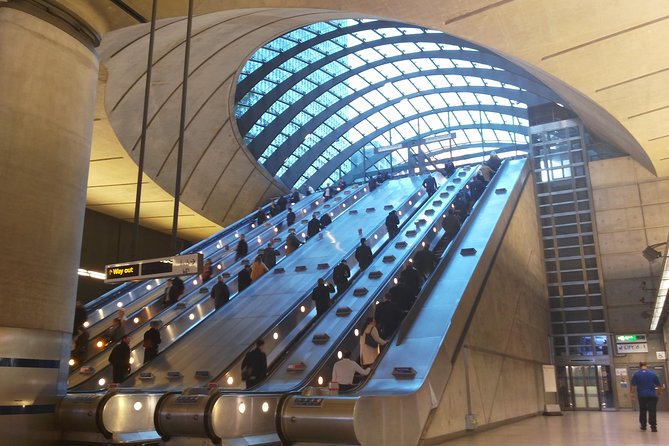
A city built on trains is a city built on stories. This small group London Underground walking tour gives you a Tube-themed way to see central London, with Victorian engineering details and station history you miss when you just pass through. I love how it pairs famous stops with less-known stories, and I also like the hands-on, human scale of the max 25-person group. One thing to consider: it’s a walking tour with many steps, so it may be tough if you have mobility limits or get uncomfortable in crowds.
You’ll start at Baker Street and work your way toward Westminster, hitting stations tied to the Underground’s early growth and later expansions. Along the way, you’ll hear how the system was built in the Victorian era, plus tales of disused and even haunted spaces on the network, not just happy sightseeing facts. Guides can bring serious energy too, and past groups have mentioned guides such as John, Angela, and Peter by name for their storytelling and clear, calm pacing.
In This Review
- Key Highlights I’d Chase on This Tour
- Tube History on Foot: Why This Tour Feels Different
- Price and Value: What You Pay, What You Still Need
- How the Walking Portion Works (and Who It Fits)
- Stop-by-Stop: What You Learn at Each Station
- Baker Street Station: The Underground’s Early Roots
- Oxford Circus Station: The Victoria Line Plans You Can Still Feel
- Green Park Area and Down Street: A Disused Station Story
- Piccadilly Circus Station: Two Line Beginnings on One Spot
- Embankment Station by the Thames: Engineering Meets Land Reclamation
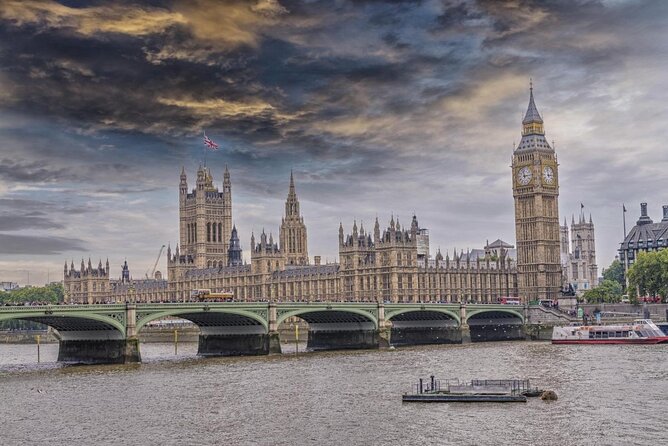
- Westminster Station: From Westminster Bridge to the District Railway
- Haunted and Disused Stations: Why That Portion Works
- Guides Matter: What to Expect From the Storytelling
- Timing and Pacing: Staying Comfortable for 2.5 Hours
- When This Tour Is the Best Fit (and When It Isn’t)
- Should You Book This London Underground Tour?
Key Highlights I’d Chase on This Tour
- Start at Baker Street Station, tied to the Metropolitan Railway and the world’s first underground railway roots
- Oxford Circus history you can picture, including dates and plans for the Victoria line’s early cross-platform interchange idea
- Down Street (Green Park area) tells the disused-station story, opened in 1907 and closed in 1932
- Piccadilly Circus Station has two-layer origin dates, linking Bakerloo and Piccadilly line platform openings in 1906
- Embankment connects engineering to land reclamation, showing how the Thames shoreline development shaped the line
- Small group pacing helps you keep up, with time built in at each stop for explanations
Tube History on Foot: Why This Tour Feels Different
London’s Underground is one of those things you learn by using, not by understanding. You can ride it for decades and still miss why certain stations look the way they do, or why some spaces disappeared from regular service. That’s the core appeal here: this is a tour that treats the network like a living timeline.
I also like that it’s not trying to sell you souvenirs or chase big, generic viewpoints. Instead, you’re focused on infrastructure, station design, and the decisions behind the system. It gives you a local side of London you can’t really fake, because you’re reading the city through its transit choices.
The format matters too. A maximum of 25 people keeps the walk feeling manageable, and it tends to make it easier to hear the guide. You’re also moving through some of the most central parts of London, so even when you’re not stepping into a station space, you’re in the setting where history actually happened.
More Walking Tours in London
- Tour for Muggles The Ultimate Harry Potter Walking Tour in London
★ 5.0 · 4,684 reviews - Changing of the Guard Guided Walking Tour in London
★ 5.0 · 1,793 reviews - The Great British Rock and Roll Walking Tour
★ 5.0 · 1,371 reviews
Price and Value: What You Pay, What You Still Need
At $41.13 per person for roughly 2 hours 30 minutes, the ticket price is relatively approachable for a guided, small-group format in central London. The value comes from what’s included: you visit one of the Underground’s original stations opened in 1863, you hear how the system was built in the Victorian era, and you get station stories that reach beyond normal fare.
But you should plan for one extra cost reality: the tour does not provide travel cards. You’ll need contactless, an Oyster card, or a travel card valid for Zone 1 (and the tour specifically notes Zones 1 to 2 for a day travel card). So think of this as a guided history experience that rides along with the Tube system you pay for separately.
Also, admission tickets are not included at most stops. One stop is listed as free (Westminster), which is helpful, but don’t assume every station stop comes with ticketed access. In practice, you should expect a lot of outside viewing and inside station history talk, rather than a set of fully ticketed attractions at each stop.
How the Walking Portion Works (and Who It Fits)
This is billed as a walking tour and it includes many steps, so it’s not suitable for guests with reduced mobility. Even if you’re fit, it’s still worth wearing supportive shoes, because you’ll be stopping frequently and moving between station entrances.
I’d also suggest you come ready for city crowds. The route covers high-traffic areas like Baker Street, Oxford Circus, and Piccadilly Circus, and the tour is timed in short segments. Having a moderate physical fitness level will make the pace feel lively instead of exhausting.
Because it’s a small group, this is a great pick if you like asking questions and hearing specific explanations. It also fits history buffs well, since the tour focuses on construction, politics, and how the Underground shaped life in different eras. One reviewer highlighted WWII context as part of the storytelling, which tells you the guide approach can go beyond dates and into impact.
Stop-by-Stop: What You Learn at Each Station
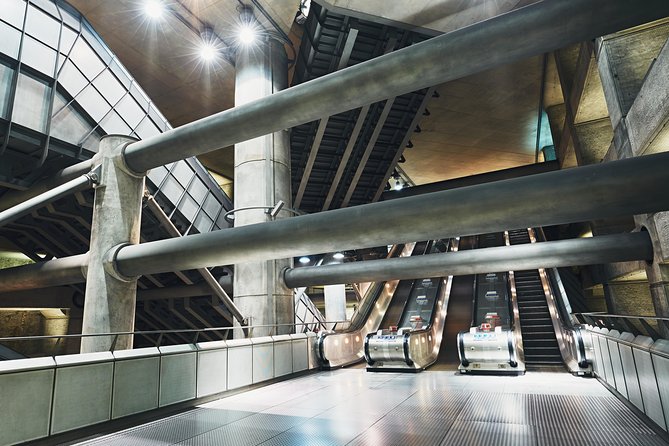
The route is paced with short, focused stops, around 10 minutes each. That’s long enough to give you the key history points without turning the tour into a lecture marathon.
Same part of England, a different sort of day out:
- Stonehenge, Windsor Castle, and Bath from London
★ 4.5 · 18,662 reviews - London Big Bus Hop-On Hop-Off Tour with Optional River Cruise
★ 3.5 · 10,803 reviews - London Small Group Tour of Historical Pubs
★ 5.0 · 10,422 reviews - Stonehenge, Windsor Castle and Bath with Pub Lunch in Lacock
★ 4.5 · 7,402 reviews
Baker Street Station: The Underground’s Early Roots
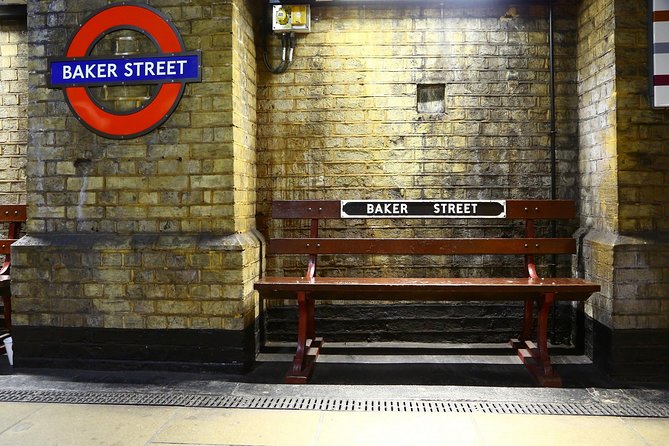
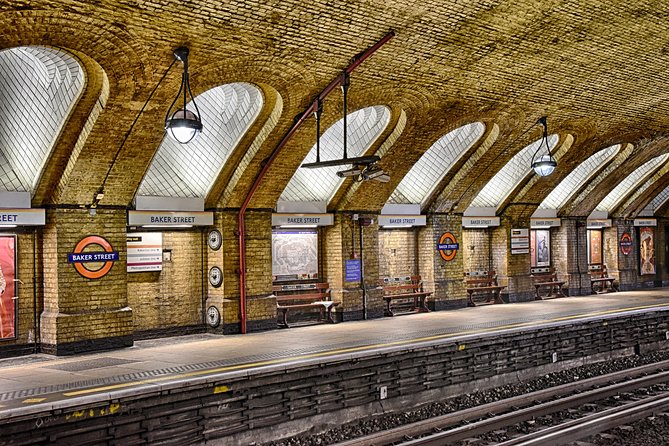
Your starting point is Baker Street Underground Station, tied to the Metropolitan Railway, which is often credited as part of the world’s first underground railway story. This matters because it frames the whole tour: you’re not starting with a modern station that just happens to have history. You’re starting where the Underground’s idea is taking shape.
I like this start because it sets expectations. You’ll likely hear how early construction decisions influenced everything from station placement to how riders move through the network. Also, since the tour includes visiting an original Underground station opened in 1863, this is where that included value is most likely to land.
Oxford Circus Station: The Victoria Line Plans You Can Still Feel
Next comes Oxford Circus Station in the Oxford Street area. Here the focus is expansion and engineering decisions. The information you’re given includes the start of construction in 1962 on the initial Walthamstow to Victoria section, and the plan to use cross-platform interchange at Oxford Circus. The Victoria line platforms opened on 7 March 1969, and the station’s opening is linked to the second extension from Warren Street to Victoria.
Why this helps you: it turns a station you’ve probably used for years into something you can visualize. Instead of thinking of Oxford Circus as a black-box transfer point, you start thinking about layout choices, passenger flow, and why interchange needed to be engineered the way it was.
Green Park Area and Down Street: A Disused Station Story
At Green Park, the tour focuses on Down Street Station, which provides a classic disused-station lesson. You’ll hear it opened in 1907 by the Great Northern, Piccadilly and Brompton Railway, later served by the Piccadilly line, and sat between Dover Street (now named Green Park) and Hyde Park Corner stations. The explanation also covers why it closed in 1932, including the combination of low patronage and closeness to other stations.
This stop is one of the most interesting conceptually, because it reminds you the Underground is not just old, it’s changeable. Lines, stations, and demand all evolve. You’re seeing how rational planning in one era can look different as the city grows.
Piccadilly Circus Station: Two Line Beginnings on One Spot
Then it’s Piccadilly Circus Station, where the tour brings out a neat historical detail: the station opened 10 March 1906 by the Baker Street and Waterloo Railway (now the Bakerloo line). The platforms of the Great Northern, Piccadilly and Brompton Railway (now the Piccadilly line) opened later, on 15 December 1906.
This kind of layered origin makes the station feel less random. It also helps you notice how station design can reflect different line identities sitting next to each other. If you like architecture and station layouts, this is a strong stop.
Embankment Station by the Thames: Engineering Meets Land Reclamation
At Victoria Embankment, you’re taken to Embankment Station, with a broader story about the Embankment itself. You’ll learn that Embankment runs from the City of Westminster up to the City of London along the north bank of the River Thames. The area was developed in the 19th century to reclaim marshy land from the river banks.
That detail is valuable because it widens your view. It’s easy to treat the Underground as if it was built in a vacuum. This stop points out that rail infrastructure is tied to waterfront engineering and how cities physically reshape themselves to make room.
If you’ve ever wondered why parts of London feel unusually planned around major corridors, this is the kind of explanation that gives you a reason.
Westminster Station: From Westminster Bridge to the District Railway
The tour ends at Westminster Tube Station (Westminster Bridge). Here, you’re given a clear origin story: it opened as Westminster Bridge on 24 December 1868 by the steam-operated District Railway, now the District line. Access is described as coming via a passageway from Bridge Street and a pedestrian subway under the road.
This is one of those endings that sticks, because it ties the station to street-level movement and older infrastructure patterns. It’s also the stop marked as admission free, which fits nicely with the end of a tour where you’ve been paying attention to physical details and how people actually got around.
Haunted and Disused Stations: Why That Portion Works

The tour includes stories about haunted and disused stations on the network. Even if you’re not a full-time ghost enthusiast, this part can still be useful. It teaches you how to “read” abandoned or rarely used spaces as part of the system’s logic, not just as odd curiosities.
I like that because it changes your Tube perspective. Instead of only noticing what’s active today, you start wondering what once served a purpose and why it didn’t last. Combined with the Down Street history, the haunted and disused theme becomes grounded, not just spooky flavor.
Also, it gives your brain a fun pattern to remember when you’re walking by stations later. You start spotting the hints of old layouts and thinking about the decisions behind them.
Guides Matter: What to Expect From the Storytelling
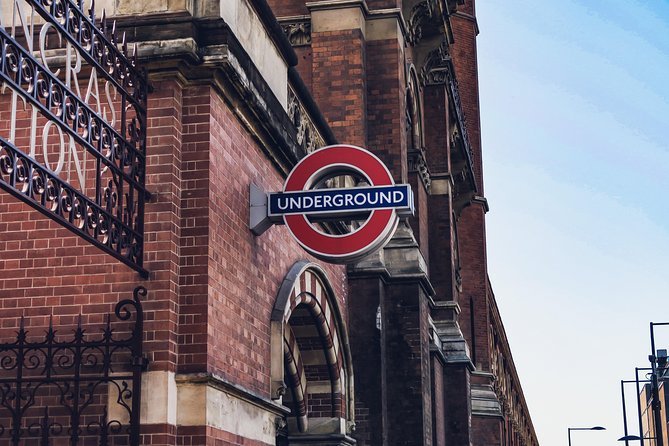
This is where the reviews give you a good signal. People have specifically praised guides including John for enthusiasm and historical knowledge connected to the London transit system. Another guide, Angela, has been credited with sharing construction, politics, and WWII experience, plus photos that helped bring ideas to life.
Peter has also been mentioned for a combination of historical anecdotes, humor, and making it easy to follow him through the crowd. That’s not a small thing. In a walking tour format, clarity and pacing matter as much as facts.
So when you join, you should expect a guide who talks like a person, not like a textbook. If that kind of narrative history is what you want, this tour is aligned with that.
Timing and Pacing: Staying Comfortable for 2.5 Hours
You’re looking at about 2 hours 30 minutes total, with short stops built in at each station and a walking component between them. Since the tour is scheduled at 1:00 pm, you’ll likely be doing it in daylight, which can help with orientation if you’re new to the area.
Because the timing is stop-based, you don’t spend all your time stationary. That’s good for attention, but it also means you should keep your water, phone battery, and stamina ready. If you’re prone to getting cold or damp, don’t ignore weather. One review described getting wet and wanting they’d been told to bring an umbrella, so I’d treat this as a “pack for rain” London moment.
When This Tour Is the Best Fit (and When It Isn’t)
This is a smart choice if you want a local, transit-focused London experience. You’ll especially enjoy it if you care about engineering and station layouts, or if you like history that explains how decisions shaped daily life.
It’s also a good match for history buffs. The tour covers Victorian construction context and also touches on later periods, including WWII context in some guide storytelling.
I’d think twice if you’re looking for a station tour that feels like a museum walkthrough at each stop. The format is built for moving and talking, not for long interior visits. Also, if you have reduced mobility, it’s not suitable due to many steps.
Should You Book This London Underground Tour?
Book it if you want to see the Underground as a historical system, not just a way to get somewhere. The price feels fair for a guided, small-group experience that includes original-station context and clear station timelines, with a guide-led focus on engineering, politics, and how people lived with the system.
Skip or choose a different style if mobility is an issue for you, or if you strongly prefer fully ticketed indoor attractions. And if you don’t already plan for Tube fare on top of the tour price, factor in the Zone 1 to 2 travel card or equivalent transport method.
If you’re the type who likes learning why cities are built the way they are, you’ll come away with a new set of mental maps for London’s stations, including the ones you never noticed before.
Recently added around London
- Shared Service from Stansted airport to Central London★ 3.5 · 3 reviews
- VIP Private Transfers Stansted Airport to/from Any London Hotel★ 5.0 · 6 reviews
- Transfer from London Stansted Airport to Central London★ 5.0 · 6 reviews
- Layover Tour of London from LHR Executive Luxurious Vehicle Private Tour 6 hour★ 4.5 · 9 reviews
- eSIM for UK (34 EU countries) | 3 to 30 days. Up to 40GB of data★ 4.0 · 18 reviews
- York Day Rail Tour from London Including Hop-on Hop-off Tour★ 3.0 · 3 reviews
- Working Women of the East End Walking Tour★ 5.0 · 85 reviews
- London with a Local (Historical)★ 5.0 · 3 reviews
Walking Tours, compared.

Oxford University Walking Tour With University Alumni Guide
Read our review →
Tour for Muggles The Ultimate Harry Potter Walking Tour in London
Read our review →
Cambridge University Walking Tour by Alumni™ Kings College Option
Read our review →
Blackbeard to Banksy – The Ultimate Walking Tour of Bristol
Read our review →
Air Raid Shelter + St. Nicholas Market Walking Tour
Read our review →
Walking Tour of Bath with Blue Badge Tourist Guide
Read our review →
Changing of the Guard Guided Walking Tour in London
Read our review →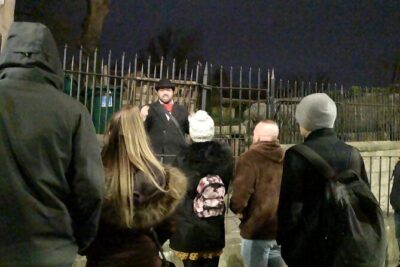
Shadows of York: Ghost Walk and Horrible History.
Read our review →Browse the lists this tour appears in