
Reviewed · CITY TOURS
Slave Trade Money Trail Tour in the City of London
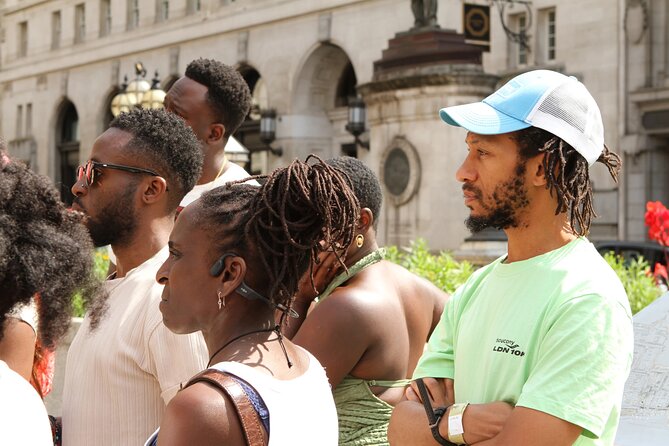
A trip that starts with money changes you. This Slave Trade Money Trail Tour turns famous City landmarks into evidence for how the transatlantic slave trade shaped London’s rise, for better and worse. You’ll see the links between finance, insurance, and everyday goods, in a way that’s hard to unsee once you notice them.
Two things I really like: the tour comes with a booklet that helps you keep up and remember what matters, and the guide, Darrel Blake, keeps the story clear while still making it personal and emotionally direct. One thing to consider: the subject is heavy, and there is no lunch or bottled water included, so plan to pace yourself and come ready to listen.
In This Review
- Key highlights I’d plan around
- Why this Money Trail Tour hits harder than a regular City walk
- Step-by-step: what you’ll learn at each stop
- City of London (Bank area): where finance meets human harm
- Royal Exchange Building: grand commerce, deadly profits
- 20 Fenchurch Street: shipping-era power in the middle of the City
- Lloyd’s of London: insurance and underwriting as part of the profit engine
- Borough Market: sugar and tobacco with a dark supply chain
- Darrel Blake as your guide: clear, personal, and not vague
- The booklet: why it actually helps
- Duration, group size, and what that means for you
- Price and value: is $48.01 worth it?
- Who should book this tour, and who should think twice
- Quick tips to get the most from the experience
- Should you book the Slave Trade Money Trail Tour?
- FAQ
- How long is the Slave Trade Money Trail Tour?
- What is the price per person?
- What language is the tour offered in?
- What is included in the tour price?
- Where does the tour start and end?
- Is lunch or bottled water provided?
- Can I cancel for a full refund?
Key highlights I’d plan around
- City landmarks with receipts, not just viewpoints, starting in the Bank area
- Royal Exchange insights on how commerce and the slave trade were connected
- Fenchurch Street shipping-era context, including where profits were organized
- Lloyd’s of London underwriting angle, showing how risk was financially managed
- Borough Market goods trail, with sugar and tobacco tied to enslaved labor
Why this Money Trail Tour hits harder than a regular City walk
If you think you know London because you’ve seen the big-name sights, the City can still surprise you. This tour uses a simple idea that works fast: follow where money went, and the story becomes physical. You stand outside institutions that helped finance, insure, trade, and profit from the transatlantic slave trade, then connect that to how London grew from the 17th to 19th centuries.
I like that the experience feels grounded in places you can actually find, not vague history. The stops are in the City of London and the financial district, so the buildings do part of the explaining. Instead of treating slavery and colonialism like distant background, the tour shows the mechanisms: banks, trading houses, shipping links, and insurance.
More City Tours in London
- City Sightseeing London Hop-On Hop-Off Bus Tour & Bookable Extras
★ 4.0 · 1,224 reviews - Private Windsor Castle, Stonehenge, The City of Bath Day Tour
★ 5.0 · 468 reviews - Heathrow London Airport Transfer to City center
★ 5.0 · 213 reviews
Step-by-step: what you’ll learn at each stop
City of London (Bank area): where finance meets human harm
Your first stop is the Bank area of the City of London. This is where you start hearing the basic plot: financial institutions were deeply entangled in the transatlantic slave trade. It’s a good starting point because it reframes what people usually imagine when they think about the slave trade. Many folks picture ships and plantations. Here, you learn how money and banking systems helped move the trade and profit from it.
The time at this stop is short, about 15 minutes. That’s not a drawback if you’re paying attention, because the goal is to set a mental framework for the rest of the walk. Come with curiosity, and you’ll catch the pattern early.
Royal Exchange Building: grand commerce, deadly profits
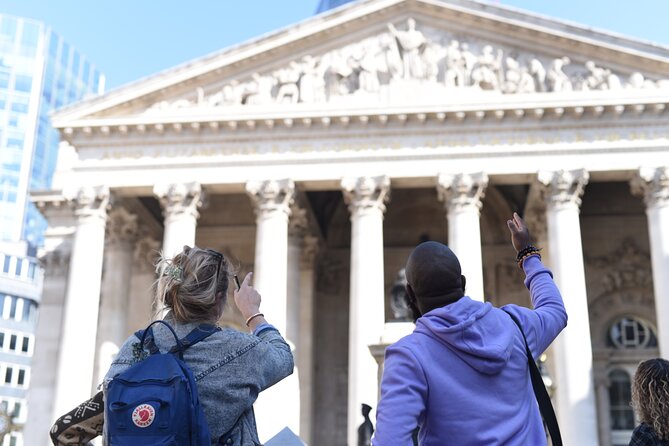
Next you reach the Royal Exchange Building. It used to be the center of London’s commercial life, and on this tour it becomes something more specific: a place tied to how transatlantic slave trade business could be facilitated. The important thing is not the architecture alone. It’s what kind of activity such a symbol of trade made possible, and how normal business practices can be linked to extraordinary cruelty.
You’ll spend around 20 minutes here, which is enough time to connect the building’s purpose to the trade economy without dragging. If you like “site-to-lesson” tours, this is the sweet spot.
A few more London days worth comparing
- Stonehenge, Windsor Castle, and Bath from London
★ 4.5 · 18,662 reviews - London Big Bus Hop-On Hop-Off Tour with Optional River Cruise
★ 3.5 · 10,803 reviews - London Small Group Tour of Historical Pubs
★ 5.0 · 10,422 reviews - Stonehenge, Windsor Castle and Bath with Pub Lunch in Lacock
★ 4.5 · 7,402 reviews
20 Fenchurch Street: shipping-era power in the middle of the City
Then you’re at 20 Fenchurch Street, and the focus shifts from banks and trading rooms to shipping and the wider machine of commerce. The story here points to the shipping industry connections, including major companies that profited from the trade and were headquartered in the area.
This stop is the longest of the first half, about 50 minutes. That makes sense because shipping is a web, not a single moment. You’re learning how goods, capital, and risk could flow through a dense business district. Even if you’ve read some abolition-era history before, this kind of location-based explanation helps it feel real in your feet and your line of sight.
Practical note: this is where you’ll want to be fully present. If you spend this stop looking at your phone, you’ll miss the “how it worked” parts that connect the earlier ideas to what comes next.
Lloyd’s of London: insurance and underwriting as part of the profit engine
After that, the tour moves to Lloyd’s of London. This stop is about a key financial function: underwriting the transatlantic slave trade. Insurance sounds indirect until you understand the role it played. When you can spread risk, you can make high-stakes commerce easier to finance and scale.
You’ll spend about 20 minutes. Again, not long, but focused. The value here is the contrast with the earlier stops. You’re not only seeing where trade happened. You’re seeing how trade became financially sustainable for powerful institutions.
Borough Market: sugar and tobacco with a dark supply chain
The final stop is Borough Market in Southwark, about 20 minutes. This is where the tour brings it back to everyday life through products. You explore how the trading hub connects to goods produced by enslaved labor, including sugar and tobacco.
This is the emotional landing point for many people. It’s one thing to talk about finance and institutions. It’s another to stand near a food market and connect familiar products to forced labor and exploitation. The story doesn’t let you keep the past safely distant.
There’s also a practical detail: the Borough Market stop lists admission ticket not included. That matters because it’s the only stop that signals possible extra payment on your side. If you plan to visit or spend inside the market after the tour, keep that in mind.
Darrel Blake as your guide: clear, personal, and not vague
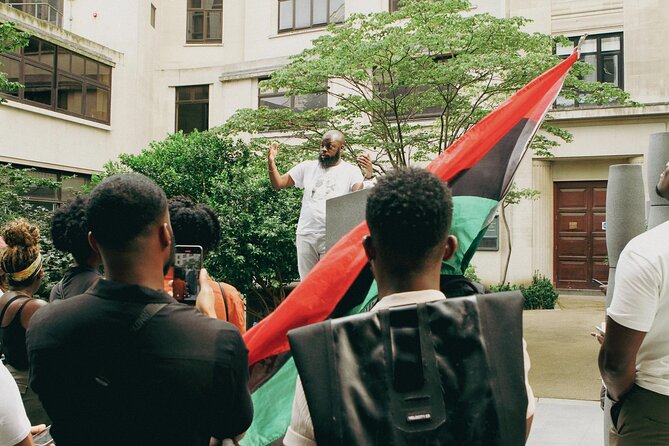
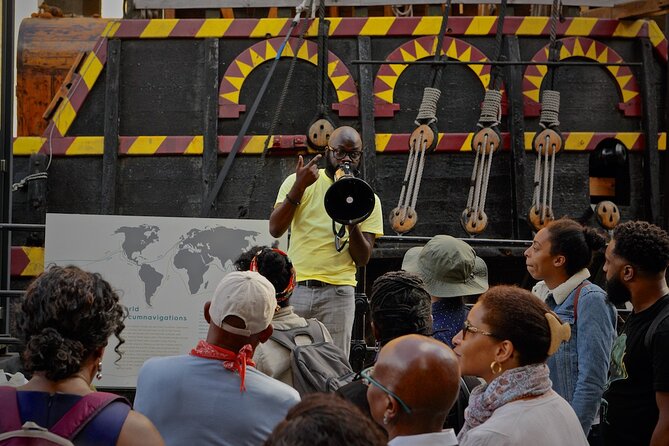
The biggest reason this tour earns such strong ratings is the way Darrel Blake teaches. You’ll notice three things quickly: his delivery is clear, his knowledge is backed by proof, and he encourages participation rather than passive listening.
Several aspects of his style come through in how people describe the experience. He shares personal context and uses artifacts to make the story tangible. He also checks understanding by involving the group, even challenging memory so the ideas stick. If you like interactive tours, this one fits you.
And he manages the tone. The topic is unapologetically serious, but the pacing stays workable. Over three hours, that balance is not easy. The result is that the tour can be both educational and emotionally moving without turning into chaos.
The booklet: why it actually helps
One of the tour’s perks is a tour booklet. In a history-focused walk like this, the booklet is not just a souvenir. It gives you a way to organize what you’re seeing, especially when the subject includes institutions, locations, and financial mechanisms.
I like that it makes the experience stick after the walk ends. City tours often fade fast because you’ve seen a lot of stone and streets. A booklet gives your brain hooks, so you can keep connecting the dots on your way back to your hotel.
Duration, group size, and what that means for you

This is about 3 hours total, and it runs with a maximum of 30 travelers. That group size is big enough to feel lively, but small enough for a guide like Darrel Blake to keep everyone engaged. You’re not stuck in a long chain of strangers who never hear the same thing.
The tour starts at 12:00 pm at the Royal Exchange (Royal Exchange, London EC3V 3LL) and ends at Borough Market (London SE1 9AL). Because the route covers several City locations, plan for regular walking and standing. It’s not a sit-down museum format.
Also, confirmation is received at booking time, and the ticket is mobile. That reduces friction on the day. If you’ve ever chased paper tickets in crowded places, you’ll appreciate this.
Price and value: is $48.01 worth it?

At about $48.01 per person for roughly three hours, this is priced like a serious guided experience rather than a casual stroll. What you’re paying for is not admission to one big attraction. You’re paying for a guide, structured stops, and teaching materials that help you process a complex topic.
Here’s the value breakdown in plain terms:
- Guide included, and the guide is a major part of the quality
- Tour booklet included, which helps the learning last
- Multiple stops with free admission for the first four locations, so most of your time isn’t tied to ticketed venues
- Small group (max 30), which makes participation more realistic
Two costs to plan around: lunch and bottled water are not included. And the Borough Market admission is marked not included. For value, that still works out if you treat the tour as the main event and then plan your own snack or meal after.
Who should book this tour, and who should think twice
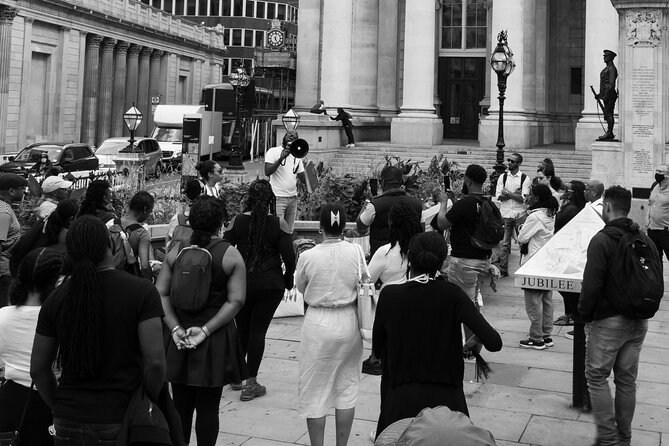
This tour is a good fit if you want history that connects to power, money, and institutions. It’s also well-suited to history buffs, and if you care about social justice or human rights, you’ll likely find the framing useful.
It’s less ideal if you want light sightseeing. This isn’t built around playful facts. It’s built around a serious and personal topic. If heavy subjects wear you down fast, you might need to bring emotional stamina and be ready to step away afterward if you need a breather.
Kids are mentioned as possible participants. The guide’s communication style is described as understandable for younger people. If you bring children, I’d consider their maturity with difficult topics, but the tour itself is designed to explain clearly rather than bury meaning.
Quick tips to get the most from the experience
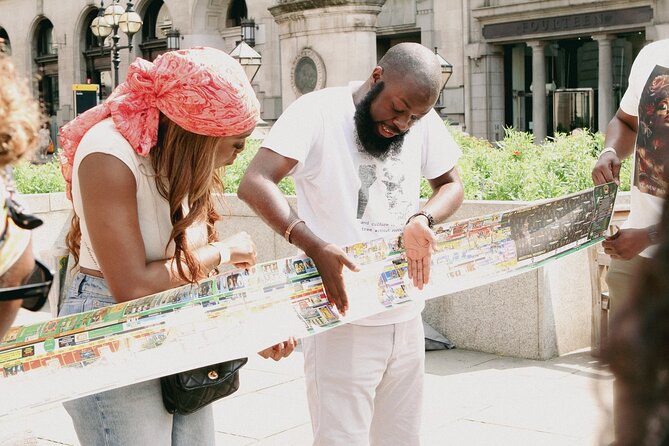
- Bring questions. Darrel Blake encourages participation, and you’ll get more if you ask as you go.
- Plan to stay mentally switched on at the longer stop on Fenchurch Street, because it carries a lot of the shipping and trade structure.
- Wear comfortable shoes and dress for typical London weather. The experience is described as requiring good weather.
- Expect a booklet and artifacts to do real work for your understanding, so pause long enough to read and look when offered.
Should you book the Slave Trade Money Trail Tour?
If you like London, but you want to understand it instead of just photograph it, this is a strong choice. The value is in the combination of focused stops, the money-and-institutions angle, and Darrel Blake’s teaching style. You’ll leave with a different mental map of the City, not just new facts.
I’d book it if you’re the type who reads plaques and then wonders what sits behind them. I’d also book it if you want a route that connects slavery, colonialism, and London’s financial development in a way that feels honest and specific.
Think twice if you need a purely upbeat walk or if you hate emotional subject matter. Otherwise, this is the kind of tour that makes a place feel clearer, and that clarity lasts.
FAQ
How long is the Slave Trade Money Trail Tour?
The tour lasts about 3 hours.
What is the price per person?
The price is listed as $48.01 per person.
What language is the tour offered in?
The tour is offered in English.
What is included in the tour price?
The tour includes a tour guide. A tour booklet is also described as part of the experience.
Where does the tour start and end?
It starts at the Royal Exchange (Royal Exchange, London EC3V 3LL, UK) and ends at Borough Market (London SE1 9AL, UK). The start time listed is 12:00 pm.
Is lunch or bottled water provided?
No. Lunch and bottled water are not included.
Can I cancel for a full refund?
Yes. Free cancellation is available up to 24 hours in advance of the experience start time. If you cancel less than 24 hours before, the amount you paid will not be refunded.
Recently added around London
- Stonehenge Private Tour★ 5.0 · 4 reviews
- Private Transfers From Heathrow Airport to Central London★ 5.0 · 8 reviews
- Professional Private Couple Photoshoot★ 5.0 · 35 reviews
- Private transfer to Southampton with a stop at Stonehenge★ 4.5 · 33 reviews
- Private transfer from London Heathrow Airport to Southampton★ 5.0 · 3 reviews
- Private London Panoramic Tour by Car with Pick Up From Your Hotel★ 5.0 · 13 reviews
- Private Transfer Any London Hotel to Southampton Cruise Port★ 5.0 · 7 reviews
- Private driver tours to Leeds Castle, Canterbury, White Cliffs★ 4.5 · 30 reviews
City Tours, compared.
Liverpool City Sights Hop On Hop Off City Tour – 24hr Ticket
Read our review →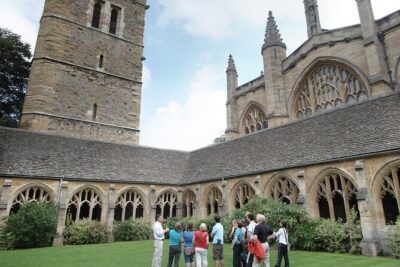
1.5-hour Oxford City and University Walking Tour
Read our review →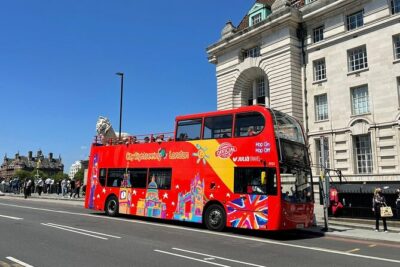
City Sightseeing London Hop-On Hop-Off Bus Tour & Bookable Extras
Read our review →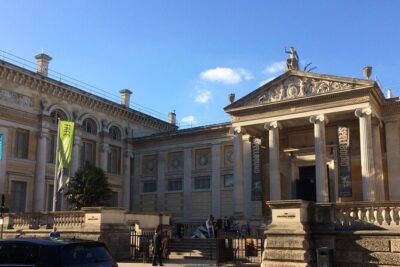
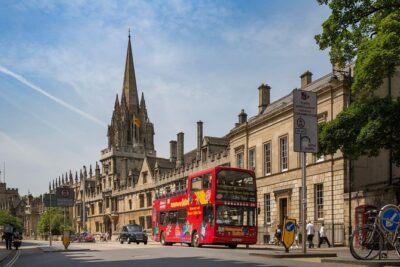
City Sightseeing Oxford Hop-On Hop-Off Bus Tour
Read our review →
Browse the lists this tour appears in