
Reviewed · CITY TOURS
Slavery and City of London Walking Tour
Few London walks hit like this one.
This City of London route mixes major landmarks with uncomfortable truths, all told in an easy walking pace. I really like how the guide, Sam (author of several books on the area), uses clear, conversational storytelling that turns the streets into a real timeline, not a list. I also like that many stops are admission-free, so your money mostly goes to the thinking and context, not entry tickets. One drawback to consider is the subject matter is heavy and direct, so if you want a light sightseeing outing, you may find it emotionally intense.
You’ll also want to plan for a compact group. The tour caps at 35 people, which keeps it feeling personal without turning into a private lecture. Expect about 1 hour 30 minutes, and the schedule is tight enough that comfy shoes help. Lastly, there’s an inconsistency in the route notes about the final drop-off area, so it is smart to recheck the exact finish point in your booking details before you set off.
In This Review
- Key Highlights You’ll Notice on the Streets
- The City of London Is Not Just London
- From Tower Hill to Aldgate: How the Pace Really Feels
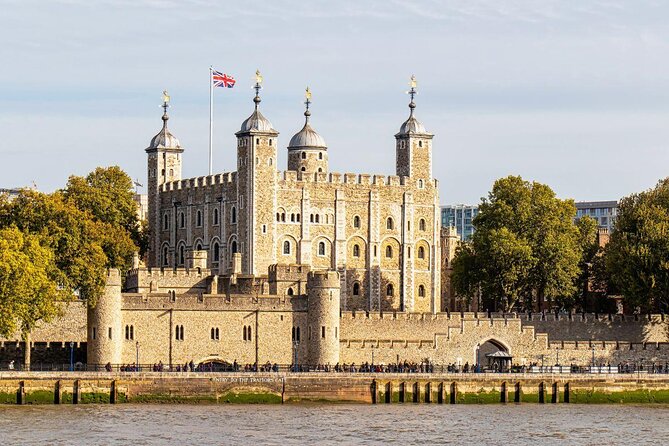
- Stop 1 at the Tower of London: Granville Sharp’s Office Connection
- The Roman Wall of Londinium: Slavery Before the Atlantic Story
- East India House Site: Where the East India Company’s Power Lived
- Fen Gardens and the Gilt of Cain Sculpture: A Visible Marker of Abolition
- Jamaica Wine House: Coffee, Sugar, and the West Indies Connection
- St Mary Woolnoth Church: John Newton’s Rector Role
- Bank of England Museum: Public Apology and the Power of Removing Statues
- St. Paul’s Cathedral Finish Area: Landmark End, Central London Easy Exit
- Is This Tour Worth $27.43? Value That Comes from Focus
- Who Should Book This (and Who Might Skip It)
- Should You Book This Slavery and City of London Walk?
- FAQ
- How long is the Slavery and City of London Walking Tour?
- What is the price per person?
- Where does the tour start?
- What time does it begin?
- How large is the group?
- Do I need to print anything, or is it a mobile ticket?
- Are the stops free to enter?
- Is this tour suitable for most people?
- What happens if the weather is poor?
- What is the cancellation rule?
Key Highlights You’ll Notice on the Streets
- A slavery history route mapped onto the City of London with abolitionist names and locations you can actually point to
- Sam’s style: clear, engaging, and often funny, with oral-history and imagery tied to specific buildings
- Museum and church stops with no admission fee listed, so the tour stays good-value
- Street-level “hidden” markers like the Gilt of Cain sculpture at Fen Gardens
- Direct accountability moments, including the Bank of England’s public apology about past slave-trade involvement
- A route that keeps moving with a manageable group size of up to 35 people
The City of London Is Not Just London
One reason this walk works so well is that the City of London has always operated like its own little world. You can feel that in the architecture and the civic buildings, but you also feel it in how power moved through the area, especially in the years when the Atlantic slave trade fueled wealth back home.
This is not only about the transatlantic story, either. The route connects the dots to older layers too, starting with Roman London and the Roman wall. That matters because it gives you a long view of how slavery systems could be built and rebuilt across centuries, using different justifications and different institutions.
And because you’re walking, you’re not trapped looking at a single monument. You see how these themes sit next to each other, sometimes in plain sight, sometimes in small carvings or local corners that most first-time visitors walk right past.
More City Tours in London
- City Sightseeing London Hop-On Hop-Off Bus Tour & Bookable Extras
★ 4.0 · 1,224 reviews - Private Windsor Castle, Stonehenge, The City of Bath Day Tour
★ 5.0 · 468 reviews - Heathrow London Airport Transfer to City center
★ 5.0 · 213 reviews
From Tower Hill to Aldgate: How the Pace Really Feels

The tour meets at Tower Hill Tram, Trinity Square, London EC3N 4TH, and it begins at 12:00 pm. The route ends at Aldgate Underground station, at Aldgate High St, London EC3N 1AH. The written itinerary also points to St. Paul’s Cathedral as the last major landmark stop, and it mentions St. Paul’s Underground station on the Central line for getting away, so use the finish location shown in your confirmation pin to avoid confusion.
Time-wise, you’re out there for about 1.5 hours. It is a “see a lot without rushing” kind of walk, and the group size cap at 35 helps. With a larger crowd, these kinds of tours can turn into shoulder-to-shoulder museum line walking. Here, you still get space to hear the story and look around when the guide points something out.
You’ll also get a mobile ticket, which simplifies entry and reduces the usual “where is the paper voucher” stress.
Stop 1 at the Tower of London: Granville Sharp’s Office Connection
The first theme lands right at the Tower area with the Ordnance Office at the Tower of London, where Granville Sharp was employed. The key detail here is that Sharp was one of the most prominent anti-slavery figures in 18th-century Britain.
This matters because it frames the walk with names, not just concepts. You are not only tracking commerce and institutions. You’re also meeting people who challenged the system, and that changes the tone from pure indictment to something more human. It helps you understand how abolition efforts were built, step by step, through networks and institutions.
The Roman Wall of Londinium: Slavery Before the Atlantic Story

Next you’ll get to the Roman wall of Londinium, described as a boundary that helped lead to the founding of Londinium about 2,000 years ago. The guide ties this to the fact that Romans took Britons as slaves, even while the Romans were reportedly complaining that the Britons were lazy.
This is one of those “wait, I didn’t expect that” moments. Sticking slavery only in the Atlantic era can make it feel like a single historical event. Starting with Roman London stretches your understanding of how forced labor could exist in different empires, different forms, and different time periods.
As listed, this stop has admission-free time built in, so you are not paying to access the setting. You are getting a narrative that turns a visible boundary into a story about how the city was shaped.
More Walking Tours in London
- Tour for Muggles The Ultimate Harry Potter Walking Tour in London
★ 5.0 · 4,684 reviews - Changing of the Guard Guided Walking Tour in London
★ 5.0 · 1,793 reviews - The Great British Rock and Roll Walking Tour
★ 5.0 · 1,371 reviews - Westminster Guided Walking Tour with Abbey Entry
★ 5.0 · 1,282 reviews
East India House Site: Where the East India Company’s Power Lived
Then the walk moves to the site where East India House once stood, the headquarters of the East India Company. Here, the emphasis is on how the company relied on slave labour and trafficked enslaved people from East and West Africa.
This stop is valuable because it complicates the stereotype that “slave trade” only belonged to one type of merchant. The East India Company is better known for other aspects of empire, so learning the slave-labour link in this precise setting makes the story feel grounded.
You also get a sense of scale. This is not a single plantation anecdote. This is corporate power, headquartered in the City, connected to shipping routes and wealth.
Fen Gardens and the Gilt of Cain Sculpture: A Visible Marker of Abolition
At Fenchurch Street, you’ll pause at Fen Gardens and see the Gilt of Cain sculpture, which commemorates the abolition of the transatlantic slave trade.
For me, this is where the walk becomes visually rewarding. Many “history tours” point at plaques and move on. Here, you get a specific artwork with symbolic meaning, and the guide can connect it back to the earlier stops where wealth-building and forced labor are spelled out.
This stop is also listed as admission-free, so it works as a low-effort, high-impact pause in the route.
Jamaica Wine House: Coffee, Sugar, and the West Indies Connection
Next is the Jamaica Wine House, linked to London’s first coffee house, the Jamaica Coffee House. The story here is that this coffee house became a hub in the sugar trade and in the systems tied to slave plantations in the West Indies.
This is a clever pivot. Instead of treating slavery as distant and abstract, you get a sensory-era detail: a coffee house, a daily social space, and commerce happening in the background. It helps you understand how societies normalize the profits of exploitation until abolitionists force a reckoning.
The practical takeaway is that the guide keeps pulling you from “big institutions” to “everyday places.” That is how you start seeing the hidden machinery behind ordinary life.
St Mary Woolnoth Church: John Newton’s Rector Role
At St. Mary Woolnoth Church, the walk highlights that slavery abolitionist John Newton was rector there.
Newton is a name that many people have heard, but you usually meet him through a single factoid rather than through a location. Seeing the church in the context of abolition connects his work to the local civic and religious fabric that shaped public opinion.
As listed, this stop is also admission-free, which keeps the experience focused on the guide and the walk itself.
Bank of England Museum: Public Apology and the Power of Removing Statues
One of the most striking segments is the Bank of England Museum stop. The key point is that the Bank of England has apologized for the involvement of some past former directors and governors in the slave trade. It also promised to remove all statues and paintings of those figures from public display in its Threadneedle Street building.
Even if you already know the topic, I find this kind of institutional response important to hear in the setting where it matters. It adds a modern layer to a historical problem: what institutions do after the fact, how they handle memory, and whether they make changes you can actually notice.
The route also explains that the Bank of England’s building reflects involvement in the transatlantic slave trade through civic leadership. Sherifs, mayors, and aldermen of the City of London met there as shareholders of the Royal Africa Company.
That part is sobering. You are looking at a symbol of national finance, and the story connects it to the specific mechanisms of the slave trade that helped build wealth.
St. Paul’s Cathedral Finish Area: Landmark End, Central London Easy Exit
The last major highlight is St. Paul’s Cathedral. The itinerary notes that the walk finishes by St. Paul’s underground station, which is on the Central line.
Because the end point is also listed as Aldgate Underground station, I suggest you use the day-of navigation from your booking details and treat St. Paul’s as the final big sight you’ll see on the route. Either way, you’re ending in an area with strong transit connections, which makes it simple to keep exploring after the tour.
Is This Tour Worth $27.43? Value That Comes from Focus
At about $27.43 per person for roughly 90 minutes, this is priced like a “serious history” walking tour, not a quick photo loop. What makes it feel like good value is the combination of:
- a structured route through major and small sites tied to slavery and abolition
- multiple stops noted as admission-free
- Sam’s presentation, described as clear and engaging, often with humor, plus a deep familiarity with the area
You are not paying for gate tickets. You’re paying for interpretation. And because Sam is also an author, you can expect the story to be organized, not random.
The only real reason it might not feel worth it is if you only want classic sightseeing, with minimal discomfort. This tour brings the uncomfortable parts of British history into view, including the institutional ties to the slave trade.
Who Should Book This (and Who Might Skip It)
This is a great fit if you:
- like your London history tied to streets and specific institutions, not just museum rooms
- enjoy tours where you get names, places, and context in the same session
- want a City of London walk that finds details most people miss
You might skip it if you want:
- a purely scenic walk with light commentary
- a topic that stays gentle and indirect
- a tour with no emotional weight
It also suits people who like a group size that stays manageable. With a 35-person cap, it is less chaotic than the big-bus style crowds.
Should You Book This Slavery and City of London Walk?
I’d book it if you care about understanding how London’s power connected to forced labor, and you want that understanding delivered in a clear, human way. The route gives you a strong sense of place, from the Tower of London area to the Roman wall connection, to East India House and the Bank of England’s modern accountability moment.
I’d hesitate only if the slavery theme will feel too heavy for you right now, or if you need a tour that is mostly upbeat sightseeing. If you can handle a serious topic with an abolitionist thread and a guide who makes the walking story make sense, this one is a smart use of 90 minutes.
FAQ
How long is the Slavery and City of London Walking Tour?
The tour runs about 1 hour 30 minutes.
What is the price per person?
The listed price is $27.43 per person.
Where does the tour start?
It starts at Tower Hill Tram, Trinity Square, London EC3N 4TH, UK.
What time does it begin?
The start time is 12:00 pm.
How large is the group?
The tour has a maximum of 35 travelers.
Do I need to print anything, or is it a mobile ticket?
It’s listed as a mobile ticket.
Are the stops free to enter?
The itinerary lists admission ticket free at several key stops, including the Roman wall of Londinium area, Fen Gardens (Gilt of Cain), St. Mary Woolnoth Church, the Bank of England Museum, and the St. Paul’s Cathedral stop.
Is this tour suitable for most people?
It says most travelers can participate.
What happens if the weather is poor?
It requires good weather. If it’s canceled due to poor weather, you’ll be offered a different date or a full refund.
What is the cancellation rule?
Free cancellation is available up to 24 hours in advance for a full refund. If you cancel less than 24 hours before the start time, the amount paid is not refunded.
Recently added around London
- Fast Track IFS Cloud Cable Car Round Trip Ticket★ 4.5 · 39 reviews
- Best of London Tour – Crown Jewels, River Cruise & History Walk★ 4.5 · 110 reviews
- Hampton Court Palace 3hr tour: Henry VIII’s & William III’s intriguing Palaces★ 5.0 · 87 reviews
- Fast Access Westminster Abbey Private Tour with a London Blue Badge Guide★ 5.0 · 30 reviews
- Fashion History Walking Tour in London★ 5.0 · 10 reviews
- Frameless Lates: Immersive Art Experience in London★ 5.0 · 73 reviews
- Private Half-Day Tour of Windsor Castle★ 5.0 · 34 reviews
- Exclusive Beefeater Meet & Greet at the Tower of London★ 4.5 · 13 reviews
City Tours, compared.
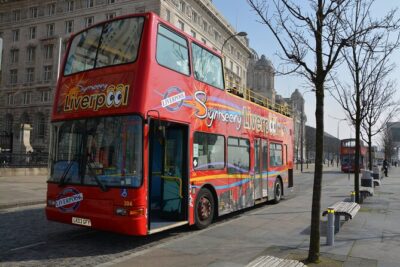
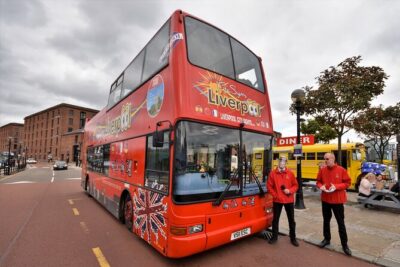
Liverpool City Sights Hop On Hop Off City Tour – 24hr Ticket
Read our review →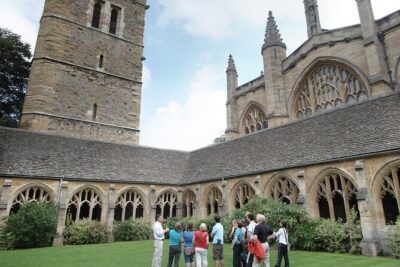
1.5-hour Oxford City and University Walking Tour
Read our review →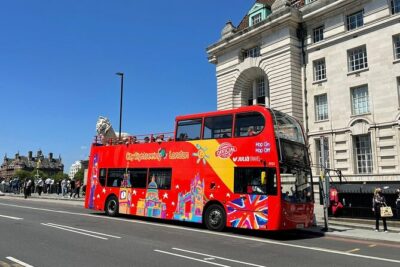
City Sightseeing London Hop-On Hop-Off Bus Tour & Bookable Extras
Read our review →
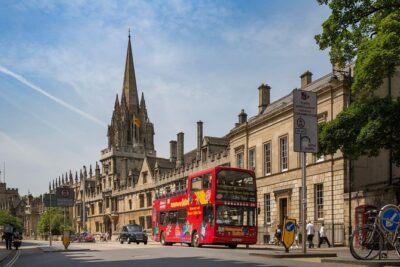
City Sightseeing Oxford Hop-On Hop-Off Bus Tour
Read our review →

Browse the lists this tour appears in