
Reviewed · MUSEUMS
Tate Modern Museum London Guided Tour Semi-Private 8ppl Max
Modern art suddenly makes sense here. This small-group Tate Modern tour is built for real conversation, so you can ask questions as you move through standout galleries. I also love how the guide ties major works to the artist’s personal story, while you take in the museum’s converted power plant setting.
The main drawback is practical: this tour is not available for wheelchair use or people with walking disabilities, and you have to plan around museum security rules (no large bags, only handbags or small thin bag packs).
In This Review
- Key things to know before you go
- Tate Modern, in a small group that talks back
- Getting there, tickets on your phone, and the “security first” reality
- Your two hours: a guided walk through big modern-art milestones
- Mondrian’s colors, and why geometry became a language
- Picasso, Dali, and the Spanish Civil War influence
- Impressionism to abstract expressionism, from Monet to Rothko
- Warhol’s pop art, and celebrity faces in the 1960s
- Duchamp’s Fountain: stop, breathe, then talk
- Why the guide style matters: Sasha and Becky’s approaches
- The building matters: Tate Modern inside a former power plant
- Temporary exhibitions are not the focus, so plan your expectations
- Value check: does $107.45 make sense for a London art outing?
- Who should book this tour, and who might skip it
- Quick advice to get more out of your time
- Should you book this Tate Modern semi-private tour?
- FAQ
- How long is the Tate Modern guided tour?
- What group size is this semi-private tour?
- Where does the tour start and end?
- Is the tour offered in English?
- What is included in the price?
- Is Tate Modern admission included?
- What is not included?
- Do I need to bring anything for booking?
- Is the tour wheelchair accessible?
- What is the cancellation policy?
Key things to know before you go
- Semi-private, max 8 people: You stay in a tighter group than most standard tours.
- Question time is part of the plan: Expect plenty of chances to ask what you are looking at and why it matters.
- Artist context, not guesswork: Guides explain how personal histories shaped major artists and their works.
- A short, efficient 2-hour route: You hit many major movements without wandering aimlessly.
- Modern-art icons in one museum: Expect stops associated with artists like Mondrian, Picasso, Dali, Monet, Rothko, Warhol, and Duchamp.
Tate Modern, in a small group that talks back
Tate Modern can feel like a test if you show up expecting everything to be obvious. This tour is designed to lower that pressure fast. With a semi-private size cap of 8, you are not squeezed into the back of a big crowd. You can actually hold eye contact with the guide, ask follow-ups, and get answers in the moment. That matters at a museum where attention can drift when you do not know what you are supposed to notice.
I also like the way the tour frames modern art as something human. You do not get a museum lecture that only tells you what to think. Instead, you get personal context, like how events and life experiences influenced the work. It is the difference between memorizing a label and understanding why a painting, sculpture, or graphic looks the way it does.
More museum visits in London:
- Tower of London and Crown Jewels Exhibition Ticket
★ 4.5 · 6,677 reviews - Chelsea FC Stadium Tours and Museum
★ 5.0 · 1,908 reviews - Official tickets: Moco Modern & Contemporary Art Museum
★ 4.5 · 1,157 reviews
Getting there, tickets on your phone, and the “security first” reality
This starts and ends at Tate Modern, Bankside, London SE1 9TG. It is near public transportation, so you can use the Tube or bus if that is your usual move. Just note that hotel pickup and drop-off are not part of the price, so it is smart to plan an Uber or taxi if you are staying far away.
You will need a mobile phone number at booking, including your country code. The experience also uses a mobile ticket, so keep your phone charged before you arrive. Tate Modern has security, and the tour comes with clear expectations: no large bags or suitcases inside. The allowed items are handbags or small thin bag packs through security. If you are the type who travels with a day bag and an extra coat, test your packing early so you do not get stuck at the door.
Dress code is described as requiring appropriate dress for entry into some sites. That sounds vague, but it is common for museums. If you are unsure, wear something comfortable and sensible, like you would for a nice indoor church or gallery.
Your two hours: a guided walk through big modern-art milestones
The tour runs about 2 hours, so think of it as a focused introduction. You will move through many galleries and halls covering major 19th and 20th century works. The goal is not to see every corner of Tate Modern. It is to see the most discussed, most influential works, and to understand what people mean when they call modern art confusing.
As you walk, the guide points out patterns, themes, and major shifts in style. You also get time to stop, look longer, and ask questions. That question time is a big reason this works, especially if you feel awkward asking in a room full of strangers.
Mondrian’s colors, and why geometry became a language
One of the early anchors of the tour is Piet Mondrian. You’ll spend time around Mondrian’s famous geometric patterns of color. The guide’s job here is to help you read the logic in the squares and lines, instead of treating it like decorative math you are supposed to either like or dislike.
If you have ever wondered why minimal shapes can feel intense, this stop is a good chance to ask directly. The best modern-art viewing is active, not passive. So when you are in front of Mondrian, you will want to look for balance, rhythm, and contrast, then ask how the guide connects those choices to the artist’s thinking.
A few more London days worth comparing
- Stonehenge, Windsor Castle, and Bath from London
★ 4.5 · 18,662 reviews - London Big Bus Hop-On Hop-Off Tour with Optional River Cruise
★ 3.5 · 10,803 reviews - London Small Group Tour of Historical Pubs
★ 5.0 · 10,422 reviews - Stonehenge, Windsor Castle and Bath with Pub Lunch in Lacock
★ 4.5 · 7,402 reviews
Picasso, Dali, and the Spanish Civil War influence
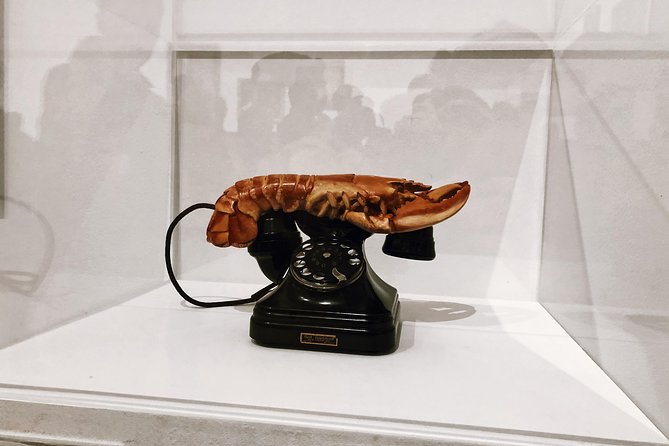
The tour also connects Spanish-born artists to major historical pressure, especially during the Spanish Civil War. You will learn about how Picasso and Dali produced some of their greatest artwork during this period, and how that context fed into the themes and imagery you see later.
This is one of the tour’s most helpful angles. Modern art often gets explained as pure invention, but it is usually shaped by time, fear, identity, politics, and personal survival. When you understand what is happening around an artist, the work stops feeling random. Even if you do not love every piece, you can still feel the intention.
Impressionism to abstract expressionism, from Monet to Rothko
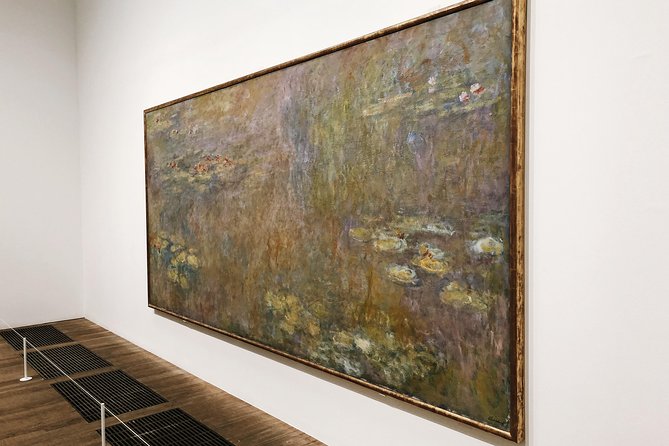
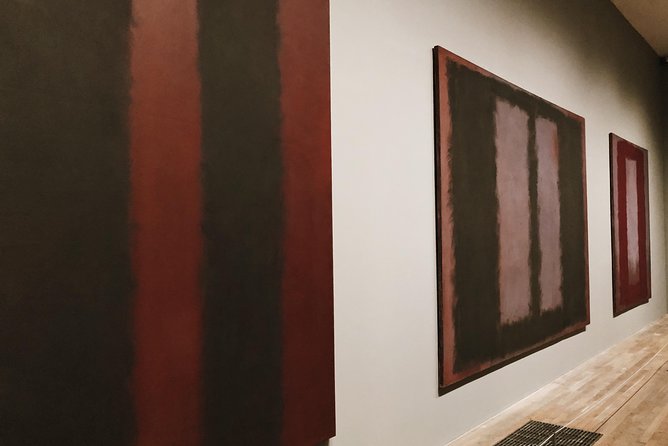
The route then steps into Impressionism with Monet, and it later shifts into abstract expressionism through Mark Rothko. That change can be jarring if you are thinking in a strict linear timeline. The tour’s pacing helps you handle that jump, because the guide connects each style to what artists were trying to do at that moment.
With Monet, you are likely to focus on how a scene is built through light and perception, rather than strict detail. With Rothko, the question becomes emotional and physical. Abstract expressionism can feel like it is asking you to bring your own feelings. The guide helps you make that less mysterious by pointing you to what to notice in color blocks, edges, and atmosphere.
Warhol’s pop art, and celebrity faces in the 1960s
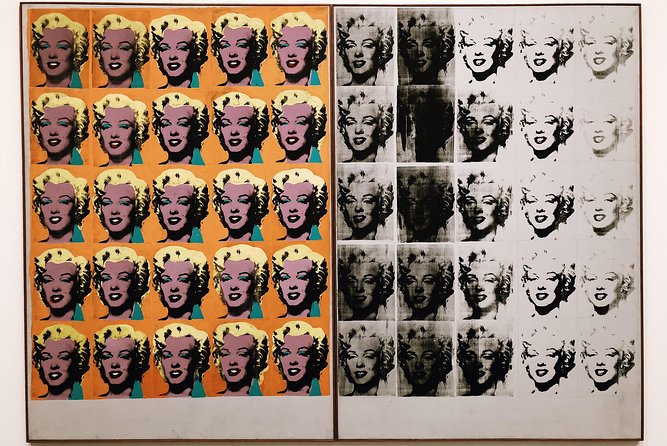
Andy Warhol shows up through pop art tied to 1960s culture. You’ll learn about Warhol’s work featuring faces of celebrities such as Marilyn Monroe. This part of the tour is a great bridge between modern art and what you already know from magazines, posters, and mass media.
When you see Warhol through a context lens, you start noticing the repetition, the production idea, and the commentary implied by fame itself. It is not just artwork of a famous person. It is artwork about what fame does, and how easily images become products.
Duchamp’s Fountain: stop, breathe, then talk
One of the most famous moments in the museum is Duchamp’s Fountain. The tour encourages you to slow down around it. You take a moment to stand there, like you are stepping back from the normal rules of what counts as art, and then you use the guide’s prompts to talk it through.
This stop is especially good if you ever think modern art must be “solved.” It is not about getting one right answer. It is about understanding what the artist is challenging. Asking the guide how people argue about the meaning helps you turn confusion into a real conversation.
Why the guide style matters: Sasha and Becky’s approaches
Two guide names come up strongly: Sasha and Becky. What stands out is not just that they know art. It is the way they communicate.
Sasha’s style is described as selecting a wide variety of art forms and giving insight that pushes you to think, not just nod along. Becky is praised for being interactive and for providing context without doing all the interpretation for you. That balance is a sweet spot for first-time modern art viewers. You leave with tools, not with a script.
If you can, bring one thing to ask in advance, even if it is simple, like what to look for when a work seems to have no subject. Then, when the guide gives you permission to ask, you already have the first question ready.
The building matters: Tate Modern inside a former power plant
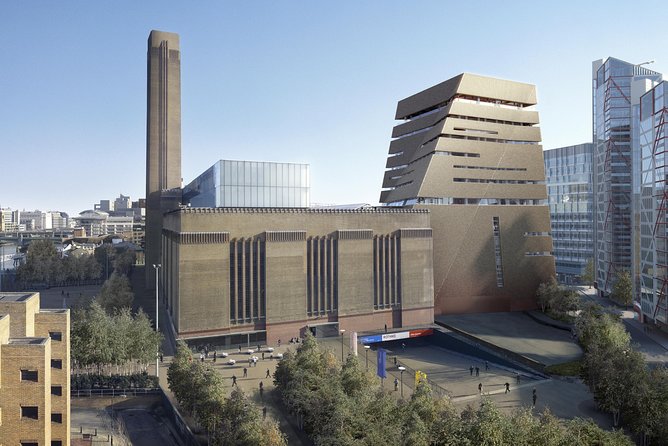
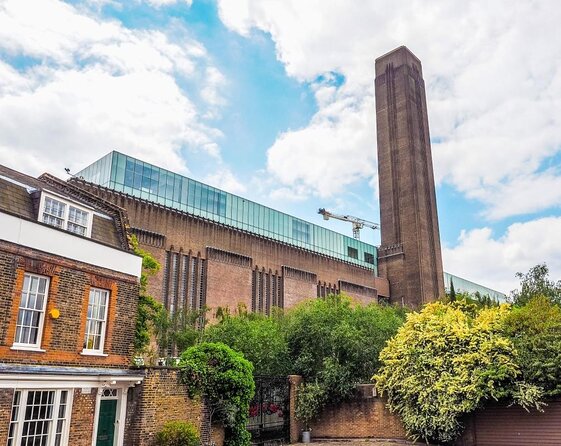
Tate Modern is housed in a converted power plant, and that shape of the space changes how you experience the art. Big rooms, strong industrial bones, and a sense of scale can make monumental works feel even more dramatic. The tour does not treat the building like background scenery. It helps you connect the setting to the museum’s role as a home for modern experimentation.
Even during a short tour, this matters. A museum can either feel like a maze, or it can feel like a stage. Here, it tends to feel like a stage.
Temporary exhibitions are not the focus, so plan your expectations
This tour does not include temporary exhibitions. It also notes that some collections may vary by the year. That is not a problem if you want a steady, modern-art foundation. It just means you should not expect the tour to cover everything currently on view beyond the core galleries and halls the guide is using.
If you love being flexible, this is still a smart format. You can do the guided route for context, then spend your remaining time on your own terms on the things you want to revisit or go deeper on.
Value check: does $107.45 make sense for a London art outing?
At $107.45 per person for about two hours, you are paying for three things: the guide’s expertise, the semi-private size, and a tight route through major works. If you were to self-tour Tate Modern with no plan, you would likely spend time figuring out where to start, what to prioritize, and how to interpret what you are seeing.
This tour tries to remove that friction. The group size cap of 8 is the practical value kicker. It is easier to ask questions when you are not competing with a large crowd. And the structure matters when you are trying to see a lot of iconic modern art without getting overwhelmed.
Also, the tour notes an admission ticket as free in the experience duration line. That is worth paying attention to when you compare prices, because admission can be a meaningful portion of the total cost.
Lastly, this sort of booking pattern tends to move early. It is commonly booked about 68 days in advance, so if your dates are fixed, plan ahead.
Who should book this tour, and who might skip it
This is a strong fit if:
- You think modern art is confusing and want a translator for the visuals
- You like asking questions in real time
- You want a guided hit list without spending half a day wandering
It may not be the best fit if:
- You need wheelchair access or have significant walking limitations, since it is not available for those needs
- You prefer to move at your own pace with no structure, because this tour is intentionally set to about 2 hours
One more practical note: some rooms inside the museum are quiet or restrict speaking. The guide will explain where that rule applies before you enter, so you will not be caught off guard.
Quick advice to get more out of your time
Before you go, decide what kind of help you want. Do you want help understanding history, symbols, or the artist’s mindset? Then, when you stop at each major work, ask one focused question. Even if the answer changes how you see something, you are still building your own ability to look.
Also, wear comfortable shoes. You will be on your feet for the full walk, and Tate Modern is not a sit-and-watch experience.
Finally, keep your expectations aligned with the format. This is an introduction through many major works, not a deep, room-by-room masterclass on every artist. That is what makes it a great use of limited time in London.
Should you book this Tate Modern semi-private tour?
If you want modern art to feel less like a mystery and more like a conversation, I think this tour is a good bet. The semi-private size, the built-in Q&A, and the guide-led context for artists like Mondrian, Picasso, Dali, Monet, Rothko, Warhol, and Duchamp make it a fast path to understanding what you are looking at.
Skip it only if your mobility needs do not match the tour’s restrictions, or if you know you want a totally unguided museum day. Otherwise, book with confidence, especially since it is often scheduled in advance.
FAQ
How long is the Tate Modern guided tour?
The tour runs about 2 hours.
What group size is this semi-private tour?
It is limited to a maximum of 8 people per tour.
Where does the tour start and end?
It starts at Tate Modern, Bankside, London SE1 9TG, UK, and ends back at the meeting point.
Is the tour offered in English?
Yes, the tour is offered in English.
What is included in the price?
The tour includes the semi-private museum tour and a professional tour guide, for a duration of 2 hours.
Is Tate Modern admission included?
The experience duration notes admission ticket free.
What is not included?
Hotel pickup or drop-off is not included. Gratuities are also not included. Temporary exhibitions are not included.
Do I need to bring anything for booking?
You must provide a mobile phone number (including country code).
Is the tour wheelchair accessible?
No, the tour is not available for those with walking disabilities or using a wheelchair.
What is the cancellation policy?
You can cancel up to 24 hours in advance for a full refund. Changes within 24 hours of the start time are not accepted.
Recently added around London
- Shared Service from Stansted airport to Central London★ 3.5 · 3 reviews
- VIP Private Transfers Stansted Airport to/from Any London Hotel★ 5.0 · 6 reviews
- Transfer from London Stansted Airport to Central London★ 5.0 · 6 reviews
- eSIM for UK (34 EU countries) | 3 to 30 days. Up to 40GB of data★ 4.0 · 18 reviews
- Layover Tour of London from LHR Executive Luxurious Vehicle Private Tour 6 hour★ 4.5 · 9 reviews
- York Day Rail Tour from London Including Hop-on Hop-off Tour★ 3.0 · 3 reviews
- Working Women of the East End Walking Tour★ 5.0 · 85 reviews
- London with a Local (Historical)★ 5.0 · 3 reviews
Museums, compared.

Tower of London and Crown Jewels Exhibition Ticket
Read our review →
British Museum London Guided Tour Semi-Private 8ppl Max
Read our review →
The British Museum London – Exclusive Guided Museum Tour
Read our review →

Skip the Line: Liverpool Beatles Museum – The perfect tribute to the Beatles
Read our review →
Browse the lists this tour appears in