
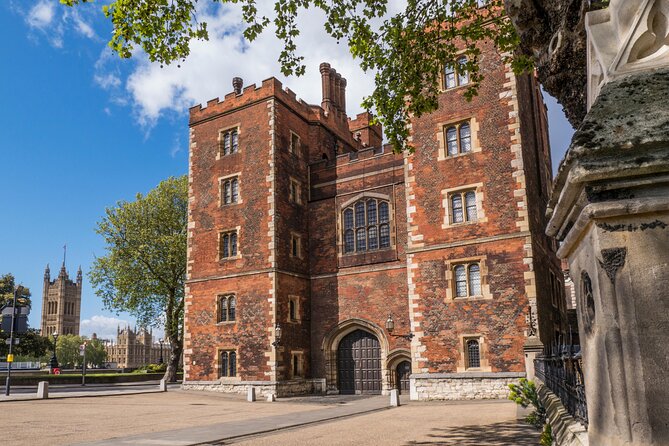
Reviewed · WALKING TOURS
Thomas Cromwell’s Wolf Hall Tudor London Walking Tour
Tudor London hides in plain sight. I love the convenience of hotel pickup, and I love the off-the-tourist-trail route that threads through places tied to Thomas Cromwell, including stops like Maughan Library. One drawback to plan for: several highlights are outside views or places where admission isn’t included, so you may need extra time or money if you want to go in.
This walk also gives you big, recognizable landmarks like St. Paul’s Cathedral, then immediately grounds them in the Tudor London story. You’ll stand near sites tied to the Great Fire, the Blitz, and the brutal reality of Henry VIII era politics, without feeling like you’re speed-walking through a checklist.
It’s set up as a private experience, in English, and it runs about 3 hours, though there’s also a longer version mentioned by past guests. You’ll want a moderate fitness level, and the route involves a lot of walking on city streets and in tight lanes.
In This Review
- Key Reasons You’ll Enjoy This Wolf Hall Walk
- Why Traitors’ Gate Sets the Tone Right Away
- Staple Inn to Gray’s Inn: Tudor London’s Legal Roots
- Gray’s Inn Chapel and Lincoln’s Inn: When You Want the Quiet Details
- Maughan Library and Temple Area: Cromwell in Everyday Places
- From Blackfriars to St. Paul’s: Fire, Ruins, and the City’s Memory
- Smithfield Martyrs and Greyfriars Garden: Where Tudor Policy Got Physical
- Milk Street to Austin Friars: Cromwell’s London Residence and the Everyday City
- St. Helen’s to the Cornhill Maypole: Layers of Rome, Nuns, and Wolf Hall Details
- St. Olave’s to the Tower Hill Scaffold: The Final Thread to Cromwell’s Fate
- Price and Value: Is 271.76 Per Person Worth It?
- Timing, Pace, and What to Bring for a Comfortably Long Walk
- Who This Tour Fits Best (and Who Should Skip It)
- Should You Book Thomas Cromwell’s Wolf Hall Tudor London Walking Tour?
- FAQ
- How long is Thomas Cromwell’s Wolf Hall Tudor London Walking Tour?
- Is the tour private and in English?
- Where does the tour start and end?
- Is hotel pickup included?
- Are admission tickets included for all stops?
- What does the tour cover?
- What is the cancellation policy?
Key Reasons You’ll Enjoy This Wolf Hall Walk
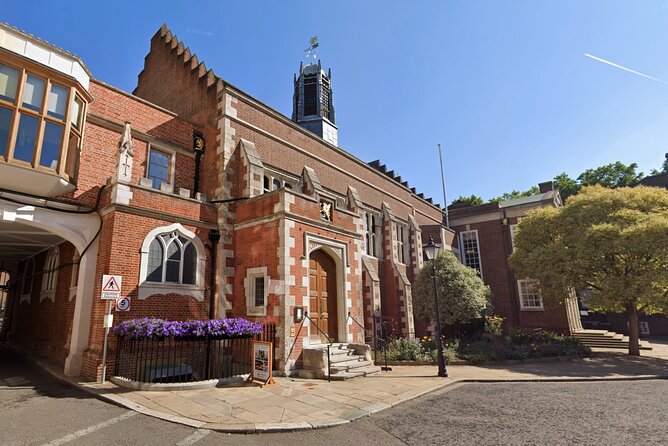
- Private guide, your group only: you move at a pace that makes sense for photos, questions, and quick stops.
- Real Tudor legal districts: Gray’s Inn, Lincoln’s Inn, and Temple area streets instead of only famous monuments.
- Cromwell-linked addresses: Cromwell’s office connection at Maughan Library, plus multiple Dissolution era sites.
- Great Fire and Tudor punishment in one arc: St. Paul’s, Pye Corner, Smithfield, and the Tower area.
- Hotel pickup helps you skip transport stress: especially helpful if you do not want to route-plan at 9:30am.
- A lot of “small stops” that add up: memorials and courtyards keep the story from feeling one-note.
Why Traitors’ Gate Sets the Tone Right Away
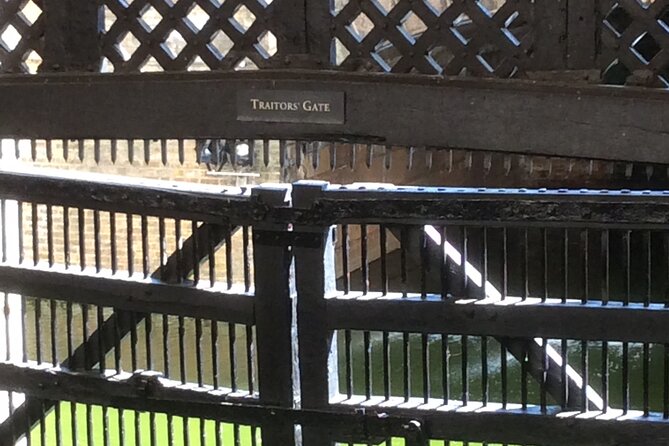
The tour starts and ends outside Traitors’ Gate, the infamous entry point to the Tower of London for people the Crown wanted to disappear. That matters because Thomas Cromwell’s story is not just court intrigue, it’s power, paperwork, and consequences.
From the start, you get the sense that this is a City of London walk with sharp edges. You’ll spend the day moving between legal institutions, religious sites affected by the Dissolution, and public memory markers tied to fire and execution.
You also get practical payoff. Traitors’ Gate is close to Tower Hill tube access, so you’re not stuck miles from transit when you finish.
More Walking Tours in London
- Tour for Muggles The Ultimate Harry Potter Walking Tour in London
★ 5.0 · 4,684 reviews - Changing of the Guard Guided Walking Tour in London
★ 5.0 · 1,793 reviews - The Great British Rock and Roll Walking Tour
★ 5.0 · 1,371 reviews
Staple Inn to Gray’s Inn: Tudor London’s Legal Roots
The first stop is Staple Inn, one of the standout Tudor facades still showing its age in a very real way. You’ll hear how the original 1585 building was a wool staple, where wool was weighed and taxed, and how the structure survived the Great Fire. It later got refaced in the 17th century, then restored in the 19th and 20th centuries, and it was damaged by bombing in 1944. That “layers of London” story is the whole vibe here.
A practical note: Staple Inn is listed with admission ticket not included, so plan on seeing it from the outside and focusing on the facade and context rather than treating it like a museum stop.
Then you move into Gray’s Inn, one of the legal guild environments Cromwell would have understood. Thomas Cromwell was elected as a member here, so the tour frames the walk as more than sightseeing. It’s about knowing how these places worked: paths, gardens, and buildings used by people who handled law for the Crown.
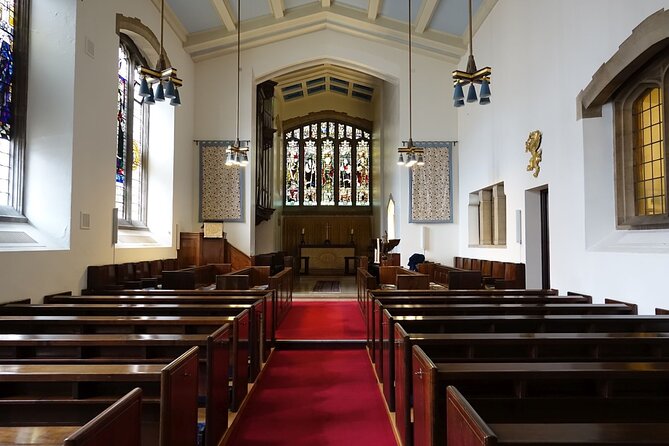
Gray’s Inn can be closed at weekends, so if you’re booking a Saturday or Sunday, keep flexible expectations about access. The chapel is a good follow-up, since Gray’s Inn Chapel is free and open for worship and respectful visitors.
Gray’s Inn Chapel and Lincoln’s Inn: When You Want the Quiet Details
Gray’s Inn Chapel is one of those stops where the architecture does the teaching. Even when the tour is moving quickly, stepping inside (when open) lets you connect the legal world to the religious world that surrounded Tudor politics. The tour description makes it clear it’s open to worship, which is a good reminder to keep your voice low and your attention on the space.
After that, you’ll head to Lincoln’s Inn. It’s described as another prestigious legal establishment, and on weekdays you might be able to peek inside. On weekends it can be closed, so again: weekday timing gives you better odds for access.
I like this section because it’s not trying to copy a standard “famous sights only” London itinerary. Instead, it gives you the sense that the people behind Cromwell’s rise worked among these institutions.
Maughan Library and Temple Area: Cromwell in Everyday Places
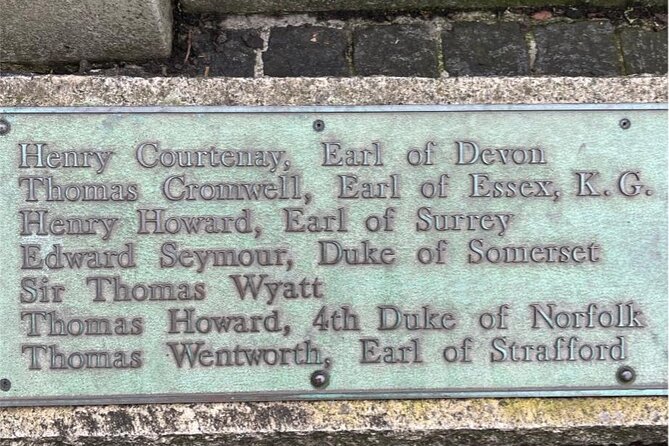
Next is Maughan Library, now a private library building for King’s College. What makes it click for Wolf Hall fans is the connection that this was once a place where Thomas Cromwell had an office. That kind of detail changes how you see the surrounding buildings. It stops being a story you heard on TV and becomes a real address you can stand near.
This stop is listed as admission ticket not included, so expect the visit to be more about location and explanation than a full interior tour.
From there, you pass through the Temple district, another legal zone that doubles as filming and literary territory. The tour notes it can be closed at weekends, so if you’re going on a weekend, expect more “pass by and learn” than “stop and enter.”
You’ll also see Temple Church from the outside. It’s more than a Da Vinci Code reference, the history goes back about 800 years. Seeing it from outside still helps, because it gives you an anchor point for what the legal-religious mix looked like in Tudor London.
Playhouse Yard follows, once the location of a famed Tudor theatre. That’s a clever break in tone: Cromwell’s era is political, yes, but it’s also cultural. You get a quick reminder that the city life around the courts had music, performance, and stories too.
Then comes a “church entry” stop where plans for Henry VIII’s divorce from Queen Katherine of Aragon were hatched. The tour doesn’t frame it as a debate lesson, it frames it as a place in the decision-making chain. Even when you are only getting a brief look, that kind of specificity makes the whole walk feel grounded.
Same part of England, a different sort of day out:
- Stonehenge, Windsor Castle, and Bath from London
★ 4.5 · 18,662 reviews - London Big Bus Hop-On Hop-Off Tour with Optional River Cruise
★ 3.5 · 10,803 reviews - London Small Group Tour of Historical Pubs
★ 5.0 · 10,422 reviews - Stonehenge, Windsor Castle and Bath with Pub Lunch in Lacock
★ 4.5 · 7,402 reviews
From Blackfriars to St. Paul’s: Fire, Ruins, and the City’s Memory
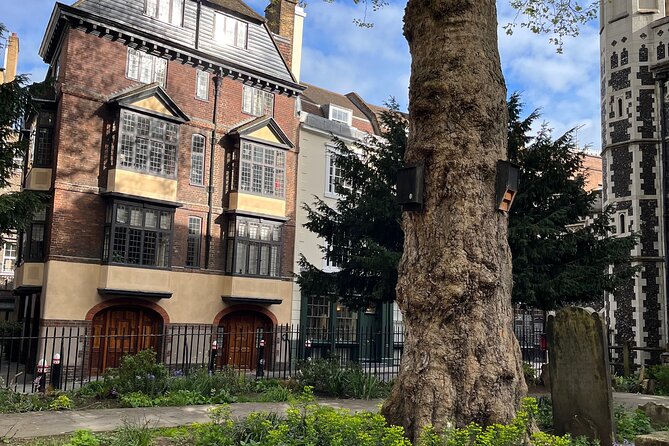
A big pivot comes at Blackfriars, where you’ll see small ruins of an abbey that Henry VIII seized and shut down. The tour also mentions Whitefriars nearby and that it’s included in the visit. This is one of the clearest examples of how Tudor power remade religious geography, turning monasteries and friaries into something else.
From there you reach St. Paul’s Cathedral. You’ll marvel at the City of London symbol from a short distance. The story here is that St. Paul’s arose from the ashes of the Great Fire and narrowly avoided destruction during the Blitz. It’s one of those landmark moments where you get a “big picture” London event, then you immediately carry it back to Cromwell’s era and mindset.
St. Paul’s is listed with admission ticket not included, so this is a viewpoint stop, not a guided cathedral ticket. Still, the timing makes it land well, because you’ve just come from fire and religious change themes.
Then you hit Pye Corner for the Golden Boy story tied to the Great Fire of London. It’s a short stop, but these little legends do useful work. They show how people processed disaster through symbols and street-level belief.
After that, the walk threads through other memorial markers: the William Wallace Memorial, the Great Rising of 1381 memorial, and then St. Bartholomew’s Gatehouse. The gatehouse stop matters because it gives you a Tudor-looking anchor, not just a plaque stop.
Smithfield Martyrs and Greyfriars Garden: Where Tudor Policy Got Physical
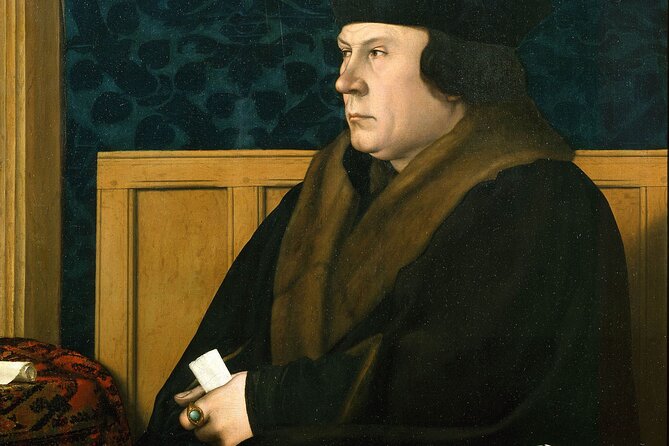
Smithfield Martyrs’ Memorial is a heavy moment in the best way. The tour points to the spot where Protestant bishops were burned at the stake by Queen Mary in Tudor times. It’s a reminder that Tudor politics carried real violence, and the walk doesn’t try to soften that.
Christchurch Greyfriars Church Garden follows. Cromwell had more personal involvement with the dissolution here than some other sites, and the space now functions as a memorial garden after being bombed out in World War II. That combination, Dissolution and wartime damage, gives you a strong sense of how London repeatedly “breaks and rebuilds,” and how institutions survive in fragments.
If you like history you can stand inside, this part delivers. Even when you cannot access full buildings, you still get a clear emotional geography.
Milk Street to Austin Friars: Cromwell’s London Residence and the Everyday City
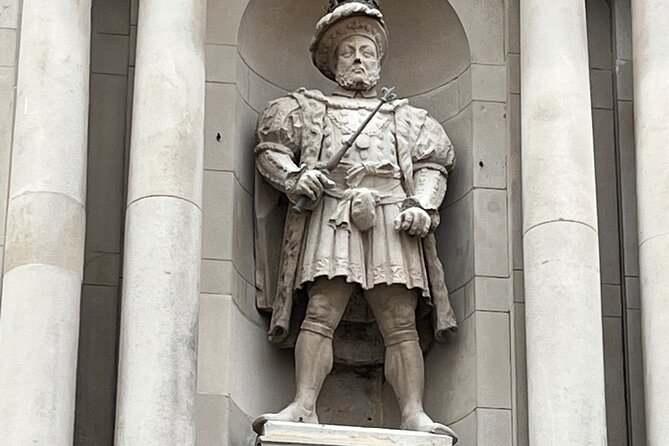
Milk Street is next, and it’s one of the quickest ways to hook Tudor history into famous later figures. You’ll pass where Sir Thomas More was born, and More’s end at Tower Hill is part of the story thread you’re seeing all day.
Then you reach Austin Friars, described as once an Augustinian friary. After Henry VIII’s dissolution, the estate became part of Thomas Cromwell’s domain and is noted as his main residence in the City of London. This is one of the most valuable moments on the walk because it’s a shift from “Cromwell as officeholder” to “Cromwell as resident and power broker.” Even a short stop here makes the day feel less abstract.
After Austin Friars, you visit Drapers’ Hall, the home of the Drapers Livery Company. The tour notes it as one of the few reminders of Cromwell’s home. It’s one more “institutional London” stop, and for me, these are the places where you start picturing the legal networks in motion.
Next is the Dutch Church, once a church for friars. The tour says it’s a quiet refuge from the financial center, and that Cromwell would have known it. That’s a useful mindset shift: history isn’t only grim. Sometimes it’s just a calm place people returned to while the City ran around them.
St. Helen’s to the Cornhill Maypole: Layers of Rome, Nuns, and Wolf Hall Details
St. Helen’s Church, Bishopsgate comes with a big time range. It’s described as the largest parish church in the City, built atop suspected Roman or Saxon foundations, and it sat on a site connected to a nunnery before the Reformation. Stops like this are why the walk works even if you are not a full Tudor scholar. You get the sense of continuity and disruption side by side.
You then pass Fenchurch Street, now transformed, but once another possible Cromwell-associated home near the Walkie-Talkie area on the south side. The tour keeps this one as a “pass through and learn” stop, which is fine because it helps you keep momentum without losing the connection.
The Maypole of Shaft’s Court is a great Wolf Hall treat. Henry VIII is mentioned in Wolf Hall talking about meeting Anne of Cleves and feeling he might marry, referencing the Cornhill Maypole. The tour places the Maypole near the Cheesegrater building, so you get a very modern City landmark as a reference point for the story.
St. Olave’s to the Tower Hill Scaffold: The Final Thread to Cromwell’s Fate
St. Olave’s Church is another pass-by stop, and it adds literary and diarist connections. Charles Dickens is noted as a favorite, and the diarist Samuel Pepys is buried here. Pepys lived across the road during the time of the Great Plague and the Great Fire, which links his personal life to the same urban transformation you’ve been tracking all tour.
Then you finish with Traitors’ Gate again, outside the Tower of London. The tour explicitly frames it as the infamous entry point, and that gives the last minutes real weight.
Tower Hill Scaffold Site is the final memorial stop, marking the spot where Thomas Cromwell, Thomas More, and countless others were executed in Tudor times and other periods. This is where the whole walk comes together. You’ve been moving through the legal systems, the Dissolution sites, the fire-era stories, and the City memory markers, and now you end at the place where Tudor policy turned lethal.
If you want a small extra activity after, the tour notes you can explore the Tower of London, where Thomas Cromwell is buried.
Price and Value: Is 271.76 Per Person Worth It?
At $271.76 per person, this is not a budget-only walk. The value comes from a few key places the price covers: a private guide and hotel pickup offered for convenience. That matters because a Tudor-themed London walk is less about a handful of famous monuments and more about making sense of the connections between legal institutions, Dissolution sites, and public memory.
What the price does not cover is also important. Several stops list admission ticket not included, including Staple Inn, London Silver Vaults, Maughan Library, St. Paul’s Cathedral, St Bartholomew’s Gatehouse is listed not included, Drapers’ Hall not included, and St Helen’s Church admission ticket not included. So you will likely spend most of the time observing from outside, and you may skip or add optional interior access based on your interests.
The upside is that the tour is built around places you can learn from even when you are not paying for entry. That is how it keeps value high for a price in this range.
If you can’t stand paying extra for entrance tickets, plan your expectations for more “outside and context” than “full admissions all day.”
Timing, Pace, and What to Bring for a Comfortably Long Walk
The tour is listed at about 3 hours, and one review mentions a longer 5 hour version. Either way, you should expect a lot of walking. Stops are short, often 2 to 10 minutes, so comfort depends on how quickly you can move between points without needing frequent long breaks.
Start time is 9:30am. That helps with daylight and crowd levels around the City, but you still want sensible shoes. The route includes legal-institution lanes and city streets, and some spots can be closed on weekends.
Bring a small water bottle and a camera. You’ll be taking photos of Tudor facades like Staple Inn, memorial markers, and the outside views of St. Paul’s. Also bring patience for tight pacing. The guide’s strength is the connections, and those connections depend on you not rushing past the moment you’re standing in.
Who This Tour Fits Best (and Who Should Skip It)
This is ideal if you:
- love Wolf Hall and want London locations tied to Thomas Cromwell, not just generic Tudor references
- enjoy legal history, inns of court, and how institutions shaped decisions
- like City of London walks where many stops are brief but meaningful
- want a private guide and a route that avoids the same tourist circuit
You might skip it if you want a tour with constant museum-style interiors and included admissions. Several highlights have admission not included, and some sites can be closed on weekends. If your ideal London day is mostly big indoor attractions, you may feel a little exposed to outside viewing only.
Should You Book Thomas Cromwell’s Wolf Hall Tudor London Walking Tour?
Yes, if you want a Wolf Hall day that feels specific and place-based. I like that it mixes the big, dramatic landmarks like St. Paul’s and the Tower area with quieter, more surprising stops like Gray’s Inn Chapel, Pye Corner’s Golden Boy story, and the memorial sites around Smithfield.
The strongest reason to book is the guide experience. In reviews, Stephen stands out for attention to detail, fact-focused storytelling, and communication before and during the walk. If that style matches how you like to learn, you’ll probably leave with more than photos. You’ll leave with a mental map of how Cromwell’s world worked.
If you’re the kind of person who likes London best when you’re wandering off the obvious path, this one makes a lot of sense.
FAQ
How long is Thomas Cromwell’s Wolf Hall Tudor London Walking Tour?
It’s listed at about 3 hours.
Is the tour private and in English?
Yes, it’s a private tour/activity, and it’s offered in English.
Where does the tour start and end?
It starts and ends at Traitors’ Gate, London EC3N 4AB, UK.
Is hotel pickup included?
Hotel pickup is offered for convenience, and pickup details include meeting at your hotel or meeting near Chancery Lane Station.
Are admission tickets included for all stops?
No. Some stops list admission ticket not included, while many others are listed as free.
What does the tour cover?
The route connects Tudor legal districts, Cromwell-related locations such as Maughan Library and Austin Friars, City memorial stops, and finishes near the Tower of London and Tower Hill scaffold site.
What is the cancellation policy?
Free cancellation is available up to 24 hours in advance for a full refund.
Recently added around London
- Tower of London Private Guided Tour for Kids and Families★ 4.5 · 3 reviews
- Tower of London Private Guided Tour★ 3.0 · 8 reviews
- Tower of London Private Tour with Blue Badge Guide★ 4.5 · 23 reviews
- Tower of London: VIP After Hours Access & Ceremony of the Keys★ 5.0 · 26 reviews
- Tower of London Early Access, Opening Ceremony and Royal London★ 5.0 · 173 reviews
- Admission Ticket to The Tower of London & Crown Jewels Exhibition★ 4.5 · 97 reviews
- Tower of London Guided Tour with Beefeater Meet & Crown Jewels★ 4.5 · 146 reviews
- Tower of London Fully Guided Private Tour★ 5.0 · 3 reviews
Walking Tours, compared.

Oxford University Walking Tour With University Alumni Guide
Read our review →
Tour for Muggles The Ultimate Harry Potter Walking Tour in London
Read our review →
Cambridge University Walking Tour by Alumni™ Kings College Option
Read our review →
Blackbeard to Banksy – The Ultimate Walking Tour of Bristol
Read our review →
Air Raid Shelter + St. Nicholas Market Walking Tour
Read our review →
Walking Tour of Bath with Blue Badge Tourist Guide
Read our review →
Changing of the Guard Guided Walking Tour in London
Read our review →
Shadows of York: Ghost Walk and Horrible History.
Read our review →Browse the lists this tour appears in