
Reviewed · FOOD & DRINK
Twinings 2-Hour Tea Tasting Masterclass in London
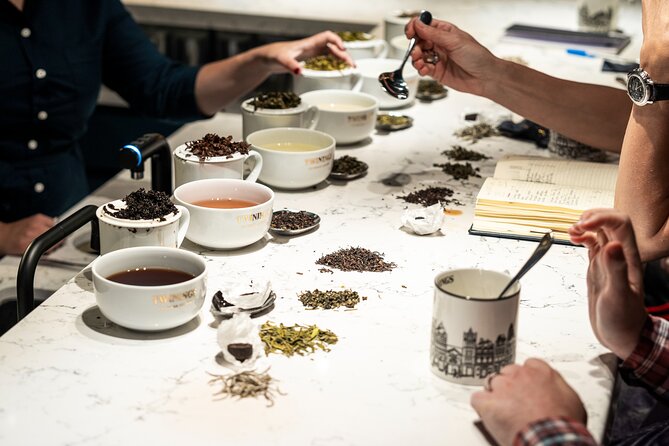
Tea tasting can be a real London highlight. This 2-hour Twinings masterclass brings you face to face with tea’s plant-to-cup story and the six tea styles you’ll sample. It’s small, guided, and built around hands-on tasting, not just lectures.
I especially like the format: a tight group (maximum 5) with lots of interaction, so you can ask questions and actually compare teas. I also like that you learn a tasting approach, the same way teachers describe judging tea aroma, flavor, mouthfeel, and aftertaste.
The one drawback to consider is the price. At $69.45 per person, it’s not a quick bargain stop, so you’ll get the most value if you’re curious about tea and ready to slow down for a sensory class.
In This Review
- Key Takeaways Before You Go
- Why This Twinings Tea Tasting Feels Like a Real London Experience
- Finding 216 Strand, Temple, and Settling In
- The 2-Hour Masterclass Flow, From Bud to Cup
- What You Actually Learn While You Taste
- Six Tea Categories, Explained in Plain Tasting Terms
- White tea
- Yellow tea
- Green tea
- Oolong tea
- Black tea
- Pu’erh
- How Professionals Evaluate Tea (And How You Can Too)
- Your Timing: Why Two Hours Is the Right Length
- Where This Masterclass Offers Value for $69.45
- Who Should Book This Tea Tasting (And Who Might Skip It)
- Small-Group Perks You’ll Feel in the Room
- Should You Book Twinings 2-Hour Tea Tasting in London?
- FAQ
- Where is the meeting point for the Twinings tea tasting masterclass?
- How long is the tea tasting masterclass?
- What teas are included in the tasting?
- How many people are in the group?
- Is the masterclass offered in English?
- Can I cancel for a full refund?
Key Takeaways Before You Go
- Six tea styles in one session: White, Yellow, Green, Oolong, Black, and Pu’erh
- Max 5 people, lots of back-and-forth during a true masterclass format
- Tea judging practice, including how professionals evaluate tea and how to describe what you taste
- Real tea culture context for why British tea habits developed the way they did
- Hands-on tasting guidance that works even if you start with zero tea knowledge
- Twinings shop follow-up time, and you might find product perks after the class
Why This Twinings Tea Tasting Feels Like a Real London Experience
London has a thousand ways to pass an afternoon, but tea culture is one of the most British. This masterclass is a smart shortcut into that world, because you’re not just hearing tea history. You’re learning how different teas are made and then comparing them side by side.
What makes it stand out for me is how the class nudges you from casual sips to real noticing. You start paying attention to aroma first, then flavor, then how the tea feels in your mouth. Even if you think you only like one kind of tea, you’ll likely leave with a new short list of favorites and, just as importantly, a better way to tell why.
The group size helps. With a maximum of 5 travelers, the teacher can keep the pace moving without leaving anyone behind. And the instructors named in past sessions, like Alessandra, Liam, Rachel, Rosie, and Angelo, are described as story-driven and engaging, which matters when you’re spending two hours tasting and talking.
More Food Tours in London
- London Bridge & Borough Market Food Tour with 7 Authentic Dishes
★ 5.0 · 1,972 reviews - Eating London East End Food Tour
★ 5.0 · 1,509 reviews - London Foodie Adventure:More than 10 dishes with Sherpa Food Tour
★ 5.0 · 932 reviews
Finding 216 Strand, Temple, and Settling In
The experience meets at 216 Strand, Temple, London WC2R 1AP. The tea shop area is easy to reach in the general city core, and the activity is marked as near public transportation. I like that because tea tastings can otherwise get derailed by complicated travel plans.
You’ll have a mobile ticket, and confirmation comes at booking time. The class runs about 2 hours, and it ends back at the same meeting point. So you don’t need to build a whole day around it. It fits well as a planned stop between other Strand or Covent Garden style errands, or as a “slow down” experience on a busy trip.
One more detail that helps set expectations: the class can take place in a more intimate, indoor setting. A past group described it as happening in a basement space connected to a chic bar area. Whatever the exact room setup is on your date, it’s the kind of place where you can smell tea, focus on samples, and concentrate without the distractions of a loud tour scene.
The 2-Hour Masterclass Flow, From Bud to Cup
This is structured around your questions, your senses, and the tea’s journey. The goal is to answer the big ones fast and clearly:
Where does tea come from?
How did it arrive in Britain?
What makes one tea taste like itself, not like everything else?
You start with the tea plant’s path from bud to brew. That matters because many tea drinkers rely on labels and flavor claims, but don’t know what changes in processing and origin. In this class you learn what differentiates the tea categories you’ll later taste, so the samples don’t feel random. They feel like chapters.
Next comes the tasting itself. You sample six categories: White, Yellow, Green, Oolong, Black, and Pu’erh. The teacher guides you as you go, including how professionals evaluate tea.
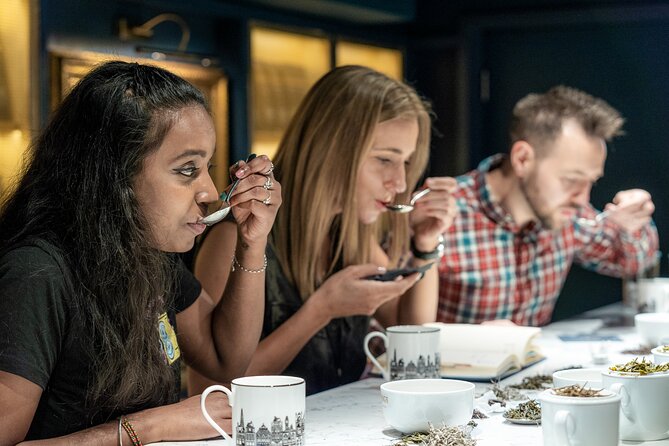
And yes, there’s a whole sensory style element to it. The class includes guidance on how to “slurp,” which sounds funny until you realize it’s a practical technique. When you slurp, you aerate the tea slightly, spreading aroma through your nose so you notice more than just sweetness or bitterness. You’re basically training your senses to behave like a tasting room.
What You Actually Learn While You Taste
You’ll likely remember the class for the tasting, but the learning sticks because it’s tied to comparison. The way this is set up pushes you to answer, cup by cup:
What aroma do I notice first?
Is the flavor light, grassy, malty, floral, smoky, earthy?
Does it change as it cools in the mouth?
What lingers after I swallow?
The strongest part of the format is that you’re asked to describe what you’re experiencing. In past sessions, people noted prompts to rate teas and to put tasting impressions into words using example vocabulary. That’s huge for beginners. If you’ve ever taken a sip and thought, I can’t explain this, you’ll appreciate learning a simple tasting language that makes your notes make sense.
The class also links tea categories to how they’re harvested and processed, at least at the level needed to understand what you’re tasting. The point is not to memorize every detail. The point is to get the “why” behind each cup so you can choose tea later without guessing.
Same part of England, a different sort of day out:
- Stonehenge, Windsor Castle, and Bath from London
★ 4.5 · 18,662 reviews - London Big Bus Hop-On Hop-Off Tour with Optional River Cruise
★ 3.5 · 10,803 reviews - London Small Group Tour of Historical Pubs
★ 5.0 · 10,422 reviews - Stonehenge, Windsor Castle and Bath with Pub Lunch in Lacock
★ 4.5 · 7,402 reviews
Six Tea Categories, Explained in Plain Tasting Terms
Let’s make the six categories concrete, because this class works best when you know what you’re comparing.
White tea
White tea is typically taught as a gentle, delicate category. In a class like this, you usually notice lighter aroma and a smoother flavor profile first. The value here is learning how “subtle” tea can still have character.
Yellow tea
Yellow tea tends to be less familiar than green or black, and that’s part of the fun. You’ll likely notice a difference in body and aroma compared with what you expect from green tea. Even if you’ve never heard of it before, the structured tasting helps you place it.
Green tea
Green tea is where a lot of people start, but the class helps you move beyond the basic idea of green and grassy. You taste for specific notes and texture so green stops being one vague flavor and becomes a set of measurable traits.
Oolong tea
Oolong is often described as a bridge category. In a tasting format, you can compare it directly against greener and darker styles and spot the changes in flavor depth. It’s a common turning point in the class where people realize tea isn’t just one thing.
Black tea
Black tea is familiar, but this kind of tasting can still surprise you. The guidance helps you notice how black tea can range from brisk and malty to darker and more complex, depending on the cup. If you love British tea habits, this is usually the category that anchors the experience in real culture.
Pu’erh
Pu’erh is often where the class gets exciting, especially for people who assume tea will always taste smooth and light. Pu’erh often brings earthy, fermented, or woody notes. The practical benefit is learning how a tea that seems intense can be judged fairly, rather than written off as too strong.
How Professionals Evaluate Tea (And How You Can Too)
This is where the masterclass earns its keep. Tasting is easy when you drink casually. Tasting is hard when you want to describe what you’re drinking, and especially hard when you’re comparing six categories in sequence.
You’ll practice the steps professionals use:
Look at what you can before tasting (even loose leaf and brewed cues, if your session includes them)
Smell first, before you decide what you think
Taste in a way that spreads aroma through your nose, using that slurp technique
Pay attention to mouthfeel, not just flavor
Notice aftertaste, because it often signals quality and processing differences
And the interaction part is real. With a group of up to 5, you can ask questions and get feedback in the moment. Past sessions highlight that instructors like Alessandra and Liam can answer almost anything about teas, and that the teaching style is both funny and approachable. That combination matters, because tea can feel intimidating if the teacher sounds like a textbook.
Your Timing: Why Two Hours Is the Right Length
Two hours is short enough to feel manageable, but long enough to do real tasting work. You’re not rushing through one sample and then leaving. You’re tasting a progression, learning a vocabulary, and comparing categories long enough that your palate resets between cups.
This also helps with jet lag and busy schedules. You can plan this as one focused activity without turning it into a half-day ordeal. People also note that time feels perfect for learning without dragging, which is exactly what you want in a sensory class where each cup takes a few minutes.
Where This Masterclass Offers Value for $69.45
At $69.45 per person, this isn’t “cheap fun.” It is, however, a clear value if you compare it to what you get.
You’re paying for:
A guided lesson on tea production, history, and varieties
Tasting of six tea categories
Hands-on instruction on how pros evaluate tea
A small group format with maximum 5 travelers
A structured experience that leaves you with a repeatable way to choose tea later
If you think of it as buying six guided tastings with coaching, the price makes more sense. If you just want a quick souvenir or a short photo stop, it may feel expensive. But if you like food and drink classes, and especially if you enjoy learning to taste, it’s priced like a specialty experience for a reason.
Also, there’s often shop follow-up. One past class noted getting a discount on products after the class. Since it’s not guaranteed in the core details, treat it as a possible perk rather than a promise. Still, it can soften the cost if you end up buying tea you actually understand.
Who Should Book This Tea Tasting (And Who Might Skip It)
This is a great fit if you fall into any of these groups:
You’re a tea lover and want to go beyond your usual cup
You want a hands-on food and drink activity that doesn’t require cooking skills
You like structured tastings where you can ask questions and get feedback
You’re visiting London and want something that connects to British culture in a practical way
It might be less ideal if:
You’re not interested in tea flavors at all and only want sightseeing
You hate scent and taste training (because you will smell and taste a lot)
You want a totally hands-off lecture with no interaction
Good news: past participants noted it can still be fun even if you’re not a tea drinker. The key is that the class teaches you how to approach tasting from zero, then uses the six categories to build understanding quickly.
Small-Group Perks You’ll Feel in the Room
With a maximum of 5 travelers, this kind of class works differently than bigger group tours. You’re not waiting for your turn. You can respond to prompts while the tea is still fresh. If you have a question about one specific sample, you’ll likely get an immediate answer rather than a general comment for the whole group.
That’s also why instructor personality matters. Named teachers like Rachel, Rosie, Liam, Alessandra, and Angelo are described as engaging and interactive. In a short class, a teacher who can keep momentum is part of what you’re paying for.
And the tasting format is sensory, not just verbal. You’ll likely find yourself thinking differently after the session, because you learned how to pay attention.
Should You Book Twinings 2-Hour Tea Tasting in London?
I’d book it if you want a focused, small-group London experience that teaches you how to taste, not just what to taste. The combination of six sampled tea categories, guided judging techniques, and a teacher-led story about tea’s path to Britain makes it worth the time.
I’d think twice if your goal is purely budget sightseeing, or if you prefer long outdoor activities to indoor sensory work. At $69.45, you’re paying for an experience that works best when you’re ready to use your senses and ask questions.
If you do book, go in curious. Bring your questions. And don’t worry if you start with basic tea knowledge, the class is built to meet you where you are, then help you leave with a better palate and a smarter way to choose tea next time.
FAQ
Where is the meeting point for the Twinings tea tasting masterclass?
The experience starts at 216 Strand, Temple, London WC2R 1AP, UK and ends back at the same meeting point.
How long is the tea tasting masterclass?
It runs for about 2 hours.
What teas are included in the tasting?
You’ll sample White, Yellow, Green, Oolong, Black, and Pu’erh.
How many people are in the group?
The masterclass has a maximum of 5 travelers.
Is the masterclass offered in English?
Yes, the experience is offered in English.
Can I cancel for a full refund?
Yes. You can cancel for a full refund if you cancel at least 24 hours in advance. Free cancellation is available up to that point.
Recently added around London
- Ted Lasso Tour of Richmond with Private Guide★ 5.0 · 25 reviews
- Private Ted Lasso Filming Locations Tour★ 5.0 · 45 reviews
- Ted Lasso Inspired Private 4-hour Tour in Richmond★ 5.0 · 40 reviews
- Ted Lasso London Taxi Tour★ 5.0 · 5 reviews
- Tea Time & Doughnuts at Borough Market: A Proper London Treat★ 5.0 · 41 reviews
- Taxi Private Tour of the Big Sights of London★ 5.0 · 40 reviews
- Tate Modern Theatre Picasso Exhibition★ 3.5 · 7 reviews
- Taxi: Heathrow Airport To or From London★ 5.0 · 18 reviews
Food & Drink, compared.

London Bridge & Borough Market Food Tour with 7 Authentic Dishes
Read our review →
London Foodie Adventure:More than 10 dishes with Sherpa Food Tour
Read our review →
Eating London: Twilight Soho VIP Food & Drinks Tour
Read our review →
East London Indian Food Tour with 8+ Authentic Food Tastings
Read our review →
London Borough Market & London Bridge Food Tour
Read our review →
Ultimate London Cheese Crawl : Guided Food Tour
Read our review →
Browse the lists this tour appears in