
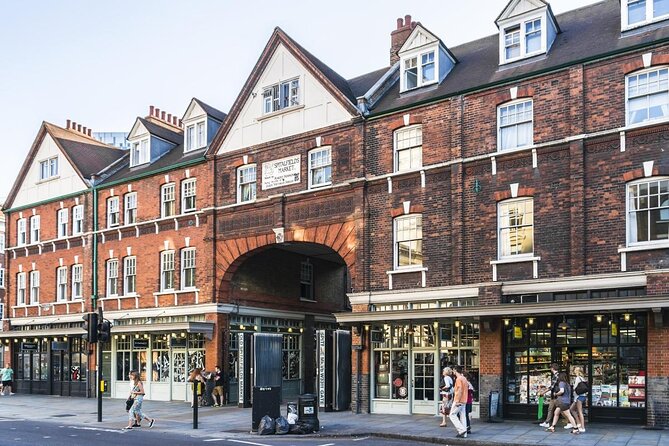
Reviewed · WALKING TOURS
Walking Tour around Spitalfields in the East End of London
Spitalfields has stories most miss. This 2-hour East End walking tour trades the usual postcard sights for close-up history: English Baroque architecture, immigrant life, a medieval survivor, and a building that changed jobs over centuries. What I especially like is the small group size of just 5, so the guide can slow down and answer your questions without rushing you through the streets.
My second favorite bit is the ending. You finish in an 18th-century drawing room with tea and cakes baked to a recipe from 1720, with views over Christ Church Spitalfields. The only real drawback to consider is simple: the walk involves about two hours of standing and walking, so it may not suit you if you cannot manage that comfortably.
In This Review
- Key highlights worth planning around
- Why Spitalfields in the East End beats the usual London loop
- Starting at Christ Church Spitalfields and Nicholas Hawksmoor’s English Baroque
- The institution that served East European Jewish immigrants
- Learning the story of the ancient market
- A medieval survival, the priory site, and the brewery through two women
- A famous thoroughfare, controversy, and the building that changed faiths
- Eighteenth-century houses and Nicholas Culpeper’s herb garden
- The tea and cakes finish in an 18th-century drawing room
- Price, duration, and whether $90.28 feels fair
- Practical tips before you go
- Who should book this Spitalfields walking tour
- Should you book the Gentle Author’s Spitalfields walk?
- FAQ
- How long is the walking tour around Spitalfields?
- What time does it start, and where do we meet?
- What is the group size for this tour?
- Is tea and cake included at the end?
- Is the tour suitable if I cannot stand and walk for about two hours?
- What happens if the weather is poor or I cancel?
Key highlights worth planning around
- Five-person group: more attention, fewer crowds, and more time for details.
- Nicholas Hawksmoor start: English Baroque architecture right at the beginning.
- People-centered history: immigrant communities, the institutions around them, and the lived experience behind buildings.
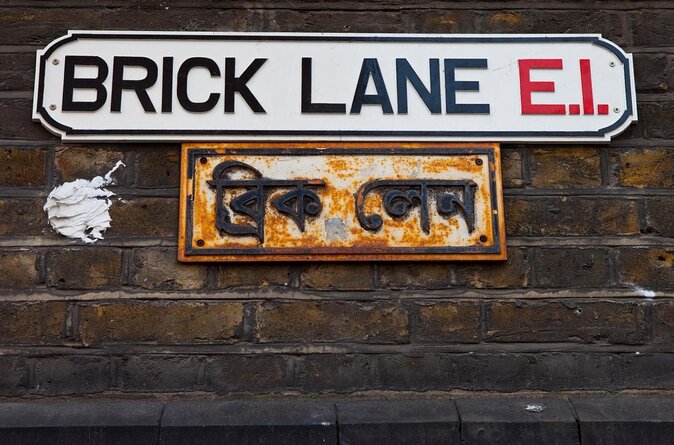
- A building with three identities: a Huguenot Chapel turned into a Synagogue, then a Mosque.
- Nicholas Culpeper’s herb garden: a practical, local stop that connects you to medicinal plants.
- Tea and cakes at the end: included, plus a specific recipe from 1720.
Why Spitalfields in the East End beats the usual London loop
Spitalfields is the kind of London you only catch when you get curious, not when you follow a standard route. This area sits just east of the famous center, and the streets feel like they belong to real daily life. The tour leans into that. You walk at a human pace, stop for meaning, and look at the mix of old and newer landmarks as part of the same story.
I like that the focus is not just stone and dates. You get stories about the people tied to institutions, markets, workplaces, and homes. That turns the East End into something you can actually picture, instead of a blur of buildings.
And because the group is tiny, you get a steadier rhythm. When the guide pauses to point out something specific, you can hear it. When you want to ask a question, there is room for it.
More Walking Tours in London
- Tour for Muggles The Ultimate Harry Potter Walking Tour in London
★ 5.0 · 4,684 reviews - Changing of the Guard Guided Walking Tour in London
★ 5.0 · 1,793 reviews - The Great British Rock and Roll Walking Tour
★ 5.0 · 1,371 reviews
Starting at Christ Church Spitalfields and Nicholas Hawksmoor’s English Baroque
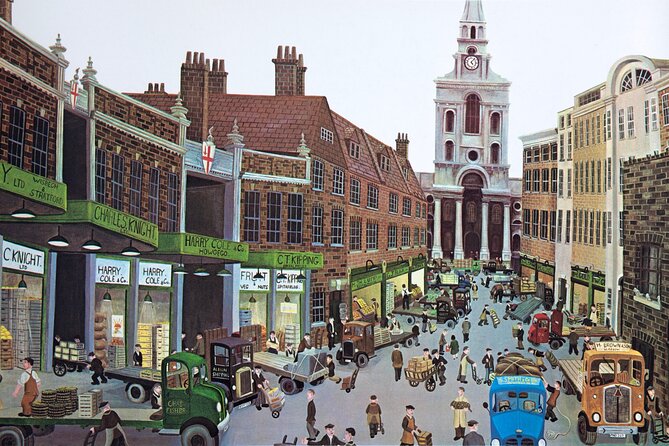
You begin at Christ Church Spitalfields on Commercial Street, and the tour immediately sets a strong tone. One of the first stops is Nicholas Hawksmoor’s English Baroque masterpiece, which matters because it frames the neighborhood in a way most people miss. Instead of treating Hawksmoor as an isolated name on a list, you see how the area’s identity formed around its major landmarks.
Baroque churches can feel dramatic from the outside, but the real value on this walk is how the guide teaches you to notice. You are not just looking up. You are learning what the design was trying to communicate, and why it would have stood out in the surrounding streets at the time.
If you enjoy architecture that has a point of view, this opening is a great way to get your bearings fast. You also get to start your East End day with a clear reference point, because the rest of the tour keeps coming back to the area around Christ Church Spitalfields.
The institution that served East European Jewish immigrants
After the architecture, the walk shifts into people and purpose. You meet the thread of an institution tied to the needs of Jewish immigrants from East Europe, described as the region now known as the Ukraine. This is where the tour becomes emotionally grounded. The guide connects the physical setting to the human reason it mattered.
What you end up with is not a vague “immigrants lived here” story. You hear about the kinds of roles people played in ministering to those communities, and you learn how the neighborhood’s character formed through care, work, and community life.
This section works especially well if you like history that explains the why behind what you see. Instead of pointing at buildings and moving on, the guide spends time turning the facts into lived context. It also helps that the group stays small, because the subject matter benefits from a calm pace.
Learning the story of the ancient market
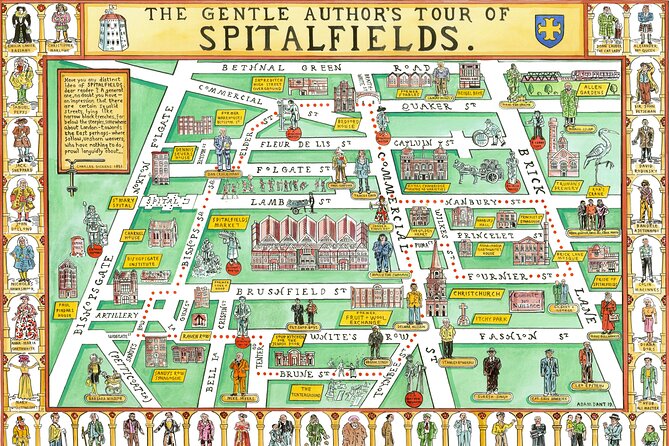
Spitalfields has long been linked with trade and exchange, and this tour brings that to life with a stop focused on the story of the ancient market. Markets are not just places where people buy things. They are where languages mix, where workers meet, and where money and migration intersect.
As you walk, you learn how markets shape streets over time. You also start to understand why the neighborhood looks the way it does, because markets influence where buildings get built, where services cluster, and which parts of the area become central.
The key advantage here is that you see the market story as part of a longer chain, not a single snapshot. Even if you are not a market person, you will likely come away with a clearer mental map of what Spitalfields used to be, and why it still feels like itself today.
Same part of England, a different sort of day out:
- Stonehenge, Windsor Castle, and Bath from London
★ 4.5 · 18,662 reviews - London Big Bus Hop-On Hop-Off Tour with Optional River Cruise
★ 3.5 · 10,803 reviews - London Small Group Tour of Historical Pubs
★ 5.0 · 10,422 reviews - Stonehenge, Windsor Castle and Bath with Pub Lunch in Lacock
★ 4.5 · 7,402 reviews
A medieval survival, the priory site, and the brewery through two women
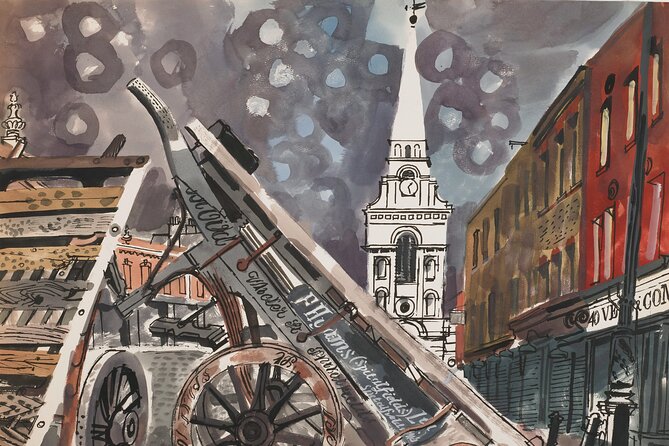
Next, the tour slows down for two kinds of time travel. One stop focuses on the purpose of an astonishing medieval survival, and another visits the site of the Priory of St Mary Spital.
The medieval survival piece is a reminder that some parts of cities do not disappear cleanly. They bend, get repurposed, and survive through layers of change. You get the kind of explanation that helps you recognize why something old still matters in a modern street scene.
At the Priory of St Mary Spital site, the value is less about spectacle and more about place. Being at the site helps the story land. You are not learning the priory as a random entry in a guidebook. You are hearing how it fits into the neighborhood’s timeline.
Then comes a different angle on industry, told through real work. You visit the story of the brewery told through the lives of two women who worked there. I found this especially powerful because it shifts the spotlight away from anonymous history. Even with just two biographies, you get a sense of daily labor and how jobs shaped people’s lives in Spitalfields.
It also balances the tour. You get architecture, community care, trade, medieval continuity, and then work and employment. That mix keeps it from becoming one-note.
A famous thoroughfare, controversy, and the building that changed faiths

One of the tour stops turns to a famous thoroughfare and the ongoing controversy over its future. The point is not to take sides on something political in a walking-tour vacuum. The point is to show that city streets keep evolving, and decisions about them have consequences. On this section, you learn how past and present collide when communities argue about what comes next.
From there, you see one of the most striking stories in the whole walk: a building that moved through identities over time. You hear the history of a Huguenot Chapel that became a Synagogue and then became a Mosque. That is a rare arc for one structure, and the guide helps you understand why it can happen. It connects faith, migration, and the practical reuse of space in a changing neighborhood.
This is one of those moments where you can feel how one address can hold multiple communities across eras. You end up looking at the streets differently, because you start noticing how layers of London overlap, rather than replacing each other cleanly.
If you care about how cities absorb waves of people, this segment is a highlight. It also helps you remember that cultural history is not just in museums. It is in buildings still standing and still serving people in different ways.
Eighteenth-century houses and Nicholas Culpeper’s herb garden

After the big transformation stories, the tour shifts to something more domestic, then something hands-on.
You hear the story behind fine eighteenth century houses, with attention to why these buildings mattered in their context. I like this because it shows that Spitalfields was not only about crowded change. There were also residents and social layers that shaped the architecture. The guide connects the houses to the neighborhood’s broader evolution, so they do not feel like random pretty façades.
Then you visit the herb garden of Nicholas Culpeper, a 17th-century herbalist. This is a smart stop because it gives you a tangible connection to the past. You are not just hearing about what people believed. You see plants linked to historical approaches to health and medicine.
Even if you do not know Culpeper’s work beyond his name, the garden stop gives you a calm reset during a walking-heavy tour. It is also a nice contrast to the social history parts, because it grounds you in how people used everyday natural resources.
The tea and cakes finish in an 18th-century drawing room
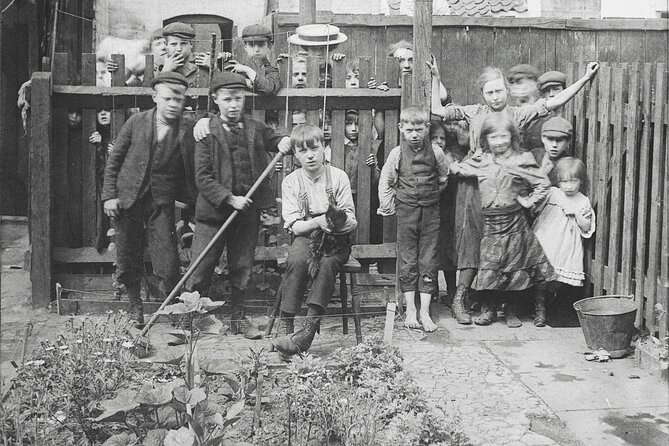
The tour ends with a very specific kind of London treat. You put your feet up in an 18th-century drawing room overlooking Christ Church Spitalfields. Then you enjoy tea and cakes baked to a recipe from 1720, with an admission ticket included.
This ending is a real value add. For one thing, it gives you time to absorb what you just learned. For another, it turns the last half hour into a reward that matches the theme of the walk. You spent time on older London layers. Then you sit in an older room and taste something tied to the same long timeline.
The tour also has a “small group” rhythm here. You are not ushered through a crowd. It is more relaxed, more conversation-friendly, and you can ask one more question before you head off again.
Price, duration, and whether $90.28 feels fair
At about $90.28 per person for roughly 2 hours, this is not a bargain-basement walk. But it also is not priced like a big mass-market tour. The real value is the tight group size, the guided storytelling, and the included tea and cake with a historical recipe detail.
You are paying for three things:
- Time and attention, because the group tops out at 5.
- A variety of stops, from major architecture to immigrant-focused stories and a garden.
- An included payoff, the tea and cakes at the end, not just a quick break.
If you love history that explains why facts matter, and you do not want a rushed script, the price makes more sense. If you are looking for a purely budget walk with minimal extras, you might feel the cost. But if you want a guided East End experience that actually slows down, this price is in line with the level of care.
Practical tips before you go
This tour runs in English and uses a mobile ticket. You should also plan around the fact that it works best in good weather, since it is an outdoor walk.
A few practical things I’d do:
- Wear shoes you trust. You will be on your feet for about two hours.
- Add a little buffer time to reach the meeting spot at Christ Church Spitalfields, Commercial St, London E1 6LY.
- If you know you have mobility limits, choose your day carefully and be honest about how long you can stand and walk.
Also note the pacing. The tour is designed for stops and focusing on details. If you try to squeeze it between tight plans, you may feel rushed. I’d give it a little breathing room before and after.
Who should book this Spitalfields walking tour
You should strongly consider it if you:
- Want to see a side of London different from the centre, with a clear sense of local identity.
- Like guides who explain not just what happened, but why it happened.
- Enjoy neighborhood history that includes everyday work, not only famous names.
- Appreciate small-group touring, where you can actually hear and ask questions.
You may want to skip or rethink if you cannot manage two hours of standing and walking, even if you can handle short stops.
Should you book the Gentle Author’s Spitalfields walk?
I’d book this if you want an East End experience that feels personal and specific. The combination of Hawksmoor at the start, immigration and institutions, market and medieval survival, a priory site, and then the building that changed from chapel to synagogue to mosque gives you a strong arc. Add the tea and cakes finished in an 18th-century drawing room, and you get a tour that respects your time.
If you are the type of traveler who reads details with your feet, not just your eyes, this fits. If you want big-bus highlights and quick photo stops, you might find it too story-heavy. But if you want London that makes sense at street level, this is an excellent bet.
FAQ
How long is the walking tour around Spitalfields?
It lasts about 2 hours.
What time does it start, and where do we meet?
The tour starts at 2:00 pm at Christ Church Spitalfields, Commercial St, London E1 6LY, UK, and it ends back at the meeting point.
What is the group size for this tour?
The group is limited to a maximum of 5 travelers.
Is tea and cake included at the end?
Yes. The tour ends with tea and cakes baked to a recipe of 1720 in an 18th-century drawing room, and the admission ticket is included.
Is the tour suitable if I cannot stand and walk for about two hours?
It is not recommended if you cannot stand and walk for two hours.
What happens if the weather is poor or I cancel?
The tour requires good weather. If it is canceled due to poor weather, you will be offered a different date or a full refund. You can cancel for a full refund up to 24 hours before the experience starts.
Recently added around London
- Shared Service from Stansted airport to Central London★ 3.5 · 3 reviews
- VIP Private Transfers Stansted Airport to/from Any London Hotel★ 5.0 · 6 reviews
- Transfer from London Stansted Airport to Central London★ 5.0 · 6 reviews
- eSIM for UK (34 EU countries) | 3 to 30 days. Up to 40GB of data★ 4.0 · 18 reviews
- Layover Tour of London from LHR Executive Luxurious Vehicle Private Tour 6 hour★ 4.5 · 9 reviews
- York Day Rail Tour from London Including Hop-on Hop-off Tour★ 3.0 · 3 reviews
- Working Women of the East End Walking Tour★ 5.0 · 85 reviews
- London with a Local (Historical)★ 5.0 · 3 reviews
Walking Tours, compared.
Oxford University Walking Tour With University Alumni Guide
Read our review →
Tour for Muggles The Ultimate Harry Potter Walking Tour in London
Read our review →
Cambridge University Walking Tour by Alumni™ Kings College Option
Read our review →
Blackbeard to Banksy – The Ultimate Walking Tour of Bristol
Read our review →
Air Raid Shelter + St. Nicholas Market Walking Tour
Read our review →
Walking Tour of Bath with Blue Badge Tourist Guide
Read our review →
Changing of the Guard Guided Walking Tour in London
Read our review →
Shadows of York: Ghost Walk and Horrible History.
Read our review →Browse the lists this tour appears in