
Reviewed · HISTORICAL TOURS
A Walk Through Time: History of Liverpool Walking Tour
Liverpool’s waterfront feels like a time machine. This walk links landmark after landmark to the story of how the city grew, from medieval origins to world trade. Royal Liver Building sets the tone, and you get those details from a historian guide, often highlighted by people who mention John by name.
I especially like the way the route mixes civic power and working waterfront. You’re not just seeing pretty buildings, you’re learning why places like the docks and the old port infrastructure mattered. That mix is the real value for the money, since you cover a lot of Liverpool’s big sites in about 2 hours.
One consideration: it’s mostly an outdoor walk, and the river wind can be sharp on cold days. Also, a couple of stops note admission tickets are not included, so plan to view those areas even if you do not go inside.
In This Review
- Key highlights to look for
- Royal Liver Building at Pier Head, where the story begins
- From St Nicholas Church Gardens to Liverpool’s medieval origins
- Old Hall Street and Cotton Exchange, the port that scaled up
- Liverpool Town Hall (1749) and the civic face of commerce
- Castle Street to the Queen Victoria Monument, from fortress to empire
- Liverpool ONE, modern Liverpool between the centuries
- Old Dock tour (1715) and Royal Albert Dock (1846), the working heart
- Ending at the Three Graces again, you finish with the view
- Group size, pace, and what to wear for this kind of walk
- Price and value for a 2-hour overview tour in Liverpool
- Who should book this A Walk Through Time history tour?
- Should you book it?
- FAQ
- What is the price for the Liverpool walking tour?
- How long does the tour last?
- Where does the tour start and end?
- Is the tour offered in English?
- Do I need to bring an admission ticket for every stop?
- Is the group size limited?
- Do I receive a mobile ticket?
- Is the tour dependent on weather?
- Are service animals allowed?
- What is the cancellation policy?
- Is the tour close to public transportation?
Key highlights to look for
- Three Graces start and finish at the Royal Liver Building waterfront setting
- Medieval St. Nicholas origins in the Parish Church Gardens area, tied to Liverpool’s early founding
- Old Hall Street to Cotton Exchange focus on trade routes and port growth
- Georgian architecture at Liverpool Town Hall (1749), framed as civic commerce
- Old Dock and Royal Albert Dock (1715 and 1846) with guidance on how Liverpool handled world shipping
Royal Liver Building at Pier Head, where the story begins
Most history tours in Liverpool toss you into the middle of things. This one starts with the iconic waterfront view at the Royal Liver Building, part of the famous Three Graces cluster on Pier Head. Before you even move, you get a tour introduction and the big picture of what Liverpool used to be, and what it became.
That early framing matters. When you understand how Liverpool’s waterfront and maritime identity drive the city’s timeline, every next stop clicks into place. You’ll also be looking at a location that feels instantly important, even if you are new to Liverpool.
Practical note: the stop time here is short, about 10 minutes, and it notes that admission tickets are not included. So think of this as a guided orientation plus exterior history at the waterfront rather than a long building visit.
More History Tours in Liverpool
- Best Of Liverpool Heritage, History & Culture Guided Walking Tour
★ 5.0 · 539 reviews - History Guided Tour of Liverpool and the Beatles
★ 5.0 · 408 reviews - Liverpool Hidden History and Dead House Evening Walking Tour
★ 5.0 · 200 reviews
From St Nicholas Church Gardens to Liverpool’s medieval origins
After the Pier Head introduction, the walk heads toward the Liverpool Parish Church Gardens area and crosses the Strand. This section is where the tour slows down just enough to explain Liverpool’s earliest roots.
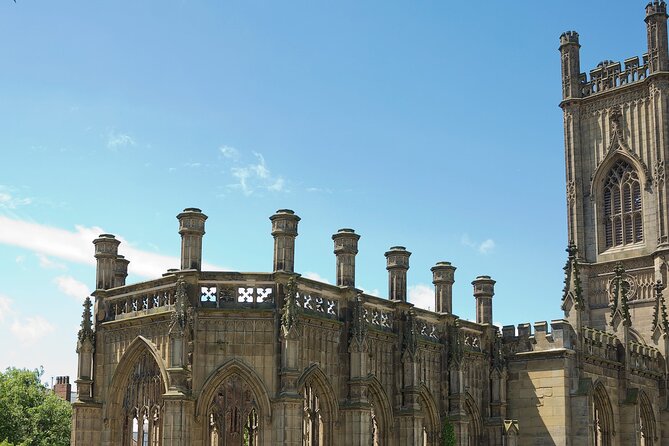
Here the focus is on what’s called the oldest building in Liverpool city centre, once known as St. Nicholas’ Church, with the patron saint of the sea tied to Liverpool’s long relationship with ocean trade. You also get the medieval timeline connection, including origins traced back to the early 1200s and the kind of primary evidence you can find in the area tied to Liverpool’s creation in the 13th century.
This is the part of the route I like most for first-time visitors. Medieval Liverpool is usually treated as a vague prequel to later dock history. This stop gives it concrete anchors in place and name.
Practical note: the time here is around 15 minutes and admission is listed as free. That makes it an easy win if you want learning without a paid entry fee.
Old Hall Street and Cotton Exchange, the port that scaled up
Next comes Old Hall Street, down an area that takes you straight into the medieval-to-early-modern shift. The tour links Old Hall Street to the site of an older town hall after Liverpool received its town charter, then connects it to the surrounding Grade I Listed Buildings.
From there it moves toward the Cotton Exchange, presented as a place where trade from across the world was managed. The emphasis is not just on the fact that Liverpool was busy. It’s on how the city grew as a global port and how cotton trade dynamics let Liverpool surge ahead of London by the late 1700s.
If you care about how cities become economic engines, this is your section. You get the logic of port growth: institutions, marketplaces, and the physical streets that linked commerce. It also sets you up for the dock stops later, so the waterfront stops do not feel random.
Practical note: stop time is about 10 minutes and the tour lists admission as free here.
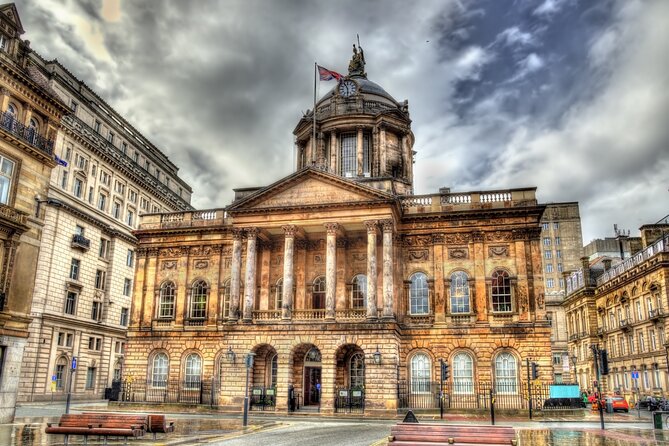
Liverpool Town Hall (1749) and the civic face of commerce
Then you reach Liverpool Town Hall, built in 1749. This is one of those moments where the tour helps you see that trade is not only ships and warehouses. It’s also paperwork, governance, and major civic buildings that signal status.
The guide frames the town hall as the finest surviving Georgian building in the UK, and ties the building to Liverpool’s rise as a global port and commerce center. The point is simple: when a city grows rich, it builds in stone what it needs in life.
Stop time is about 10 minutes, and admission tickets are not included for this stop. So expect guidance that covers what you can see and why it matters, not a long interior visit.
More Walking Tours in Liverpool
- Liverpool Ghost Walking Tour
★ 5.0 · 862 reviews - Beatles Famous Walking Tour Of Liverpool- Fully Guided
★ 5.0 · 751 reviews - Downtown Liverpool Walking Tour – In Spanish
★ 5.0 · 591 reviews - Tales from the Necropolis – A Ghost Walk Through St. James Cemetery
★ 5.0 · 263 reviews
Castle Street to the Queen Victoria Monument, from fortress to empire
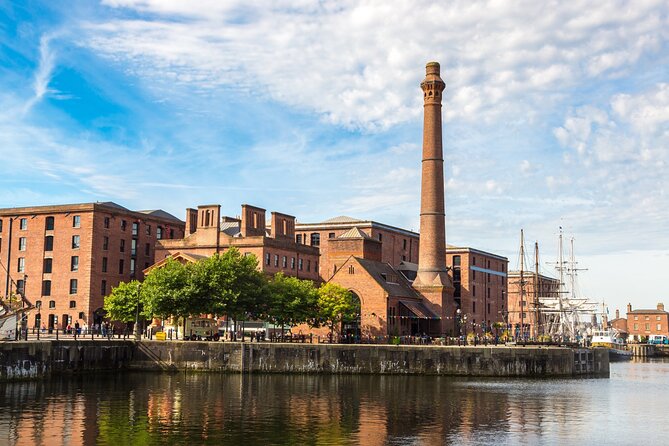
The walk continues down Castle Street, described as a literal time walk through evolving architecture and the city’s development. This stretch is where you get the physical feel of how Liverpool changed over centuries, step by step.
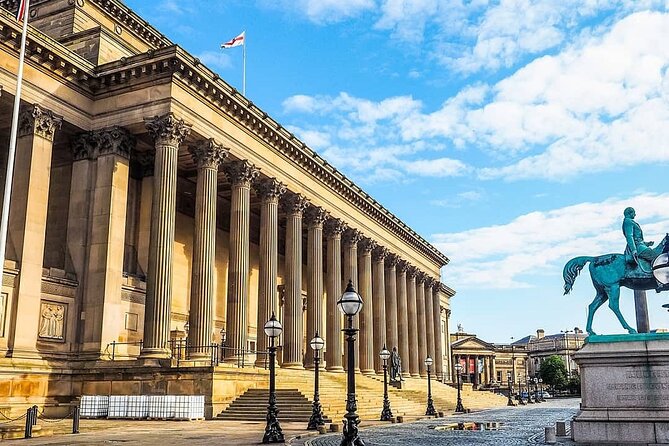
You are also guided toward Liverpool Castle and why the area around it became important over time. The tour then carries that momentum to the Queen Victoria Monument area, where you circle back to the 1800s story and how Liverpool became the largest port on the planet for global trade by 1800.
This section works well because it ties geography to narrative. You see how streets can act like chapters: the built form changes, but the role of the waterfront economy remains.
Practical note: Castle Street gets about 15 minutes. The Queen Victoria Monument stop is around 10 minutes, and both are listed as free.
Liverpool ONE, modern Liverpool between the centuries
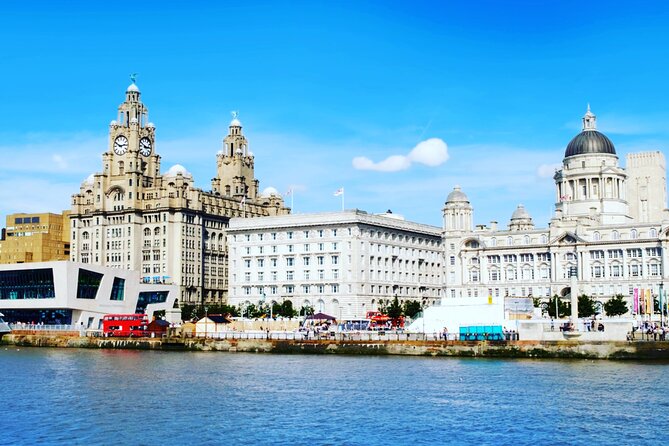
Not every history tour leaves room for the present. This one does, with a guided stop through Liverpool ONE, the modern shopping destination.
This part is shorter, about 10 minutes, and it’s handled as a guided walk-through of the area. I like it because it keeps your mental map current. When you’re done with medieval origins and dock history, it helps to see what the city turned into, and where key modern foot traffic flows sit in relation to the older waterfront core.
You are not meant to treat this as a shopping break. The value is orientation, so you know how the modern city stitches onto what came before.
Practical note: this stop is listed as free and time is limited.
Old Dock tour (1715) and Royal Albert Dock (1846), the working heart
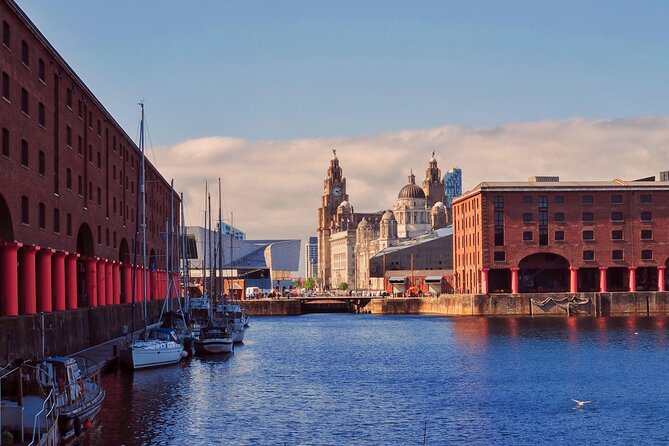
Then the tour takes you back to shipping with real-world port infrastructure. The key stop here is the Old Dock tour, described as an exclusive guided history tour of the Old Dock site. The highlight is the First Commercial Wet Dock on the planet built in 1715.
This is a strong segment because it explains the practical side of why Liverpool mattered. Docks are not just scenery. They are the engineering that makes a port efficient, and the story connects that efficiency to Liverpool’s rise as a leading shipping hub.
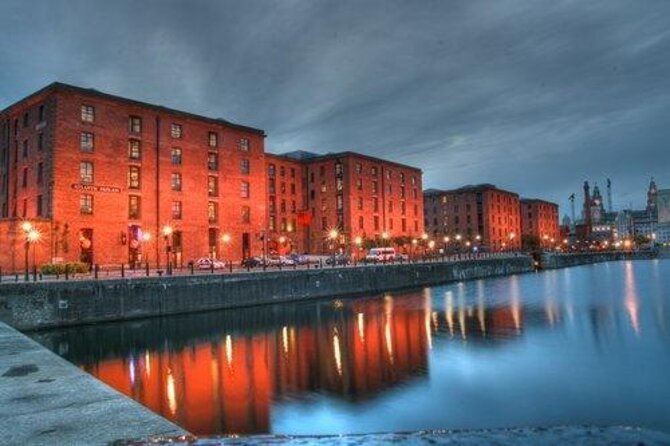
After that, you head to Royal Albert Dock Liverpool, built in 1846. This stop brings the 19th-century picture forward, including Liverpool’s commerce role and its connection to the First and Second World Wars.
If you want Liverpool beyond the headline acts, this portion delivers. It helps you see the city’s working life, and it also helps you understand why Liverpool’s global reach came with complicated histories. One common thread in the feedback for this tour is the willingness to discuss trade in a clear way, including not only the triumphant side of maritime history but also the darker parts connected to commerce.
Practical note: both of these stops are listed as free, and each gets around 10 minutes.
Ending at the Three Graces again, you finish with the view
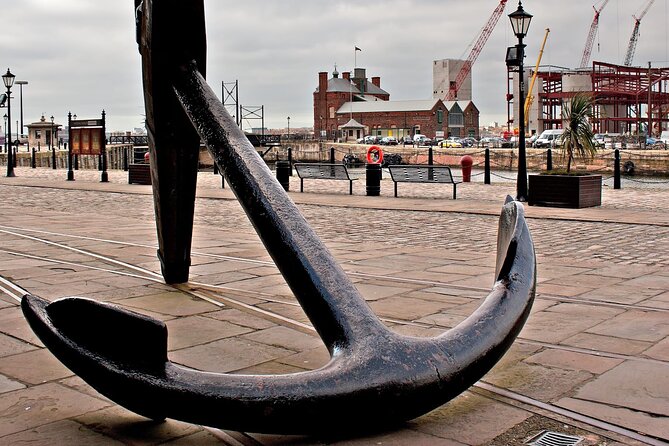
The tour wraps back at the Royal Liver Building, bringing you full circle to the Three Graces waterfront setting. The final stop is shorter, about 5 minutes, and again notes admission ticket not included.
That repeat matters. Finishing where you started helps you connect what you learned with what you see, especially at the waterfront. By the end, you are not only looking at a famous landmark, you’re reading the city’s timeline in layers.
Group size, pace, and what to wear for this kind of walk
The tour is listed at a duration of about 1 hour 50 minutes and caps at 40 travelers. That matters in practice. You get enough people to feel social, but not so many that you lose the guide’s voice or the group’s rhythm.
The route also includes multiple short stops. Expect short explanations, then movement. This is fast enough to feel efficient, but it is not a slow “sit and absorb” stroll. If you need a very quiet pace, you might find it energetic.
Also, it is an outdoor route across streets and the waterfront approach. If the day is cold, you will want warmth. Feedback specifically calls out cold and wind off the river, so pack a jacket and wear comfortable shoes.
One more small tip: since the tour includes stops where admission tickets are not included (notably Royal Liver Building at both the start and end, and Liverpool Town Hall), you should be ready to treat this as a guided history walk with exterior stops and street-side orientation rather than an all-entry museum day.
Price and value for a 2-hour overview tour in Liverpool
At $27.74 per person, this is priced like a solid city-orientation history walk, not like a museum ticket day. For that cost, you get a historian guide plus a route that hits major anchors: Pier Head’s Three Graces area, early church origins in the Strand vicinity, the commercial thread through Old Hall Street and the Cotton Exchange area, Georgian civic architecture, Castle Street, Queen Victoria Monument, modern Liverpool ONE, and then both Old Dock (1715) and Royal Albert Dock (1846).
You also get a useful structure for planning the rest of your trip. After this walk, you can decide what to revisit based on what grabs you most, whether that is docks and shipping, civic architecture, or the medieval roots.
One note on value: because a couple stops are marked as admission not included, your money buys guidance and access to the historical framing, not necessarily paid entry to interiors. That’s still good value if you want context fast.
Who should book this A Walk Through Time history tour?
This walk is a strong fit if you:
- Want an efficient Liverpool overview that connects waterfront, trade, and civic buildings
- Prefer a guided explanation over trying to piece together history on your own
- Like maritime and commerce stories, including the complicated parts tied to global trade
- Are short on time and want a route that hits many major sites in under two hours
It may be less ideal if you:
- Need a very slow pace with long stops to read or linger
- Want mostly indoor attractions with minimal walking in wind and cold
- Expect every landmark to include an entry ticket
Should you book it?
If you want to understand Liverpool fast, I think this is a smart booking. The route gives you a clear timeline from medieval origins to dock-era commerce, and it ends where it started so the waterfront feels understandable, not just scenic. The best reason to book is the way the guide connects places to the city’s growth, and the way the stops focus on trade, docks, and why certain buildings and streets mattered.
Book it if you want a guided “map with meaning.” Just go prepared for an outdoor walk, and remember that some stops are listed as admission not included.
FAQ
What is the price for the Liverpool walking tour?
The price is $27.74 per person.
How long does the tour last?
It lasts about 1 hour 50 minutes.
Where does the tour start and end?
It starts at Liver Building, Pier Head, Liverpool L3 1HU, UK. It ends at Queen Victoria Monument, One Derby Square, James St, Liverpool L2 1AB, UK.
Is the tour offered in English?
Yes, it is offered in English.
Do I need to bring an admission ticket for every stop?
No. Some stops note admission tickets not included, including Royal Liver Building and Liverpool Town Hall. Other stops are listed as free.
Is the group size limited?
Yes. The tour has a maximum of 40 travelers.
Do I receive a mobile ticket?
Yes. The tour offers a mobile ticket.
Is the tour dependent on weather?
Yes. The tour requires good weather, and if it is canceled due to poor weather you will be offered a different date or a full refund.
Are service animals allowed?
Yes, service animals are allowed.
What is the cancellation policy?
There is free cancellation. You can cancel up to 24 hours in advance for a full refund, and cut-off times are based on the experience’s local time.
Is the tour close to public transportation?
Yes. It is near public transportation, and most travelers can participate.
Recently added around Liverpool
- Half Day Welcome to Liverpool Walking Tour★ 5.0 · 17 reviews
- Ultimate Ticket To Ride Beatles Half-Day Shore Excursion- Private★ 5.0 · 6 reviews
- The Story of Liverpool 2-Hour Walking Tour★ 5.0 · 3 reviews
- The Music and Art of Sefton Park★ 5.0 · 17 reviews
- Beatles Ticket To Ride Half Day Tour Small Groups★ 5.0 · 60 reviews
- Liverpool Wine Tour Experience★ 5.0 · 5 reviews
- Original 3-Hour Beatles Tour★ 5.0 · 3 reviews
- The Liverpool Pass®: All top attractions inc. Hop-On Hop-Off Bus Tour | 2-Days★ 4.5 · 11 reviews
Historical Tours, compared.
Shadows of York: Ghost Walk and Horrible History.
Read our review →
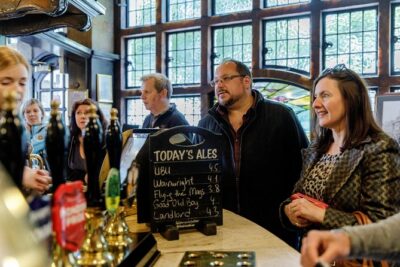
Royal Historic Pubs Walking Guided Tour in London
Read our review →
Private Group: Historical Pub Walking Tour of London
Read our review →
Best Of Liverpool Heritage, History & Culture Guided Walking Tour
Read our review →
Browse the lists this tour appears in