
Reviewed · WALKING TOURS
The Story of Liverpool 2-Hour Walking Tour
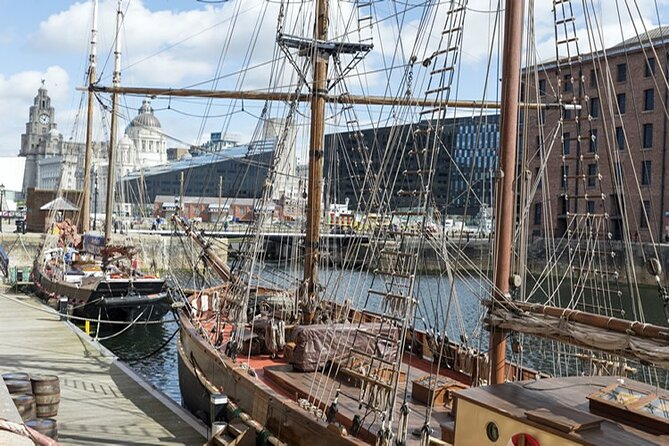
Titanic lights, Liverpool docks, and merchant money. This 2-hour walking tour is a fast way to get your bearings and spot the city’s waterfront big names, from the Royal Liver Building to the Three Graces. You also get little-known stories that most guidebooks skip, so the walk feels like you are reading the city with someone who knows where the footnotes are.
I especially liked the easy walking pace and the way the guide keeps connecting architecture to the people who paid for it, built it, and suffered through its consequences. One thing to consider: the route includes the uncomfortable side of Liverpool’s trading past, including references to the slave trade and the Confederate links, so it is not a fluffy history stroll.
In This Review
- The 5 Things That Make This Walk Worth Your Time
- Where the Tour Starts: The Titanic Engine Room Heroes Memorial
- St Nicholas and Our Lady Church: When the Tide Used to Reach the Steps
- Tithebarn Street: Confederate Clues Hidden in Plain Sight
- Liverpool Town Hall: Merchant Power Written in Carvings
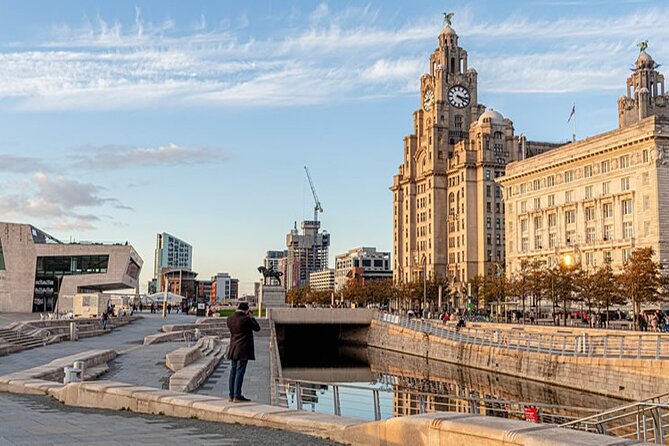
- The Royal Liver Building: Constructed for the Skyline, Built on a Past
- Albion House and White Star Line: Reading Names Where History Still Hangs
- Pier Head and the Mersey Tunnel: The Three Graces Plus Engineering Pride
- Albert Dock: Design, World War II, and Easy Paths to Museums
- Salthouse Dock and Canning Dock: Stone Connections and the Ship Refurbishing Loop
- Thomas Steers Way: Old Dock Outlines and a Glass View
- Liverpool Water Street: Banking, Currency Notes, and a Building That Still Exists
- Price and Time: Is $40.22 for Two Hours Good Value?
- Practical Tips That Will Make the Walk Easier
- Should You Book This 2-Hour Liverpool Walking Tour?
- FAQ
- Where does the walking tour start?
- Where does the walking tour end?
- How long is the tour?
- How much does it cost?
- What language is the tour offered in?
- How big is the group?
- Do I need to buy tickets in advance?
- Is the tour suitable for most people?
- Is there a weather requirement?
- Are service animals allowed?
The 5 Things That Make This Walk Worth Your Time
- A Titanic-focused start that explains why wireless and power mattered when the lights failed
- Pier Head and Three Graces views in one smooth waterfront sweep
- Church, town, and dock stops that connect everyday buildings to big money and big decisions
- Free-to-see landmark grounds along the way, so your value comes from interpretation, not museum fees
- Small group size (up to 12) that keeps questions actually possible
Where the Tour Starts: The Titanic Engine Room Heroes Memorial
You begin near the Memorial to the Marine Engine Room Heroes of the Titanic. It is a dramatic place to start, and that is the point. The guide uses it to set the tone for Liverpool as a working city, built on engineering, shipping, and the systems behind the stories we think we already know.
You will hear the key moment that shaped how disaster unfolded: when the Titanic sank, the lights and the wireless telegraph failed. The guide explains that power was maintained for the wireless set until about ten minutes before the sinking, and the lights failed just two minutes before she sank. That timeline matters because it turns the Titanic from a headline into something technical and human.
This first stop is also a good “mental warm-up.” It helps you understand what you will be looking for later, like why Liverpool cared so much about docks, power, and communication.
More Walking Tours in Liverpool
- A Walk Through Time: History of Liverpool Walking Tour
★ 5.0 · 911 reviews - Liverpool Ghost Walking Tour
★ 5.0 · 862 reviews - Beatles Famous Walking Tour Of Liverpool- Fully Guided
★ 5.0 · 751 reviews
St Nicholas and Our Lady Church: When the Tide Used to Reach the Steps
From there, you head toward one of the oldest buildings in Liverpool: the Church of Our Lady and St Nicholas at the Pier Head. The guide gives you a sense of time scale fast. Long ago, the River Mersey used to lap the steps of this church during high tide, until land reclamation for George’s Dock changed the shoreline.
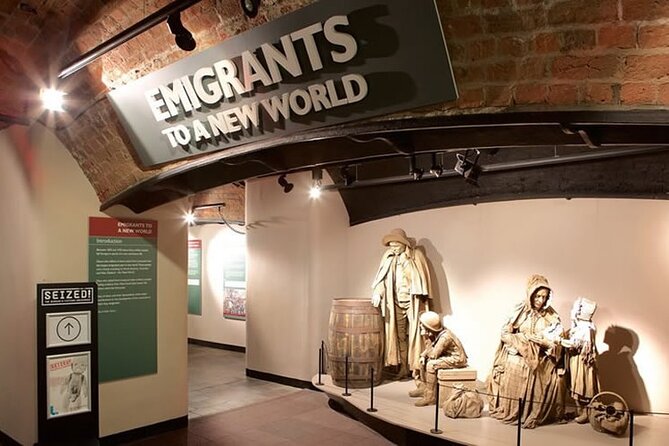
You will also learn about burial connections tied to slave traders, including Bryan Blundell. Even if you are familiar with Liverpool’s role in the slave trade, the way this church is described makes it feel local, not abstract.
Practical note: this stop is worth your attention even if you do not love church interiors, because the shoreline detail changes how you picture the Pier Head area today.
Tithebarn Street: Confederate Clues Hidden in Plain Sight
Next up is Tithebarn Street, where the story turns from the waterfront to the merchant world behind it. When the American Civil War broke out, Britain agreed to remain neutral. Liverpool’s merchants, according to what the guide shares, leaned toward the South, meaning the Confederacy.
You will see references described as an unofficial Confederate Embassy. The guide also talks about a company that became the unofficial bankers for the Confederate states. The value here is not just the political fact, it is the way the guide helps you connect the dots between Liverpool business interests and international conflict.
If you like history that feels like it has fingerprints still on the street, this is one of the more memorable stretches.
Liverpool Town Hall: Merchant Power Written in Carvings
Then comes Liverpool Town Hall, one of the city’s finest buildings. The guide frames it as merchant-funded ambition, with construction and decoration that spared no expense.
Look at the frieze carvings around the Town Hall. You will see depictions tied to trade that enabled Liverpool’s wealth, including elephants, camels, African people, and ivory, plus other flora and fauna. This is where the tour’s theme gets real: Liverpool did not only profit from shipping. Its wealth came through networks that were entangled with violent exploitation.
If you are the kind of person who enjoys “reading” buildings, take your time here. The architecture is the text, and the guide gives you the key to the vocabulary.
Same part of England, a different sort of day out:
- Beatles Magical Mystery Tour
★ 5.0 · 9,266 reviews - Liverpool: “Blue Route” – City & Beatles Tour
★ 5.0 · 8,562 reviews - Liverpool City Sights Hop On Hop Off City Tour – 24hr Ticket
★ 4.5 · 2,555 reviews - The LFC Stadium Tour
★ 5.0 · 1,548 reviews
The Royal Liver Building: Constructed for the Skyline, Built on a Past
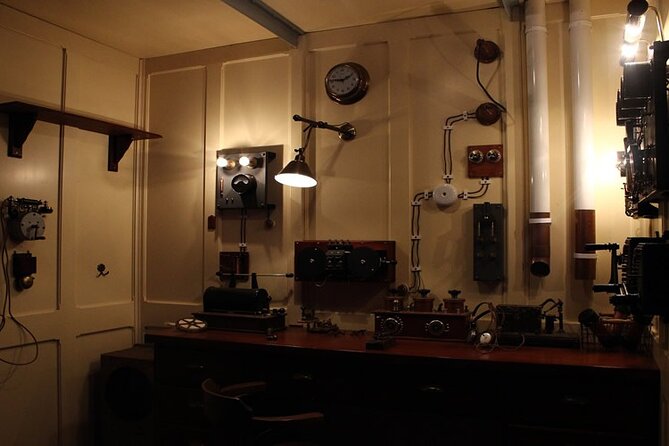
A short walk later, you reach the Royal Liver Building. The guide describes it as the most famous Liverpool building, loved by locals and visitors alike.
You learn how the building was constructed and what used to be on the land before it appeared. That kind of before-and-after detail is surprisingly useful, because it trains your eye to spot what the city replaces when it grows.
Even if you take photos, do not skip the explanation. The point is to understand why that skyline icon exists, not just admire the shape.
Albion House and White Star Line: Reading Names Where History Still Hangs
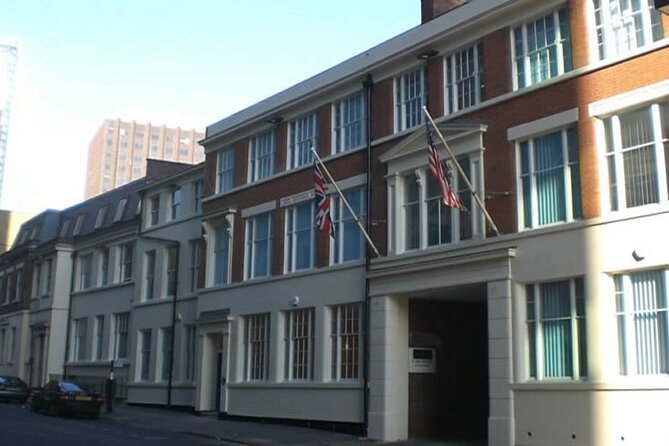
As you return toward the waterfront, the route brings you to Albion House, described as the headquarters of the White Star Line. If you have seen the Titanic film, the guide connects those dots to the real-world setting.
There is a specific detail worth listening for: the balcony where White Star Line staff read the list of names of those who died in the sinking of 1912. It is a quiet moment in the tour’s emotional arc, and it makes the Titanic story feel less distant.
This stop also works well if you are doing Liverpool on a short schedule. You get a direct, practical link between the city’s shipping identity and the Titanic story you already know.
Pier Head and the Mersey Tunnel: The Three Graces Plus Engineering Pride
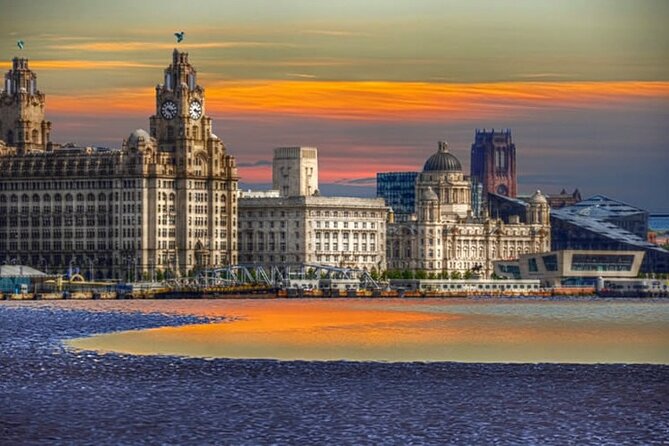
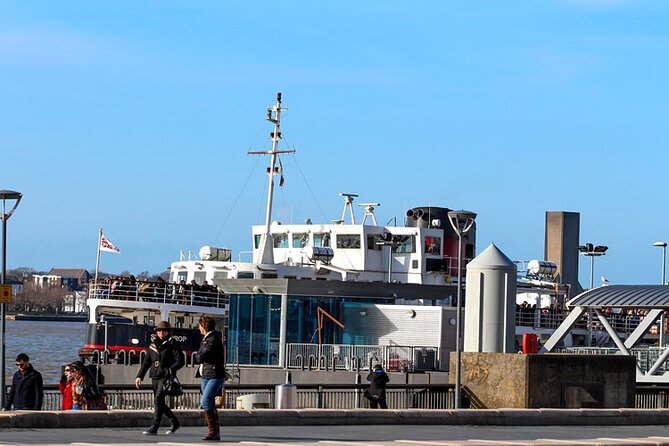
At Pier Head, the guide brings in two kinds of landmarks: major buildings and major engineering.
You learn about the Mersey Tunnel, described as an extraordinary feat of engineering. Then you get the final two buildings of the Three Graces, including the Cunard Building and the Mersey Docks and Harbour Building.
The Three Graces area is where the tour pays off for your photo album, sure. But more importantly, it teaches you how Liverpool projects confidence. These buildings are not just views. They represent companies and institutions that made the city feel important on the world stage.
If you are walking with someone who thinks Liverpool is only about music, this part helps reset that idea quickly.
Albert Dock: Design, World War II, and Easy Paths to Museums
Next you pass through Albert Dock, and the guide focuses on what makes it special as a working dock, not just a pretty complex. You learn how it was designed and built, and what role it played during the Second World War.
The guide also points out nearby museum options for after the tour. You might want to continue to the Tate Gallery, the Maritime Museum, and the International Slavery Museum, depending on your interests and time.
One practical advantage here: Albert Dock is a natural “branching point.” The tour ends later, but this is where you can decide to stay in the area for longer, or keep moving while the ideas are still fresh.
Salthouse Dock and Canning Dock: Stone Connections and the Ship Refurbishing Loop
As you walk further along the dock area, you pass Salthouse Dock and Canning Dock. The guide mentions massive stones from Liverpool Castle being used in the construction. That is a nice detail because it turns the docks into a “city reuse” story, not just a blank waterfront.
Then the tour shifts into a darker, more direct explanation of the Graving Docks. The guide describes how slave ships were refurbished after the transatlantic journey, preparing them to return to Africa and begin trading again.
This stop is emotionally heavy. The value is that it is not handled like a footnote. You are given enough context to understand the dock space as infrastructure for an entire system, not isolated events.
If you are sensitive to these topics, you may want to take a breather during this stretch, even if you keep walking. It is a lot to hold in one 2-hour walk.
Thomas Steers Way: Old Dock Outlines and a Glass View
Near the end, you reach Thomas Steers Way. Here you get a clever transition from history as buildings to history as traces.
You will see outlines of the Old Dock laid out in the pavement. There is also a section you can view through a glass window in the ground. The guide explains what you are looking at, so the glass panel is more than a curiosity.
This stop works as a “wrap your brain around it” moment. You have been moving through stories at the street level, and suddenly the tour slows your thinking and shows you what remains.
Liverpool Water Street: Banking, Currency Notes, and a Building That Still Exists
The final portion includes Liverpool Water Street. The guide shares a surprising fact: there was a Bank of Liverpool that produced its own currency notes. The building still exists, and you can see it during the walk.
This is a strong closer because it reminds you that Liverpool’s power was financial as much as maritime. When the docks, shipping firms, and merchants connect, you start to understand why Liverpool’s buildings look the way they do.
It also helps if you want to keep your plan for the rest of your day simple. The tour ends at Thomas Steers Way in the L1 shopping complex, with easy access to Liverpool city centre.
Price and Time: Is $40.22 for Two Hours Good Value?
At $40.22 per person for about 2 hours, you are paying for interpretation and orientation, not museum entry. A key value point: the stops are described as having free admission at the locations themselves, which means you are buying the guide’s ability to connect architecture, trade, and world events.
This is also a small group experience, with a maximum of 12 people. That matters because with bigger groups, guides often rush. Here, the format supports slower explanations and questions, which is what you want when the subject matter is layered.
One more timing note: the tour is on average booked about 34 days in advance. If your trip dates are fixed, booking ahead is a smart move.
Practical Tips That Will Make the Walk Easier
- Wear comfortable shoes. A waterfront walk plus dock areas means uneven ground and lots of standing.
- Bring a rain layer. One of the best pieces of advice from the experience is simple: pouring rain can happen.
- If you care about the International Slavery Museum or Maritime Museum, plan time after the tour. The guide will point them out during the route.
- If you are short on time, treat this as your starting compass. The tour is designed to open doors, not to answer everything forever.
Should You Book This 2-Hour Liverpool Walking Tour?
Yes, if you want a compact overview that actually explains why Liverpool looks the way it does. This walk is especially good for first-time visitors who want to hit major waterfront landmarks, plus learn the less obvious story threads behind them, from Titanic-linked engineering to merchant wealth and its ugly roots.
Skip it if you only want light, entertainment-focused sights with no heavy context. The route includes references to slavery and Confederate support, so it is honest and weighty even when the pace stays easy.
If you have 2 hours and you want to leave Liverpool with names, dates, and street-level meaning, this tour is a strong fit.
FAQ
Where does the walking tour start?
The tour starts at the Memorial to the Marine Engine Room Heroes, St Nicholas Pl, Canada Blvd, Liverpool L3 1QW, UK.
Where does the walking tour end?
The tour ends at Thomas Steers Way, Liverpool L1, UK, in the L1 shopping complex area.
How long is the tour?
The tour lasts about 2 hours.
How much does it cost?
The price is $40.22 per person.
What language is the tour offered in?
The tour is offered in English.
How big is the group?
The tour has a maximum of 12 travelers.
Do I need to buy tickets in advance?
You get a mobile ticket, and confirmation is received at the time of booking.
Is the tour suitable for most people?
Most travelers can participate.
Is there a weather requirement?
Yes. The experience requires good weather, and if it is canceled due to poor weather, you will be offered a different date or a full refund.
Are service animals allowed?
Yes, service animals are allowed.
Recently added around Liverpool
- Half Day Welcome to Liverpool Walking Tour★ 5.0 · 17 reviews
- Ultimate Ticket To Ride Beatles Half-Day Shore Excursion- Private★ 5.0 · 6 reviews
- The Music and Art of Sefton Park★ 5.0 · 17 reviews
- Beatles Ticket To Ride Half Day Tour Small Groups★ 5.0 · 60 reviews
- Liverpool Wine Tour Experience★ 5.0 · 5 reviews
- Original 3-Hour Beatles Tour★ 5.0 · 3 reviews
- The Liverpool Pass®: All top attractions inc. Hop-On Hop-Off Bus Tour | 2-Days★ 4.5 · 11 reviews
- The Liverpool Pass®: All top attractions inc. Hop-On Hop-Off Bus Tour | 1-Day★ 3.0 · 8 reviews
Walking Tours, compared.

Oxford University Walking Tour With University Alumni Guide
Read our review →
Tour for Muggles The Ultimate Harry Potter Walking Tour in London
Read our review →
Cambridge University Walking Tour by Alumni™ Kings College Option
Read our review →
Blackbeard to Banksy – The Ultimate Walking Tour of Bristol
Read our review →
Air Raid Shelter + St. Nicholas Market Walking Tour
Read our review →
Walking Tour of Bath with Blue Badge Tourist Guide
Read our review →
Changing of the Guard Guided Walking Tour in London
Read our review →
Shadows of York: Ghost Walk and Horrible History.
Read our review →Browse the lists this tour appears in