
Reviewed · BUCKINGHAM PALACE TOURS
Buckingham Palace, St James Palace & Tea at Kensington Palace
Three palaces, one easy afternoon. I love how this walk connects Buckingham Palace and St James’s Palace with back-street stories, then ends with classic British high tea at Kensington Palace.
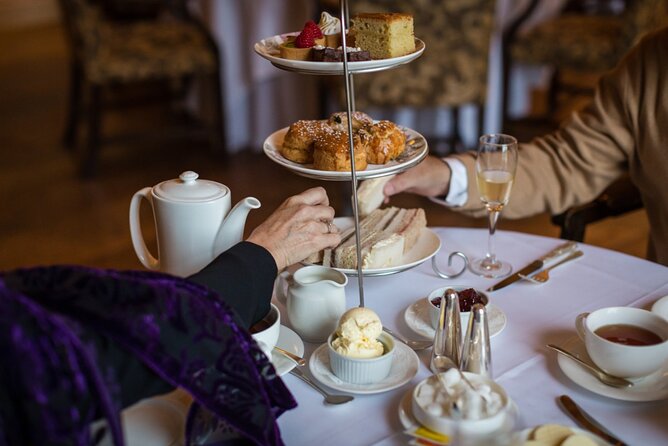
Two things I really like are the small-group vibe and the guide-led detail. You get a short, focused history walk that feels personal, and the included tea spread is properly old-school with finger sandwiches, Welsh scones, and cakes.
One thing to consider: this is mostly an outside walking tour. If you want to see inside state rooms, make sure you choose the option at check-out and plan for a fair amount of walking.
In This Review
- Key highlights you will notice fast
- Green Park to the royal spine of London
- St James’s: politics, clubs, and back streets you can actually walk
- Spencer House and The Mall: the royal world without the big crowds
- Clarence House and St James’s Palace: what you can see from the outside
- Buckingham Palace grounds, Tyburn under your feet, and a quick royal realism check
- Bomber Command Memorial and Apsley House: history with a pause built in
- Royal Albert Hall and the Albert Memorial: a classy route into Kensington
- Kensington Palace and the Orangery high tea finish
- What you actually get at high tea
- Group size, pace, and how much walking you will do
- Price and value for 2 hours of Royal London
- Should you book Buckingham Palace, St James Palace and tea at Kensington Palace?
- FAQ
- How long is the Buckingham Palace, St James Palace, and Tea at Kensington Palace experience?
- What is included with the afternoon tea?
- Are there dietary options for the tea?
- Is this a large group tour?
- Do I get inside access to the palaces?
- Where does the tour start and end?
- Is the walking portion strenuous?
- Is public transport included?
- What is the cancellation policy?
- Are service animals allowed, and can most people participate?
Key highlights you will notice fast
A maximum of 10 people (often 4 to 6), so you are not stuck behind a crowd
Quiet royal back streets that explain who lived where and why politics and power mixed
A big high tea finish at the Kensington Palace Orangery, with sandwiches, scones, and cake
Multiple royal stops in one route, including Buckingham, St James’s, Clarence House, and more
- A thoughtful WWII pause at the Bomber Command Memorial on the way toward Kensington
Green Park to the royal spine of London
The tour starts at Green Park, a sweet spot because you can feel the city’s royal gravity without being boxed in by tour buses. Your guide sets the tone right away, steering you away from the busiest paths toward calmer streets and discreet passageways. It is a smart start: you get bearings first, then you earn the big landmarks with context.
Green Park is also a reminder that London’s royal world is not only about palaces. It is about geography, movement, and who had access to what. As you walk, you learn how Upper St James Park became part of the royal zone, and you get a sense of how the neighborhoods around it formed the backstage for power.
I especially like the pacing here. It keeps the story coherent, rather than tossing you from one monument to the next like a photo scavenger hunt. If you do not want to spend all day figuring things out alone, this is a good way to get a storyline in place.
More Buckingham Palace and Changing of the Guard tours:
- Changing of the Guard Guided Walking Tour in London
★ 5.0 · 1,793 reviews - Buckingham Palace Entrance Ticket & Changing of the Guard Tour
★ 4.0 · 1,720 reviews - Changing of the Guard Guided Tour at Buckingham Palace
★ 4.5 · 941 reviews
St James’s: politics, clubs, and back streets you can actually walk
St James’s is where you feel the old London class map. This is the main aristocratic quarter, where landed families and political figures mixed in spots that started as ordinary taverns and chocolate houses. Those places later became prestigious clubs in the seventeenth century, which is exactly the kind of detail that makes the area click.
You will stroll through streets that most people skip when they only chase the famous facades. And that is where the guide’s storytelling matters. When you learn what once happened on a particular corner, a small side street becomes more than scenery.
There is also an added bonus for people who like lived-in places. You are moving through neighborhoods, not a museum hallway. You can slow down, look at facades, and imagine daily life, not only royal pageantry.
One practical note: because you are in a residential and office-heavy zone, expect normal city sounds. It is London, not a theme park. That is a good thing.
Spencer House and The Mall: the royal world without the big crowds
Next comes Spencer House, one of London’s finest surviving eighteenth-century town houses. Built between 1756 and 1766 for John, first Earl Spencer, it connects directly to the Spencer family line tied to Diana, Princess of Wales. Even if you are not a royal deep-dive person, the simple fact that this is one of the best preserved homes from that era makes it worth your attention.
From there you reach The Mall, a stretch most people associate with pageantry. Here, you get the more realistic side of royal access. St James Palace remains the official royal palace, but it is not regularly open to visitors. What you can do, depending on timing, is attend Sunday services at the Chapel Royal and the Queen’s Chapel.
That is helpful because it sets expectations. If your dream is to wander inside the palace whenever you want, this route will not be that fantasy. Instead, it gives you the practical way the public interface with the palace world: through ceremonies and specific access points.
Clarence House and St James’s Palace: what you can see from the outside
At Clarence House, you learn what happens when royal preferences shift. Built between 1825 and 1827 to a design by John Nash, it was commissioned by the Duke of Clarence, later King William IV. He lived there because he preferred it to St James’s Palace, which he found too cramped.
So even when you are only viewing from the street, the explanation helps. You understand that these buildings were not chosen by aesthetics alone. They were chosen by comfort, status, and the practicalities of daily life at court.
Then you are back near St James’s Palace for another close-up look. The tour frames this as more than a postcard. You get the story of how aristocrats and political classes mixed and how everyday meeting places helped shape elite culture. It is a clever setup, because by the time you reach Buckingham, you already know what to look for in the details.
If you are hoping for lots of inside access, read the tour inclusions carefully. Entrance to the State Rooms is not automatic. It is offered if you select that option at check-out.
A few more London days worth comparing
- Stonehenge, Windsor Castle, and Bath from London
★ 4.5 · 18,662 reviews - London Big Bus Hop-On Hop-Off Tour with Optional River Cruise
★ 3.5 · 10,803 reviews - London Small Group Tour of Historical Pubs
★ 5.0 · 10,422 reviews - Stonehenge, Windsor Castle and Bath with Pub Lunch in Lacock
★ 4.5 · 7,402 reviews
Buckingham Palace grounds, Tyburn under your feet, and a quick royal realism check
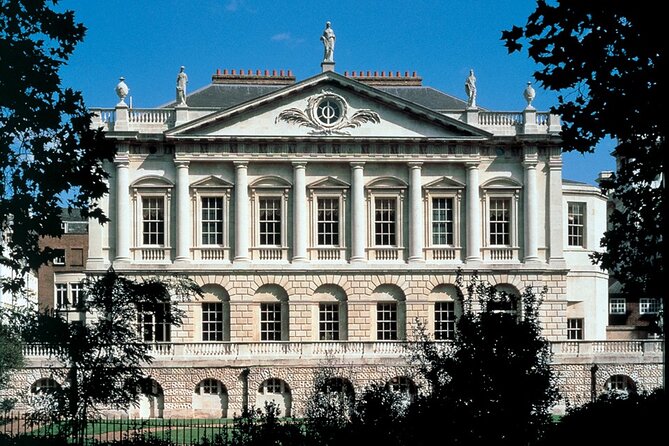
Now you hit Buckingham Palace. The site’s story is longer than many people expect, and it is not just about Victorian royalty. The palace site formed part of the Manor of Ebury, fed by the river Tyburn, which still flows below the courtyard and south wing.
That detail is a mind-bender, in a good way. You stop thinking of the palace as a single era. Instead, you realize you are walking on layers of London, from medieval ownership changes all the way to the modern royal machine.
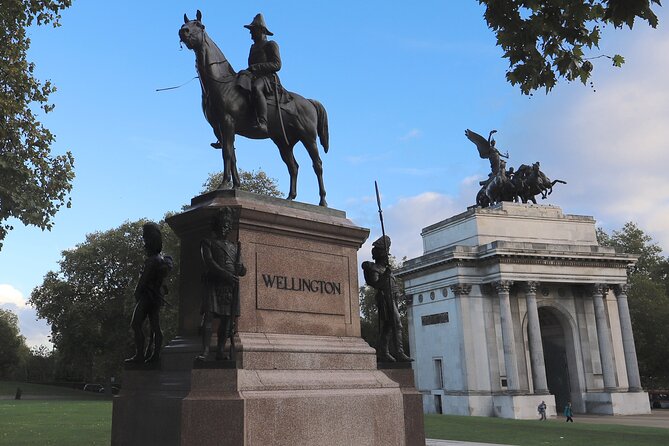
You also get Wellington Arch on the way, another stop that feels ceremonial but also architectural. This one was designed by Decimus Burton in 1828, with the famous 4-horse chariot. There is also a figure of peace from 1912, and the central passage was reserved for royalty. That kind of “who used what doorway” detail is exactly the sort of insider explanation that makes a walking tour feel worth it.
After Wellington Arch, the route turns serious, and that is not accidental.
Bomber Command Memorial and Apsley House: history with a pause built in
The Bomber Command Memorial is located on the south side of Piccadilly, facing Hyde Park Corner. It commemorates RAF Bomber Command crews from World War II, and it marks the sacrifice of 55,573 aircrew from Britain, Canada, Australia, New Zealand, Czechoslovakia, Poland, and other allied countries, plus civilians killed during raids.
This is a brief stop, but it gives you something missing from most rushed “royals only” routes: context. The royal buildings are symbols of continuity, but the memorial reminds you that the UK’s modern identity was also shaped by massive loss and hard decisions.
Then you continue to Apsley House, originally built in red brick by Robert Adam between 1771 and 1778 for Lord Apsley, who gave the house its name. Some Adam interiors survive, including the Piccadilly Drawing Room and an Adam fireplace. There is also a Portico Room behind the giant Corinthian portico added later by Wellington.
If you like architecture, this stop helps you pivot from royal pageantry to elite domestic design. It is not a long look, but it is the right kind of “taste” stop, especially in a 2-hour format.
Royal Albert Hall and the Albert Memorial: a classy route into Kensington
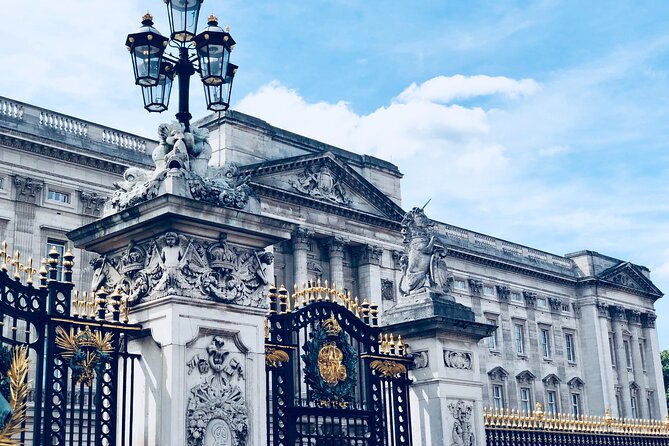
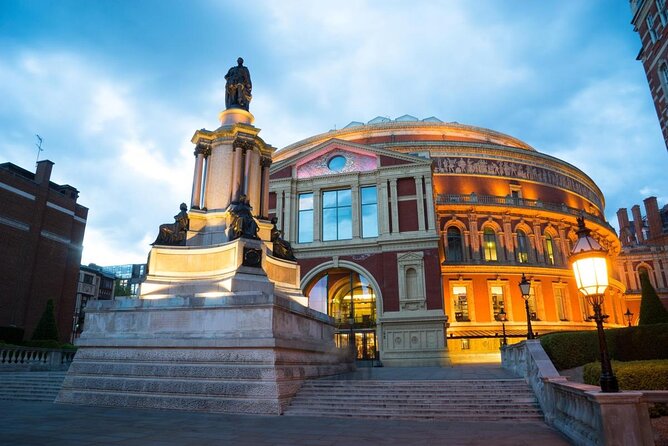
After Apsley House, you pass Royal Albert Hall, sitting on the northern edge of South Kensington. It opened in 1871 and seats about 5,272 people. The guide points out that it has hosted major artists from many genres since the beginning, which helps you place it as more than a pretty building.
You also stop at the Albert Memorial in Kensington Gardens, one of London’s ornate monuments. It commemorates Prince Albert, who died of typhoid in 1861.
These stops do two things. First, they prevent the walk from feeling like one long royal corridor. Second, they cue you that Kensington is a different mood than Westminster. You shift from the state and power zone into a more park-and-culture area where the next chapter makes sense.
And then you arrive at Kensington Palace.
Kensington Palace and the Orangery high tea finish
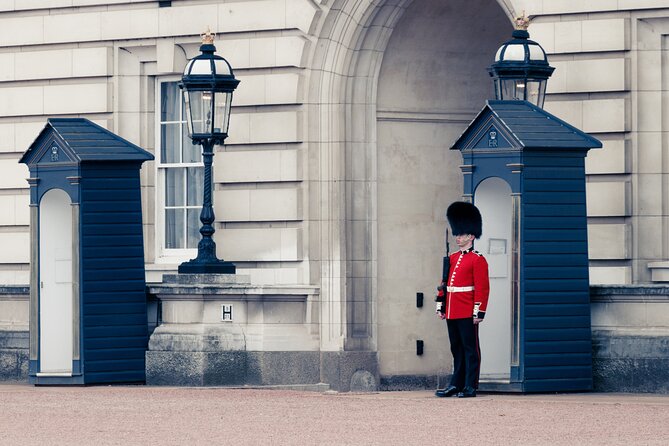
The tour ends at Kensington Palace, and you finish at the Orangery, where your afternoon tea is hosted. Before tea, you get a story-based moment at the palace itself. One highlight shared here is the dramatic end of George II. In 1760 he rose early, drank hot chocolate, and was later found collapsed. He died before help arrived, and he was succeeded by George III, buried in Westminster Abbey.
Whether you love royal trivia or just enjoy a good historical hook, that story works because it is specific. It makes Kensington Palace feel like a lived setting, not just a picture background.
Now the important part: the tea.
What you actually get at high tea
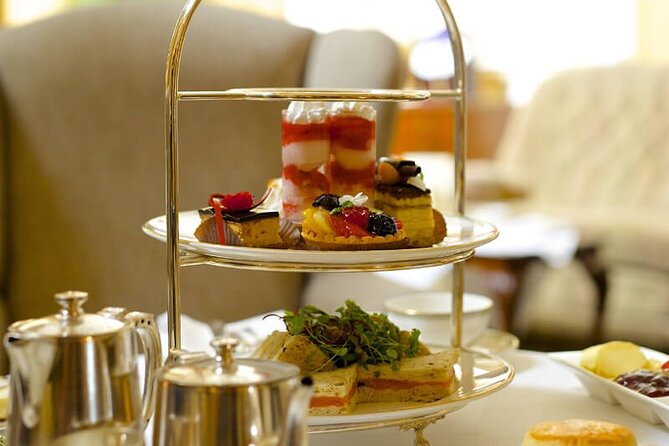
Your included afternoon tea is served as a proper meal, not a snack. You can expect:
- Delicate finger sandwiches (variety can change by season, plus gluten free, vegan, and halal options)
- Welsh scones, served with clotted cream and strawberry jam, with options with or without raisins
- A Royal cake selection, based on the time of year
You also get a short explanation of the history of tea drinking in England. It sounds small, but it makes your table feel connected to the experience, not just filled with food.
You are also given a private table at the venue, which matters. High tea can be chaotic elsewhere. Here, it is set up so you can talk and eat without fighting for space. Alcohol is not included, but you can purchase it during tea.
One more detail worth noting: at least one guide style experience in this format is described as using royal china connected to Princess Diana, which makes the setting feel extra special. Even if the exact tableware varies by day, the overall presentation is clearly part of the appeal.
Group size, pace, and how much walking you will do
This is a small group tour, maximum 10 people, typically 4 to 6. That is one reason so many people rate it highly. Smaller numbers mean you can hear the guide and you can pause when you want to. You also avoid the “everyone shuffle past the same gate” feeling that comes with bigger bus tours.
The route is still a walking tour. So bring comfortable shoes and plan on a good chunk of time on your feet. One theme from guide feedback is that the walk is not described as overly athletic, but it is still real walking, and your legs will notice. If you have mobility limits, the “most people can participate” promise is a good start, but you should still think about how you handle uneven sidewalks and city pacing.
The upside is you are not doing this for hours and hours. The total duration is about 2 hours, which makes it ideal for short stays.
Price and value for 2 hours of Royal London
At $173.45 per person, this is not a bargain-basement deal. You are paying for three things that add up fast in London: a guided walk with history, a small-group size, and a proper high tea included at the end.
Here is how I think about value:
- If you were to do the walk on your own, you would still need to pay for tea somewhere, and you would likely spend time figuring out routes and stories without a guide.
- If you were to do only a tea experience, you would miss the context of Kensington Palace and the “why this matters” links across the royal area.
- If you were to do only palace sights, you would still need to get to Kensington and plan your afternoon, which can turn into a time crunch.
This tour compresses a lot into a short window. And it hits a practical traveler need: you get guidance on where to look, what to notice, and how to make the route feel coherent. That is worth money in London, where time is expensive.
Also, the tour includes a mobile ticket, and you get offered in English. Those small conveniences help your day run smoother.
Should you book Buckingham Palace, St James Palace and tea at Kensington Palace?
Book this if you want a guided, story-led way to see royal landmarks without spending all day crisscrossing the city. It is especially good for first-timers who want a clean overview, families who prefer a calmer pace, and anyone who likes food-based endings like high tea.
Skip it or choose a different option if your top priority is lots of interior palace time. Since entrance to state rooms is only included if you select the option at check-out, you may feel slightly boxed in if you came for full rooms on every stop.
My final take: this is a strong pick for a “royal afternoon” that ends with something genuinely enjoyable. In two hours, you get palaces from the outside, plus a real meal at the end, plus a guide who helps the route make sense.
FAQ
How long is the Buckingham Palace, St James Palace, and Tea at Kensington Palace experience?
It runs for about 2 hours.
What is included with the afternoon tea?
You get afternoon tea that includes sandwiches, scones, and cakes. The tour also includes the history of tea drinking in England.
Are there dietary options for the tea?
Yes. Gluten free, vegetarian, vegan, and halal options are available if requested in advance.
Is this a large group tour?
No. The group maximum is 10, and it is typically 4 to 6 people.
Do I get inside access to the palaces?
Entrance to the State Rooms is available only if you select that option at check-out. Otherwise, the walking tour focuses on what you can see on the route.
Where does the tour start and end?
It starts at Green Park (Piccadilly) and ends at Kensington Palace at the Orangery, where the high tea is served.
Is the walking portion strenuous?
It is described as a walking tour but not overly athletic. You should still wear comfortable shoes because it is still walking.
Is public transport included?
No. Bus fare is not included, and you should bring a Contactless Card or Oyster Card. The listed bus fare is £1.75 per person.
What is the cancellation policy?
You can cancel for a full refund if you cancel at least 24 hours before the experience start time. If you cancel less than 24 hours before, the amount paid is not refunded.
Are service animals allowed, and can most people participate?
Service animals are allowed. The tour states that most travelers can participate.
Recently added around London
- Shared Service from Stansted airport to Central London★ 3.5 · 3 reviews
- VIP Private Transfers Stansted Airport to/from Any London Hotel★ 5.0 · 6 reviews
- Transfer from London Stansted Airport to Central London★ 5.0 · 6 reviews
- eSIM for UK (34 EU countries) | 3 to 30 days. Up to 40GB of data★ 4.0 · 18 reviews
- Layover Tour of London from LHR Executive Luxurious Vehicle Private Tour 6 hour★ 4.5 · 9 reviews
- York Day Rail Tour from London Including Hop-on Hop-off Tour★ 3.0 · 3 reviews
- Working Women of the East End Walking Tour★ 5.0 · 85 reviews
- Crash course in archaeology at the British Museum★ 5.0 · 96 reviews
Buckingham Palace Tours, compared.
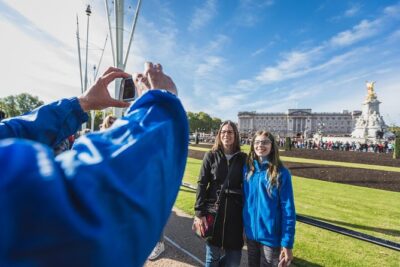
Changing of the Guard Guided Walking Tour in London
Read our review →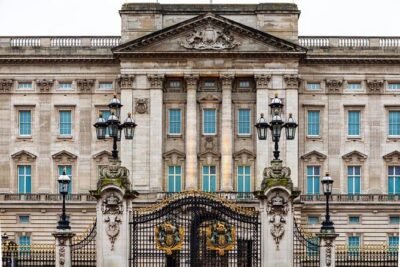
Buckingham Palace Entrance Ticket & Changing of the Guard Tour
Read our review →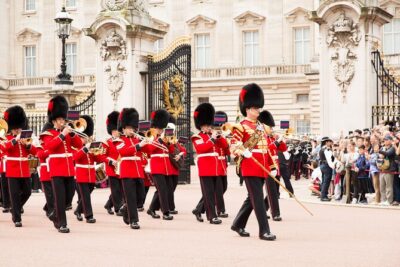
Changing of the Guard Guided Tour at Buckingham Palace
Read our review →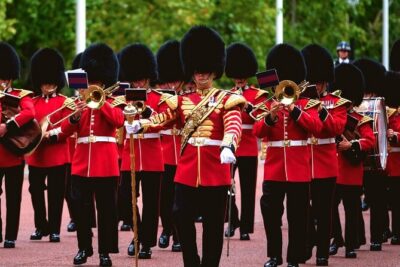
Changing of the Guard Walking Tour in London at Buckingham Palace
Read our review →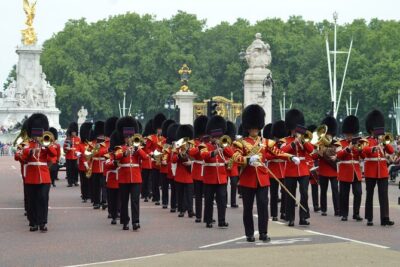
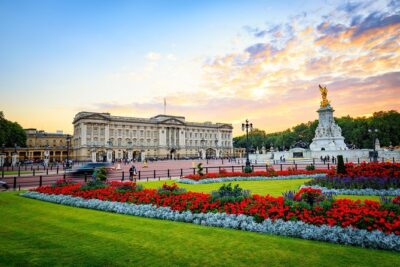
Buckingham Palace & Afternoon Tea Sightseeing Tour with PG Tips
Read our review →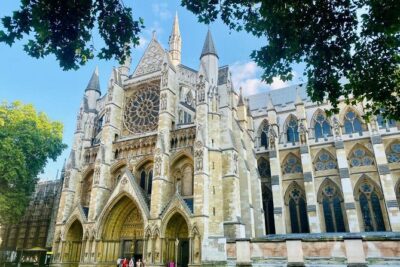
Buckingham Palace & Big Ben (& Westminster Abbey entry)
Read our review →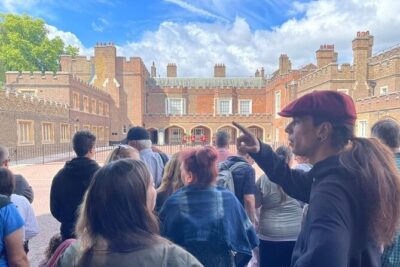
The Changing of the Guard Tour and Buckingham Palace
Read our review →Browse the lists this tour appears in