
Reviewed · HISTORICAL TOURS
City of London History Tour: The Square Mile that Rose to Empire
A small walk, big story. This City of London history tour connects Roman defenses to medieval churches and then to the guilds and institutions that helped the Square Mile grow into an empire. I love that it’s off-the-beaten-track while still covering the headline places like Guildhall and the Bank of England. One possible drawback is the pace is brisk, with many short stops, so you’ll want comfortable shoes and the mindset of quick looks over long museum time.
I also like the practical format: it runs about 2 hours 30 minutes, keeps groups to a maximum of 8, and uses a mobile ticket you can show on your phone. It’s wheelchair and stroller accessible, and most of the sights are outside gardens, church areas, and street-level landmarks rather than deep-ticket museums. If you hate walking between multiple stops, or if you’re hoping for long indoor visits, this may feel too much like a guided stroll.
In This Review
- Key Things I’d Circle Before You Go
- St. Alphage London Wall, the Salters Garden, and Where the Story Gets Real
- Roman Wall to St. Giles Cripplegate, Reading Layers Like a Map
- Salter’s Hall Garden, Trade and Governance, and the Role of Sacrifice
- Brewers’ Hall and St. Mary Aldermanbury, City Power in Plain Sight
- City of London and Guildhall, Where Governance Meets Myth
- St. Lawrence Jewry and the Guildhall Art Gallery Roman Amphitheatre
- St. Margaret Lothbury, the Meaning of Wards, and Worshipful Companies
- The Royal Exchange, the Golden Grasshopper, and Adventurers in a Marketplace
- Mansion House and the Lord Mayor Home, Governance as a Role
- London Troops War Memorial and the 12 Dragon Lamposts
- Bank of England, Traditional Power With a Forward Look
- Price and Value for a 2.5-Hour Square Mile Walk
- Who This Tour Fits Best, and Who Should Skip It
- Should You Book the City of London History Tour?
- FAQ
- How long is the City of London History Tour?
- What does the tour cost?
- What language is the tour offered in?
- Where do I meet and where does it end?
- Is a mobile ticket used?
- How big is the group?
- Is the tour wheelchair and stroller accessible?
- Do I need paid admission tickets for the stops?
- What is the cancellation policy?
Key Things I’d Circle Before You Go

- Start at St. Alphage London Wall, where Roman to Norman layers show up in the Salters garden setting
- See the Roman city wall with the oldest section tied directly to Londinium’s survival
- Meet the livery companies through places you can actually stand in, including Salters Hall and Brewers Hall
- Learn the City’s governance story at Guildhall, plus mythology-style context from Greek to Norman influence
- End at the Bank of England, finishing with the meaning behind the golden statue
St. Alphage London Wall, the Salters Garden, and Where the Story Gets Real
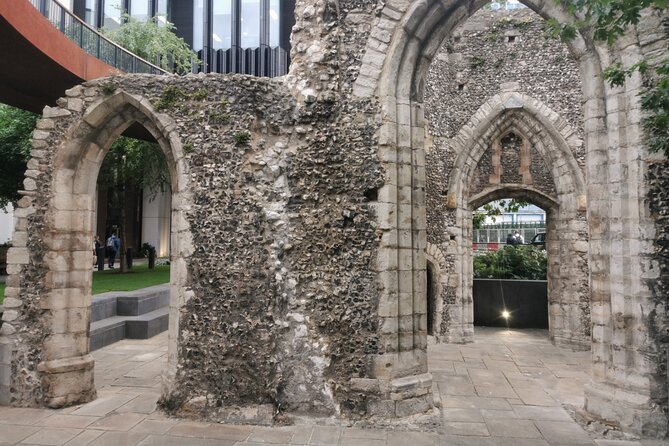
Most London history tours start with a famous palace. This one starts with a quieter place that makes you look at the map differently. You begin at St. Alphage London Wall, in the Salters garden area, where you’re shown how multiple cultures and eras overlap.
The big hook is that you’re not just learning dates, you’re spotting how walls, church sites, and civic buildings follow the same ground over centuries. You’ll likely pick up the idea that London’s early strength was physical, not flashy. That’s a strong opening for newcomers, because it gives you a spine for the rest of the walk.
Stop one is short, about 15 minutes, and the tone feels friendly and explanatory. It’s a good pace starter, especially if you’ve just arrived in the City and want context fast.
More City Tours in London
- City Sightseeing London Hop-On Hop-Off Bus Tour & Bookable Extras
★ 4.0 · 1,224 reviews - Private Windsor Castle, Stonehenge, The City of Bath Day Tour
★ 5.0 · 468 reviews - Heathrow London Airport Transfer to City center
★ 5.0 · 213 reviews
Roman Wall to St. Giles Cripplegate, Reading Layers Like a Map
After the Salters garden introduction, you move to the Roman city wall. This is where the tour gives you one of its most tangible payoffs. The oldest part of the wall is presented as a real fortification, tied to Londinium holding its line against outside influence.
Then the walk shifts into medieval time at St. Giles Cripplegate. This church is described as one of the oldest medieval churches in the City since Norman time, built on an even older Saxon church site. Even if you’re not a church-details person, the tour helps you understand why sites like this matter. They show continuity, and they show how later generations reused what already worked.
These stops are each about 10 minutes. That’s intentional. You get the key points without burning your whole afternoon on one landmark, and you keep a rhythm that works well for people who want a lot of variety.
Salter’s Hall Garden, Trade and Governance, and the Role of Sacrifice

Next up is Salter’s Hall Garden, and this is one of the places where the tour earns its name. The Roman wall isn’t treated like a leftover artifact. It’s framed as the physical structure that kept the City fortified over time, and the guide connects it to earlier peoples tied to the region, including Celtic presence.
Then the story broadens into trade, governance, and sacrifice. This is also where Salter’s Hall enters the conversation as one of the City’s livery companies. You’ll learn it’s ranked 9th among the 12 most important livery companies, which is a clever detail because it gives you a way to think about status inside the system.
What I like here is that it turns London from a list of buildings into a working machine. You start to see how rules, businesses, and civic responsibility grew together in the Square Mile.
Brewers’ Hall and St. Mary Aldermanbury, City Power in Plain Sight
The tour doesn’t only focus on solemn history. Brewers’ Hall is a fun pivot, with the livery company presented as setting a standard for booze. It’s a reminder that the City’s influence wasn’t abstract. It came from trade, regulation, and industry, including everyday products.
Then you shift to St Mary Aldermanbury Garden. This stop is built around ruins and naming. The church ruins are described as deriving their name from an ancient court or bery of the aldermen, with that tradition tied to gatherings now held at Guildhall. That kind of explanation helps you link what you’re seeing to how the City functioned.
In the garden you’ll also encounter memorials connected to Shakespeare and legends linked to livery companies. If you’re a literature fan, this is one of those quick stops that can make you slow down for a moment. If you’re not, it still works because the memorials are part of how institutions remember themselves.
Both of these stops are kept to about 10 minutes, so you get ideas, not overload.
More History Tours in London
- London Small Group Tour of Historical Pubs
★ 5.0 · 10,422 reviews - Soho Music & Historic Pubs Tour
★ 5.0 · 1,993 reviews - Royal Historic Pubs Walking Guided Tour in London
★ 5.0 · 803 reviews - Private Group: Historical Pub Walking Tour of London
★ 5.0 · 660 reviews
City of London and Guildhall, Where Governance Meets Myth

At the City of London stop, the tour zooms out just enough to reframe everything you’ve seen so far. This is the municipal governing body of the City of London and the historic center. You’re not just walking through streets. You’re moving inside a place with its own governance identity.
Then comes Guildhall, the town hall of the City of London. The guide describes it as having been on its current site since at least the 13th century. You’ll also hear a mythology-style run through influences from Greek to Roman, Saxon, and Norman periods.
This is one of the best places on the route to get your bearings. Even if your London vocabulary is rusty, you start to feel how civic power is represented with symbolism, architecture, and stories. It also makes later stops feel connected, not random.
The stop is about 15 minutes, and the time feels right for understanding the role of Guildhall without turning it into a lecture marathon.
St. Lawrence Jewry and the Guildhall Art Gallery Roman Amphitheatre
St. Lawrence Jewry is short, about 5 minutes, but it adds an edge to the tour’s timeline. The church is described as the official church of the City of London Corporation, and it remembers a saint associated with Christianity growing through a sacrifice described as cruel and unforgettable.
Short stop, sharp takeaway: religion and civic identity were tied together here, and the City used faith sites as part of its public story.
Next is the Guildhall Art Gallery, where the Roman Amphitheatre is mentioned as the location beneath or associated with the site. The stop is around 25 minutes, which signals the tour wants you to look carefully and get the connection. Even if you don’t go deep into art, this is useful because it reinforces a core theme: London’s layers are physical, not just written records.
St. Margaret Lothbury, the Meaning of Wards, and Worshipful Companies
You then move to St. Margaret Lothbury Church. This stop ties the tour’s civic map together using the City’s ward system. The church is presented as representing two wards, and you’ll also hear how livery companies gained the naming idea of worshipful.
This is helpful for anyone who’s seen the word worshipful on plaques or documents and wondered what it really means. Here, it becomes understandable as part of hierarchy and civic respect, not just a fancy historical label.
Again, this stop is about 5 minutes, but the payoff is conceptual. You leave with a clearer sense of how status and structure show up in everyday City naming.
The Royal Exchange, the Golden Grasshopper, and Adventurers in a Marketplace
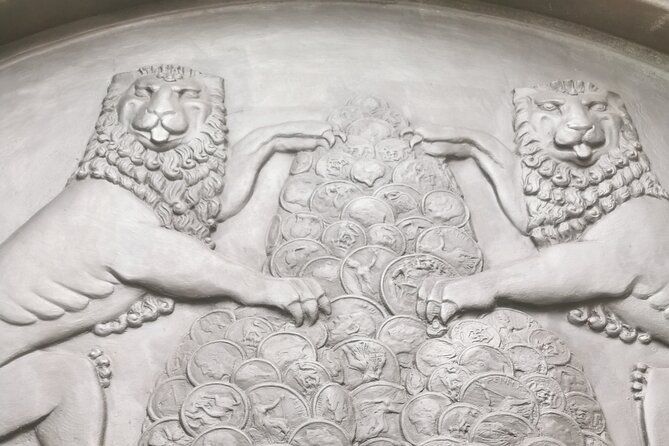
The Royal Exchange is one of the most recognizable stops on the walk, and it’s treated as more than a pretty building. The tour presents it as built by a legend for adventurers to meet, then connects that idea to how these figures helped shape the new world.
You’ll also find out about the golden grasshopper on top of the Royal Exchange. It’s one of those small details that makes architecture feel like a storybook. Instead of staring at a landmark, you’re looking for meaning in placement and symbols.
The stop is short at about 5 minutes, so if you’re the type who loves slow photo time, be ready to squeeze in one or two quick shots and keep moving. The tradeoff is you get to cover a lot of ground without getting bored.
Mansion House and the Lord Mayor Home, Governance as a Role
Next is the Mansion House of the City of London. The tour explains that the Lord Mayor of the City of London sits at the head of governance and that the position also works as an international ambassador role for the UK’s financial and professional services sector.
That context helps you understand why the Square Mile has always mattered. It isn’t only about old streets. It’s about a continuing role in finance and professional life, anchored in leadership.
The stop is about 5 minutes. Again, short, but the point is clear. You’re seeing how a historic City structure stays plugged into the modern UK economy.
London Troops War Memorial and the 12 Dragon Lamposts
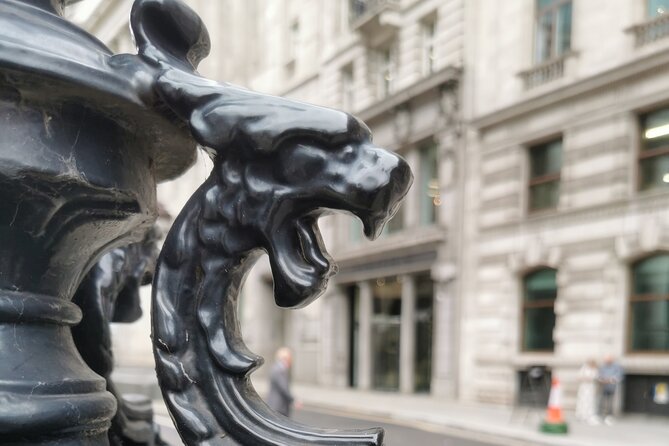
From there you reach the London Troops War Memorial, about 10 minutes. The tour describes it as inside a circle of 12 dragon lamposts representing the 12 great livery companies. It’s a visual way of tying the City’s historical institutions to remembrance.
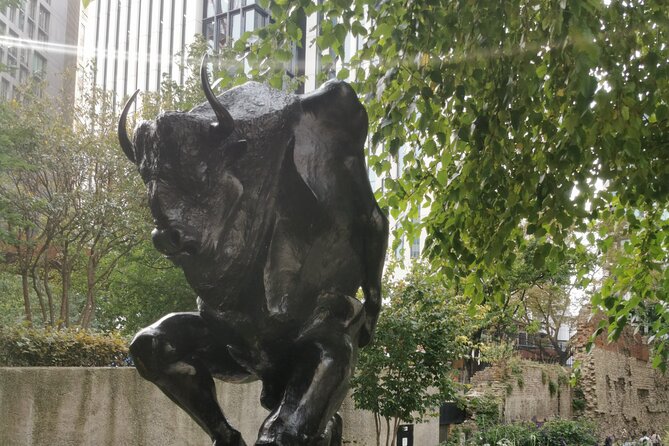
You’ll also hear about notable figures remembered around the area, then the tour concludes by returning to the story of Minotaur. That ending choice is smart. It links symbolism back to the civic myth theme you started with at Guildhall, so the last stop doesn’t feel like a random detour.
Bank of England, Traditional Power With a Forward Look
Finally, you reach the Bank of England for a brief stop, about 5 minutes. The tour frames it as influential and traditional while still looking forward. The golden statue on top gets explained with an interesting story, giving you a final symbol to interpret.
This is a good finish point because it sits in the modern spotlight. After everything you’ve seen about walls, wards, churches, and livery companies, the Bank feels like the end of a long chain. You’re not just seeing a financial building. You’re seeing an outcome of centuries of civic organization.
Price and Value for a 2.5-Hour Square Mile Walk
At $30.69 per person for roughly 2 hours 30 minutes, this tour sits in the budget-friendly end for guided London experiences. The value comes from two places.
First, the itinerary stacks major City landmarks and lesser-known stops in one line, so you don’t have to plan an independent route. Second, the tour positions the sights as a connected system, especially the livery companies and the City’s governance theme.
You’re also told that admission tickets for the stops are free within the tour context, which lowers the usual “hidden cost” worry for people who want a guided day without paying separate entry fees.
The main tradeoff is time. Short stops mean you’ll see a lot, but you’ll be moving. If you like slow pacing and indoor deep time, you may want to add a separate visit elsewhere after the tour ends.
Who This Tour Fits Best, and Who Should Skip It
I’d steer you toward this tour if you:
- are new to London and want to understand how the City really works
- like the connection between politics, business, and places
- want a walk that includes both well-known landmarks and lesser-visited corners
I’d consider skipping it if you:
- hate walking between frequent stops
- want long indoor museum time at each location
- prefer purely Roman-only or purely Tudor-only history, because this tour blends eras
One small plus for comfort: it’s described as wheelchair and stroller accessible, and it runs near public transportation. That makes it easier to plug into a busy travel schedule.
Should You Book the City of London History Tour?
If you want a smart, structured way to understand the Square Mile’s rise, I think you should book it. The tour’s biggest strength is its theme: it explains how walls, wards, and livery companies connect to governance and global influence, all while hitting major landmarks like Guildhall and the Bank of England.
If your perfect day is one long museum and one long lunch, you might prefer something slower. But if you like guided walking, quick context, and seeing London’s layers in the space of a single afternoon, this is a strong choice.
FAQ
How long is the City of London History Tour?
It runs for about 2 hours 30 minutes.
What does the tour cost?
The price is $30.69 per person.
What language is the tour offered in?
It is offered in English.
Where do I meet and where does it end?
You start at Barbie Green2 London Wall Pl, Barbican, London EC2Y 5AU, UK. You end at London Troops War Memorial1 Cornhill, London EC3V 3LN, UK.
Is a mobile ticket used?
Yes, it’s a mobile ticket.
How big is the group?
The maximum group size is 8 travelers.
Is the tour wheelchair and stroller accessible?
Yes, it is described as wheelchair and stroller accessible.
Do I need paid admission tickets for the stops?
The itinerary lists admission tickets as free for the stops.
What is the cancellation policy?
Free cancellation is available, and you must cancel at least 24 hours before the experience start time for a full refund. If you cancel less than 24 hours before, the amount you paid is not refunded.
Recently added around London
- The Cotswolds Guided Day Tour from London★ 4.5 · 136 reviews
- The Cotswolds Private Black Cab Tour with Hotel Pick up★ 5.0 · 3 reviews
- Dark Comedy on Battersea Barge★ 4.5 · 21 reviews
- The Cotswolds England Bus Tour★ 4.5 · 3 reviews
- Original Harry Potter Tour : Guided Tour of London with Boat Ride★ 5.0 · 587 reviews
- The Chocolate Cocktail Club London★ 4.5 · 30 reviews
- Immersive Treasure Hunt Adventure – City of London’s Secrets★ 4.5 · 41 reviews
- The Classic Highlights Bike Tour with a local guide★ 5.0 · 93 reviews
Historical Tours, compared.



Shadows of York: Ghost Walk and Horrible History.
Read our review →
A Walk Through Time: History of Liverpool Walking Tour
Read our review →
Royal Historic Pubs Walking Guided Tour in London
Read our review →
Private Group: Historical Pub Walking Tour of London
Read our review →
Best Of Liverpool Heritage, History & Culture Guided Walking Tour
Read our review →Browse the lists this tour appears in