
Reviewed · PHOTOGRAPHY SESSIONS
London Photography Tour – Private Tour
Good photos start with better walking directions. This private London shoot turns central sights like Trafalgar Square and the London Eye into a live classroom, with a Fine Art photographer coaching you on framing, light, and camera settings as you move. You get a guided route that actually helps you see the city in usable photo angles.
I love the hands-on teaching that goes beyond pointing at famous buildings. You practice focus techniques, depth of field, white balance, shutter speed, and even portrait flash, then you get a mid-tour moment to check progress. One caution: the route hits a lot of ground in about 4 hours, so if you want slow browsing, this fast, photo-first pace might feel a bit tight.
In This Review
- Key highlights you will feel in your photos
- A pro Fine Art photographer makes the city feel like a studio
- Price and value, what you are really paying for
- What you will learn, in plain camera terms
- Trafalgar Square: aperture, light, framing, and street texture
- National Gallery area in 15 minutes: angles, depth, and focus checks
- Leicester Square: light changes fast, so your settings have to too
- Piccadilly Circus: white balance, camera handling, and a mid-tour reset
- Horse Guards Parade and Whitehall: portraits, action, and uniforms
- Big Ben and Parliament Square: icons plus statue portrait framing
- Westminster Abbey outside, plus the scale lesson that changes everything
- London Eye across the river: matching scale with lens choice
- The photo review piece, why it is worth the extra effort
- Who this private photo tour is best for
- Should you book this private London photography tour?
Key highlights you will feel in your photos
- Private coaching with a professional Fine Art photographer who stays with you and adjusts to your camera
- A setting-by-setting practice route, from apertures and depth of field to shutter speed and focusing
- Major central London sights packed into one walk, starting at Charing Cross and finishing near Victoria Embankment
- Free-entry photo stops across Trafalgar Square, National Gallery area, Parliament area, and London Eye viewpoints
- A short review break mid-tour to help you improve the next shots right away
- Real London details you can shoot quickly, like red telephone boxes, red buses, chalk artists, uniformed guards, and statues
A pro Fine Art photographer makes the city feel like a studio
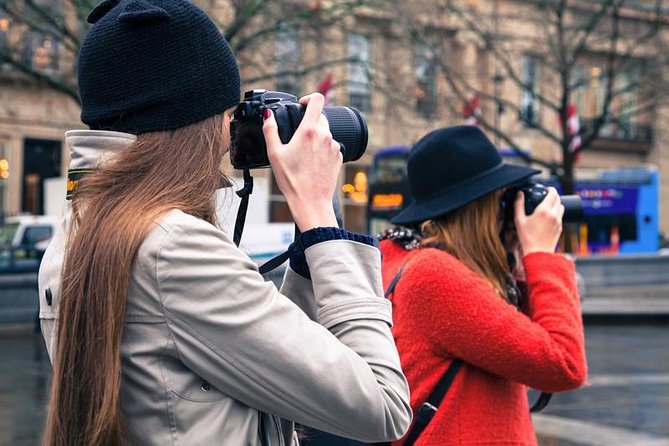
This tour is built around one smart idea: learn photography by using London as your subject, not by studying theory in the abstract. Your instructor works with your own camera (and you can even shoot with a smartphone), so the lessons connect directly to what you are holding.
The private format matters. You are not squeezed into a big group where one person always gets the instructor’s attention. Instead, you can ask questions as they come up, try a setting, and get immediate feedback. In practice, that is how you go from taking pictures to making images.
A few more London days worth comparing
- Professional Photoshoot in London Photographer
★ 5.0 · 102 reviews - Private landmarks photoshoot for families and couples
★ 5.0 · 92 reviews - Professional Private Photoshoot in London
★ 5.0 · 63 reviews
Price and value, what you are really paying for
At $336.40 per person for about 4 hours, this is not a budget activity. But you are buying more than a walk and a list of sights. You are paying for a professional Fine Art photographer who teaches technique, helps you choose lens choices and angles of view, and then reviews your progress so you can improve before the tour ends.
Also, many of the stops are marked as admission free for the tour experience. That means your money goes toward instruction and time, not toward paying separate attraction tickets for every click. If you travel as a small group, you can also benefit from group discounts that are mentioned as part of the offering.
What you will learn, in plain camera terms
The best part is that the teaching stays practical. You do not just hear photography words, you use them while the light and scenes are changing.
Across the day, you will practice:
- Composition and framing so your photos look intentional, not accidental
- Aperture and depth of field to control what is sharp and what fades
- Focusing techniques to nail details on statues, street scenes, and people
- Angles of view and lens choices so you get variety, even when you repeat a location
- Light and white balance so reds look like reds and shadows do not ruin your contrast
- Shutter speed to freeze action and avoid blur
- Portrait tools like fill flash for uniformed subjects and street-style portraits
And yes, you should bring your own fully charged camera plus extra memory cards, because once you start seeing shots through a new lens, you will take more pictures than you planned.
Trafalgar Square: aperture, light, framing, and street texture
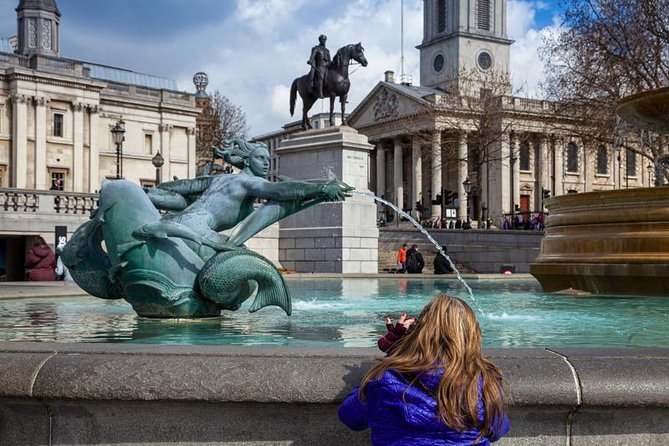
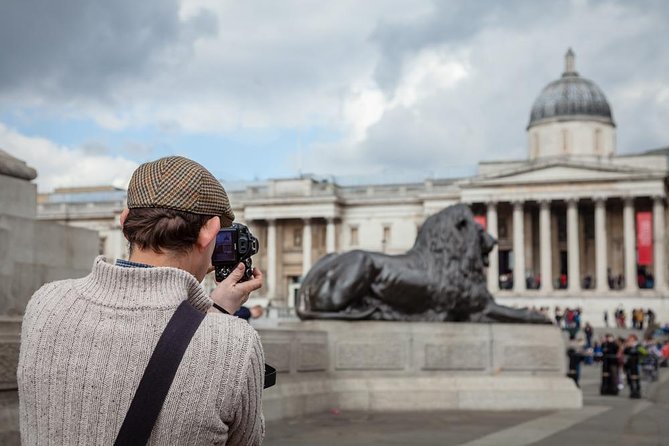
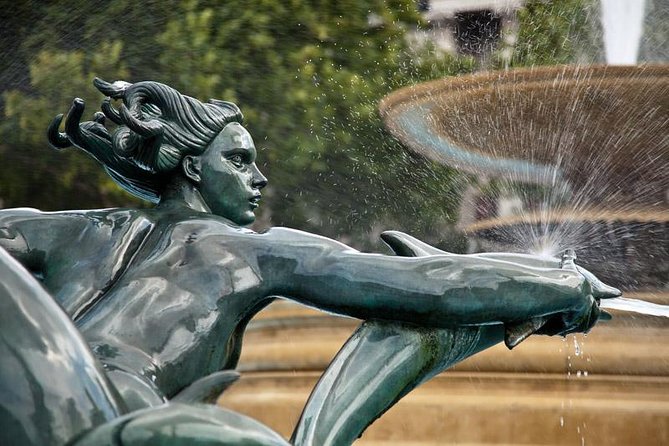
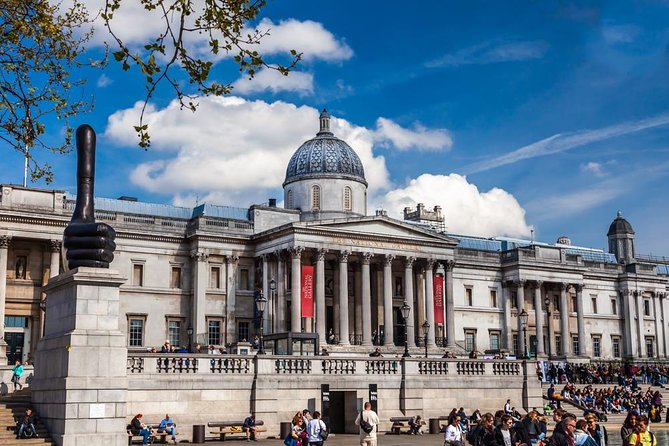
You start around Charing Cross and head to Trafalgar Square, one of London’s best places for learning fast. It has everything a photographer needs: iconic statuary, wide views, big fountains, and lively street activity.
In your time there, you focus on how to photograph heritage and tradition while still finding modern compositions. Your instructor works with ideas like:
- framing and composition that guide the eye
- using light effectively at different angles
- depth of field, so you can isolate a subject against a busy background
- lens choices, including how to handle the square’s scale
One useful detail is that you spend time on both the big scene and the small moments. You can shoot the far-reaching view toward Whitehall, then turn around for street entertainers and chalk drawings. That mix is what makes the technique stick.
Potential drawback: Trafalgar Square is lively. Crowds can make it harder to get clean frames, so be ready to wait briefly or shoot tighter details.
Same part of England, a different sort of day out:
- Stonehenge, Windsor Castle, and Bath from London
★ 4.5 · 18,662 reviews - London Big Bus Hop-On Hop-Off Tour with Optional River Cruise
★ 3.5 · 10,803 reviews - London Small Group Tour of Historical Pubs
★ 5.0 · 10,422 reviews - Stonehenge, Windsor Castle and Bath with Pub Lunch in Lacock
★ 4.5 · 7,402 reviews
National Gallery area in 15 minutes: angles, depth, and focus checks
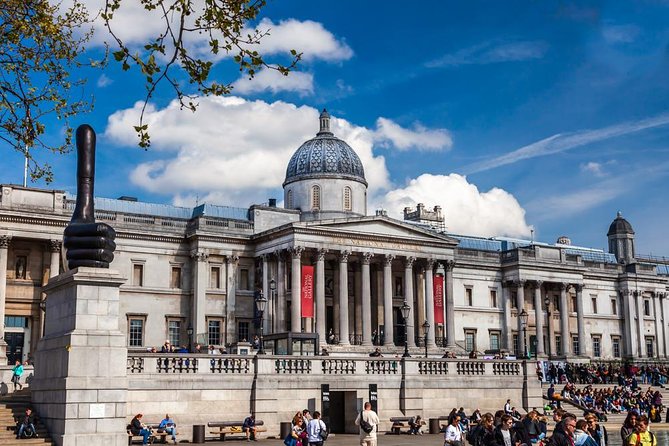
Next comes The National Gallery, with a short stop focused on building confidence quickly. This is where you practice how architecture changes your approach. Stone, lines, and symmetry force you to pay attention to angles of view.
You get specific coaching on:
- angles of view
- depth of field for architectural details
- focusing techniques that help your shots stay sharp
Because the time is limited, you will learn to pick a few strong compositions instead of trying to cover everything. That habit is useful for any city, not just London.
Potential drawback: the stop is only 15 minutes. If you are hoping for a slow museum-style experience, this part is about photography, not lingering.
Leicester Square: light changes fast, so your settings have to too
At Leicester Square, you get a change in texture. The scene shifts toward pop culture and movie premiere energy, with fountains, gardens, and famous statue moments. You also get to photograph landmarks tied to comedy and film culture, including a portrait approach aimed at Charlie Chaplin.
The coaching focus here is about progression:
- how to develop composition and framing
- how to experiment with varying angles of view
- using aperture and depth of field to separate a subject from the background
- general camera handling
This stop is also good practice for shooting “in-between” moments. You are not only photographing statues. You are photographing the setting around them, then using depth of field to control what matters.
Potential drawback: if you dislike crowds or busy sidewalks, you may want to plan your expectations. The training encourages you to work with the energy rather than escape it.
Piccadilly Circus: white balance, camera handling, and a mid-tour reset
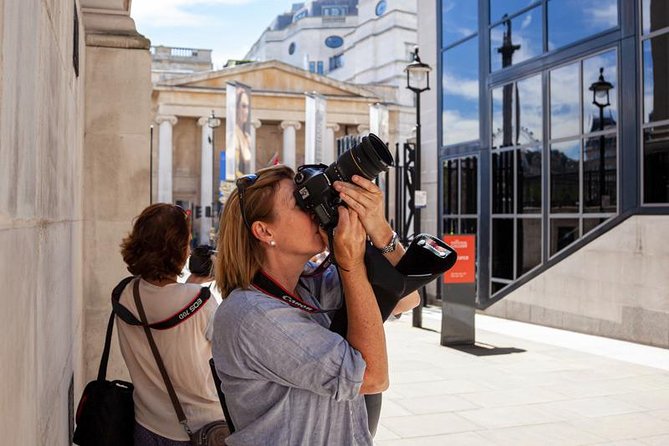
From Leicester Square, you walk through side streets with old charm and small shops. The route is part of the learning. Your instructor encourages you to keep noticing photo opportunities along the way, not just when you reach the main intersection.
At Piccadilly Circus, you aim at bold subjects like:
- red telephone boxes
- red London buses
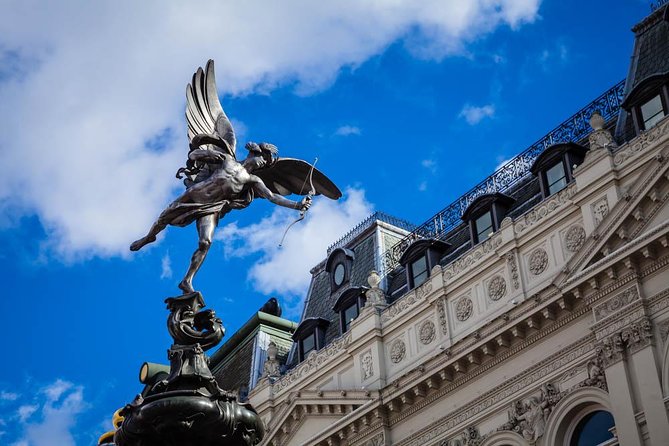
- the Statue of Eros
- high banners and street-level details
You also do a short working break to review progress and talk about how to handle the rest of the tour. That matters more than it sounds. A quick reset helps you correct one common issue, like blur from slow shutter speed or flat-looking photos from poor white balance.
You get coaching on:
- white balance
- camera handling
- composition and light
- how to see locations with a fresh perspective
Potential drawback: Piccadilly is a visual overload. The instructor approach helps, but you still need to concentrate, otherwise you end up with lots of similar shots.
Horse Guards Parade and Whitehall: portraits, action, and uniforms
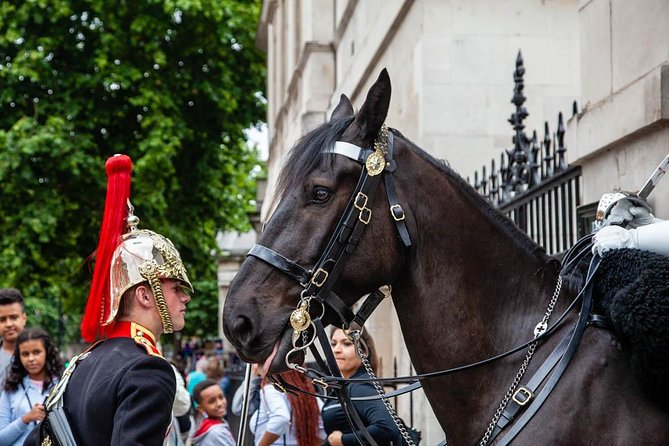
This is where the tour leans into portrait skills. You head toward Admiralty Arch, Horse Guards Parade, and Whitehall. The subject matter here is strong: horseguards, sentries, and colorful uniforms.
You practice how to take imposing portraits and how to photograph mounted sentries with clarity. Your instructor also ties technique directly to what you see:
- aperture values for portraits
- shutter speed to freeze action
- focusing techniques for moving subjects
- fill flash for better subject separation
You also pass by the Cabinet War Rooms and statues honoring the Women of the Second World War. Even if you are only photographing from the outside, those visuals add emotional weight to your compositions. It gives your portfolio more range than a straight sightseeing set.
Potential drawback: uniforms move and horses shift. You will need patience, quick reflexes, and the willingness to take multiple frames.
Big Ben and Parliament Square: icons plus statue portrait framing
From the Whitehall area, you move to Westminster. The stops here are short but targeted.
First, you photograph Big Ben and the Houses of Parliament setting. This is ideal for learning how to frame iconic skyline scenes, and it also gives you a chance to shoot a familiar visual anchor like a red telephone box in an iconic context.
Then comes Houses of Parliament, where the emphasis turns to statues. You are guided to photograph key figures in Parliament Square, including Churchill, Gandhi, and Nelson Mandela, set against the Houses of Parliament backdrop.
The coaching here focuses on:
- capturing the historic landscape perfectly through framing
- selecting viewpoints that make statues feel grounded and not pasted-on
- practical composition so scale reads correctly in your final images
Potential drawback: the time at each Westminster moment is limited. If the exact weather and crowd conditions are not ideal, you may need to work harder on framing and timing.
Westminster Abbey outside, plus the scale lesson that changes everything
You finish the Parliament area sequence with Westminster Abbey. The focus is on outside photography and the feeling of scale. Westminster Abbey is one of those buildings where your instinct often fails. If you shoot too tight, the grandeur disappears. If you shoot too wide, details lose meaning.
Your instructor helps you with:
- composition and framing
- scale
- lens choice and zoom selection
- creative aperture values
That combination is the real takeaway. You learn how to make scale believable and still keep your image sharp.
Potential drawback: depending on where you stand, you may be dealing with angles that are not perfectly open. You will still get good photos if you focus on the right composition and stop chasing a perfect postcard view.
London Eye across the river: matching scale with lens choice
The last major subject is the London Eye. You photograph it from across the river, with an emphasis on compositions that show relationship and scale. The London Eye’s height is listed as 443 feet (135 metres), so it is worth treating it like a giant in your frame, not a small distant attraction.
Your instructor helps you with:
- framing so the wheel looks intentional in your composition
- lighting and lens choice
- depth of field and focusing techniques
- shutter speed and general camera handling
- composition that includes river life
This is also the point where your earlier lessons connect. If you have been practicing depth of field and shutter speed correctly, you will see a difference immediately in how the river movement and reflections come out.
Potential drawback: river light can change fast. Keep an eye on exposure, and do not rely on one “perfect” setting for every shot.
The photo review piece, why it is worth the extra effort
The tour includes a review of your photographs and guidance on how to develop your photography skills. You also get at least one working break for progress check while you are still in the city, which makes this feel less like a lecture and more like a workshop.
In my mind, that is the difference between a sightseeing photo walk and a learning experience. Without review, you can walk away with lots of shots and still be confused about what to fix. With feedback, you can leave with a clear next step for your next day of shooting.
Who this private photo tour is best for
This tour is suitable for all skill levels, and it is also flexible enough for different types of devices, including smart phones. That makes it a rare kind of London activity that can work for beginners who want a gentle path into settings, and also for experienced shooters who want someone else to point out composition angles and camera choices.
It also works well for people who want structure without being stuck in a classroom. You get a paced walk route, short coaching at key photo spots, and quick technique practice built into each stop.
If you are traveling with a teen or a curious adult who enjoys cameras, the private format is a plus because you can share the experience without turning it into a distraction.
Should you book this private London photography tour?
Book it if you want:
- hands-on photography instruction while seeing famous central London spots
- a private setup with coaching that stays focused on your camera and your questions
- a practical route that trains composition, focus, aperture, shutter speed, and light
Skip it or consider another option if:
- you need lots of museum time and slow wandering
- you hate walking in crowds, even briefly
- you are expecting a tour focused only on sightseeing without camera homework
If you are serious about improving your photos, this tour is one of the more efficient ways to do it in London. You will go home with more than snapshots, you will have new habits for how you look at scenes.
Recently added around London
- Southwark Pirates of the Thames Quest Experience in London★ 5.0 · 3 reviews
- Sky Garden Access Ticket + 2 Course Breakfast at Larch Restaurant★ 3.0 · 11 reviews
- London Soho District Guided Walking Tour Semi-Private 12ppl Max★ 5.0 · 12 reviews
- London Smartphone Photography workshop and tour★ 5.0 · 5 reviews
- London Scavenger Hunt and Highlights Self-Guided Tour★ 4.0 · 4 reviews
- British Royal Mistresses and a Pub★ 4.5 · 5 reviews
- The 4 Hour Private Iconic London Taxi Sightseeing Tour★ 5.0 · 28 reviews
- London Rock N Pop taxi Tour★ 5.0 · 25 reviews
Photography Sessions, compared.
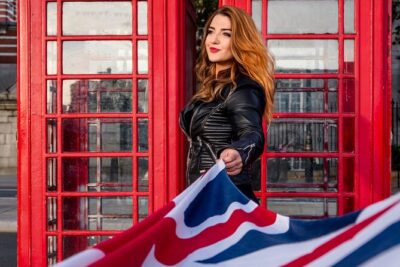
Professional Photoshoot in London Photographer
Read our review →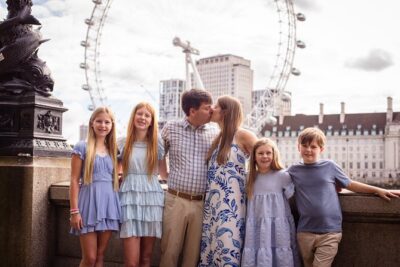
Private landmarks photoshoot for families and couples
Read our review →
30 Major London Attractions Walking Tour With Photos
Read our review →
Private Landmarks with a Professional Photographer
Read our review →
Private Smartphone photography Walking Tour Around Bath
Read our review →Browse the lists this tour appears in