
Reviewed · BRIGHTON TOURS
Seven Sisters Tour
Seven Sisters means big views, and this trip times them well. You get a smart mix of South Downs geology and coastal viewpoints plus short walks that you can skip when the wind gets rude. I love how the day moves between dramatic cliff scenes and calm village moments, and I also love the guide, Colin, for pacing and comfort. One possible drawback is that you’ll be outside at several spots, so if the weather is truly grim, you may want to bring proper layers and accept that a few views can be hazy.
This is a private half-day style tour based in Brighton, starting at 9:30 am and running about 4 to 6 hours. You ride in an air-conditioned vehicle with WiFi and bottled water, and you get light refreshments while you travel. Most stops are free to visit, and the itinerary is built to give you photos, stories, and a bit of Sussex character without turning the day into a sprint.
In This Review
- Key Highlights You Will Actually Feel
- A Half-Day Route That Packs Cliffs, Villages, and Geology
- Price and Value: What 205.67 Per Person Buys You
- Getting Picked Up in Brighton, Then Settling In
- Devil’s Dyke: V-Shaped Chalk Valley with Victorian Twist
- Seaford Beach and the Unseen Work of Coastal Defense
- Seaford Head Nature Reserve: Short Optional Walk to Big Views
- Cable House 14: Telegraph Cables to WWII Gun Emplacements
- Belle Tout Lighthouse Lookout and the 20-Mile Visibility Plan
- Birling Gap from Sea Level: Photos and the Visitor Center Reset
- East Dean Village and The Tiger Inn: A Smuggler-Friendly Lunch Pause
- Long Man Brewery and Cafe: Optional Local Break
- Wilmington Village: The 1600-Year-Old Yew Tree
- Lullington Church: A Small Sussex Church with Big Quiet
- Sussex Sparkling Wine Cellar Door: Optional Complimentary Tasting
- Long Man of Wilmington: The Giant with Unclear Origins
- St Andrew’s Church Near Cuckmere River: The South Downs Cathedral
- Alfriston Village Stroll: Books and Smugglers’ Tunnels
- What Walking Is Really Like, and How to Plan Your Day
- Who This Seven Sisters Tour Suits Best
- Should You Book This Seven Sisters Tour?
- FAQ
- How long is the Seven Sisters tour from Brighton?
- What is included in the tour price?
- Is lunch included?
- Are any entrances free?
- Is the tour in English?
- Are there walking parts?
- Does the tour require good weather?
- Can service animals join the tour?
Key Highlights You Will Actually Feel
- Devil’s Dyke walk with real formation stories that explain how the chalk valley happened
- Seaford Head Nature Reserve views plus an optional 10-minute walk to the best angles
- Belle Tout Lighthouse lookout with a practical plan for coastal clouds
- Cable House 14 history tied to undersea telegraph cables and WWII coastal defense
- Alfriston stops that slow you down for books and a very old inn
- Optional tasting at a Sussex sparkling wine cellar shop
A Half-Day Route That Packs Cliffs, Villages, and Geology
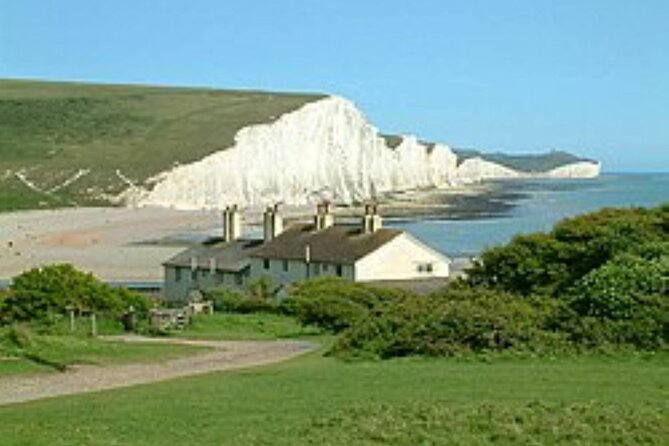
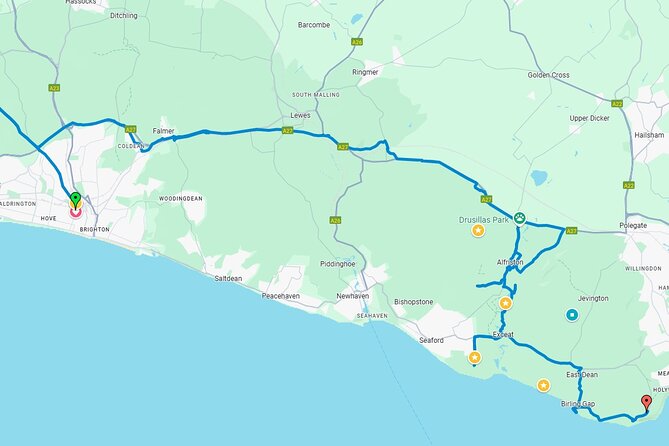
This Seven Sisters tour from Brighton is built like a greatest-hits playlist for the South Coast. You start inland with Devil’s Dyke, then slide toward the coastline and keep bouncing between viewpoints, village pauses, and a few very specific historic stops. It’s a good way to see the area without renting a car or worrying about parking on narrow coastal roads.
The route also feels balanced. You get the classic Seven Sisters cliff drama, but you also get context for why the land looks like this, and why people have had to fight coastal erosion for centuries. That makes the views more than just pretty.
A few more Brighton days worth comparing
- Seven Sisters and South Downs Tour
★ 5.0 · 491 reviews - SEA LIFE Brighton Admission Ticket
★ 4.0 · 468 reviews - Brighton Bar Crawl
★ 5.0 · 377 reviews
Price and Value: What 205.67 Per Person Buys You
At $205.67 per person for 4 to 6 hours, the price is mostly paying for three things: transport, a guide, and convenience. Private transportation matters here because you are moving between multiple villages and coastal points that are not all next to each other.
You also get several small inclusions that add up: pickup or drop-off within Brighton, light refreshments, bottled water, WiFi on board, and an English-speaking guide. Many of the stop entries listed for the key sights are free, which helps you keep costs down once you’re on the ground.
The big value question for you is whether you want a guided route that keeps the timing tight. If you prefer wandering at your own pace, this may feel like “structured sightseeing.” If you want someone else to handle the route and interpret the places for you, it’s a strong deal.
Getting Picked Up in Brighton, Then Settling In
The tour starts at 9:30 am. You can meet at your hotel reception area or outside the Brighton Train Station entrance, and if you are traveling from London by train, pickup is arranged from the train station.
Once you’re in the vehicle, the setup is straightforward. Expect an air-conditioned ride, bottled water, WiFi onboard, and light refreshments while traveling. Since this is a private tour, it’s only your group, which usually means the guide can adjust how long you linger at viewpoints.
If you hate long drives in cramped conditions, this part should reassure you. Air-conditioning and water help on windy coast days when you might otherwise get chilled fast.
Devil’s Dyke: V-Shaped Chalk Valley with Victorian Twist
The first stop is Devil’s Dyke, a 100-metre deep V-shaped dry valley. You walk around the top and hear how this place went from a natural feature to a major mid-1800s Victorian attraction.
What I like about this stop is that it teaches you to read the land. You don’t just look at a valley and move on. The guide explains how the dry valley formed through solifluction and river erosion, tied to cold-climate processes and chalk that was permanently frozen during an intense cold period long ago.
You will also get a human layer to the geology. The Victorians treated Devil’s Dyke like a star attraction, and that helps you understand why people built paths and viewpoints here. It’s not only scenery, it’s a story about how humans have always been drawn to dramatic landforms.
Practical note: plan for a short walk with uneven ground. Good shoes matter more here than people expect.
Same part of England, a different sort of day out:
- The Brighton story – walking tour
★ 5.0 · 251 reviews - Fun, Flexible Treasure Hunt Around Brighton with Cryptic Clues & Hidden Gems
★ 5.0 · 154 reviews - City Sightseeing Brighton Hop-On Hop-Off Bus Tour
★ 4.5 · 152 reviews - The V.I.B (Very Independent Brighton) Walking Food Tour
★ 5.0 · 151 reviews
Seaford Beach and the Unseen Work of Coastal Defense
Next comes Seaford Beach, tied to a long-running coastal challenge: shingle moving along the shoreline through longshore drift. This constant shifting has forced ongoing human intervention to protect the town from erosion and flooding.
The modern approach matters because it shows the coast as a working system, not a postcard. You hear how heavy machinery like bulldozers and dumper trucks is used to redistribute pebbles, especially around structures like the Terminal Groyne, to keep the beach functioning as a sea defense.
If you like practical history, this is a solid stop. It turns coastline talk from vague “nature is changing” into a real picture of how people manage it day after day.
Seaford Head Nature Reserve: Short Optional Walk to Big Views

For Seven Sisters viewpoints, the highlight is Seaford Head Nature Reserve, managed by Sussex Wildlife Trust. Your best viewpoint is a short 10-minute walk away from where you park, and that walk is completely optional.
This is where you get one of the best “why this place matters” moments in the day. Seaford Head sits beside Cuckmere Estuary, described as one of the last remaining undeveloped river mouths on the South Coast. It is also home to nationally rare and significant plant, bird, and insect species, so the stop has a conservation angle, not just scenery.
If the wind is high or you prefer minimal walking, you can still enjoy the views from the main area. If you do the short walk, you’ll probably feel like you got the best angle without overdoing the effort.
Cable House 14: Telegraph Cables to WWII Gun Emplacements
Cable House 14 is an intriguing stop on the newly named King Charles III England Coastal Path route. The hut is described as the birthplace of an undersea cable station network that carried telegraph messages under the sea to France.
Built in 1900 as a relay station, the same structure was later converted into a gun emplacement in WWII to fend off a landing invasion at Cuckmere Haven. This is one of those “small building, huge story” moments that makes a guided tour feel worth it.
Since the time is about 45 minutes and entry is free, it’s also a good option if you want a break from climbing. You get history without needing to walk much.
Belle Tout Lighthouse Lookout and the 20-Mile Visibility Plan
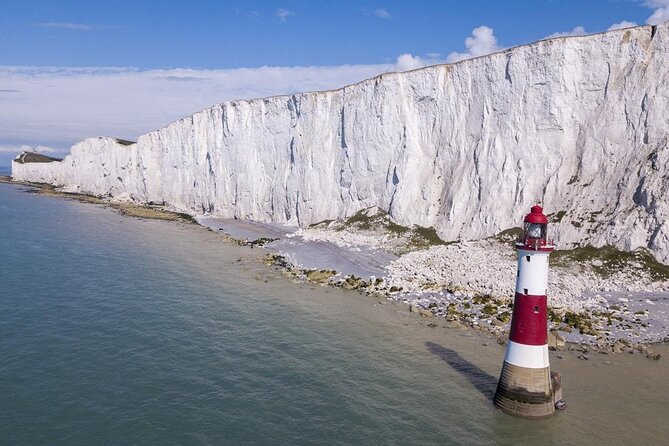
You drive down the coast road to Birling Gap, with Belle Tout Lighthouse as the key lookout. The lighthouse came into operation on 11 October 1834, and it was manned around the clock by two lighthouse keepers.
Here’s the clever part of the plan. The lighthouse position was chosen so the light was visible for 20 miles out to sea, and the cliff edge would obscure the beam if sailors came too close. But being on top of the cliffs also meant frequent cloud issues, so Belle Tout Lighthouse ceased operations in 1900 when Beachy Head lighthouse took over.
You can stop just at the lighthouse area, but the day includes a suggestion that can improve your views a lot. You can walk from the lighthouse down along the cliffs to Birling Gap for about 20 minutes, and this walk is optional.
Practical note: if it’s gusty, take your time on the cliff paths. Even a short distance can feel longer when you’re fighting the wind.
Birling Gap from Sea Level: Photos and the Visitor Center Reset
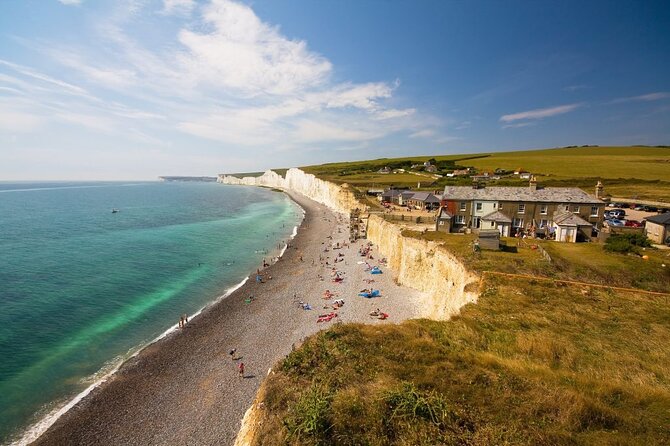
At Birling Gap, you go for classic Seven Sisters views from sea level. The idea is to get different angles than you get from above the cliffs, and to walk the beach for photographs.
This is also where you can reset. There’s a stop for a snack or drink at the visitors centre, which is helpful if the morning has been chilly and you’ve been moving steadily between viewpoints.
If your goal is to take strong pictures of the chalk cliffs and get that layered look, this is one of your best chances on the whole route.
East Dean Village and The Tiger Inn: A Smuggler-Friendly Lunch Pause
East Dean is centered around the village green, with a war memorial, a medieval church, and an inn called The Tiger. This stop includes an optional lunch at The Tiger Inn in East Dean village.
The Tiger is described as a pub where smugglers used to meet, and it has been serving ales, wines, and food to residents, walkers, farmers, soldiers, smugglers, lovers, and brewers since the 15th century. That’s a long runway of country pub life, and the setting is the kind that makes lunch feel like part of the travel, not a forced break.
If you don’t want lunch, you can still stop for a quick drink. Either way, this part of the itinerary gives you a calmer pace than the coast.
Long Man Brewery and Cafe: Optional Local Break
From East Dean, the tour can include a stop at Long Man Brewery, along with a cafe, again as an optional add-on. If you enjoy local beer or just want a warm break, it’s a sensible choice.
Because the schedule is structured, the key benefit here is flexibility. If you’re tired, you can treat this as a reset. If you’re hungry for another taste of local flavor, you’ve got a brewery-based option.
Wilmington Village: The 1600-Year-Old Yew Tree
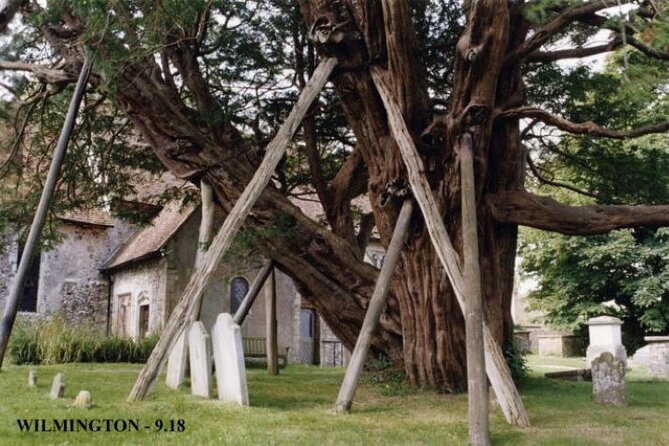
In Wilmington, you get a short pause focused on the downland village’s age. The church here dates back to around 1200 as a chapel to the adjacent priory, and the churchyard features an ancient yew tree estimated to be 1600 years old.
One practical tip is included: don’t eat the red berries. They are poison, even if the berry can be eaten but not the pip. It’s a strange-sounding instruction, but it’s exactly the kind of local detail that makes the stop memorable.
This is a great moment to slow down and appreciate how old English village life is, even when the day is still moving toward more dramatic coastal landmarks.
Lullington Church: A Small Sussex Church with Big Quiet
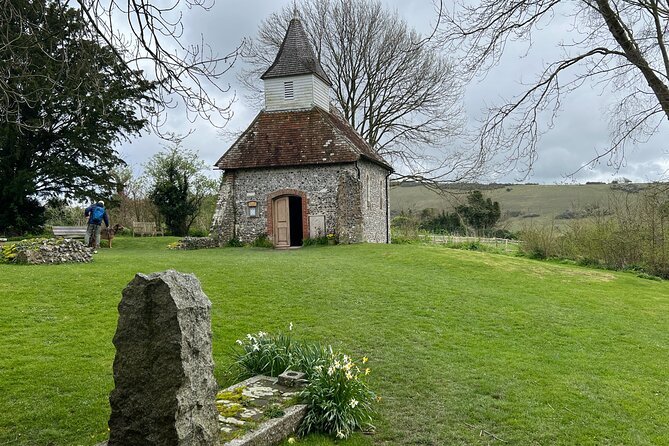
Lullington is a peaceful rural stop centered on a charming church with history dating to the 13th century. The site previously had a larger church that burned down, and the current tiny church is said to be one of the smallest in England, and the smallest in Sussex.
There’s no on-site parking, and it notes that the walk from Alfriston takes about 15 to 20 minutes, with the church open daily. The views from the churchyard over surrounding countryside are part of the appeal.
If you like quiet places and don’t mind a short walking stretch, this is a strong change of pace from cliffs and lighthouses.
Sussex Sparkling Wine Cellar Door: Optional Complimentary Tasting
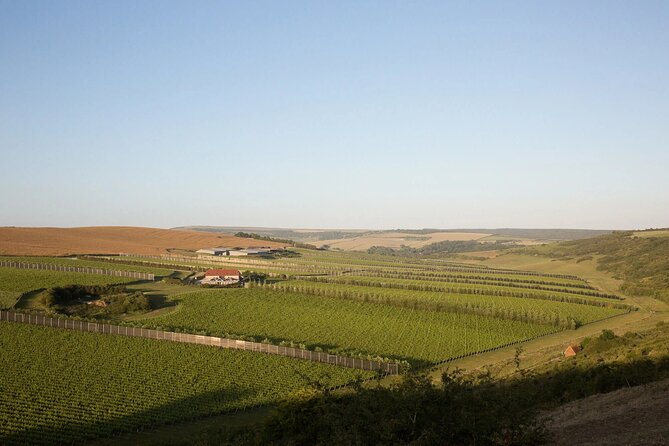
After Lullington, there’s an optional stop for complimentary tasting in a cellar door shop focused on Sussex sparkling wine. The information provided emphasizes single-site Sussex vineyard production on a south-facing slope with chalk soil and aspect suited to sparkling wine.
Even if you don’t buy anything, a tasting stop can make the day feel more layered and less like a checklist. It also gives you a sheltered moment if the wind has been persistent.
Keep in mind this is optional. If you’d rather spend that time taking a final photo somewhere earlier, you can skip it.
Long Man of Wilmington: The Giant with Unclear Origins
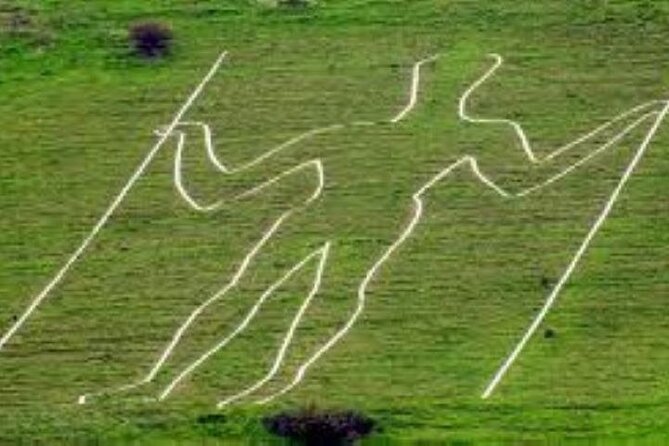
The next major stop is The Long Man of Wilmington, often called the Wilmington Giant. It stands on the steep slopes of Windover Hill above Wilmington, and its origins and meaning have puzzled archaeologists and historians for centuries.
You get the range of theories, because the figure is difficult to date. Some suggest prehistoric roots, with a note that Roman coins show a similar figure. Others point to possible 4th or 5th century origins, possible Anglo-Saxon connections with parallels to helmeted figures found on ornaments, and even the idea of a work by an artistic monk between the 11th and 15th centuries.
This is a great stop for curious minds, because you are not forced into one neat answer. You see how historians build arguments from fragments, and you walk away with questions instead of just facts.
Time is short, about 5 minutes, which keeps it from dragging.
St Andrew’s Church Near Cuckmere River: The South Downs Cathedral
St Andrew’s is founded in the 1360s, and it’s described as a fine example of a 14th century parish church near the winding Cuckmere River. It is beside the Old Clergy House, described as the first National Trust property.
What makes St Andrew’s special in the details you’re given is how it was built. It was built all at one time with no major later additions, and the design includes spacious soaring arches and a feeling of openness due to few memorials inside.
It’s also known for dramatic bell ringing, with six bells placed below the spire. It is noted as one of fewer than twenty churches in the country where bell ringers regularly ring from the centre of the church.
This stop is about atmosphere, not only architecture. If the coast has been windy, stepping into a stone church can feel like a relief.
Alfriston Village Stroll: Books and Smugglers’ Tunnels
Alfriston is where the itinerary slows again. You get sightseeing around the village for about 30 minutes, with a couple of specific stops you can use to shape that time.
One is Much Ado Books, a two-floor shop in a medieval village setting with new books alongside vintage, antiquarian, and secondhand volumes. The shop is described as having a book-filled shepherd’s hut and a bower with bargain paperbacks, which makes it more fun than a typical bookstore.
Another is The George Inn, described as first licensed in 1397, with foundations dating back to 1250. The inn is flint stone and half-timbered, and there’s a network of smugglers’ tunnels leading from its cellars, adding another thread to the smugglers theme that began earlier in the day at The Tiger.
Food quality is mentioned as good quality, and there is a garden and heated terrace for cooler evenings. Even if you do not eat there, it helps you understand why pubs and inns were such central places in this part of England.
What Walking Is Really Like, and How to Plan Your Day
The route has several optional walking pieces, so you can control your effort. At Seaford Head Nature Reserve, the best viewpoint is a short 10-minute optional walk. At Belle Tout Lighthouse, walking down along the cliffs to Birling Gap is suggested for about 20 minutes, also optional.
At the same time, the day includes repeated scenic stops where you might stand around for photos. That means layers matter more than stamina. Plan for wind, even in daylight, because coastal weather can shift quickly.
Also, bring a small bag for essentials. You’ll want water, a wind layer, sun protection if it’s clear, and comfortable shoes for uneven cliff-edge paths and churchyard steps.
Who This Seven Sisters Tour Suits Best
This tour fits you if you want the classic Seven Sisters views but also want the “why” behind them. The Devil’s Dyke geology, Seaford’s coastal defense story, and the uncertain origins of the Long Man give the day substance beyond the postcard.
It’s also a good match if you’d rather not drive yourself. Pickup and drop-off within Brighton, plus private transportation, keeps stress low. The guide support helps you move efficiently between viewpoints without turning every stop into a logistics problem.
If you hate tours that feel rushed, you’ll likely like the structure here because each place has a reason and a reasonable time window. And if you like pubs, bookshops, and quiet churches, the day has plenty of those quieter stops.
Should You Book This Seven Sisters Tour?
I’d book it if your priority is a guided Sussex day that blends cliffs, villages, and specific historic context, without forcing long walks. The added value is the way the day is paced, with optional walking and free entry style stops that keep you from spending time hunting for tickets.
Skip it if you want total freedom with no scheduled stops. This route is structured, and the best parts are tied to set timing, especially around viewpoints.
Bottom line: if you want a smart, story-led Seven Sisters experience from Brighton, with a guide like Colin and multiple coastal viewpoints you can access without driving, this is a very solid choice.
FAQ
How long is the Seven Sisters tour from Brighton?
It runs about 4 to 6 hours, depending on the day and how long you choose to spend at stops.
What is included in the tour price?
The price includes pickup and drop-off within Brighton, light refreshments while traveling, a tour guide, an air-conditioned vehicle, bottled water, private transportation, and WiFi onboard.
Is lunch included?
No. Lunch is not included, though there is an optional lunch stop at The Tiger Inn in East Dean Village.
Are any entrances free?
The itinerary lists free entry for multiple stops and viewpoints, including Devil’s Dyke, Seaford Head Nature Reserve, Belle Tout Lighthouse lookout, and several village and church stops. The tour also mentions optional tasting in a cellar door shop.
Is the tour in English?
Yes, the tour is offered in English.
Are there walking parts?
Yes, but several are optional. Seaford Head includes a short optional 10-minute walk, and there is an optional 20-minute cliff walk from the Belle Tout Lighthouse area to Birling Gap.
Does the tour require good weather?
Yes. The experience requires good weather, and if it is canceled due to poor weather, you will be offered a different date or a full refund.
Can service animals join the tour?
Service animals are allowed.
Recently added around Brighton
- Adventurous Scavenger Hunt in Hastings by Operation City Quest★ 3.0 · 3 reviews
- Sussex Birdwatching Private Guided Day Tour★ 5.0 · 13 reviews
- Handcrafted Donuts & Tea: Brighton’s Artisan Sweet Treat Tour★ 5.0 · 127 reviews
- Ultimate Shooting Taster Session in Brighton★ 5.0 · 33 reviews
- The Hunt: Team Activity in Brighton, Sussex★ 5.0 · 149 reviews
- Sussex Vineyard & Winery Bus Tour on Iconic Vintage London Bus★ 4.5 · 89 reviews
- Stonehenge and Bath – Day Tour from Brighton★ 4.5 · 68 reviews
- Fun, Flexible Treasure Hunt Around Brighton with Cryptic Clues & Hidden Gems★ 5.0 · 154 reviews
Brighton Tours, compared.

Fun, Flexible Treasure Hunt Around Brighton with Cryptic Clues & Hidden Gems
Read our review →
City Sightseeing Brighton Hop-On Hop-Off Bus Tour
Read our review →The V.I.B (Very Independent Brighton) Walking Food Tour
Read our review →

Handcrafted Donuts & Tea: Brighton’s Artisan Sweet Treat Tour
Read our review →Browse the lists this tour appears in