
Reviewed · CANTERBURY TOURS
The Best of Kent: a private 3 hour minibus tour with an expert
Kent comes alive with the right guide. This private 3-hour minibus tour with Dr Anthony Medhurst is built for questions, not rushing, and I loved the way his stories connect directly to specific places, from St Augustine’s Abbey to the White Cliffs of Dover. The only drawback is the tight schedule, so if you want long, slow stops for shopping or big indoor visits, you may feel a bit pressed.
You choose the timing, with departures around 8:30am, 12:00 noon, or 4:00pm from the Hampton by Hilton on St Margaret’s Street. In practice, that flexibility helps a lot if you are pairing Kent with a London stay or another day trip.
Most admissions on the route are marked free, and the tour ends back where it begins, which makes the whole half-day feel easy to plug into your plans. For me, the value comes from mixing countryside viewpoints with a structured walk through Canterbury’s layers, not just ticking off one highlight.
In This Review
- Key Things I Wouldn’t Skip
- Why This Private Minibus Tour Feels Worth It in 3 Hours
- Canterbury’s Early Roots: Abbeys, Churches, and Pilgrimage Clues
- Kent Villages by Minibus: Medieval Greens and WWII Threads
- The White Cliffs of Dover Viewpoint You Can Actually Use
- The Return Drive: Vineyards, Mozart, and a Norman Church in Caen Stone
- Canterbury on Foot: From Roman Stops to the Cathedral Gate
- Cathedral Gate, Buttermarket, and the River Stour stretch
- Westgate Tower, Alluvia, weavers, and Chaucer
- Price, Timing, and When This Tour Makes the Most Sense
- Should You Book This One?
- FAQ
- How long is The Best of Kent tour?
- Where does the tour start, and where does it end?
- What departure times are available?
- Is this a private tour?
- What is included in the price?
- What is the cancellation policy?
Key Things I Wouldn’t Skip
- Dr Anthony Medhurst, Cambridge PhD historian: you can ask questions and get straight, place-based answers.
- Three departure times from Hampton by Hilton Canterbury: you can match the day to your energy, and the photo light changes with the slot.
- St Augustine’s Abbey and early Christian Kent (AD597): the tour frames 597 as a turning point, not trivia.
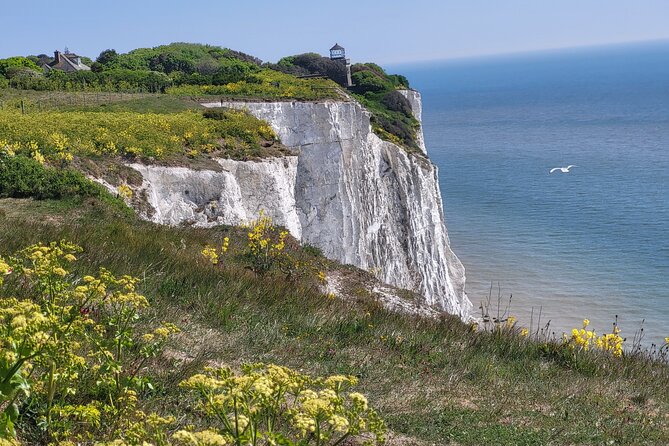
- A lesser-known White Cliffs of Dover vantage point: you get Dover Castle, the harbour, the English Channel, and France if visibility is good.
- Short stops in village lanes, churchyards, and greens: Wickhambreaux, Ickham, Wingham, Barham, Bishopsbourne, and Patrixbourne add real texture.
- A focused one-hour Canterbury walking tour: Roman roots, medieval pilgrimage sites, and major street corners in one tight loop.
Why This Private Minibus Tour Feels Worth It in 3 Hours
This tour works because it is private, which changes everything about pacing. In a group format, you tend to keep moving because everyone else needs to move. Here, you can ask follow-up questions as you go, and Dr Anthony can explain what you are seeing in the moment, then steer you to the next best angle.
The second big win is the guide. Dr Anthony Medhurst is a Cambridge-educated historian, and his background shows in how he ties legends, dates, and politics to actual buildings and street corners. The day does not feel like a lecture, it feels like a guided walk through Kent that keeps making connections.
The thing to watch is time. You only have around three hours, and the itinerary is built from quick stops plus a one-hour city walk. You will see a lot, but you will not linger long in any single place, so come with comfy shoes and a camera you can grab fast.
A few more Canterbury days worth comparing
- Official Canterbury Guided Walking Tour – 11.00 Tour
★ 5.0 · 422 reviews - Official Canterbury Guided Walking Tour – 14.00 Tour
★ 5.0 · 214 reviews - Silver Ring Workshop in Kent, England
★ 5.0 · 102 reviews
Canterbury’s Early Roots: Abbeys, Churches, and Pilgrimage Clues
The day starts at the Hampton by Hilton on St Margaret’s Street, where you get met and escorted to the minibus. From there, you head into the Canterbury story in a smart order: first the major early-Christian anchor just outside the city centre, then the older religious threads that run under the rest of Canterbury.
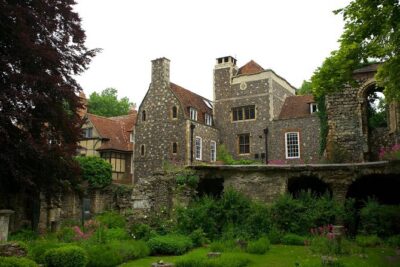
Stop by St Augustine’s Abbey (founded AD597): this is where the tour sets up the big theme of Kent’s conversion to Christianity. Augustine arrived in Kent after St Augustine’s mission began, and the abbey functioned as a monastery and a kind of missionary school. Dr Anthony’s explanation hits hard on details, like the illuminated manuscripts tradition and the fact that only 150 survived the English Reformation and the dissolution of the monasteries in 1538. One of the survivors, the Canterbury Gospels, was even used in the recent coronation of King Charles III.
Then you pass the statues of King Ethelbert and Queen Bertha on Lady Wootton’s Green. It is a quick moment, but it gives context for why Augustine could build and spread Christianity across the country. That detail makes the later pilgrimage history around Canterbury Cathedral feel less random and more inevitable.
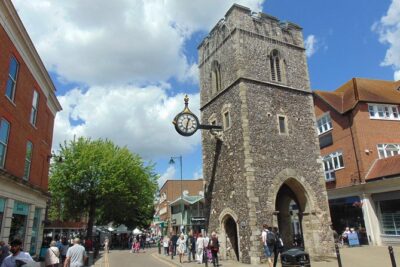
Spot St Martin’s Church, cAD597: this is one of the best examples of how the tour makes ancient dates feel real. St Martin’s is described as the country’s oldest surviving church, with Roman origins and later additions from Anglo-Saxon and medieval periods. Even if you are not a church buff, it is the kind of building that makes you slow down for one good look, then let the guide put it into the bigger timeline.
Kent Villages by Minibus: Medieval Greens and WWII Threads
Once the tour leaves Canterbury’s edge, it turns east toward the coast through villages that feel like postcard England, but with names and stories that keep changing every few minutes.
Wickhambreaux village green and churchyard details: the route includes a stop for photos around this medieval green, where you can see how a village centre was built around church, manor house, rectory, inn, and mill. Dr Anthony also adds the sort of historical cross-currents that make Kent feel like more than just scenery. At St Andrews, a 13th-century church, Squadron Leader David Maltby, one of the WWII Dambusters, is both married and later buried after his death in 1943.
If pop culture is your thing, you will also hear about Christine McVie of Fleetwood Mac as a famous former resident. It is a quick mention, but it gives you permission to think of Kent as lived-in history, not museum history.
Ickham and Wingham quick hits: in Ickham, you pass white weatherboard cottages and listed buildings, with a 13th-century church adding another layer of continuity. Then the tour moves through Wingham, with many buildings dating back to the 1200s and the Grade II listed Dog Inn. These are short photo and sight stops, but they matter because they show you the texture of Kent between the big landmarks.
The practical benefit here is that you avoid the hassle of driving between villages yourself. You also avoid the problem of doing one village per stop and running out of time. This route batches the “best bits” without turning into a nonstop rush.
The White Cliffs of Dover Viewpoint You Can Actually Use
When you reach Dover, the tour takes you to a special vantage point on the White Cliffs that is largely unknown to most visitors. That wording matters, because it is not just another roadside pull-off where everyone fights for the same angle.
From this viewpoint, you are set up for Dover Castle, the harbour, and the English Channel, plus the nearby coastline of France if the weather cooperates. Even if you have seen pictures before, this is the moment when geography becomes story. You can look across the water and understand why Dover has always been both a gateway and a target.
There is also a brief history of Dover from Roman times through the Second World War. It helps that the guide connects what you see from the cliffs to what those eras were trying to control or defend. You get a sense of continuity: strategic thinking keeps coming back, only the tools change.
Then you head back toward Canterbury through country lanes and rolling hills, with several village stops that keep the trip feeling like a loop of Kent, not just an out-and-back.
Same part of England, a different sort of day out:
- The Canterbury Classic Tour
★ 5.0 · 100 reviews - Howletts Day Ticket
★ 4.5 · 42 reviews - Small-Group City Running Tour in Canterbury
★ 5.0 · 33 reviews - Private Guided Walking Tour of Canterbury
★ 5.0 · 23 reviews
The Return Drive: Vineyards, Mozart, and a Norman Church in Caen Stone
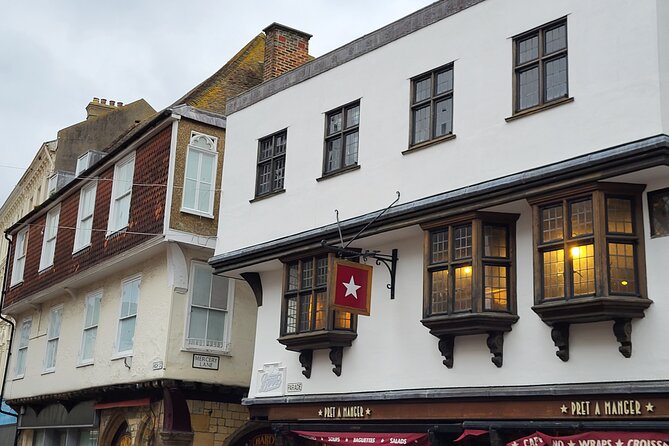
The countryside part of the tour is one of the reasons it feels more complete than a straight “Dover and back” trip. The stops are short, but they are chosen for variety, including rural hills, AONB countryside, and architecture with specific geographic links.
In Barham, you see rolling hills and newly planted vineyards, plus a quaint narrow street. The 13th-century church of St John the Baptist is highlighted, including its green copper spire and Kent peg tiled cottages, with valley views that make you want to pause for one last photo before the minibus moves on.
Next is Bishopsbourne within the Kent Downs Area of Outstanding Natural Beauty. You pass Bourne Park, a stately home connected to Wolfgang Amadeus Mozart, who visited in 1865. Even if you do not chase Mozart on travel days, that date adds a fresh layer to a county that people often reduce to medieval England only.
Then the tour goes through Patrixbourne, where the Norman church is the focal point. It is built of flint and stone from Caen in France, with French decorative influence. Dr Anthony points out a south doorway in Norman style and a wheel window from the late 12th century. Those specifics are the difference between a quick “nice church” and a church you understand in five minutes.
Canterbury on Foot: From Roman Stops to the Cathedral Gate
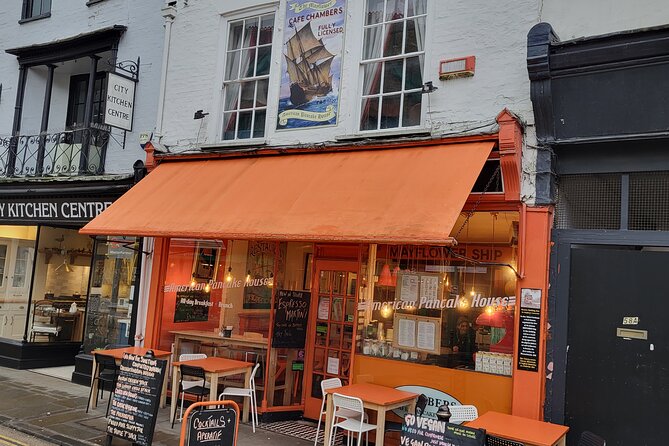
After the drive, you return to Canterbury for a one-hour walking tour of the very best bits. It is timed so you get orientation fast, then you can make your own choices after the guided part ends. You can visit landmarks like the Cathedral and castle, explore medieval streets and houses, or relax with a drink alongside the River Stour.
Back at the start points around St Margaret’s Street, the tour shifts into “under your feet” mode. You hear about the Iron Age origins of Canterbury, then Julius Caesar’s preliminary raids in 55BC and 54BC, followed by the Roman invasion and settlement in AD43 to 410. The Roman theatre built in AD80 is a standout, including the note that it was developed into a venue for 3000-plus people, plus the nearby Roman road Watling Street running between London and Dover.
From there, you move to the crossroads where St Margaret’s Street meets High Street. Here the tour covers the murder of Archbishop Thomas Becket by four knights acting for King Henry II. Then it connects the miracles said to happen after contact with the blood at the Cathedral to Becket’s sainthood and the rise of Canterbury as a pilgrimage centre from roughly 1170 to 1538.
One of my favorite parts is that you get more than big-story dates. You also get street-level clues, like seeing remains of shops, inns, and accommodation that pilgrims used. That kind of detail helps you picture the city as it functioned, not just how it looks today.
Cathedral Gate, Buttermarket, and the River Stour stretch
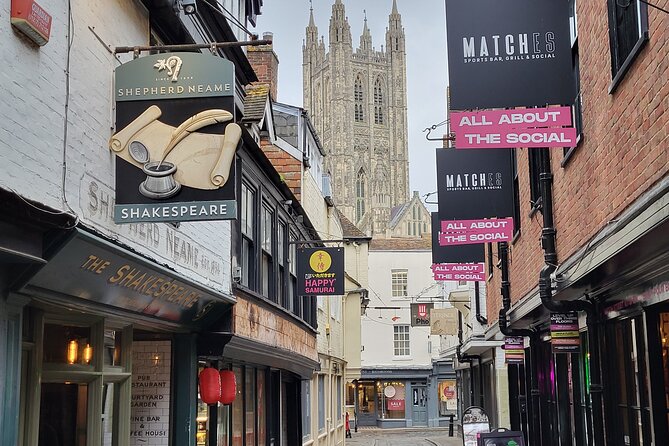
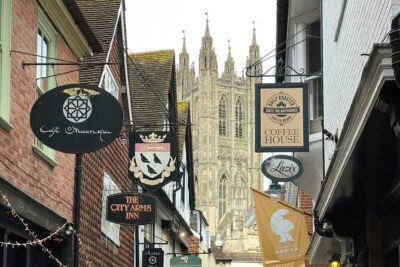
As you walk near Butchery Lane, you get a photo opportunity of the Cathedral and the cobbled streets and medieval buildings that frame it. You also learn why the Cathedral, St Augustine’s Abbey, and St Martin’s church are UNESCO World Heritage sites, with Augustine’s arrival in AD597 as the anchor.
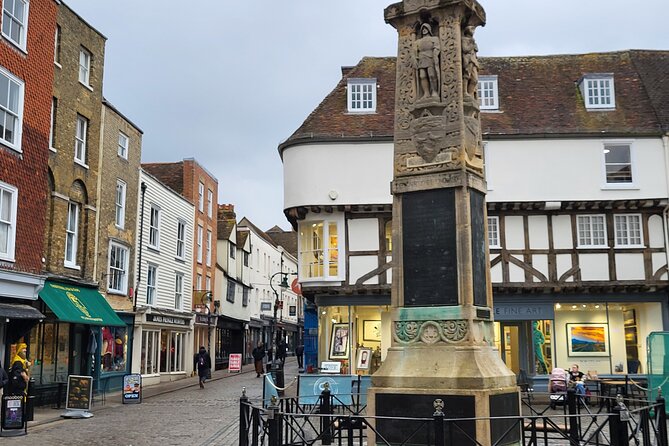
Then comes the Cathedral Gate segment, where the guide explains the gate’s connection with Henry VIII and the Tudor family, plus the Reformation’s impact on Canterbury. You also hear about the Buttermarket, a cobbled square that served as a focal point for pilgrim hotels and taverns.
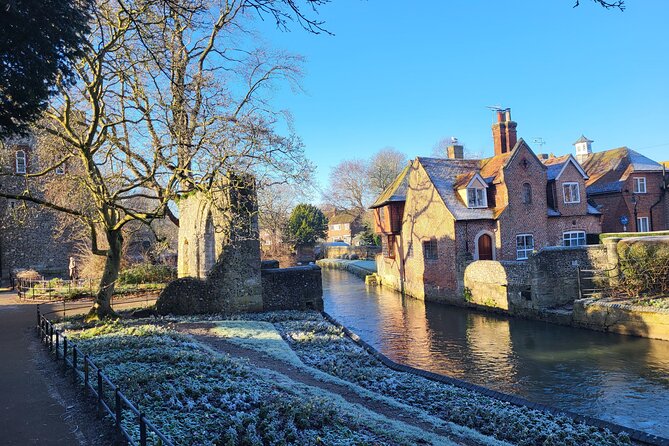
After that, the tour heads to the River Stour. The Dominican friars, known as the Blackfriars, were based there, and the tour points out surviving buildings, including a refectory used by Dominicans as a dining hall, plus separate quarters for guest accommodation. It is a photo-friendly stop, but it is also a calm moment in the middle of all the moving and storytelling.
You also hear about Christopher Marlowe, a dramatist who was a contemporary of Shakespeare and whose life ended in a Deptford tavern. It is the kind of detail that makes Canterbury feel like it fed into English literature, not just religious tourism.
Westgate Tower, Alluvia, weavers, and Chaucer
The tour’s final stretch gets very specific in a good way. At the Westgate area, you see the largest surviving medieval fortified tower and learn about Roman defensive walls and later strengthening during the Hundred Years War. Then you stroll through Westgate Gardens, where the guide points out Alluvia, a submerged female figure based on Ophelia from Hamlet. The sculpture has an additional purpose, it measures river temperature and cleanliness, which turns an art moment into a modern science note.
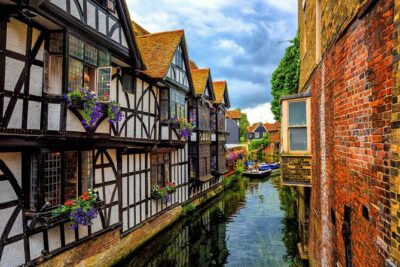
Next is the King’s Bridge area and the Old Weavers’ House, a Tudor timbered building tied to textile workers. You learn about Protestant weavers who fled the Low Countries and France in the 1500s and 1600s, and how they contributed to Canterbury’s re-emerging wealth after the Dissolution of the Monasteries in 1538.
Right nearby is a grim reminder of how life could be hard centuries ago: a witches dunking stool. The guide explains how accused women faced multiple tests including being held underwater. It is heavy material, but it fits the pilgrimage and Reformation themes you have already heard, because it shows how power and fear shaped daily life.
Finally, you end near a statue commemorating Geoffrey Chaucer and the Canterbury Tales from the late 1300s. The guide also mentions a modern connection tied to Orlando Bloom being featured on the statue. It is quick, but it helps land the idea that Canterbury stays in the cultural spotlight long after the buildings were first raised.
Price, Timing, and When This Tour Makes the Most Sense
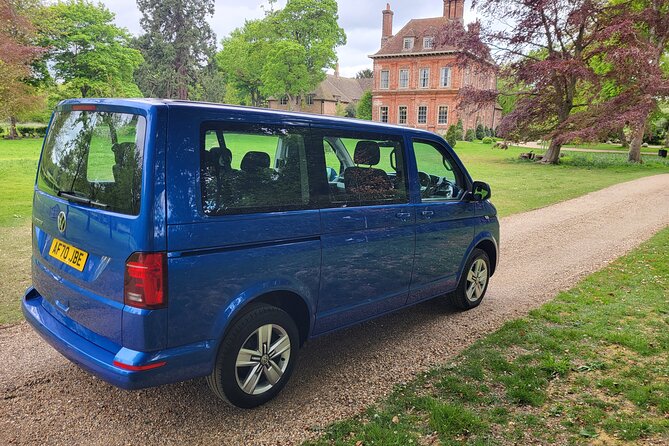
At $185.52 per person for a private 3-hour tour, this is not a bargain-basement day trip. It is premium pricing, but it is also packed with value you can feel. You are paying for a private historian guide, an air-conditioned minibus, and a route designed around free admissions and multiple major stops in one compact block of time.
If you are traveling solo, it can still be worth it if you care about depth and you want someone to build a coherent storyline for you instead of you piecing it together yourself. If you are a couple or a small group, private pricing often becomes easier to justify because you split the experience across fewer people and you can tailor what the guide emphasizes.
Timing is another big piece. With a 4pm departure, you might get softer light for the cliffs and nicer street photos in Canterbury. With the morning slot, you tend to have more energy for walking and you may be better positioned for quick photo stops without feeling rushed. Either way, you should plan ahead since it is commonly booked about 26 days in advance.
Should You Book This One?
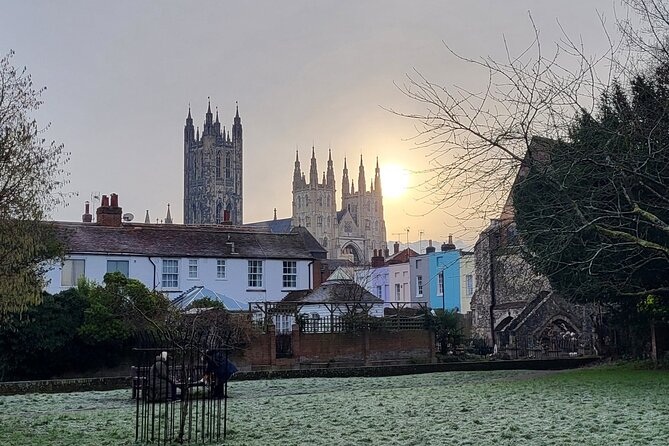
I think you should book this tour if you want a Kent highlights day with a brain behind it, not just a checklist. The combination of Dr Anthony Medhurst’s Cambridge-level historical framing, the White Cliffs viewpoint, and the tight one-hour walk through Canterbury’s key layers is exactly the kind of format that helps you get your bearings fast and then enjoy the rest of your time independently.
Skip it if your priority is lots of unhurried time in a single place, long museum-style interiors, or a heavily food-and-shopping focused itinerary. This tour is built for movement and context, and that style will either match your travel personality or frustrate it.
FAQ
How long is The Best of Kent tour?
The tour lasts about 3 hours.
Where does the tour start, and where does it end?
You meet at the Hampton by Hilton Canterbury, 7 St Margaret’s St, Canterbury CT1 2TP, UK. The tour ends back at the same meeting point.
What departure times are available?
Departure times are 8.30am, 12 noon, or 4pm, depending on your preferred time.
Is this a private tour?
Yes. It is a private tour/activity, and only your group participates.
What is included in the price?
The tour includes an entertaining local guide with a Cambridge PhD in History and an air-conditioned vehicle. Admission tickets are listed as free.
What is the cancellation policy?
You can cancel for free up to 24 hours in advance for a full refund. If it is canceled because the minimum number of travelers is not met, you will be offered a different date or a full refund.
Recently added around Canterbury
- Murder and Miracles Self Guided Tour of Canterbury City★ 4.0 · 7 reviews
- Private Guided Walking Tour of Canterbury★ 5.0 · 23 reviews
- Howletts Day Ticket★ 4.5 · 42 reviews
- Privately Guided Tour of Canterbury and Canterbury Cathedral★ 4.0 · 3 reviews
- Small-Group City Running Tour in Canterbury★ 5.0 · 33 reviews
- Silver Ring Workshop in Kent, England★ 5.0 · 102 reviews
- The Canterbury Classic Tour★ 5.0 · 100 reviews
- Official Canterbury Guided Walking Tour – 14.00 Tour★ 5.0 · 214 reviews
Canterbury Tours, compared.

Official Canterbury Guided Walking Tour – 11.00 Tour
Read our review →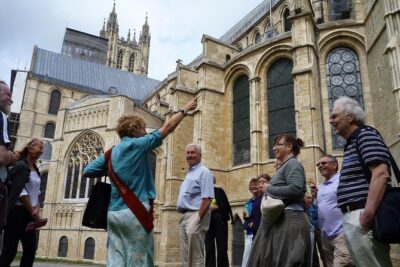
Official Canterbury Guided Walking Tour – 14.00 Tour
Read our review →

Murder and Miracles Self Guided Tour of Canterbury City
Read our review →Browse the lists this tour appears in