
Reviewed · HISTORICAL TOURS
The Jigsaw of History Tour
Coventry can look modern at first glance, but this walk shows the pieces. The Jigsaw of History Tour connects post-war city planning, industry, and inventions through a tight route that feels like solving a puzzle. You get a guided thread from Lady Godiva’s statue to the Coventry City Wall, with surprises like RAF jet-engine origins and the story behind the English Civil War.
I really like the mix of topics, because you see how Coventry reinvented itself again and again. Two wins for me are the stop-by-stop focus on real locations (not vague landmarks) and how the guide keeps pulling the same themes together, from bicycles to cars to theatres.
One drawback to plan for: a few sites are described as having admission not included, so expect mainly outside views unless you decide to pay separately.
In This Review
- Key highlights you’ll feel on the ground
- Broadgate to Godiva Square: the tour’s guiding idea
- Lady Godiva and the City of Tomorrow plan (Donald Gibson)
- Ribbon weaving, the Coventry Cathedral wall, and Sir Frank Whittle’s jet engine link
- Lady Herbert’s Garden: bicycles, Alfred Herbert, and the Coventry City Wall
- A4053 and Millennium Place: Coventry Ring Road and the motor city story
- Palmer Lane and the power of the off-route streets
- Old Grammar School area art: Coventry motors, city naming, and poet references
- Belgrade Theatre surroundings: plays, Ira Aldridge, and major women of the arts
- Bond’s Hospital and Ford’s Hospital: living institutions built for centuries of use
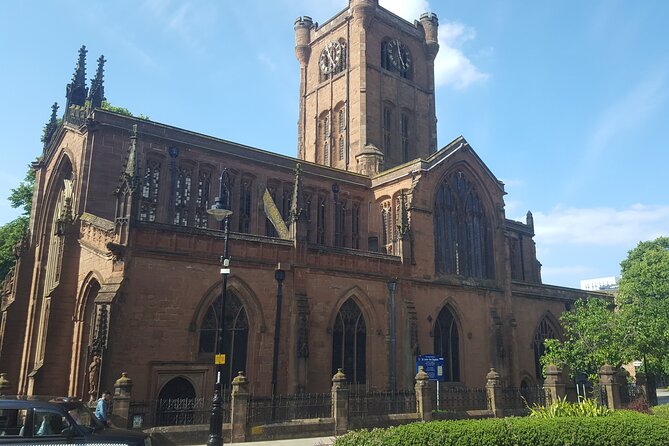
- St John the Baptist and the phrase Sent to Coventry
- Historic Spon Street: craft industries, watchmaking, and the feeling that not everything adds up
- Coventry Market Shopping Centre, Bull Yard, and Cheylesmore Manor House
- Greyfriars Spire and New Union Street, plus a closing loop back toward Hertford Street
- Price, pacing, and the value of a 12-person history walk
- Should you book this Coventry walking tour?
- FAQ
- How long is the Jigsaw of History Tour?
- How far do we walk?
- Where do we meet, and what time does the tour start?
- Is the tour mostly flat?
- What language is the tour offered in?
- How many people are on the tour?
- Are any stops admission tickets included?
- Is Coventry Market Shopping Centre open on Sundays?
- Is there free cancellation?
Key highlights you’ll feel on the ground
- A sharp City of Tomorrow thread that links Donald Gibson’s plan to what’s still around today
- Engineering first, not textbook first, with Sir Frank Whittle and the Coventry Ring Road area taught at street level
- The Coventry City Wall story tied to Alfred Herbert, plus why the wall mattered more than once
- Motor city rise and fall near the Coventry Transport Museum, with the reason it went from global to nearly gone
- Belgrade Theatre and cultural milestones including Ira Aldridge and how Coventry’s stage life shaped the city
Broadgate to Godiva Square: the tour’s guiding idea
You start at Sky Blue City Walks on Broadgate, in Coventry (CV1 1NE), with the day beginning at 9:50am. The first minutes matter because the guide frames Coventry with one big theme: how the city rebuilt itself after major disruption, and how planning choices still shape what you see.
From the start point, you’re oriented around the Lady Godiva Statue area, and you quickly learn why this part of Coventry is often called the City of Tomorrow. The tour doesn’t treat post-war rebuilding like a distant era. Instead, it helps you connect that reconstruction to nearby streets, walls, and buildings you can actually see.
The pacing is comfortable for the most part. You’ll cover just over two miles in around 2 hours 45 minutes, walking mostly flat with some inclines and ramps. There’s also one small cobbles area, so if you’re sensitive to rough surfaces, it’s worth having good walking shoes.
More history tours in England:
- London Small Group Tour of Historical Pubs
★ 5.0 · 10,422 reviews - Soho Music & Historic Pubs Tour
★ 5.0 · 1,993 reviews - Shadows of York: Ghost Walk and Horrible History.
★ 5.0 · 1,403 reviews
Lady Godiva and the City of Tomorrow plan (Donald Gibson)
Stop one begins with Lady Godiva, but the story quickly expands beyond the famous figure. You’re pointed to Donald Gibson’s masterplan for the post-war reconstruction of Coventry, the framework that helped shape the city you’re walking through now.
What I like about this opening is the way it sets expectations. You stop looking at buildings as just buildings. You start seeing the logic behind layout, design choices, and public spaces. That makes later stops click, especially when the tour comes back to ideas of rebuilding and survival.
It’s a free stop and quick, about 15 minutes, but it gives you the mental map you’ll need for the rest of the walk.
Ribbon weaving, the Coventry Cathedral wall, and Sir Frank Whittle’s jet engine link
Then the tour turns industrial in a very tangible way. You visit the area near the last surviving ribbon weaving factory in Coventry city centre. Even if you don’t think you care about weaving, the guide makes it matter by showing how an industry can grow, dominate, and then fade, leaving physical traces like walls and building shapes.
Near this thread is another anchor point: the surviving wall of the original Coventry Cathedral, St Mary’s. This is where the tour does something useful. It shows you how Coventry’s story includes both people and materials, because walls can outlast the institutions around them.
Next up is a different kind of engineering story: the Sir Frank Whittle statue. If you’ve heard Whittle’s name at all, it’s probably tied to the jet engine. On this tour, you learn how Coventry connects to his story as an engineer and RAF officer. The key is that the guide ties the invention to the city’s identity, not just the inventor’s fame.
Both of these stops are short, 5 minutes each, but they pack in big concepts fast. If you prefer slow, detailed museum-style explanations, the short timings may feel quick, but the guide’s job here is to keep the pace moving while the overall narrative stays clear.
Lady Herbert’s Garden: bicycles, Alfred Herbert, and the Coventry City Wall
This is one of the most satisfying stops because it blends everyday tech with major turning points in power.
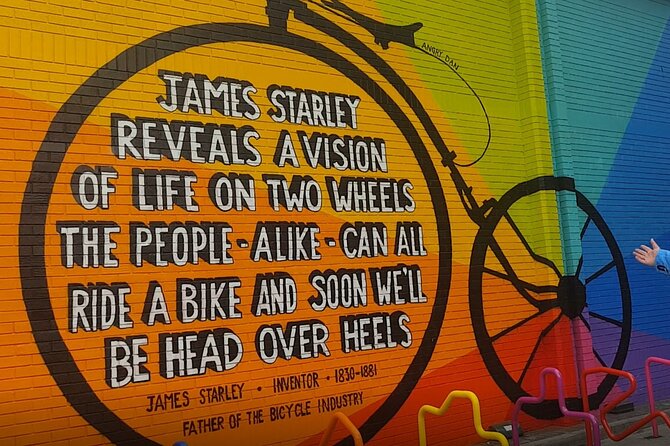
In and around Lady Herbert’s Garden, the tour connects the birth of the bicycle industry with how the modern bike came to be. You don’t just hear about inventions as dates in a book. You hear how ideas became products, and how that kind of industry became part of Coventry’s identity.
Then the story shifts to the Coventry City Wall, and it gets very specific. You turn to see the best preserved section and learn how it was built and why industrialist Alfred Herbert saved it from destruction. That rescue detail matters, because it explains why you can still see the wall now instead of only reading about it later.
The guide also explains the wall’s purpose in a moment when the city truly needed it, including the tale of the wall’s involvement in the true beginning of the English Civil War. This isn’t a long lecture, but it’s a strong reminder that Coventry’s walls were not just decoration. They were part of survival.
This stop runs about 15 minutes and is free, making it one of the best value stretches in the route.
Same part of England, a different sort of day out:
- Stonehenge, Windsor Castle, and Bath from London
★ 4.5 · 18,662 reviews - London Big Bus Hop-On Hop-Off Tour with Optional River Cruise
★ 3.5 · 10,803 reviews - Beatles Magical Mystery Tour
★ 5.0 · 9,266 reviews - Liverpool: “Blue Route” – City & Beatles Tour
★ 5.0 · 8,562 reviews
A4053 and Millennium Place: Coventry Ring Road and the motor city story

After the City Wall, you get a lesson in modern infrastructure, and it’s actually one of the tour’s smartest transitions.
You spend a couple of minutes at the A4053, learning about the engineering behind the Coventry Ring Road. Even without technical background, it’s easy to grasp what the guide is doing here. They’re showing you how Coventry tried to solve movement and growth, then how that ties back into the larger post-war rebuilding mindset.
Then you move to Millennium Place, near the Coventry Transport Museum, for the motor industry chapter. This is where the tour covers how Coventry became the motor city of England and grew into a global centre of car manufacture, then how much of it almost disappeared forever.
This stop feels especially relevant if you’ve ever visited Coventry and noticed the mixture of old industry and newer developments. The guide helps you read that mix instead of just seeing it.
Millennium Place is about 10 minutes and free. The theme is heavy but clear: industrial dominance can vanish fast, and cities have to adapt again.
Palmer Lane and the power of the off-route streets
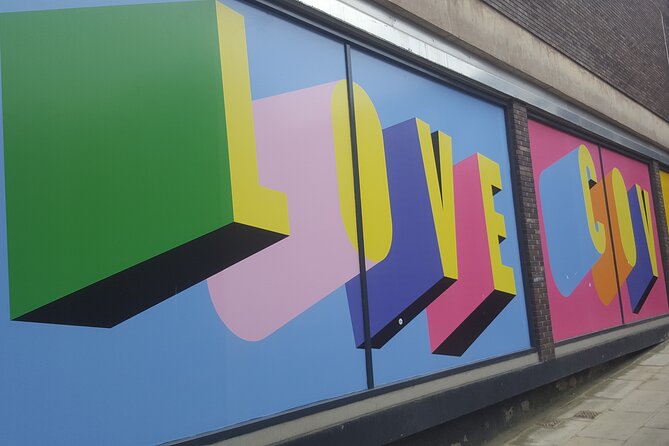
One of the best parts of this tour is that it doesn’t stay only on the main show streets. At Palmer Lane, you’re taken a bit off the beaten track to see a few things in the city that many people walking on the usual routes miss.
It’s only about 5 minutes, but this is where the tour starts feeling more local and less checklist. You get those small “wait, this is here?” moments that make walking tours worth paying for. The guide’s approach also makes you more observant. After this point, you start noticing how buildings and public art sit in relation to each other.
If you like city wandering with a purpose, this short detour is a strong payoff.
Old Grammar School area art: Coventry motors, city naming, and poet references
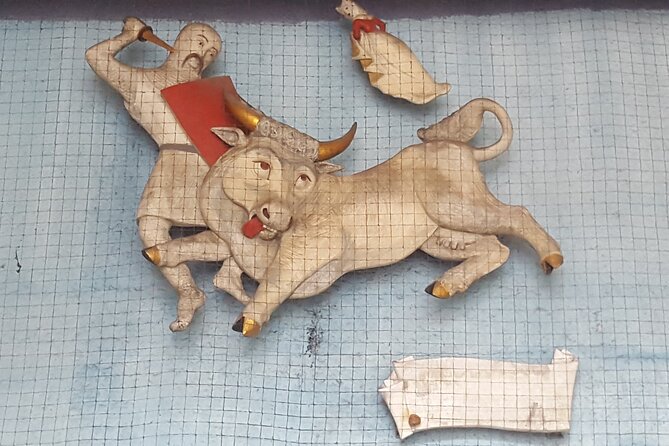
Next is the Old Grammar School area. This is described as a building you should avoid calling by a misleading name, and the guide points you toward an artwork celebrating the Coventry motor industry. You also hear about building names linked to the most famous poet from Coventry.
This stop is about 5 minutes and free. Since it also notes admission is not included, you should expect the emphasis to be on what you can see around you rather than what you access inside.
It’s a compact stop, but it reinforces the tour’s big message. Coventry doesn’t only tell its history through monuments. It also tells it through design choices, public art, and the names attached to places.
Belgrade Theatre surroundings: plays, Ira Aldridge, and major women of the arts
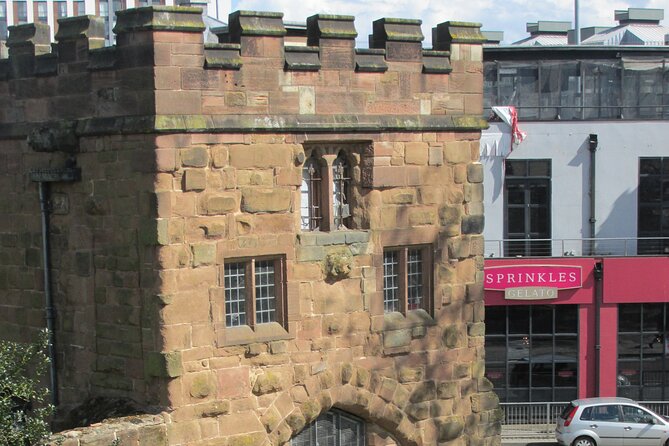
Now the tour shifts into theatre, which gives your brain a break from engineering and manufacturing.
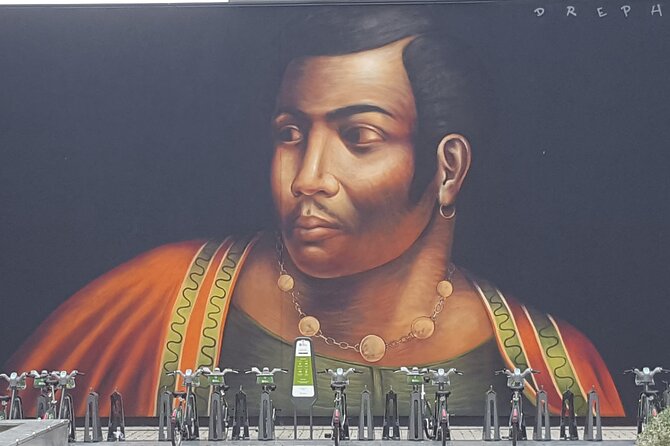
You walk around the outside of the Belgrade Theatre, and artworks around the building help explain the theatre’s story and Coventry’s long connection to plays. The tour also brings in Ira Aldridge, highlighting that 200 years after Othello was written, he became the first Black man to play the leading character.
That’s a powerful cultural detail, and the guide uses it to show how Coventry’s arts history connects to wider world stories. You also hear about three prominent women of the arts in Coventry’s history, though the specific names are not spelled out in the information you’re given, so treat it as part of what the guide fills in on the day.
This stop is about 10 minutes and free, and it’s a good one to do near mid-walk because it changes the pace visually.
Bond’s Hospital and Ford’s Hospital: living institutions built for centuries of use
Two hospital stops keep the tone practical, because these are places still connected to services, not just relics.
At Bond’s Hospital, you get a quick look at a building built in 1505 by Thomas Bond. The tour emphasizes that it’s still used for the same purpose today, more than 500 years later. That kind of continuity is rare, and it helps you see why history matters: the past still shapes everyday life.
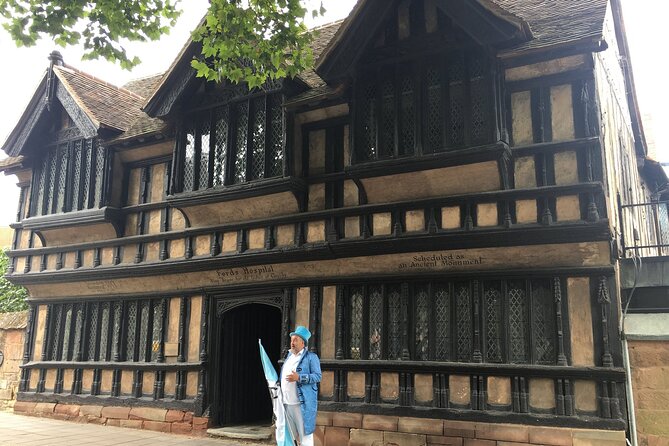
Then later you reach Ford’s Hospital, and the guide points out praise from a 1902 travel writer, who called Ford’s Hospital exceptionally exquisite. Even without the exact wording in your own memory, the stop gives you a clear sense of the building’s reputation and why it attracted attention long ago.
These stops are both about 5 minutes and free. Note that Bond’s Hospital is marked as admission not included, so again, expect outside viewing unless the guide indicates otherwise.
St John the Baptist and the phrase Sent to Coventry
One of the most distinctive parts of the walk is the stop outside the Parish Church of St John the Baptist.
The guide explains the claim that this church is the original behind the phrase Sent to Coventry. You might know the expression already, but this kind of connection is what makes walking tours feel more grounded. You’re not just learning where the phrase came from. You’re standing in the place the story points to.
This stop is about 5 minutes and admission is not included, so plan on looking from the outside and letting the guide’s explanation do most of the work.
Historic Spon Street: craft industries, watchmaking, and the feeling that not everything adds up
Then you hit Historic Spon Street, one of the tour’s longer segments at 20 minutes.
Here the guide talks through industries that shaped Coventry over time, including dying, tanning, watchmaking, and bicycles. Spon Street also gets framed as a major road for centuries, which helps you understand how trade and movement can shape what cities become.
The stop also carries a warning vibe: while not everything is as it may first seem. That’s a clue to pay attention to details, like how buildings look compared with what you’re told about them. It makes the street feel like a puzzle that the rest of the tour is trying to solve.
This one is free and is a good place to slow down, watch your surroundings, and let the guide point out what’s easy to miss.
Coventry Market Shopping Centre, Bull Yard, and Cheylesmore Manor House
You get a quick pop into the Coventry Market Shopping Centre, noted as not on Sundays. It’s only about 5 minutes, but it’s useful if you want a sense of modern Coventry while still staying on the history track.
Then you move to Bull Yard and Shelton Square for another reminder that Coventry’s rebuilding story keeps repeating. You learn about the City of Tomorrow theme again and hear about stories behind eclectic public artworks in the area, plus what the space had been like in earlier times.
Bull Yard is about 10 minutes and free, and it’s a nice change from the dense info stops.
Finally, there’s Cheylesmore Manor House, described as a 700 year old Royal Palace in the heart of the city. Admission is not included, so you’ll likely focus on exterior impressions and the guide’s highlights rather than going inside.
This stop is about 12 minutes and free.
Greyfriars Spire and New Union Street, plus a closing loop back toward Hertford Street
On New Union Street, you hear the story of Greyfriars Spire. It’s a short stop at 5 minutes and free, but it fits the larger theme: surviving structures give you a spine to hold the city’s layers together.
The walk ends back near the starting area after a final short look at a handful of points in Hertford Street, also about 5 minutes. The goal here is to help you reconnect the dots you’ve learned, so the tour doesn’t end with information you forget five minutes later.
Price, pacing, and the value of a 12-person history walk
At $17.05 per person for around 2 hours 45 minutes, this tour is priced for access, not luxury. The biggest value isn’t just that it’s cheap. It’s that you get a guided route that touches dozens of themes without turning into a marathon.
With a maximum of 12 travelers, you’re more likely to get the guide’s attention and quick course corrections if you miss something at a stop. That size also keeps the walk from feeling crowded, which matters on a route with frequent short explainers.
English is the only language listed, and you’ll use a mobile ticket. The walk is described as requiring moderate physical fitness, mostly flat with inclines and ramps, plus a small cobbles area. If you can handle that, you’ll be fine.
Also note that many stops are free to view from the outside, but some locations have admission not included. That’s not a problem, but it does mean you should expect the guide to do most of the storytelling without relying on indoor entry fees.
Should you book this Coventry walking tour?
Book it if you want Coventry that feels specific. This is ideal for first timers who think they know the basics but want the city’s industry, engineering, and culture tied together in a way that makes walking through the streets feel like reading clues.
Skip it if you want a single theme only, like purely medieval sites, purely WWII, or purely museums. This is a jigsaw, so it moves across topics quickly.
If you enjoy short stops with clear explanations, you’ll appreciate the structure. You’ll also like it if you plan to spend extra time after the walk, because you’ll know where to look for meaning when you return on your own.
FAQ
How long is the Jigsaw of History Tour?
It runs for about 2 hours and 45 minutes (approximately).
How far do we walk?
The walk is just over two miles.
Where do we meet, and what time does the tour start?
You meet at Sky Blue City Walks, Broadgate, Coventry CV1 1NE, UK, and the listed start time is 9:50am.
Is the tour mostly flat?
It’s mostly flat with some inclines and ramps, plus one small area of cobbles.
What language is the tour offered in?
The tour is offered in English.
How many people are on the tour?
The tour has a maximum of 12 travelers.
Are any stops admission tickets included?
Most stops are free to view from the tour, but a few are marked as admission ticket not included (such as Old Grammar School, Bond’s Hospital, St John the Baptist, and Cheylesmore Manor House).
Is Coventry Market Shopping Centre open on Sundays?
The market stop is not on Sundays.
Is there free cancellation?
Yes, you can cancel for a full refund for free up to 24 hours in advance of the experience start time.
Recently added around England
- Dartmoor Tour★ 5.0 · 36 reviews
- Godiva’s Cathedral Quarter Walk★ 5.0 · 16 reviews
- North Devon: Indoor Climbing Taster Session★ 5.0 · 21 reviews
- Coasteering Geopark Adventure In Torquay★ 5.0 · 150 reviews
- Haunted Coventry Ghost Walk & Dark History★ 5.0 · 10 reviews
- 90 Minute Coastal Explorer in Torquay★ 5.0 · 76 reviews
- Private tour of the stunning Cotswolds with an expert local guide★ 5.0 · 45 reviews
- 2-Hour Alpaca Farm Experience in Kenilworth★ 4.5 · 14 reviews
Historical Tours, compared.
Shadows of York: Ghost Walk and Horrible History.
Read our review →
A Walk Through Time: History of Liverpool Walking Tour
Read our review →
Royal Historic Pubs Walking Guided Tour in London
Read our review →
Private Group: Historical Pub Walking Tour of London
Read our review →
Best Of Liverpool Heritage, History & Culture Guided Walking Tour
Read our review →Browse the lists this tour appears in