
Reviewed · HISTORICAL TOURS
Letchworth Garden City: Self-Guided History Puzzle Walk
Garden City history, turned into a street game. This Letchworth self-guided history puzzle walk mixes local facts with a treasure-hunt style challenge at the town’s landmark spots, so you’re not just reading plaques. I really like the no-crowd, private setup and the fact you can start when it fits your day, since the game runs on a flexible schedule. One thing to consider: you’ll be looking closely around outdoor buildings and streets for the answers, so it pays to wear sensible shoes and move at an easy pace.
Here’s the basic idea. You’ll follow a route across Old Letchworth’s most story-rich locations, and at each stop you solve a clue to move forward. It feels like a light escape game that still gives you real context for what makes Letchworth special.
If you want an easy win, this is it: about 1 hour 30 minutes of planning-light exploring. If you want to breeze through, you might find the puzzle stops a little “pause and look” compared with a classic sightseeing walk.
In This Review
- Key highlights in plain English
- Why Letchworth Garden City works so well as a puzzle walk
- Price and value: is 5.90 per person actually worth it?
- The practical logistics that make or break a self-guided walk
- Stop 1: Station Place, where Letchworth’s railway story begins
- Stop 2: Broadway Gardens and Walk, Howard’s ideas in layout form
- Stop 3: The History of the College, Canon Triest and the Letchworth connection
- Stop 4: The cinema story from 1936 and the gala opening
- Stop 5: St Mary the Virgin, a late 12th-century anchor
- Stop 6: International Garden Cities Institute, planners’ office to global influence
- Stop 7: St Michael’s Church, dedicated in 1908 and linked to St Mary’s
- What to expect from the puzzle format, and why it works
- Who this is for, and who might want a different plan
- Timing tips: when to start and how long it really takes
- Should you book the Letchworth Garden City puzzle walk?
- FAQ
- How long is the Letchworth Garden City self-guided history puzzle walk?
- Can I start the walk at different times or pause and resume?
- Do I need an internet connection to play?
- Is there a physical tour guide with me?
- Where does the tour start and end?
- What language is the experience offered in?
- Is it possible to get a refund if I cancel?
Key highlights in plain English
- Self-guided escape game feel, with you solving clues to progress
- Offline play, so no internet connection needed
- Flexible start time, and you can take breaks then resume
- Letchworth landmarks with real stories, from early rail to churches and institutions
- Private group, no human contact, designed to help you avoid crowds
Why Letchworth Garden City works so well as a puzzle walk
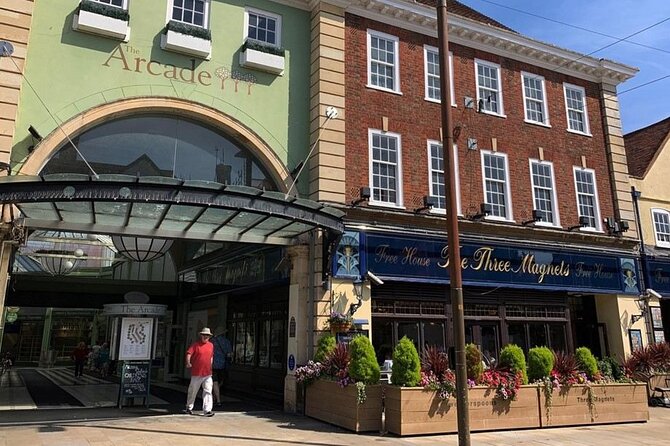
Letchworth is a place where planning, design, and community ideals show up in everyday streets. That’s why a puzzle format fits. Instead of treating the town like a background, the game makes you slow down enough to notice details you’d normally walk past.
You also get a nice blend of styles. One minute you’re decoding a clue tied to a specific spot. The next minute you’re learning how the area formed, who shaped it, and why certain places matter. The result is “active sightseeing,” not passive wandering.
And the best part for me is the pace control. You don’t have to match someone else’s rhythm. You can start early, late, or mid-morning, and you can pause when you want to check something, grab a drink, or simply take a break.
More walking tours in England:
- Oxford University Walking Tour With University Alumni Guide
★ 5.0 · 6,905 reviews - Tour for Muggles The Ultimate Harry Potter Walking Tour in London
★ 5.0 · 4,684 reviews - Cambridge University Walking Tour by Alumni™ Kings College Option
★ 5.0 · 2,336 reviews
Price and value: is 5.90 per person actually worth it?
At about $5.90 per person, this is priced like a fun activity, not a guided tour splurge. The value comes from how that price is used: you’re paying for a self-guided experience that bundles several things into one.
You’re getting:
- an organized walk route (not just a random scavenger hunt),
- a built-in sequence of stops with specific prompts,
- and a game format that keeps kids and adults engaged.
Because it’s private for your group, you’re also paying for time that feels purposeful. If your goal is to learn Letchworth in a way that doesn’t feel like homework, this is a smart match for the price.
The main “cost” is your attention. You’ll spend some time reading clues and searching around. If you want pure speed sightseeing with zero stopping, you might feel the game slows you down. But if you like light challenges, it’s a great trade.
The practical logistics that make or break a self-guided walk
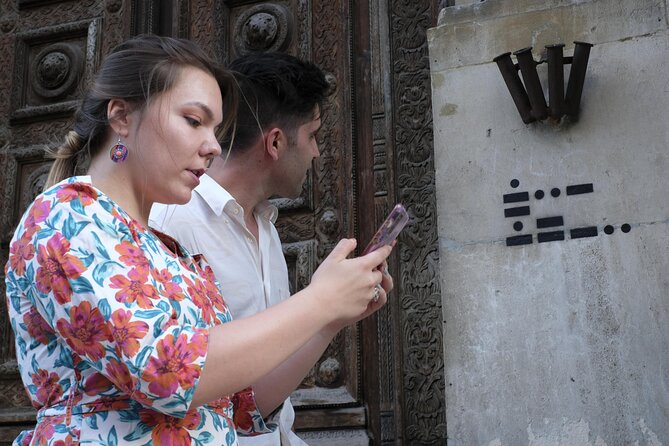
This experience is offered by Questo and is mobile-first. You’ll use a mobile ticket, and you’ll play offline, which is a big relief in towns where signal can be patchy.
The app is also described as easy to use, and in family play it has worked well with multiple adults locked in at the same time. That matters because puzzles can turn into frustration if the interface is hard. Here, the experience is meant to be simple enough that you can keep walking while you solve.
Timing is another win. The start time is flexible, and you can take a break and then resume later. The opening hours listed run from 5:00 AM to 9:00 PM, every day. So if you hate being boxed into a single slot, this format gives you options.
Finally, you’re not “on” with a human guide. It’s private, with only your group participating, and it specifically notes no human contact. That’s a real benefit if you want a calmer experience or you prefer to move at your own pace.
Stop 1: Station Place, where Letchworth’s railway story begins

Your walk starts at Station Place Station Pl, Letchworth Garden City SG6. The first challenge pulls you into the town’s early rail timeline.
Here’s the key timeline the game nudges you toward:
- the station opened in 1903 with a restricted service,
- then gained a full passenger service on 15 April 1905,
- and on 18 May 1913, it was replaced by a new station on another site.
What makes this stop click is that it ties movement and growth together. Rail wasn’t a side detail. In a planned town, transport links help shape who can live there and how fast the place develops.
At this station stop, you’ll look around to find the answer to a challenge before moving on. The “watch your surroundings” style clue is a good way to get your bearings fast, especially if you’re new to Letchworth.
Possible drawback: station areas can be busy at peak times. The good news is the overall tour is designed to help you avoid crowds, and with flexible starts you can choose a calmer moment.
More history tours in England:
- London Small Group Tour of Historical Pubs
★ 5.0 · 10,422 reviews - Soho Music & Historic Pubs Tour
★ 5.0 · 1,993 reviews - Shadows of York: Ghost Walk and Horrible History.
★ 5.0 · 1,403 reviews - Private Historical Walking Tour of York
★ 5.0 · 1,324 reviews
Stop 2: Broadway Gardens and Walk, Howard’s ideas in layout form

Next up is Broadway Gardens and Walk. This is the kind of stop where the puzzle does more than test you. It teaches you how to read a garden.
The context given is strong:
- the gardens and walk were developed after a £1 million grant from the Heritage Lottery Fund,
- and the layout reflects the initial aspirations of Ebenezer Howard, linked to the principals and designs of the world’s first Garden City.
This is a powerful pairing: a game clue at a place built on design thinking. When you search for answers here, you’re also being trained to notice patterns in space. That is the practical side of “architecture and planning history.” It doesn’t stay in books.
What you should expect: you’ll be looking around to find the answer to the challenge, then advancing to the next location. Since gardens are slower to move through, the puzzle structure works naturally here, because you’re already in a place where it makes sense to pause and look.
If you’re traveling with kids, this stop is also a good energy reset. It’s an outdoors moment with room to wander, as long as everyone stays aware of paths and uneven ground.
Stop 3: The History of the College, Canon Triest and the Letchworth connection
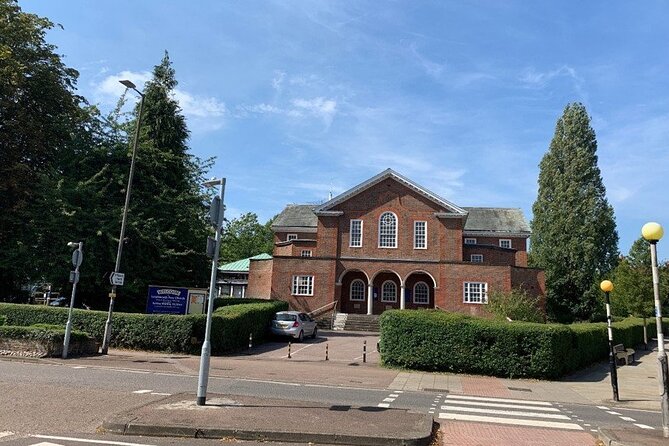
The next scene shifts toward education and religious community. The prompt is centered on a college order with roots outside England.
You’re given these anchor facts:
- the order was founded in 1803 in Belgium by Canon Triest,
- it developed international outposts through missions,
- and in the UK, the sisters were already running schools in Devon and Lancashire when a site in Letchworth Garden City came to attention.
This is where the game becomes more than a walk. It helps you connect a specific institution story to how Letchworth attracted new community services, not just residents.
At this stop, you’ll again look around for the answer to your challenge to move onward. The best way to play this section is to treat it like “slow reading on foot.” Don’t rush. Let the details you find shape the story in your head.
A consideration: if you prefer history that stays strictly local, this stop introduces Belgium and wider missions. That can feel like a detour, but it’s also part of why the town’s institutions developed the way they did.
Stop 4: The cinema story from 1936 and the gala opening
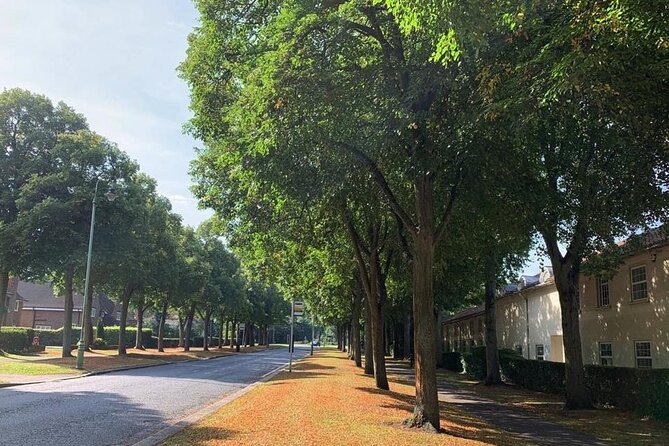
Then you hit the world of popular culture. The cinema stop is anchored to 1936, after the neighboring Palace Cinema, built in 1909, struggled to handle local crowds.
Here’s what the game highlights about the cinema:
- it opened with a black-tie gala screening of Follow the Fleet, starring Fred Astaire and Ginger Rogers.
This is a fun tonal change from rail and churches. It reminds you that planned towns still had modern entertainment life, and crowd demand pushed development.
Again, the puzzle structure asks you to look around and answer a challenge to advance. For me, this stop works because film and performance are easy entry points. Even if you’re not a cinema buff, the names and dates give you something concrete to remember.
Practical note: a cinema stop can be a good rest point too. If the route includes benches nearby, this is where you can take a breather before the next historical institutions.
Stop 5: St Mary the Virgin, a late 12th-century anchor
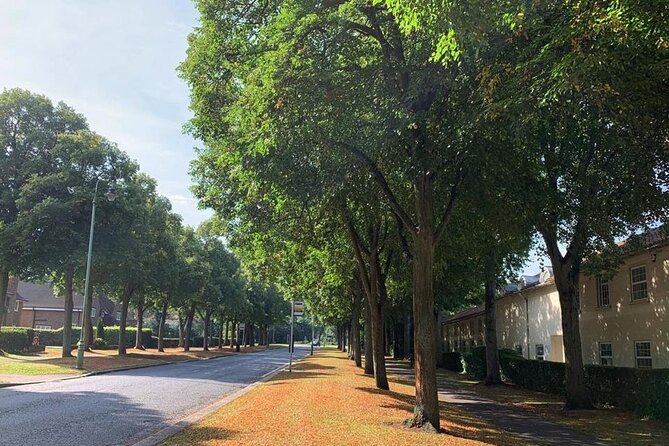
The tour then steps into medieval depth at the Church of St Mary the Virgin. The details here are specific:
- it’s the former Church of England parish church for Old Letchworth,
- the current church was built in the late 12th century,
- and it is Grade II listed,
- it falls under the Diocese of St Albans.
This is a meaningful stop because it gives you long time depth. Garden City ideals are often discussed as something new and planned, but the area’s spiritual roots reach back much further.
Your challenge here is still the same format: you look around to find the answer, then progress to the next location. But because church architecture and listings invite careful observation, the puzzle naturally slows you down in a good way.
One consideration: older stone buildings can have uneven areas around entrances. Keep your eyes on the ground, not just on signs.
Stop 6: International Garden Cities Institute, planners’ office to global influence
On Norton Way South, the route continues to the International Garden Cities Institute, described as a perfect place to begin your education of the Garden City story.
This stop is important because it shifts from “what happened here” to “how this idea spread.” The listed details are also very grounded:
- it was formerly offices for Letchworth’s town-planners and architects, Raymond Unwin and Barry Parker,
- you can trace the origins of Letchworth’s formation,
- see how streets and open-spaces were designed,
- and explore how Letchworth influenced other Garden City developments worldwide.
This is where the game’s puzzle format pays off again. It’s one thing to walk past design choices. It’s another to stand where the thinking happened, and connect what you’re seeing to named people and a planning method.
Expect the familiar “look around for the answer” moment. The best approach is to treat the institute as both a clue checkpoint and a learning pause. Even if you only catch part of what’s displayed, the prompts should pull your attention to the right things.
Stop 7: St Michael’s Church, dedicated in 1908 and linked to St Mary’s
The final stop is St. Michaels Church (spelled that way in the provided details). Here’s what you’re given:
- it was dedicated on 22 February 1908,
- designed by Courtenay Crickmer,
- it started as a mission church to St Mary’s,
- and later developed their permanent site on Town Square between 1966 and 1968,
- with a page added on 18/06/2010.
This stop is a neat closing chapter. You started with early transport. You moved through gardens, education, entertainment, and an ancient parish church. Now you land on a mission church story that connects generations and changing needs.
The puzzle challenge again asks you to look around for the answer to advance. Since this is the last segment, I’d recommend you play slightly slower here, so you end the walk with the story fully in your head.
The walk ends at 296 Norton Way S, Letchworth Garden City SG6 1SU.
What to expect from the puzzle format, and why it works
The tour is described as a combination of:
- a tour,
- a treasure hunt,
- and an escape game.
That combo matters because it gives the experience structure without turning it into a rigid guided tour. You’re not just walking from A to B. You’re doing something at each stop, solving a small problem that connects the place to a fact.
It also helps keep group energy from drifting. One clue leads to the next. That is especially useful if you’re with mixed interests, like history lovers plus kids who get bored with straight museum time.
One recurring theme from the experience feedback is how well the game keeps people engaged. The app is described as easy to use, and in one family-friendly play, four adults stayed engrossed. Another highlight is the fun of spotting black squirrels along the way. That part isn’t guaranteed, but it’s a good reminder to slow down near greenery and not treat the walk like a race.
Also, you get hints if you get stuck. That reduces the chance of frustration killing the mood.
Who this is for, and who might want a different plan
This works best for:
- families who want something active that still teaches,
- couples who like exploring with a bit of game structure,
- solo walkers who enjoy solving clues and learning on foot,
- and anyone who wants to see Letchworth while avoiding a crowd-heavy guided group.
It might not be ideal if you want:
- a sit-down, interpretive museum style tour with lots of detailed reading,
- or a purely narrated experience with no app and no searching.
Because the format asks you to look around for answers, you’ll get more out of it if you enjoy that kind of observation.
Timing tips: when to start and how long it really takes
The experience is listed as about 1 hour 30 minutes. In real life, your time will depend on how often you pause, how quickly you solve clues, and how long you linger at a stop.
Since the start time is flexible and the hours run from 5:00 AM to 9:00 PM, I like the idea of choosing a time with softer light. Early or later in the day can make outdoor looking easier on the eyes, especially if clues depend on reading small details.
If you’re traveling with kids, build in extra buffer. Puzzles take longer when everyone wants to help.
Should you book the Letchworth Garden City puzzle walk?
If your goal is to learn Letchworth while keeping your feet moving, this is an easy yes. For the price, you get a structured route across meaningful sites, offline mobile play, and a private format that helps you avoid the crowd pressure.
Book it if:
- you like self-paced exploring,
- you want a game element without needing special skills,
- and you’d rather spend time noticing details than speed-reading history.
Skip it if you hate searching for answers around outdoor sites, or if you want a classic guided narration with no app involvement.
FAQ
How long is the Letchworth Garden City self-guided history puzzle walk?
It’s listed at about 1 hour 30 minutes.
Can I start the walk at different times or pause and resume?
Yes. You can start at any hour, take a break, and resume later.
Do I need an internet connection to play?
No. You can play offline, so you do not need internet to play the city game.
Is there a physical tour guide with me?
No. The tour is self-guided, and a physical tour guide is not included.
Where does the tour start and end?
It starts at Station Place Station Pl, Letchworth Garden City SG6, UK and ends at 296 Norton Way S, Letchworth Garden City SG6 1SU, UK.
What language is the experience offered in?
The experience is offered in English.
Is it possible to get a refund if I cancel?
Free cancellation is available. You can cancel up to 24 hours in advance for a full refund, and if you cancel less than 24 hours before the start time, the amount paid is not refunded.
More Self-Guided Tours in England
- Western Approaches Self Guided Tour
★ 5.0 · 505 reviews - Golden Tours York Hop-on Hop-off Open Top Bus Tour with Audio Guide
★ 4.5 · 468 reviews - Windsor Castle Tour from London with Transportation & Audio Guide
★ 3.5 · 222 reviews - London Panoramic Open Top Bus Tour with Audio Guide
★ 4.0 · 209 reviews
Recently added around England
- Great British Classic Car Driving Experience★ 5.0 · 96 reviews
- Private Miniature Horse Walking near Lincoln★ 5.0 · 44 reviews
- Stamford Town Guided Tours★ 5.0 · 125 reviews
- Fox Encounter for 2 people and park entry★ 5.0 · 71 reviews
- VIP Chauffeur Transfer: Dover Cruise Port to/from Gatwick Airport★ 5.0 · 3 reviews
- DropWorks Rum Tour – Largest Premium Rum Distillery in Europe!★ 5.0 · 77 reviews
- Abseil Experience – Millersdale Derbyshire Peak District★ 5.0 · 24 reviews
- Full Day Wine Tour in Sussex and Kent★ 5.0 · 10 reviews
Historical Tours, compared.


Shadows of York: Ghost Walk and Horrible History.
Read our review →
A Walk Through Time: History of Liverpool Walking Tour
Read our review →
Royal Historic Pubs Walking Guided Tour in London
Read our review →
Private Group: Historical Pub Walking Tour of London
Read our review →
Best Of Liverpool Heritage, History & Culture Guided Walking Tour
Read our review →Browse the lists this tour appears in