
Reviewed · WALKING TOURS
Liverpool Slavery Walking Tour – Commercial Side
A slave trade tour can sound heavy, but Liverpool’s story here is also very human and very practical. This 2-hour walk focuses on the commercial side of enslavement, showing how money, shipping, and trading were stitched into everyday city life.
What I like most is the way you move from landmark to landmark without feeling lost. You also get a strong mix of places where people worshipped, traded, and financed the business, not just the docks. A possible drawback is that it is centered on historical industry, so if you want mostly museums or modern exhibits, this will feel more street-and-building focused.
In This Review
- Key Highlights You’ll Remember from This Walk
- Why This Liverpool Slavery Tour Zooms in on Liverpool’s Trade and Finance
- Price and Timing, and Why $38.19 Can Feel Like a Deal
- Where You Start and End, and How the Route Shapes the Story
- Our Lady and Saint Nicholas Church and Garden: A Place Where Traders Were Buried
- Hargreaves Building to the Cotton Exchange: Money Brokers, Cotton, and the Wealth Machine
- Tithebarn Street and the Confederate Embassy: Liverpool’s Role in the American Civil War
- Exchange Flags and the Nelson Monument: Where Trading and Selling Happened
- Sir Alfred Lewis Jones: Wealth, Shipping Monopoly, and Funding Tropical Medicine
- Liverpool Water Street and Dale Street: Banking Buildings and Narrow Lanes
- Castle Street and Queen Victoria Monument: The First Branch of the Bank of England and a Replaced Castle Site
- From Graving Dock to Salthouse Dock: Seeing the Port Infrastructure Built for a Cruel Loop
- Thomas Steers Way and James Street: The Old Dock Site and a Modern Sculpture Reference
- The Guides and the Small-Group Feel You Should Expect
- Who Should Book This Tour (and Who Might Want a Different One)
- Should You Book the Liverpool Slavery Walking Tour?
- FAQ
- FAQ
- How long is the Liverpool Slavery Walking Tour – Commercial Side?
- What is the price per person?
- Where does the tour start?
- Where does the tour end?
- Is the tour offered in English?
- How large is the group?
- Is a mobile ticket used?
- Are there admission tickets included for the stops?
- Can I visit the International Slavery Museum after the tour?
- Is the tour weather dependent?
- Are service animals allowed?
Key Highlights You’ll Remember from This Walk
- Commercial networks, not just ships: You’ll connect banking, cotton trade, and shipping finance to the wider system.
- Multiple ticketed stops included: Several key sites come with admissions, while others are free, so value adds up.
- A tight route with big city scale: You’re walking central Liverpool landmarks in about 2 hours.
- American Civil War connections appear on the route: You’ll learn how Liverpool links to Confederate supply networks.
- You get to see the port infrastructure itself: Graving Docks, Salthouse Dock, and older dock sites are part of the story.
Why This Liverpool Slavery Tour Zooms in on Liverpool’s Trade and Finance
Liverpool built wealth on movement. Ships moved goods. Banks moved money. Merchants moved deals. And people were part of that machinery, too. What makes this tour worth your time is that it explains slavery as a system with offices, churches, brokers, and buildings, not only as a distant tragedy.
You’ll also find the tone stays grounded. It isn’t just names and dates. The walk ties choices and incentives to real places you can stand in, so you can picture how business happened day by day. I like that because it helps you understand how something so brutal could be supported by people who still lived ordinary lives.
More Walking Tours in Liverpool
- A Walk Through Time: History of Liverpool Walking Tour
★ 5.0 · 911 reviews - Liverpool Ghost Walking Tour
★ 5.0 · 862 reviews - Beatles Famous Walking Tour Of Liverpool- Fully Guided
★ 5.0 · 751 reviews
Price and Timing, and Why $38.19 Can Feel Like a Deal
At $38.19 per person for about 2 hours, this is one of the more efficient ways to cover a lot of ground on foot in central Liverpool. The real value is how admissions are handled. Some stops include tickets, some are free, and the route keeps you moving between high-impact sites.
For example, you’ll have ticketed access at several points like Our Lady and Saint Nicholas Church and Garden, the Tithebarn Street stop, Exchange Flags, the Memorial to Sir Alfred Lewis Jones, Graving Dock, Salthouse Dock, and Dale Street. Other stops are free to visit, like parts of the banking and exchange story on the way. That mix usually means you are not paying just for narration, you are paying to actually enter or access certain historic areas.
If your schedule is tight, plan on a steady pace. Each stop is roughly around 5 to 10 minutes, which keeps things brisk and helps you cover the “commercial chain” instead of spending the whole day at one site.
Where You Start and End, and How the Route Shapes the Story
The tour begins at Liver Building, Pier Head, Liverpool L3 1HU, and ends at 2 Custom House Place, Liverpool L1 8LZ, at the site of the old dock on Thomas Steers Way inside the L shopping centre.
Starting by the Pier Head makes sense. You’re already in the port zone, and you can almost feel the commercial energy in the streets. The ending near Thomas Steers Way brings you back to the infrastructure side of the story, which is the key to why this tour works. You don’t just hear about money and trade, you finish near the dock built to enable transatlantic business.
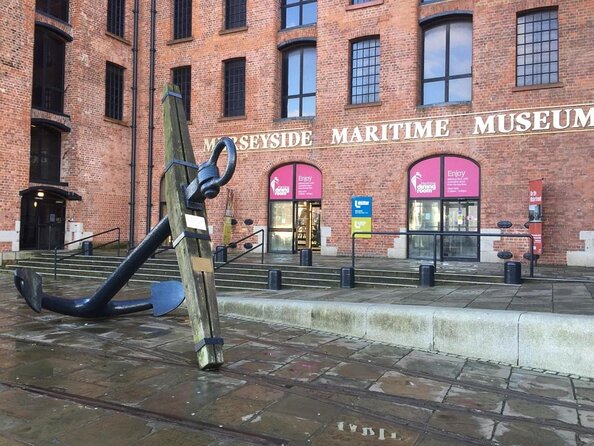
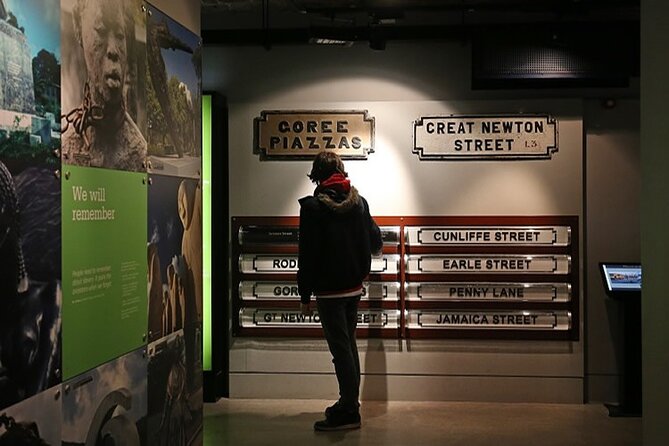
The route also passes by the Merseyside Maritime Museum, where the International Slavery Museum is free to visit. If you have energy after the walk, you can use that as a follow-up stop and round out what you just learned outdoors.
Our Lady and Saint Nicholas Church and Garden: A Place Where Traders Were Buried
Stop one takes you to Our Lady and Saint Nicholas Church and Garden. This isn’t a generic church stop. The point is that many slave traders worshipped here and were buried in the church yard.
I appreciate this because it changes how you think about distance. When people who profited from enslavement also participated in religious life, that tells you something about how normal the system felt to them. It is also a reminder that the slave trade did not run on the edges of society, it ran through parts of society people expected to be moral and stable.
You get about 10 minutes here, and the tour includes admission. That short time frame is actually helpful, because it keeps you from turning the walk into a slow museum day. You’re meant to carry the idea forward as you move to banking and trade sites.
Same part of England, a different sort of day out:
- Beatles Magical Mystery Tour
★ 5.0 · 9,266 reviews - Liverpool: “Blue Route” – City & Beatles Tour
★ 5.0 · 8,562 reviews - Liverpool City Sights Hop On Hop Off City Tour – 24hr Ticket
★ 4.5 · 2,555 reviews - The LFC Stadium Tour
★ 5.0 · 1,548 reviews
Hargreaves Building to the Cotton Exchange: Money Brokers, Cotton, and the Wealth Machine
Next is the Hargreaves Building, where you learn about the cotton broker and banker William Brown. He founded the Bank of Liverpool and Brown and Shipley Merchant Bankers. Even if you have never studied Liverpool finance, this stop gives you a clear line between who handled cotton and who funded the city.
Then the tour moves to the Cotton Exchange Building, where the theme turns to Liverpool as a world leader in cotton trading. You’ll hear about the Liverpool Rules, and how cotton trading built wealth for merchants and the city.
This is one of the places where I think you’ll get the most “click” in your understanding. Cotton wasn’t just a crop. It was tied to enslaved labor systems in the Americas, which meant trading houses and financiers in Liverpool were pulled into a supply chain of human exploitation. Seeing how that system was organized through brokers and trading institutions makes the story feel less abstract.
Stops here are brief, and some are free admission stops. That keeps your time focused on the big idea: commercial structure leads to commercial power.
Tithebarn Street and the Confederate Embassy: Liverpool’s Role in the American Civil War
At Tithebarn Street, you visit Rumford Place and hear about the Confederate Embassy during the American Civil War. The tour connects this to Bulloch’s network of spies in Liverpool, plus how Confederate armies were supplied with weapons and ships.
This stop is valuable because it widens the frame. It shows Liverpool was not only tied to the earlier transatlantic slave trade, but was also part of later networks connected to the conflict over slavery and its aftermath.
The stop includes admission ticket, and it’s only around 10 minutes, so you’ll want to listen actively. If you start zoning out here, you’ll miss the connective tissue between local business and international consequences.
Exchange Flags and the Nelson Monument: Where Trading and Selling Happened

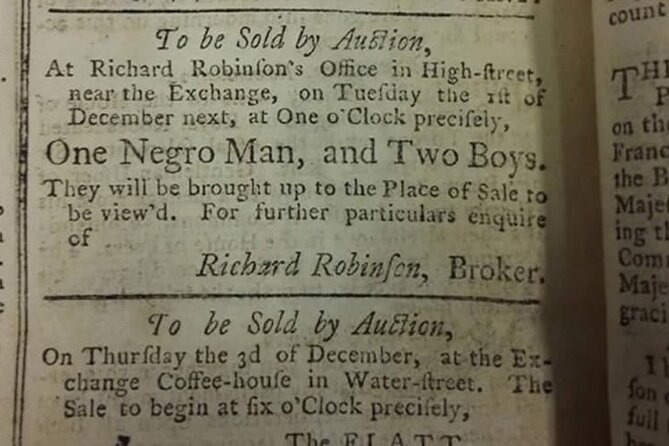
Then you reach Exchange Flags, described as the original Exchange area where traders carried out business and where slaves were sold. You’ll also see the Nelson Monument and learn what it means historically.
This is a difficult stop, but also an important one, because it puts the “business end” of slavery on the same streets as civic pride monuments. That contrast is part of what you came for: the way wealth and public life can exist beside atrocities.
The included admission ticket here helps you access the setting rather than just reading about it from outside. Aim for quiet focus. Even with short stop times, this place tends to stick with people.
Sir Alfred Lewis Jones: Wealth, Shipping Monopoly, and Funding Tropical Medicine
At the Memorial to Sir Alfred Lewis Jones, the tour turns from trade into shipping and philanthropy. You learn how Jones obtained vast wealth and a monopoly of the Elder Dempster Shipping Line, then how he funded setting up the School of Tropical Medicine.
This stop is balanced in a tough way. It does not pretend that philanthropy erases harm. It asks you to sit with the fact that money from exploitation can later be used for public good.
I find that makes the tour more honest, because it pushes you to think critically rather than simply collecting guilt as a slogan.
This stop is ticketed and lasts about 10 minutes. If you like history that holds more than one truth, you’ll likely enjoy it here.
Liverpool Water Street and Dale Street: Banking Buildings and Narrow Lanes
On Liverpool Water Street, you focus on the business and banking district from the 18th and 19th centuries. The tour points out how bankers got wealthy via American trade and then built richly designed banking houses. You’ll see the Martins Bank Building and the old Bank of Liverpool Building. (Admission is noted as not included for this stop.)
After that you head to Dale Street, where the tour helps you see old Liverpool streets that escaped Victorian widening. You also visit a public house that existed in 1726, which was likely visited by early slave traders. The stop lasts around 10 minutes and includes admission.
There’s a real practical value to these street-level segments. They help you understand that the story is not only behind glass. It is in alleyways, building facades, and the way the city grew around docks and financiers. And Dale Street is also a place where you might want to linger. If you feel like ending on a more human note, grab a drink in that historic pub setting.
My suggestion: wear comfortable shoes here. Even with frequent stops, your legs do the work.
Castle Street and Queen Victoria Monument: The First Branch of the Bank of England and a Replaced Castle Site
At Castle Street, you’ll learn how buildings there connected merchants and slavery. You also see the building that housed the first branch of the Bank of England outside London. This is another reminder that the slave trade was financially integrated, not a shadow economy.
Then the tour goes to Queen Victoria Monument, near the place where Liverpool Castle once stood before being demolished in 1726. A church, St George’s Church, was built on the site, and it served as the place of worship for Liverpool mayors and town councillors.
This stop is mostly about layering. You’re looking at how institutions shifted, what replaced what, and how power expressed itself through both banking and local governance.
From Graving Dock to Salthouse Dock: Seeing the Port Infrastructure Built for a Cruel Loop
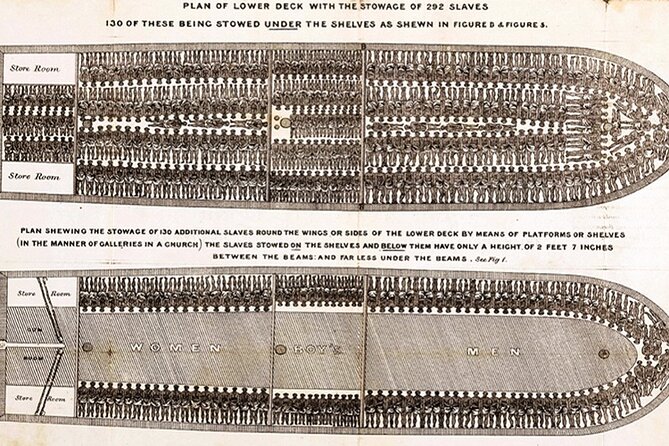
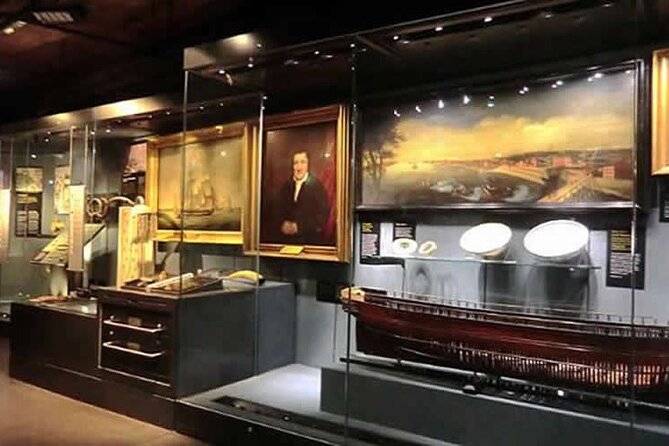
Now the tour gets physical. After a slave ship completed the grim journey from Liverpool to Africa, then to America, and back to Liverpool, ships arrived in poor condition and needed refitting. That’s what Graving Docks were for, and the tour highlights that original graving docks from the mid-1700s remain in Liverpool.
You visit Graving Dock and spend about 5 minutes here, with admission included. This is a short stop, but it’s one of the most sobering because it ties logistics to suffering. Ships didn’t just leave and disappear. They returned, were repaired, and were ready for the next cycle of business.
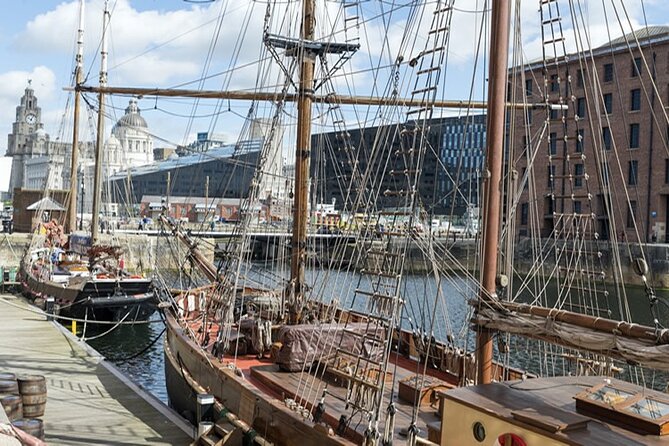
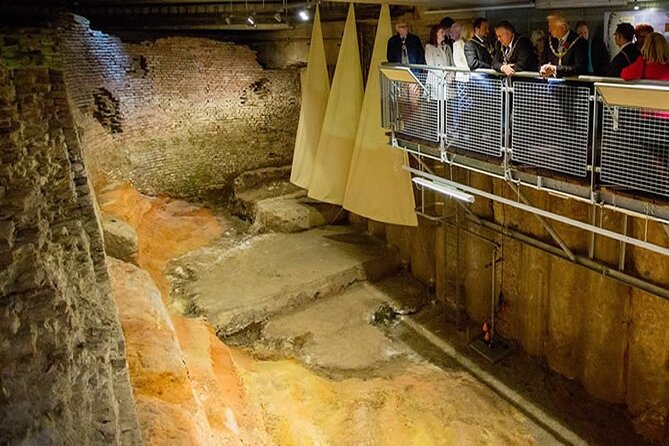
Then comes Salthouse Dock, where you see Salthouse and Canning Docks built quickly to handle rapidly increasing trade with America. The tour notes that some parts used massive stones from Liverpool Castle. You’ll also be walking on cobbles and stones that slave traders and merchants stepped on when attending to their cargo.
This is one of those times when you’ll feel the city under your feet, literally. The tour keeps it moving, so you get the main idea without getting overwhelmed.
Thomas Steers Way and James Street: The Old Dock Site and a Modern Sculpture Reference
At Thomas Steers Way, the tour shows where Liverpool’s old dock was built by Thomas Steers in 1715. The dock enabled Liverpool to exploit its geographic position and develop African and transatlantic trade.
There’s an observation window set in the ground where you might see part of the old dock. The tour also says that by prior arrangement, you may be able to get a guided tour of the actual dock. Admission here is free, and the stop is around 5 minutes.
Then at James Street, you walk through back streets of Victorian Liverpool, see old banking-house architecture, and visit a modern sculpture that evokes the slave house on Goree Island. Admission is free and the stop is about 10 minutes.
This final stretch is a nice way to close the loop. You finish back in the commercial and physical space, but you also get a visual bridge into how modern art tries to point at what the city once tried to forget.
The Guides and the Small-Group Feel You Should Expect
This tour is offered in English and has a maximum of 12 travelers, which matters. A smaller group usually means you can ask questions without waiting for a microphone shuffle.
From previous experiences with guides such as Edward and Tommy Allen, you can expect clear storytelling and a willingness to answer questions. I also like that the narration doesn’t only stay on slavery. You’ll often hear related context and city-life details, including historic links to Liverpool culture. That helps the walk feel connected to the city you’re actually standing in.
If you’re the type who wants the story to connect to real streets, buildings, and civic details, this tour’s format supports that.
Who Should Book This Tour (and Who Might Want a Different One)
Book this if you want to understand how slavery was supported by business systems in a major port city. You’ll get strong value if you like walking and learning city geography, since you cover church sites, exchange spaces, dock infrastructure, and banking streets in one outing.
Choose a different option if you want a heavier focus on indoor museum-style interpretation, or if you need a slower pace and longer time at a single exhibit.
I think it’s also a good fit if you’re a first-time visitor who wants to see more than just famous landmarks. This is Liverpool, but it is Liverpool seen through the lens of finance, trade, and shipping.
Should You Book the Liverpool Slavery Walking Tour?
If your goal is to make sense of how slavery fit into Liverpool’s commercial machinery, I’d say yes. The route is tight, the mix of ticketed and free stops makes the price feel reasonable, and the dock infrastructure stops are the kind of concrete details you can’t get from a quick photo tour.
Two quick decision checks:
- If you’re okay with a serious topic presented through historic buildings and streets, this is a strong choice.
- If you want only museum exhibits or mostly modern interpretive displays, you might find the outdoor, architecture-driven style less satisfying.
FAQ
FAQ
How long is the Liverpool Slavery Walking Tour – Commercial Side?
It runs for about 2 hours.
What is the price per person?
The price is $38.19 per person.
Where does the tour start?
It starts at the Liver Building, Pier Head, Liverpool L3 1HU, UK.
Where does the tour end?
It ends at 2 Custom House Pl, Liverpool L1 8LZ, at the site of Liverpool’s Old Dock on Thomas Steers Way in the L shopping centre.
Is the tour offered in English?
Yes, the tour is offered in English.
How large is the group?
The tour has a maximum of 12 travelers.
Is a mobile ticket used?
Yes, it includes a mobile ticket.
Are there admission tickets included for the stops?
Some stops include admission tickets, while other stops are free, and at least two stops are listed as admission not included.
Can I visit the International Slavery Museum after the tour?
The tour passes by the Merseyside Maritime Museum, which houses the International Slavery Museum. It notes that you can visit it free of charge at the end of your tour.
Is the tour weather dependent?
Yes, it requires good weather. If canceled due to poor weather, you’ll be offered a different date or a full refund.
Are service animals allowed?
Yes, service animals are allowed.
Recently added around Liverpool
- Half Day Welcome to Liverpool Walking Tour★ 5.0 · 17 reviews
- Ultimate Ticket To Ride Beatles Half-Day Shore Excursion- Private★ 5.0 · 6 reviews
- The Story of Liverpool 2-Hour Walking Tour★ 5.0 · 3 reviews
- The Music and Art of Sefton Park★ 5.0 · 17 reviews
- Beatles Ticket To Ride Half Day Tour Small Groups★ 5.0 · 60 reviews
- Original 3-Hour Beatles Tour★ 5.0 · 3 reviews
- Liverpool Wine Tour Experience★ 5.0 · 5 reviews
- The Liverpool Pass®: All top attractions inc. Hop-On Hop-Off Bus Tour | 2-Days★ 4.5 · 11 reviews
Walking Tours, compared.
Oxford University Walking Tour With University Alumni Guide
Read our review →
Tour for Muggles The Ultimate Harry Potter Walking Tour in London
Read our review →
Cambridge University Walking Tour by Alumni™ Kings College Option
Read our review →
Blackbeard to Banksy – The Ultimate Walking Tour of Bristol
Read our review →
Air Raid Shelter + St. Nicholas Market Walking Tour
Read our review →
Walking Tour of Bath with Blue Badge Tourist Guide
Read our review →
Changing of the Guard Guided Walking Tour in London
Read our review →
Shadows of York: Ghost Walk and Horrible History.
Read our review →Browse the lists this tour appears in