
Reviewed · HISTORICAL TOURS
History of Medicine Tour – by Uncomfortable Oxford™
Oxford has a darker medical side. This 1 hour 45 minute walking tour connects Oxford landmarks to the way disease, science, and public health shaped the city. You follow a tight route that turns famous buildings into clues, from medieval outbreaks to modern medicine.
I especially love the way the guide keeps it human and question-driven, with certified Uncomfortable Oxford™ guidance that invites you to talk, not just listen. Devika came through in the reviews as the kind of guide who shares sources and prompts thought, and that energy is exactly what makes this topic land.
One possible drawback: you are on your feet most of the time, with short stops that pack in big themes. If you prefer long museum time or quiet, self-paced reading, you might want to pair this with more downtime afterward.
In This Review
- Key highlights you should know
- From Bridge of Sighs to St Luke’s Chapel, a medical timeline you can walk
- Bridge of Sighs: start with medieval geography and disease
- New College outside: plague and historical epidemics in context
- Bodleian Library: anatomy, dissections, and the early study of medicine
- Clarendon Building: prostitution, public health, and power
- King’s Arms, Oxford: how pubs fit into inoculation history
- Oxford University Museum of Natural History: 18th-century science through imperialism
- War Memorial Garden at St Giles: world wars and changes in practice
- St Luke’s Chapel finale: penicillin trials and the NHS connection
- Price and value: why $95.98 can make sense for this format
- Who should book this tour, and who should pair it with something else
- What to bring for a smooth, no-stress experience
- Should you book the History of Medicine Tour in Oxford?
- FAQ
- How long is the History of Medicine Tour?
- How much does the tour cost?
- Where does the tour start and end?
- How many people are in a group?
- Is the tour offered in English?
- Do I need to pay admission fees at the stops?
- Is free cancellation available?
Key highlights you should know
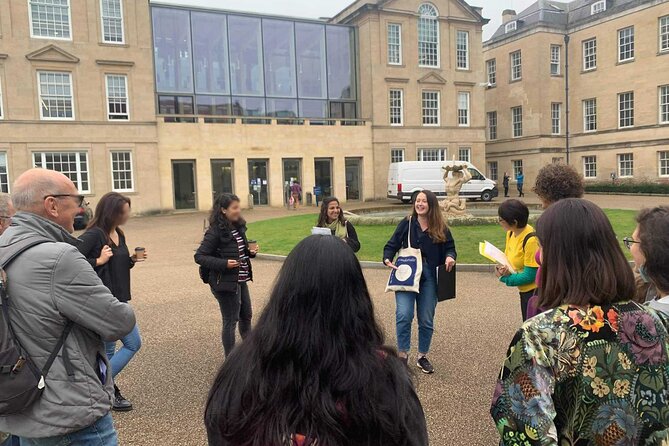
- Small group feel (up to 15 people): enough space to ask questions without the tour turning into a lecture hall.
- Free entry at the featured stops: each site on the route is listed with admission ticket free time.
- Big themes, grounded in specific places: plague, anatomy and dissections, public health, inoculation, penicillin, and the NHS.
- A guide-led pace with discussion built in: the best part is the back-and-forth your guide encourages.
- A route from medieval Oxford to modern medicine: you can see the timeline without needing a textbook.
From Bridge of Sighs to St Luke’s Chapel, a medical timeline you can walk
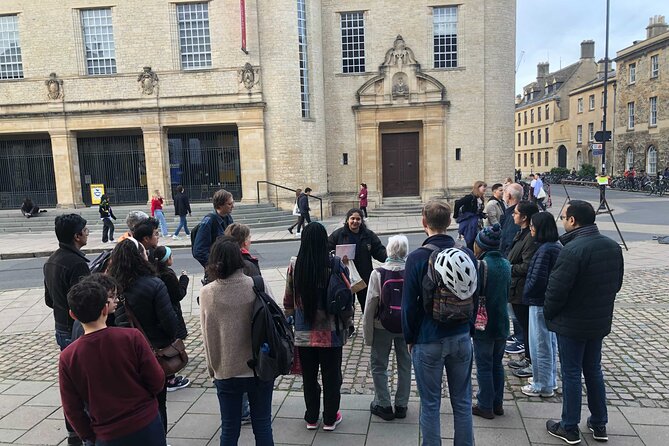
This is a focused, history of medicine route through Oxford. You start by the Bridge of Sighs at the New College area, then you move through university and city sites that the guide uses to explain how people studied disease and treated illness over centuries.
What makes it valuable is the structure. Each stop targets one theme and one place, and the guide uses that pairing to connect ideas that can otherwise feel abstract. You also get the practical win of a small group size of up to 15 people, which makes it easier to hear your guide and actually participate.
The tour is listed at about 1 hour 45 minutes, with most stops around 10 to 15 minutes. That means you get a lot of Oxford in a short time, but it also means you should come ready to keep moving and absorb information quickly.
More History Tours in Oxford
- Oxford: 90 minute Architectural & Historical Highlights Tour
★ 5.0 · 23 reviews - Natural History Museum Tour – by Uncomfortable Oxford™
★ 4.5 · 17 reviews - Oxford Pub Tour: Historic Pubs and Local Brews
★ 5.0 · 10 reviews
Bridge of Sighs: start with medieval geography and disease
You kick off under the Bridge of Sighs, and the tour begins by setting the stage with medieval geography and how it shaped disease in the city. It is a clever first move because it makes Oxford’s layout feel like part of the medical story, not just postcard scenery.
Expect the guide to help you look at the city differently. Instead of thinking only about where buildings are, you start thinking about how people moved, clustered, and lived. That shift matters for the rest of the tour because the guide keeps returning to the idea that health is tied to the built environment.
Time is tight here, about 10 minutes, so treat this as your orientation moment. Ask yourself: where would sickness spread if you lived in this kind of medieval city?
New College outside: plague and historical epidemics in context
Next you stop outside medieval New College for a discussion of plague and historical epidemics. This is where the tour moves from setting to substance, but it still stays tied to place.
Plague can feel like a single event in popular imagination. Here, you are guided to see epidemics as recurring threats that shaped behavior, planning, and how people talked about the body. The value is how the guide frames plague as something that changed society, not just science.
This stop is also about 10 minutes. It is enough time to get the main ideas and get a few questions flowing, but not enough for deep note-taking. If you like to write fast, bring a pen and jot down keywords, like what the guide says about transmission, prevention, or public response.
Bodleian Library: anatomy, dissections, and the early study of medicine

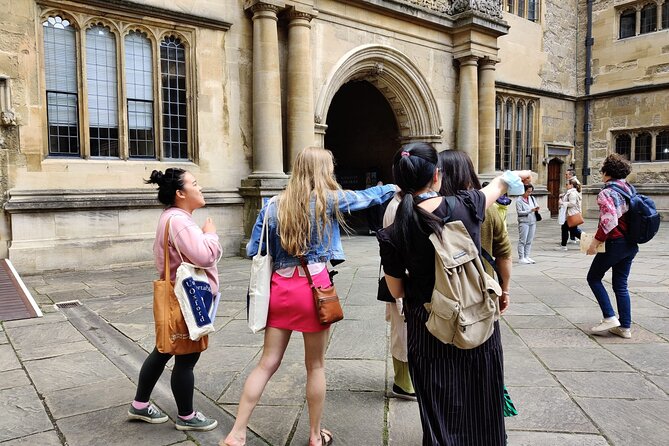
Then you enter the heart of the old library world at the Bodleian. This stop focuses on anatomical dissections and early study of medicine in the University, with about 15 minutes on site.
For me, this is one of the most interesting parts because it shows medicine as a learning process, tied to books, institutions, and training. The guide helps you connect academic study with the physical reality of the human body, which is exactly the kind of contrast that makes this tour more than a list of grim facts.
Practical note: being in a major historic interior means you should be mindful of space and keeping your voice down. You also should expect a lot of concepts delivered quickly. If you are someone who likes to slow down in quiet buildings, you might feel the time constraint here, but the payoff is how the tour ties the library to the bigger medicine story.
Same part of England, a different sort of day out:
- Oxford University Walking Tour With University Alumni Guide
★ 5.0 · 6,905 reviews - Oxford Castle and Prison Guided Tour
★ 5.0 · 1,402 reviews - 1.5-hour Oxford City and University Walking Tour
★ 4.5 · 1,383 reviews - Oxford Official University & City Tour
★ 5.0 · 1,134 reviews
Clarendon Building: prostitution, public health, and power
Next up is the Clarendon Building, the current office of the Vice Chancellor. The tour uses this setting to talk about the history of prostitution and public health, in about 10 minutes.
This stop can be uncomfortable in the best way, because it forces the conversation toward public health as social policy, not only lab work. The guide uses the university setting to show how institutions respond to health concerns in the wider city, including issues tied to morality, regulation, and risk.
If that topic is not your thing, you still might appreciate the tour’s honesty. It helps explain why public health has always been political, not just medical.
Since the time is short, focus on what the guide says about the connection between social behavior and health thinking. That theme echoes later when the tour talks about inoculation and how communities organized prevention.
King’s Arms, Oxford: how pubs fit into inoculation history
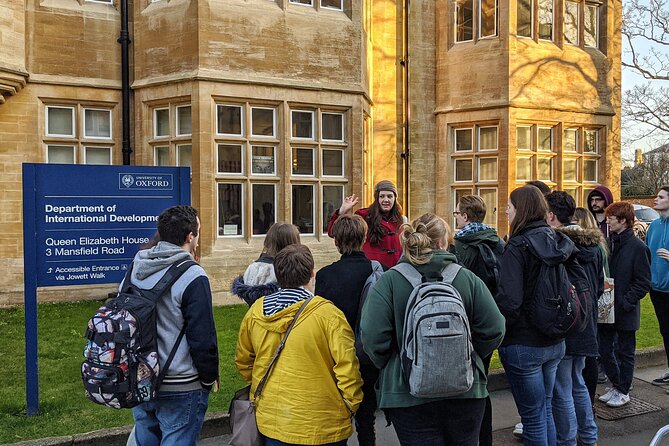
At King’s Arms, Oxford, the guide shares a surprising angle: pubs served as the original place for inoculation in the city. This stop runs about 15 minutes.
Even if you have never thought about the link between food and medicine, this is the kind of detail that makes the tour stick. It reframes inoculation from a purely clinical event into a community practice, tied to everyday spaces.
This is also a good stop to lean into the discussion side. If your brain likes connections, you might find yourself thinking about who had access to care, where people gathered, and how prevention got offered in daily life rather than in separate medical buildings.
Oxford University Museum of Natural History: 18th-century science through imperialism
Outside the Oxford University Museum of Natural History, you learn about how science and medicine transformed in the 18th century through imperialism, with about 15 minutes here.
This is where the tour widens its lens. Medicine and science do not evolve in a vacuum, and this stop points you toward the way wider power and global reach can shape what gets studied, what gets collected, and what gets funded. The guide uses the museum exterior as a jumping-off point for that idea.
You might not be going inside the museum during this particular segment. The time is designed for discussion and connections, not a full self-guided visit. Still, if you have ever walked past university museums and wondered what they mean beyond artifacts, this stop gives you a framework to interpret what you see.
War Memorial Garden at St Giles: world wars and changes in practice
At the St. Giles’ Memorial Garden, you reflect on major developments in medical practice that stemmed from the First and Second World Wars, with about 15 minutes allotted.
This stop adds a modern shock of realism. World wars drove medical change under intense pressure, and the guide uses the memorial setting to help you think about medicine as an urgent, evolving response to mass harm.
If you tend to focus on breakthroughs like penicillin, this is a helpful counterbalance. It reminds you that medical practice changes through systems, training, and real-world need. The memorial setting also keeps the conversation from becoming purely technical.
Because it is a short stop, it is more about perspective than detail. If you want to extend this topic, you can follow up after the tour by reading about the specific medical changes your guide highlighted.
St Luke’s Chapel finale: penicillin trials and the NHS connection
The tour finishes outside the former city hospital at St Luke’s Chapel. The theme here is early trials of penicillin in the city and the founding of the NHS, about 15 minutes.
This ending is satisfying because it brings the story to medicine you recognize. Penicillin is a major turning point in antibiotic history, and the NHS connects Oxford’s medical story to a modern public health system you can still feel today.
You also get a sense of closure because you started with medieval disease shaped by geography and you end with the shift toward organized healthcare. The route makes that transformation feel linear, not random.
If you want the biggest take-home, it is this: the history of medicine is also the history of how communities decide what health care should be, who it serves, and where it happens.
Price and value: why $95.98 can make sense for this format
At $95.98 per person, this is not a bargain-basement walk. The value comes from how it is built.
Here is what you are paying for, in practical terms:
- A certified Uncomfortable Oxford™ guide who leads, explains, and encourages discussion.
- Short guided time across eight meaningful stops, with a route that stays focused.
- Admission ticket free time listed for each featured stop, so you are not stacking entry fees.
- A mobile ticket plus a souvenir postcard.
The group size matters too. With a maximum of 15 travelers, you should expect a more conversational experience than large-city bus-style tours. That is often what makes a history tour worth it, especially for a topic like medicine where you likely have questions.
Also, it is often booked about 12 days in advance on average. That is a good sign the format sells, but it also means you should not wait until the last minute if your dates are fixed.
If you are the type who hates rushing, consider it carefully. The tour’s strength is how much it covers in a tight timeframe, not how long it lingers in one place.
Who should book this tour, and who should pair it with something else
This tour is a great fit if you like:
- history that connects to real places
- public health as a social story, not only a lab story
- small-group guided discussion
- a “timeline you can walk” style of sightseeing
It is less ideal if you want deep museum time, long indoor stays, or a slow-paced route where you can soak in one building for half an hour. The tour is designed for motion, and the stops are intentionally short.
If you do book it, I recommend pairing it with an extra hour afterward near the Radcliffe Observatory Quarter area. You will end close to there, so you can keep the theme going by exploring at your own speed.
What to bring for a smooth, no-stress experience
Because the tour runs about 1 hour 45 minutes with multiple short stops, plan like a compact walking outing.
Bring:
- comfortable walking shoes
- a jacket or layer for cool weather, since you will be outside at several points
- a small notebook if you like capturing names and connections your guide highlights
Since the guide encourages discussion, you can also help yourself by coming with one or two questions you genuinely care about, like how prevention worked in earlier times or how universities influenced medical practice.
Should you book the History of Medicine Tour in Oxford?
I think you should book this tour if you want Oxford to feel more layered than just spires and colleges. The route turns famous sites into entry points for plague-era thinking, anatomy study, public health debates, inoculation habits, science shaped by empire, war-driven medical change, and the penicillin to NHS story.
You should skip or reconsider if you dislike tours that move quickly between stops, or if you are looking for a purely quiet, self-paced museum visit. This is guided, talk-forward, and designed to cover a lot in a short span.
If your goal is to understand how medicine and society shaped each other in Oxford, this is a strong use of time. For $95.98, the combination of a certified guide, a small group, and free entry time at the featured stops is a value equation that usually works.
FAQ
How long is the History of Medicine Tour?
It runs about 1 hour 45 minutes (approx.).
How much does the tour cost?
The price is $95.98 per person.
Where does the tour start and end?
It starts at the Bridge of Sighs, New College Ln, Oxford OX1 3BL, UK, and ends at Radcliffe Humanities, Radcliffe Observatory Quarter, Woodstock Rd, Oxford OX2 6GG, UK.
How many people are in a group?
The tour has a maximum of 15 travelers.
Is the tour offered in English?
Yes, it is offered in English.
Do I need to pay admission fees at the stops?
The stops are listed with admission ticket free, and you should not need separate entry fees for the featured sites.
Is free cancellation available?
Yes, you can cancel for a full refund up to 24 hours in advance.
Recently added around Oxford
- Oxford’s Historic Pubs: A Self-Guided Walking Tour★ 5.0 · 5 reviews
- Discovering Cheltenham: A Self-Guided Audio Tour★ 4.5 · 23 reviews
- Harry Potter PUBLIC Tour + Self Guided Christ church Daily 12.45★ 5.0 · 82 reviews
- Harry Potter PRIVATE Tour + Self Guided Christ church Daily 12.45★ 5.0 · 32 reviews
- Natural History Museum Tour – by Uncomfortable Oxford™★ 4.5 · 17 reviews
- Oxford: 90 minute Architectural & Historical Highlights Tour★ 5.0 · 23 reviews
- Oxford Pub Tour: Historic Pubs and Local Brews★ 5.0 · 10 reviews
- Fun, Flexible Treasure Hunt Around Oxford with Cryptic Clues & Hidden Gems★ 5.0 · 202 reviews
Historical Tours, compared.


Shadows of York: Ghost Walk and Horrible History.
Read our review →
A Walk Through Time: History of Liverpool Walking Tour
Read our review →
Royal Historic Pubs Walking Guided Tour in London
Read our review →
Private Group: Historical Pub Walking Tour of London
Read our review →
Best Of Liverpool Heritage, History & Culture Guided Walking Tour
Read our review →Browse the lists this tour appears in